Bumblebee
19th March, 2026
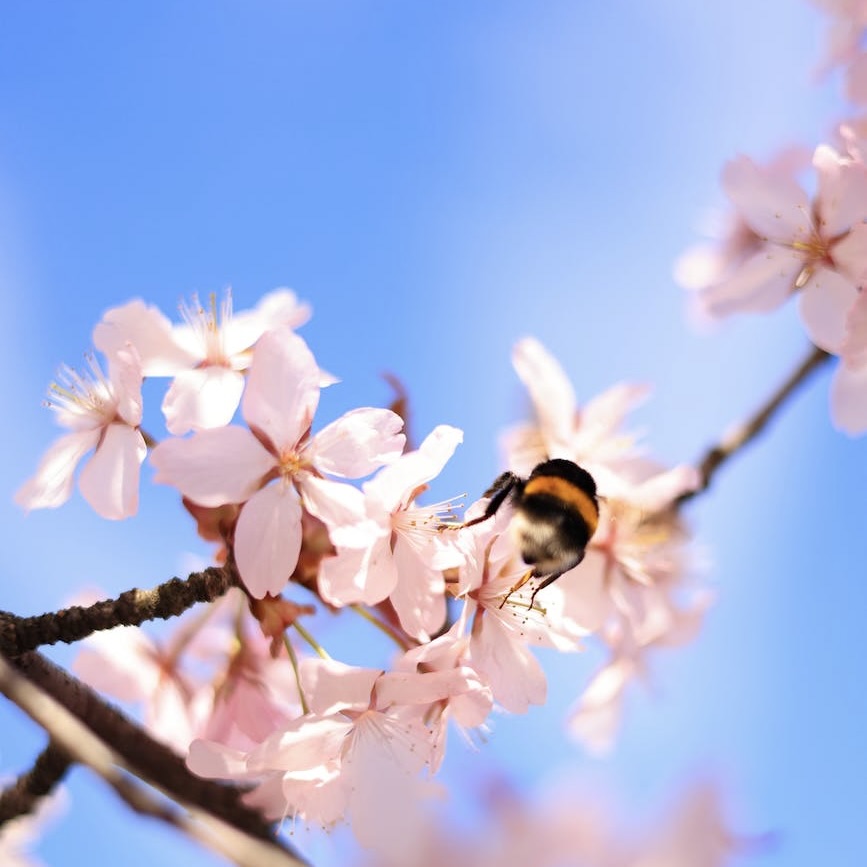
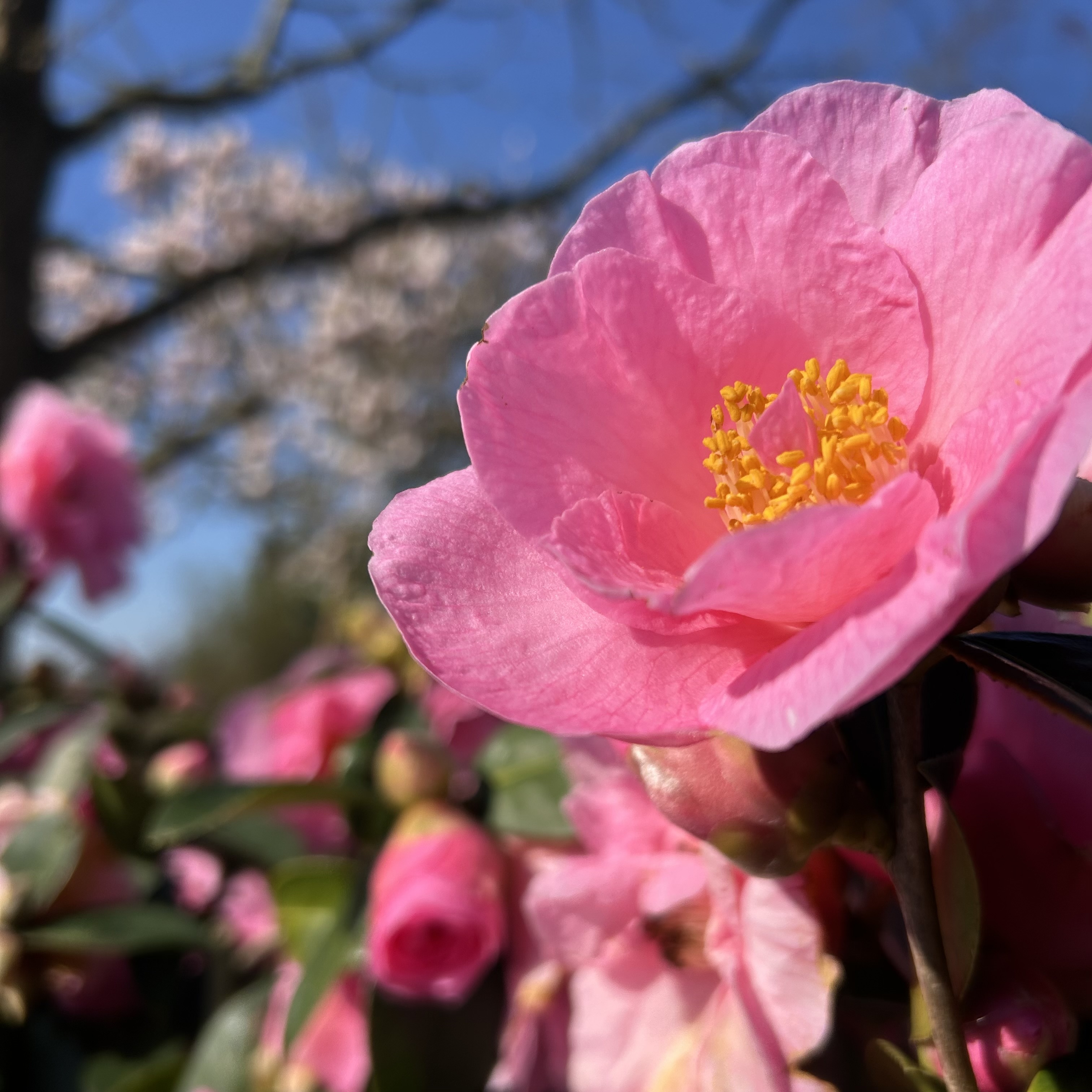
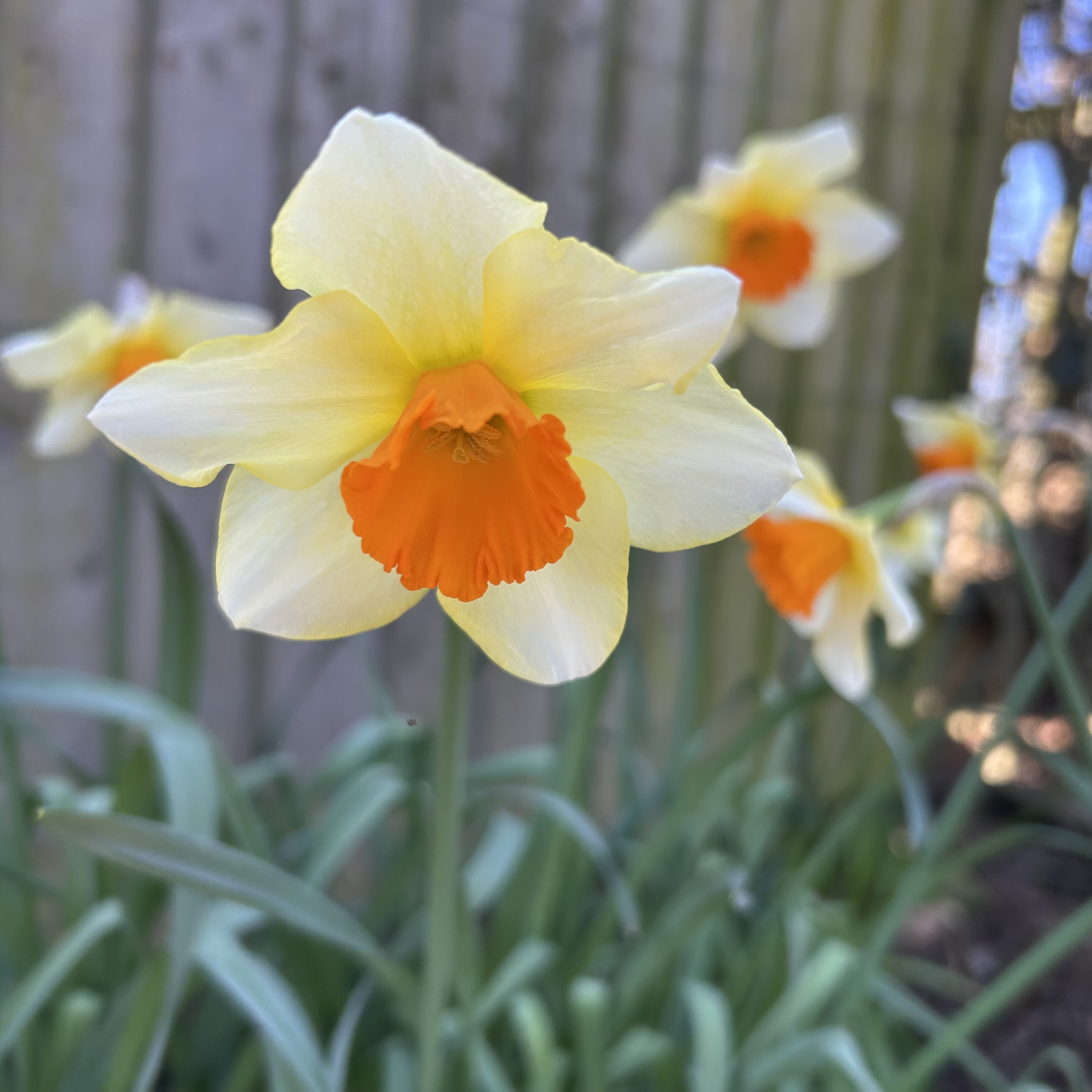
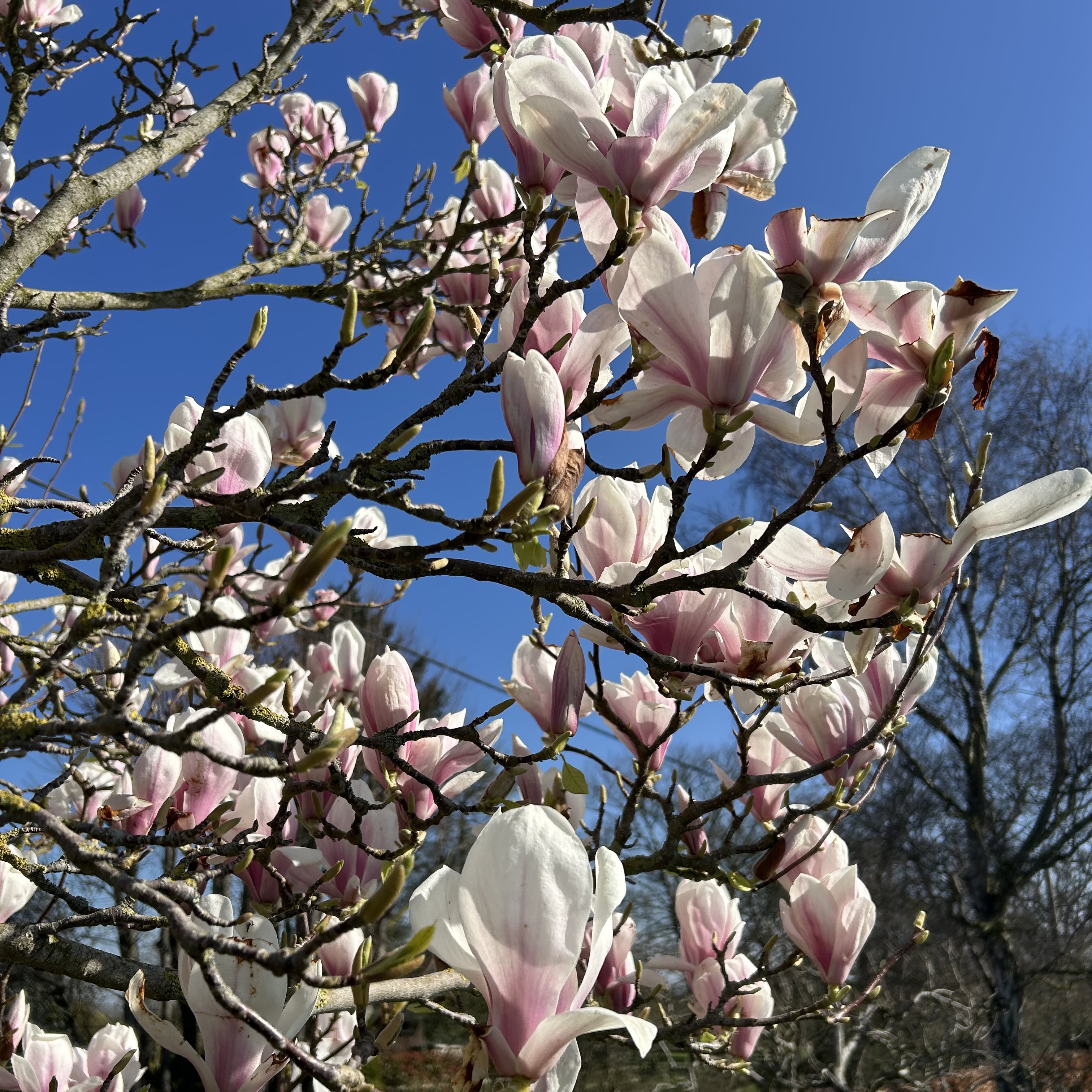
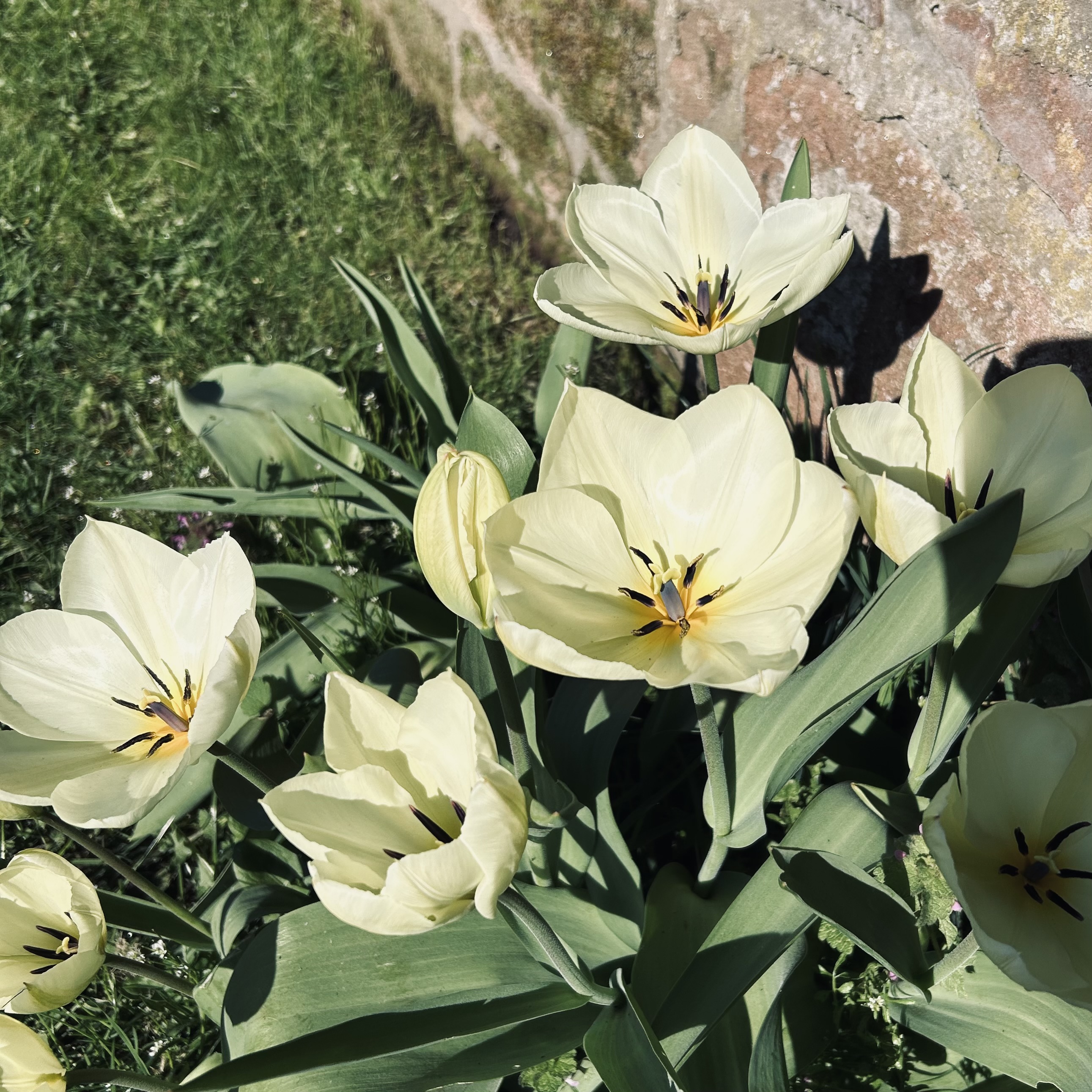
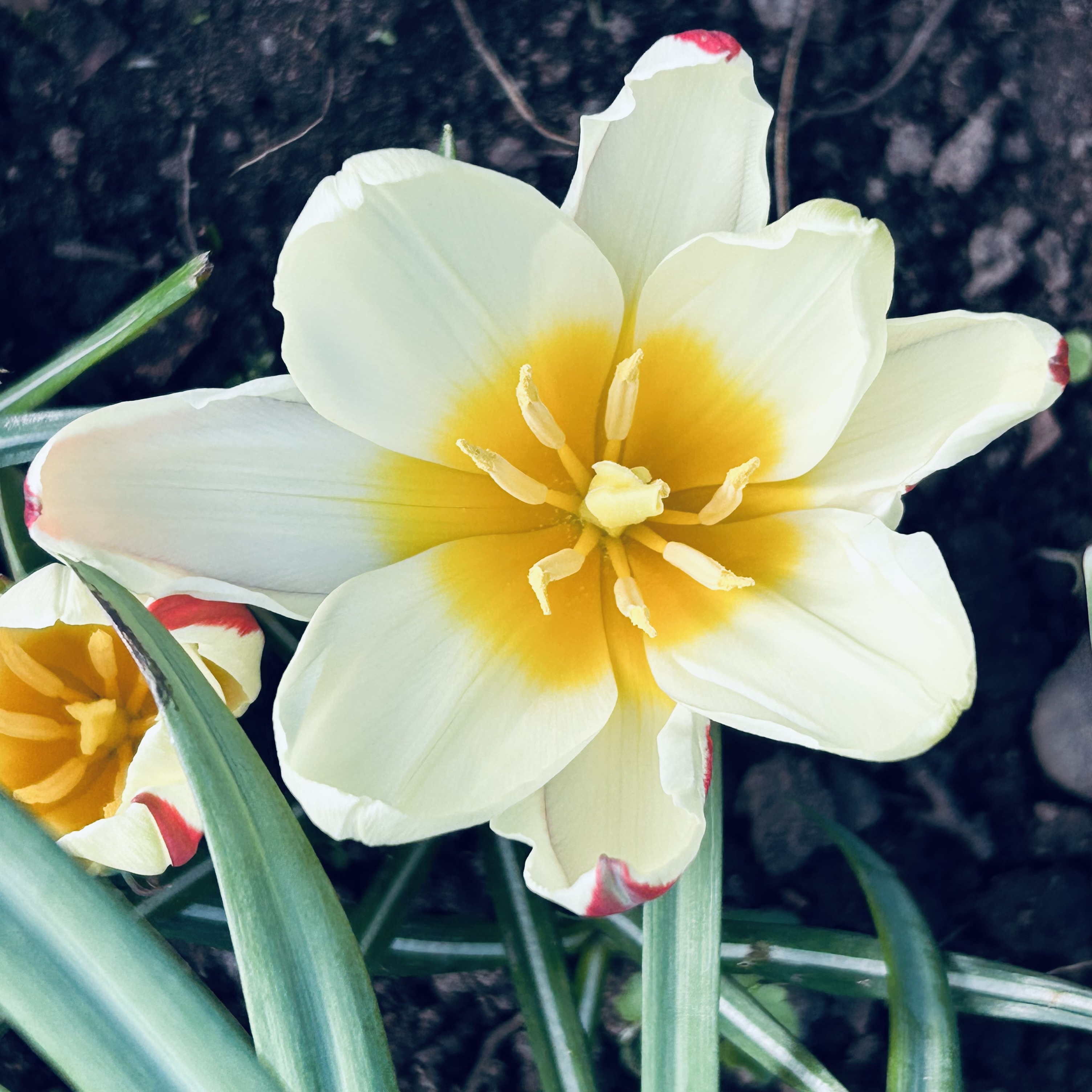
Bumblebee, A Poem
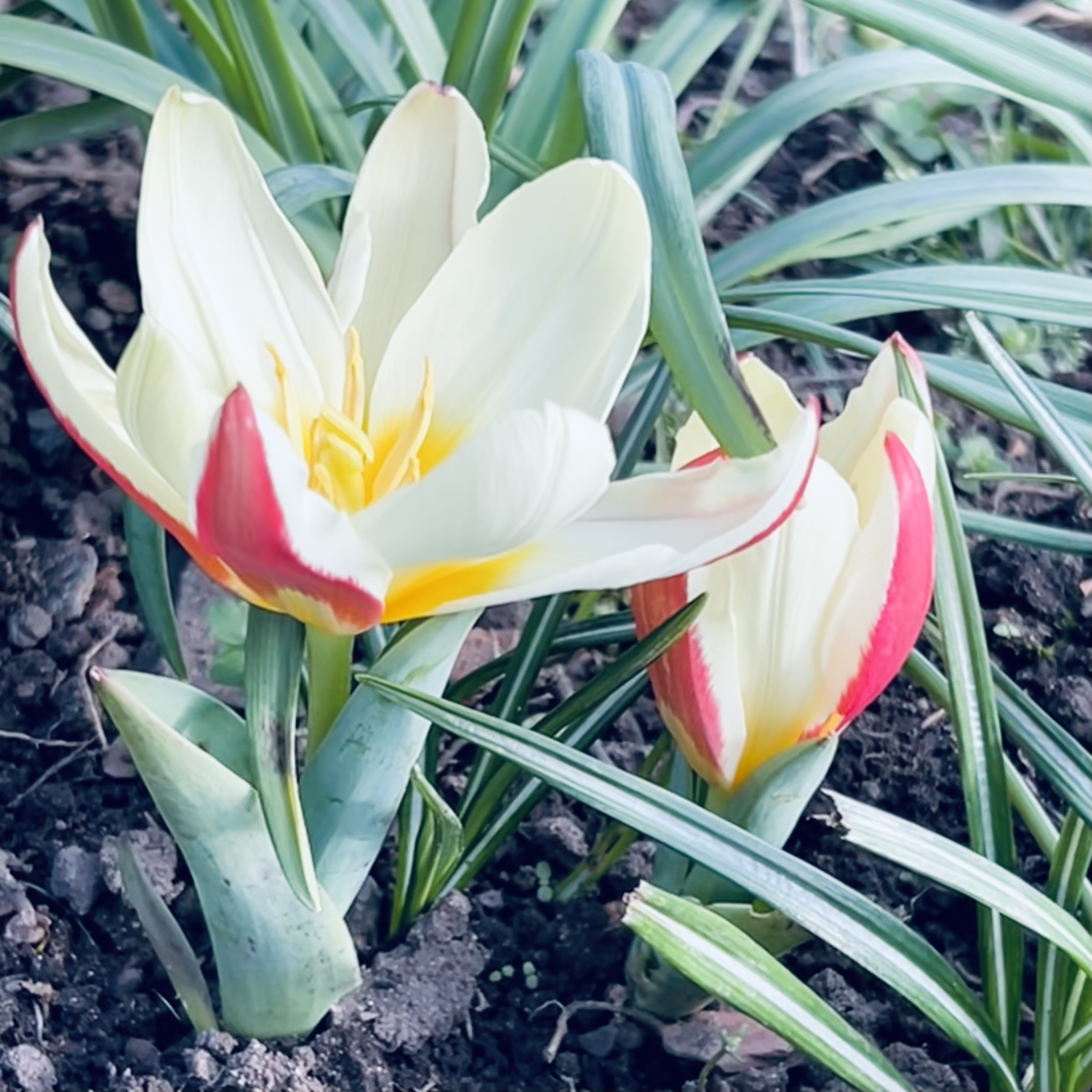
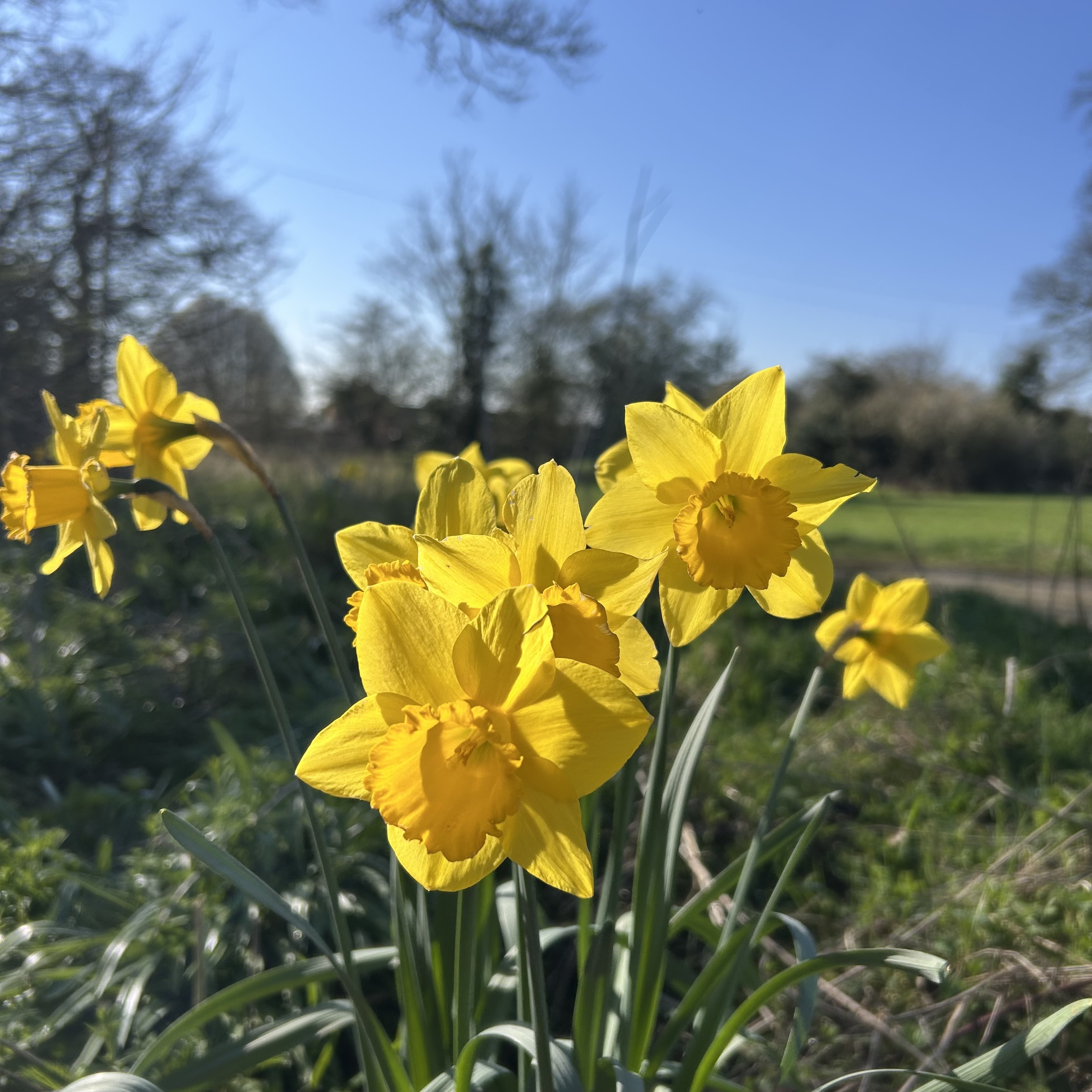
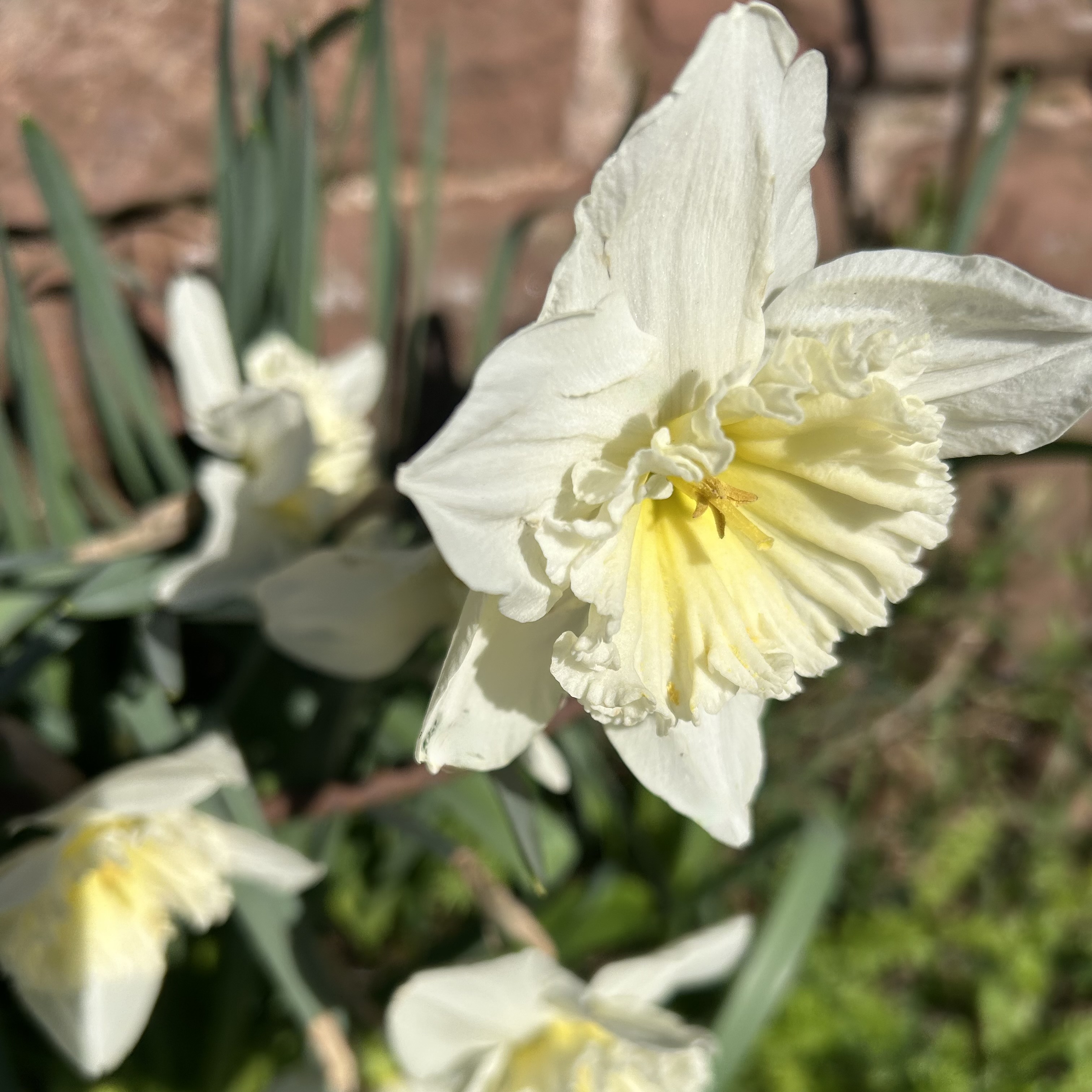
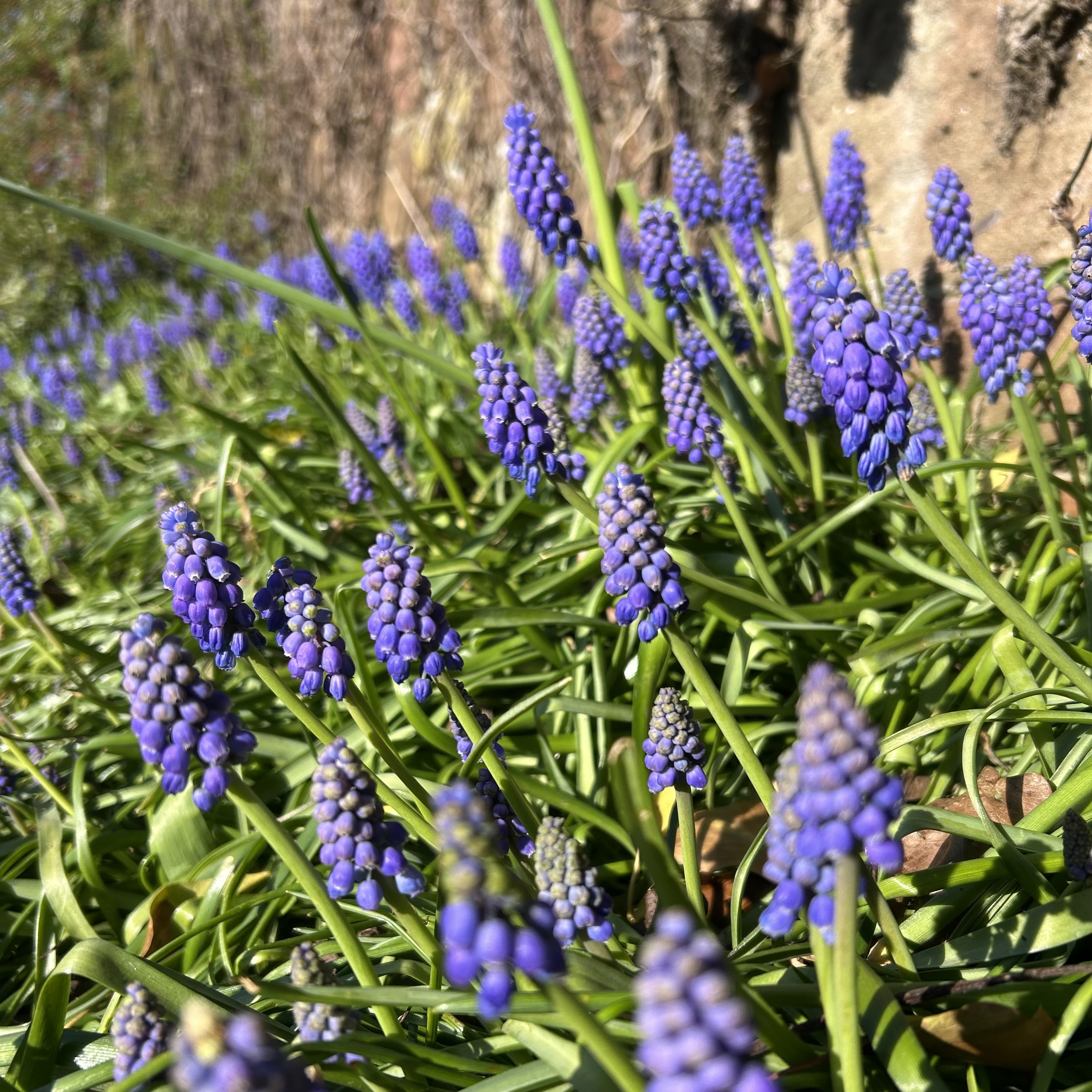
I heard you yesterday.
A sign that all is good, again.
A reassuring hum,
the softest thrum,
whisked the air beside me as I walked.
Your sound startles still;
a childhood wonder turned nuisance
(sorry for that my little friend);
To me, now, you mean the world.
© Christina Cummings
History is on my side
13th March, 2026
Why does history keep on repeating itself? An anthem for social change ~ the latest song by Julia Zelg.
To the Sun
27th February, 2026
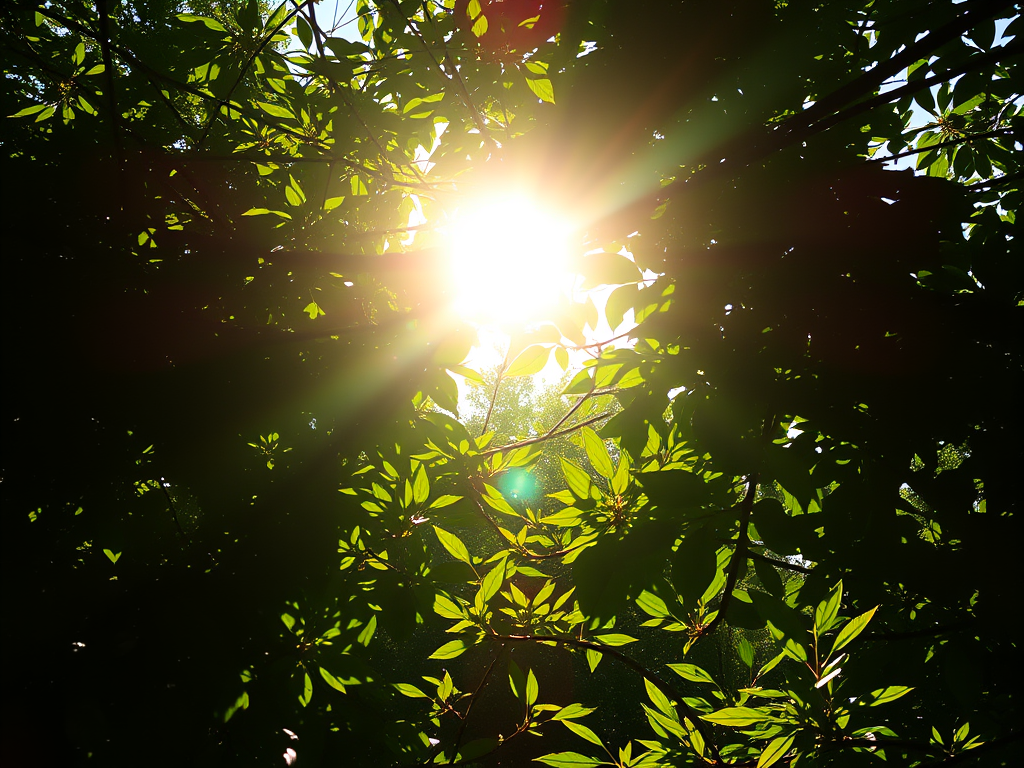
To the Sun, A Poem by Christina Cummings
You were stood,
facing away from me,
your back turned to the sun.
You had your blue shirt on,
for sure.
I remember how it clung to the
stoic shape of you.
I didn’t see your eyes;
that much is fact.
For, had I looked into them
I’d have read you like
the worn pages of
a classic paperback,
thumbed to death.
And therein,
teased the truth from you,
like a burr from the belly of an old dog,
who, regarding me with deference, blinks.
© Christina Cummings
Sometimes
12th February, 2026
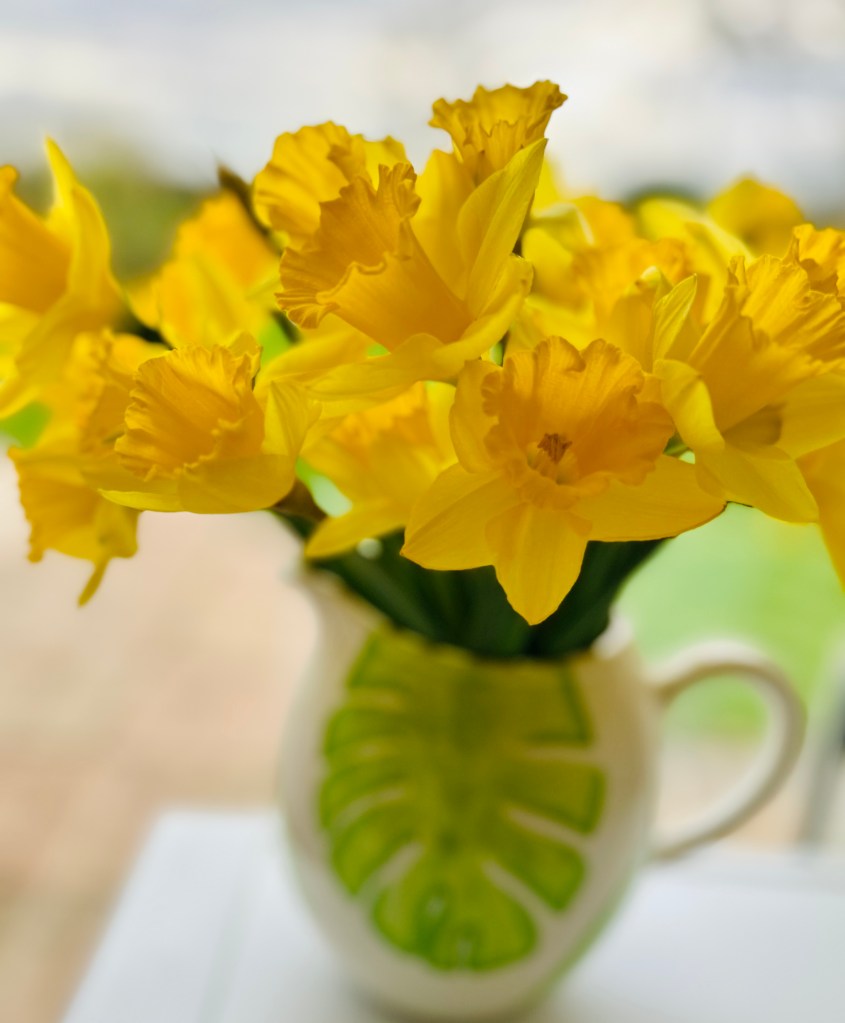
My Birthday Month – A poem
Before my Tomboy days,
I wore plastic beads,
like bale twine,
and a Paisley dress that skimmed the floor,
to half-term parties
with pretty friends from school.
Lime-green jelly gleamed in un-scraped bowls,
and gifts were wrapped
with a love
I felt
I did not deserve.
I recall
that one year,
where, in Norfolk drizzle,
with a hint of Spring,
there was
a deadly frost,
despite the daffodils,
…as though
my birthday month
was teaching me a lesson.
Oh February!
You are not so much a celebration…
you are truth.
Where life begins
and ends,
in equal measure.
© Christina Cummings
The Depth of You
16th December, 2025

Winter, I dreaded the depth of you,
flinched at your low growl,
as you approached.
When you showed up, again
with sharpened claw,
I cursed your bitter pinch.
And yet, …
now…
even as you rattle every rafter,
make haste through any door,
I find,
in my refuge,
saved by the dragon
in my fireplace,
I’m glad of you
once more.
© Christina Cummings
Restoration
25th July, 2025

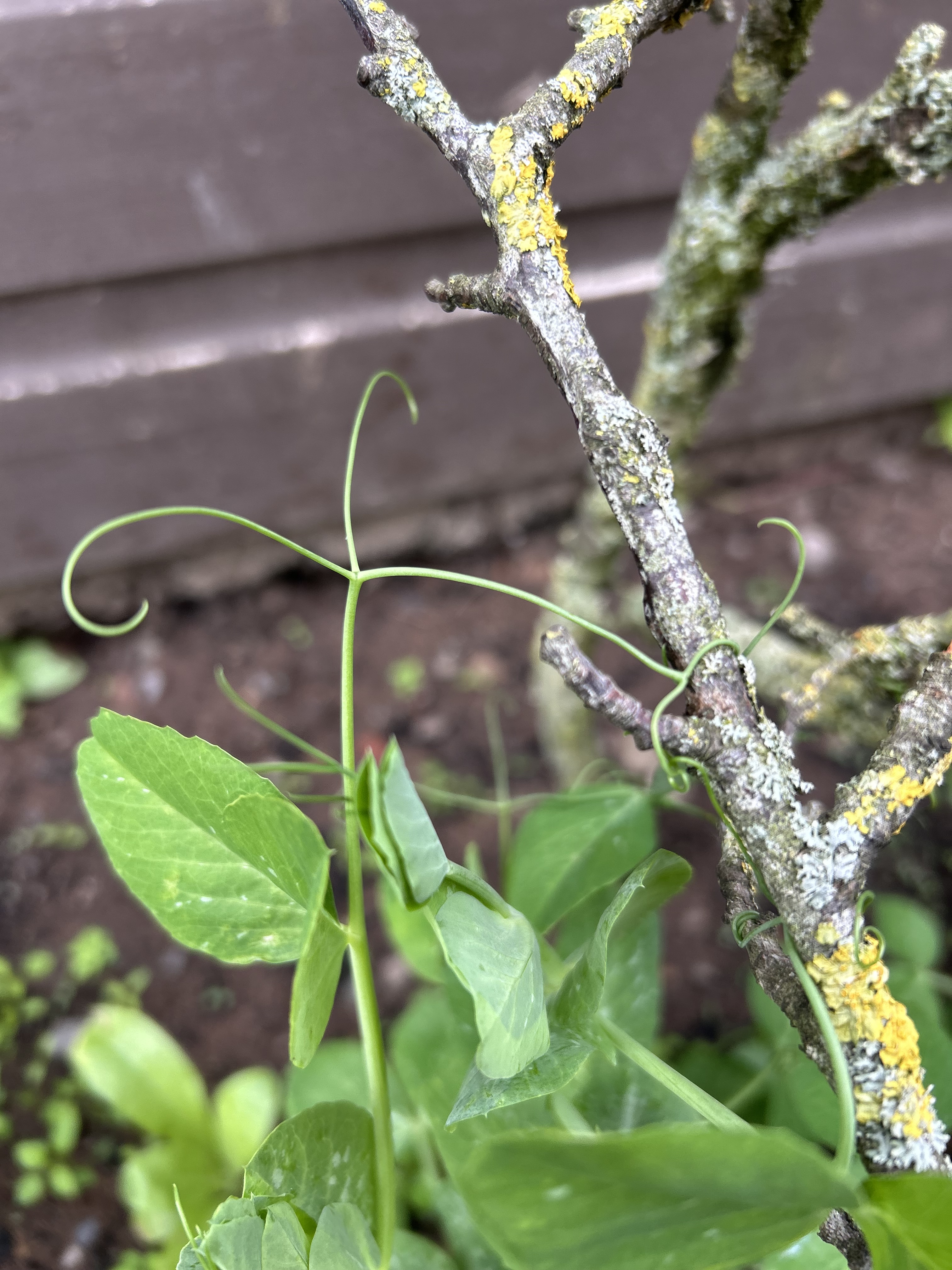

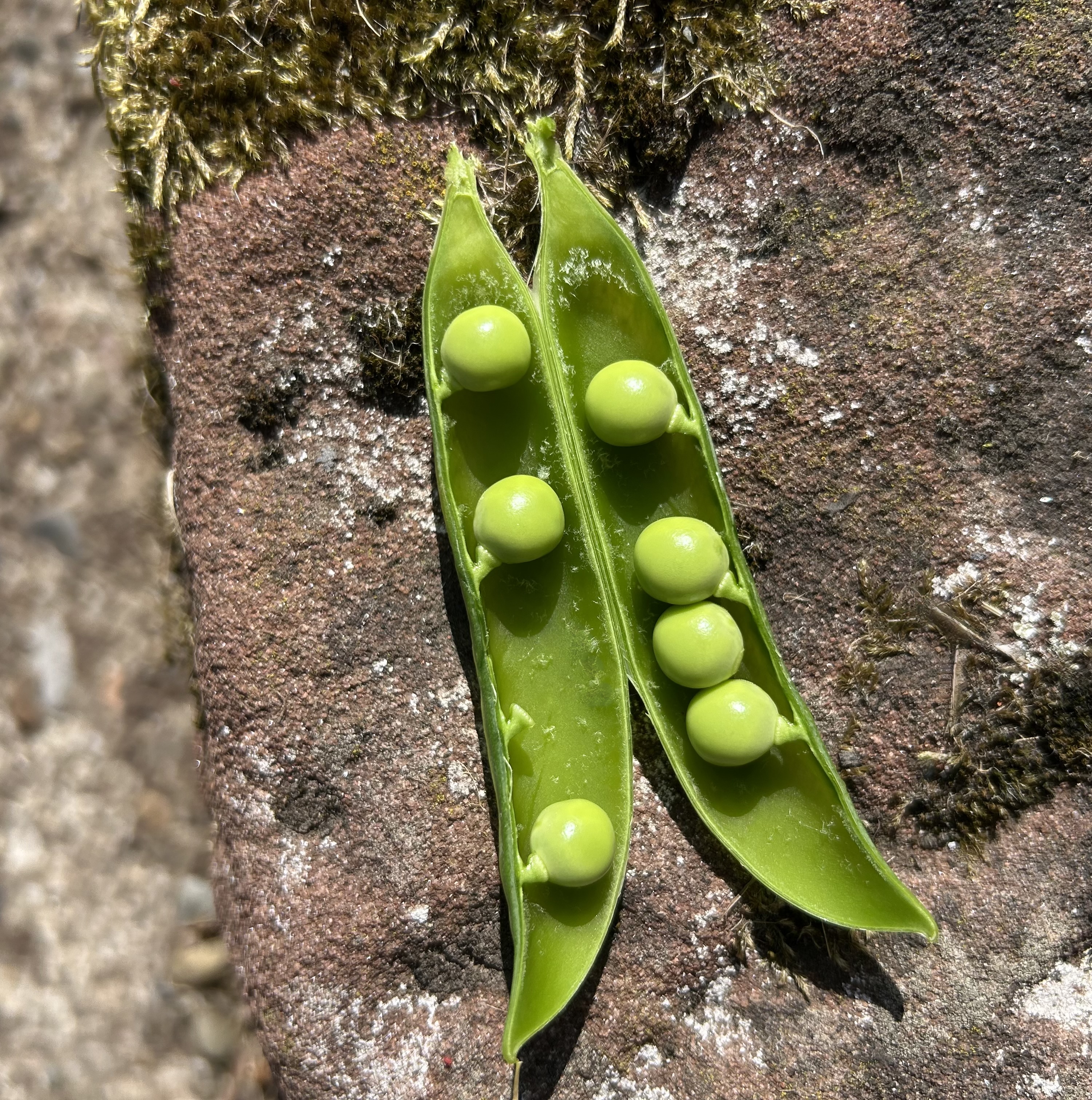

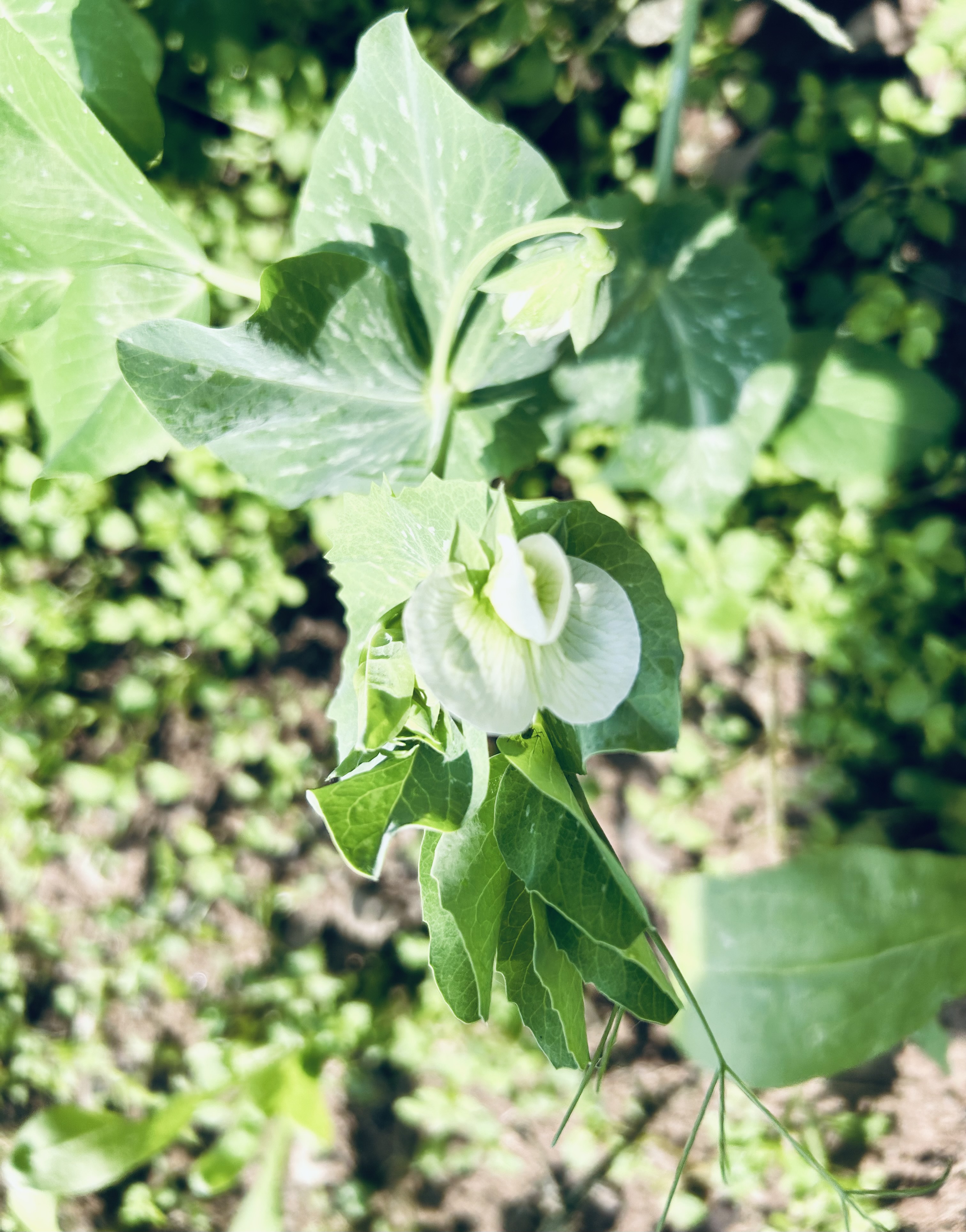

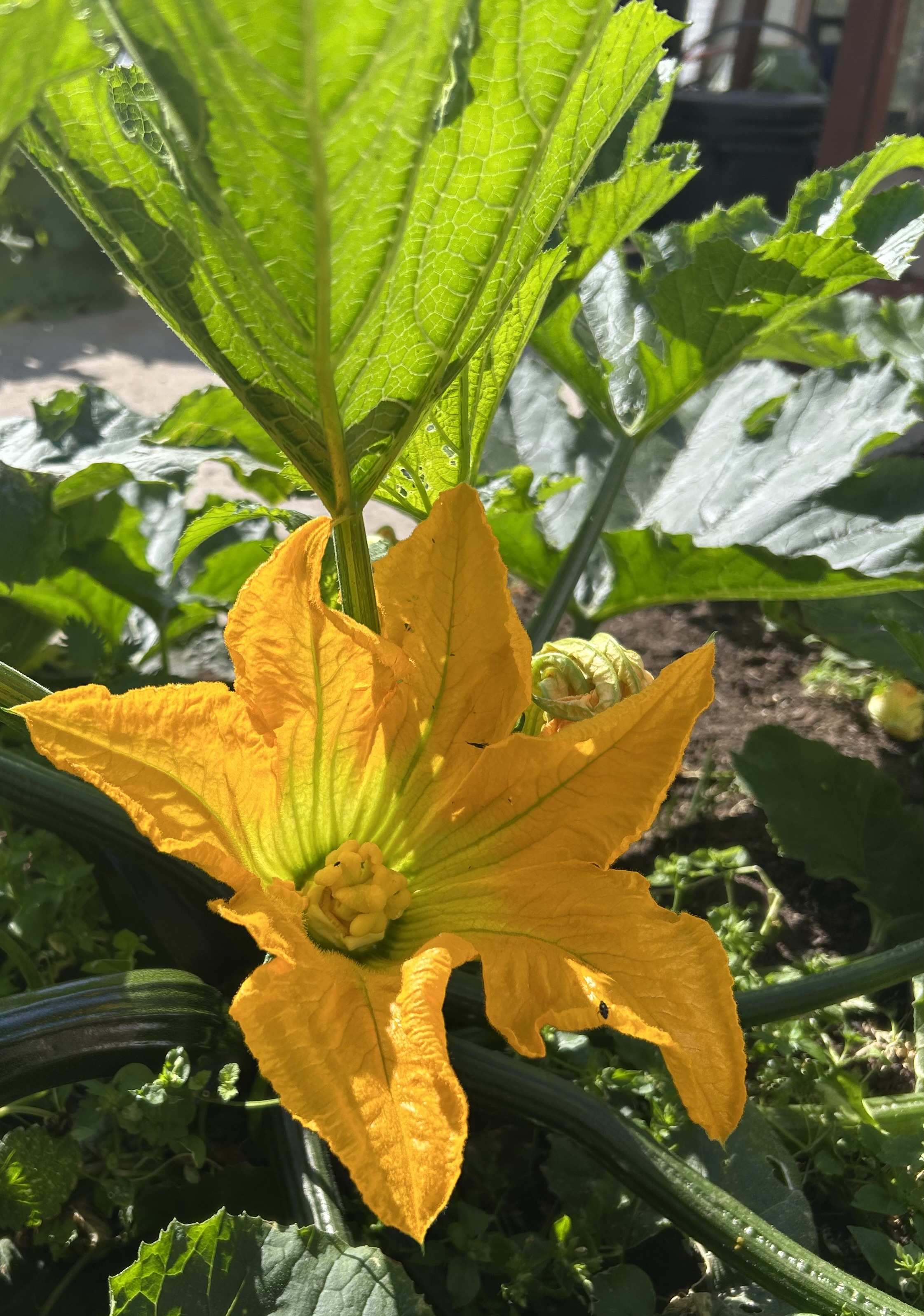
Revisiting some old writing whilst reaping the latest harvest…
Excerpts from ‘The Big Sardine’, by Christina Cummings
Maya walks unhurriedly, past the ten-pin bowling alley and the pink-bricked church, its spire reaching like a rocket ship against the star-stippled sky. She cuts through the park, almost circumnavigating the small man-made lake, where swan-boats huddle together, tethered by thick lengths of still sopping rope. She knows now what she has to do; for the first time since leaving home, she has a plan. It was as though purpose had been waiting for her return.
***
Seeds are just the start, tiny, dry as tindersticks just bursting to grow. Maya sprinkles them, liberally at first as though they’re cracked peppercorns, then delicately, as precious spices, onto a bed of soil. There’s a pause then, as the sky peers at them, brazing them with sunlight. Maya fills a metal can with tap water. Droplets, in a high arc drench the beds, quenching the earth, the moisture cloaking the seeds with a treacle-dark broth of nutrients.
For a while, nothing stirs.
During the night, the heavens exhale and raindrops tap the rooftops and the windowpanes, rinsing the town, so that by dawn, it is as though an artist has taken up a brush and a restoration has occurred. Behind the Big Sardine, where the tarmac had bubbled and blistered, life is drawn from the soil, like flames from bark and breath. Vibrancy emerges. Pearl-green shoots pierce the air.
When Maya arrives at work, she is greeted by an oasis of frills and shoots and stalks, all of them green as a forest, green as the sea. A life force rages, softly, behind the bins. A silent thrum. Plainsong. Now the hollowed grey concrete breeze blocks and the old oil drums sing with life.
© Christina Cummings
Absolute Awe
2nd April, 2025


That’s me at the back holding a placard I never thought I’d need to make, let alone march with through the city of London.
But if this is what it takes to alert people to the dangers of topical steroid use (in more & more cases) and to highlight the very real and heartbreakingly horrendous suffering which ensues, then I will never stop raising awareness.
Not until it gets through to the dismissive and arrogant healthcare professionals within the dermatology field, who continue to deny the truth in the face of very real and growing evidence. And for their shameful ‘gaslighting’ of people who are at their most vulnerable.
Along with the medical establishment, the lucrative pharmaceutical industry has played down the link to this brutal iatrogenic disease, though they’ve known for decades.
Every one of these sufferers ~ just the tip of the global iceberg ~ has my absolute awe.
#topicalsteroidwithdrawalawareness #tswwarriors #topicalsteroidaddiction #topicalsteroidsruinlives
Go to the ITSAN website for more information and to find help and support.
If you are having suicidal thoughts, please know that there is always hope. Contact the Samaritans if you need to talk to someone now. And remember, there is a way through this… and you are not alone.
Topical Steroid Withdrawal (TSW)
2nd March, 2025
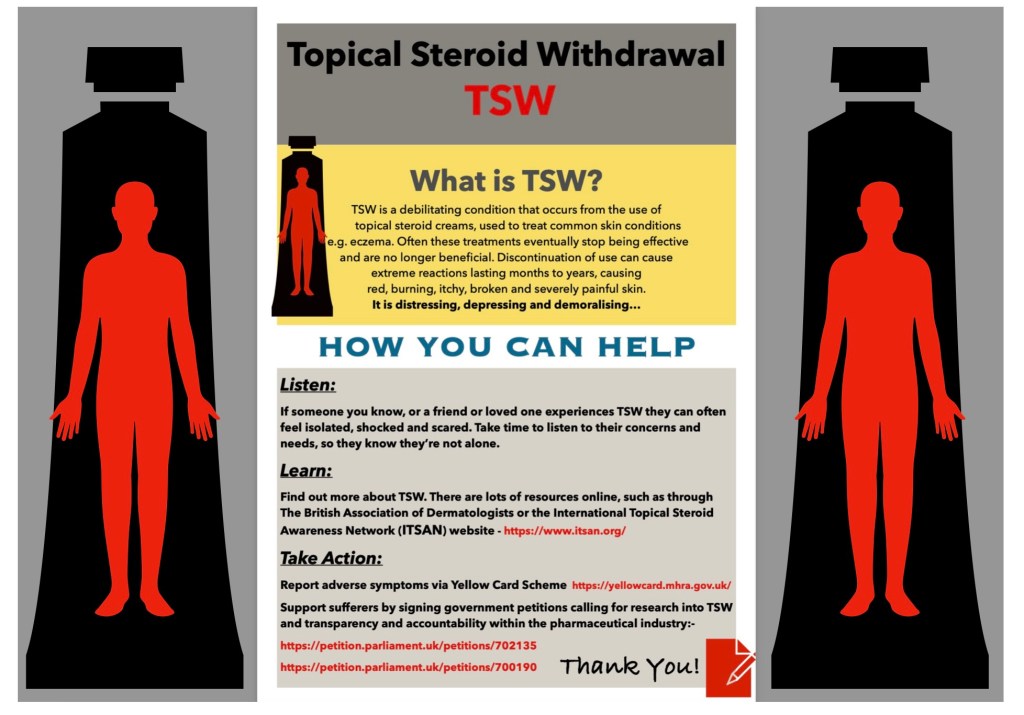
Topical Steroid Withdrawal
8th February, 2025

If you haven’t yet heard of Topical Steroid Withdrawal, do a quick search online… it’s not for the faint-hearted though. That’s why those whose lives have been destroyed by topical steroid creams and ointments prescribed by their doctors… are true warriors.
Let the more loving one…
5th February, 2025

Not the most poignant poem; one could argue clumsily constructed in parts, but this line, from W. H. Auden, resonated: “If equal affection cannot be ~ let the more loving one be me.” Just this.
The More Loving One
Looking up at the stars, I know quite well
That, for all they care, I can go to hell,
But on earth indifference is the least
We have to dread from man or beast.
How should we like it were stars to burn
With a passion for us we could not return?
If equal affection cannot be,
Let the more loving one be me.
Admirer as I think I am
Of stars that do not give a damn,
I cannot, now I see them, say
I missed one terribly all day.
Were all stars to disappear or die,
I should learn to look at an empty sky
And feel its total dark sublime,
Though this might take me a little time.
From Homage to Clio by W. H. Auden, published by Random House. Copyright © 1960 W. H. Auden.
Wystan Hugh Auden was born in 1907, in York. He attended Christ Church, Oxford and his first tentative works, partially influenced by Dickinson, Frost and Blake, were published in 1928.
Each Day
30th January, 2025

As Ralph Waldo Emerson; essayist, philosopher, lecturer, minister and poet, once said: “Finish each day and be done with it. You have done what you could. Some blunders and absurdities no doubt crept in; forget them as soon as you can. Tomorrow is a new day. You shall begin it serenely and with too high a spirit to be encumbered with your old nonsense.”
Rainy Evening Walk
Wednesday 29th, 2025


Photographs © Christina Cummings, January 2025. ‘A rainy evening walk’ [London’s Chinatown district.]
A Poem by Lynda Hull, Chinese New Year
The dragon is in the street dancing beneath windows
past the man who leans into the phone booth’s red pagoda,
past crates of doves and roosters veiled
until dawn. Fireworks complicate the streets
as people exchange gold
and silver to appease the ghosts
who linger.
I am almost invisible. Hands could pass through me
effortlessly. This is how it is
to be so alien that my name falls from me…
Ginseng idles in the stairwell, the corridor where
the doors are blue months ajar. Hands
gesture in the smoke, the partial moon
of a face. For hours the soft numeric
click of mah-jong tiles drifts
where languid Mai trails
her musk of sex and narcotics.
There is no grief in this, only the old year
consuming itself. Between voices and fireworks
wind works bricks to dust. I can touch
the sill worn by hands I’ll never know
in this room with its low table
where I brew chrysanthemum tea.
The sign for Jade Palace sheds green corollas
on the floor. It’s dangerous to stand here
in the chastening glow, darkening
my eyes in the mirror with the gulf of the rest
of my life widening away from me.
Out of the puzzling streets
men pass bottles of rice liquor, like
some benevolent arrest; the moment
when men and women turn to each other and dissolve
each bad bet, every sly mischance,
the dalliance of hands. They turn in lamplight
the way I turn now. Wai Min is in the doorway.
He brings fish. He brings me ghost money. He brings lotus root.
© Lynda Hull
Next to the Wing
18th January, 2025
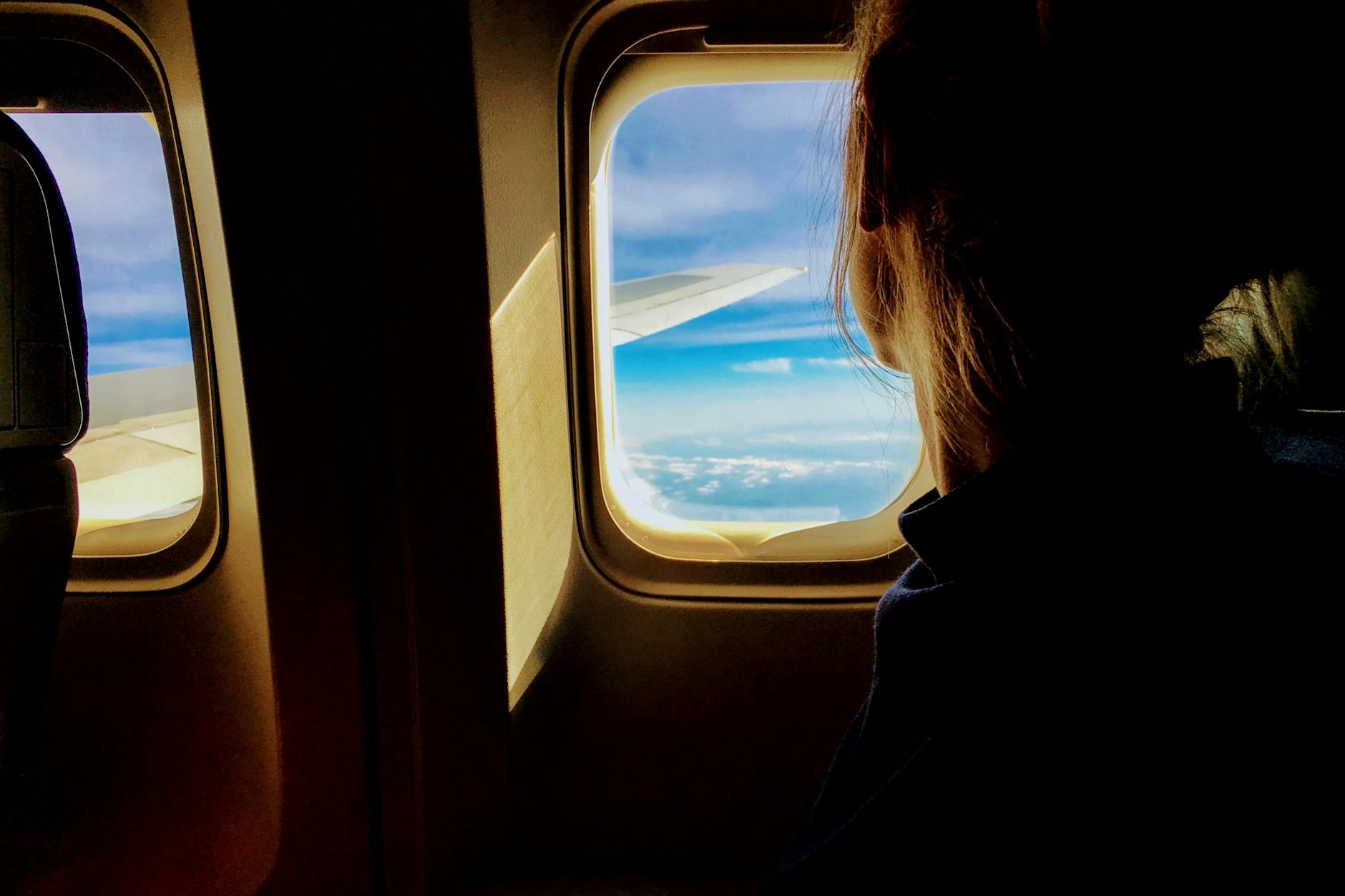
Matters of Trivia, a poem by Christina Cummings
In the backdrop to our lives
myriad elements jar.
Omniscient perspective; making one thing look foolish,
when compared with another.
While one grave and serious issue plays out
in one tiny corner of the world…
In one suburb,
In one field of rape,
In one empty nest, save for the last inhabitant, who imagines their sad routine equates to life,
At a table for two at The Steamed Crab Shack,
At your place? No, mine!
At the second exit from a roundabout the GPS will not acknowledge,
At a party, where smoky-birthday-candle wishes are inhaled, like a potpourri of dreams,
In one heart where that last sliver of glass you finally plucked from the meat of it
has been stuffed back in, like a clove, pressed to the bloody core with your own firm thumb,
… there carries out in some other nook, or bench, or bed, or boat, or in Seat 11D right next to the wing,
matters of trivia.
Or so they appear.
Whichever they are depends on us.
We are, within us, both peacemaker and warrior;
Each vies at the dressing room mirror, (the backstage theatre kind, with lights),
while we try on their hats for size.
Don’t listen to that old metaphor, as it whispers, sweet-yet-stubborn as a toffee bon-bon: ‘The mirror never lies’.
Ha! It is the master of deception!
And each bare lightbulb that surrounds it glows,
like a cheap casino in a seaside town
or a carousel with painted foals,
and drowns the very choroid of our eyes
as we stare into our reflection, with the gaze of a clown.
© Christina Cummings, originally published in 2022.
Warrior Spirit
9th January, 2025
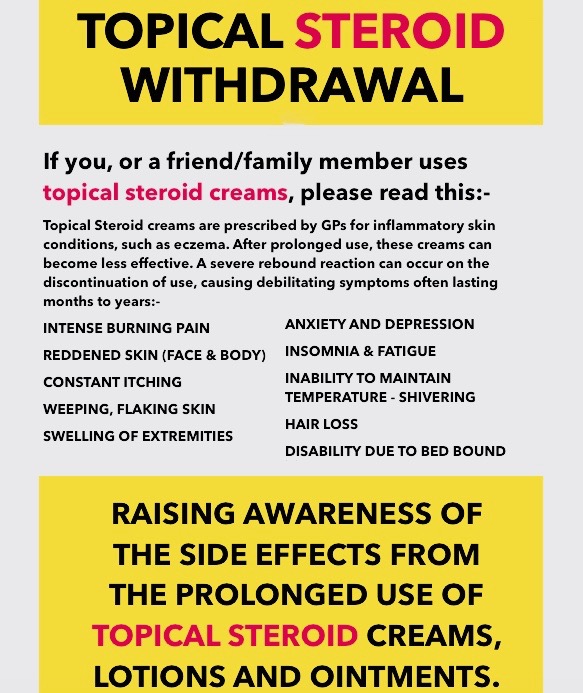
Last year, someone very dear to me went through Topical Steroid Withdrawal (TSW). And, given the unimaginable gravity of this condition, I remain in total and utter awe of her warrior spirit. Many would not have survived what she has been through.
However… devastatingly, the struggle continues.
There is very little support for people who are affected and an almost complete denial of this disease, from GPs to Consultant Dermatologists. The symptoms are severe and debilitating and can last months to years. Those who are suffering are left feeling ignored, confused and scared ~ as well as severely affected and often bed bound.
Things need to change.
Research into this, now widely emerging iatrogenic disease, needs to get underway. Support, both for the physical symptoms and the mental anguish it entails should be provided. People with inflammatory skin disease should be fully informed about the possible* side effects of these medications. Other treatment options should be explored, rather than prescribing topical steroids as first line treatment. Healthcare professionals should be educated about the risks, prevention, recognition and management of TSW.
Currently I am still writing emails to everyone I can reach, to raise awareness in the education system, the NHS and at Government level ~ MPs, Councillors, the Health Minister, the Heads of Faculties of our Universities, Deans, Professors and Lecturers in Medicine, Pharmacology and Health Sciences, plus the Dermatology Departments of all major UK hospitals.
At least if our next generation of doctors are equipped with the knowledge, then their patients ~ our loved ones ~ will be better taken care of.
It may take some time…
* N.B. The prevalence of TSW is not known, due to it being under-recognised, under-diagnosed and dismissed, despite the following evidence: “Corticosteroids suppress the inflammatory reaction during use; they are not curative and on discontinuation a withdrawal reaction (rebound or flare) may occur.” BNF, 2024.
For more information please refer to the ITSAN website. ITSAN stands for International Topical Steroid Awareness Network. They provide Topical Steroid Withdrawal Syndrome Support for sufferers and their loved ones. #TSWWarriors
Stay Close
31st December, 2024
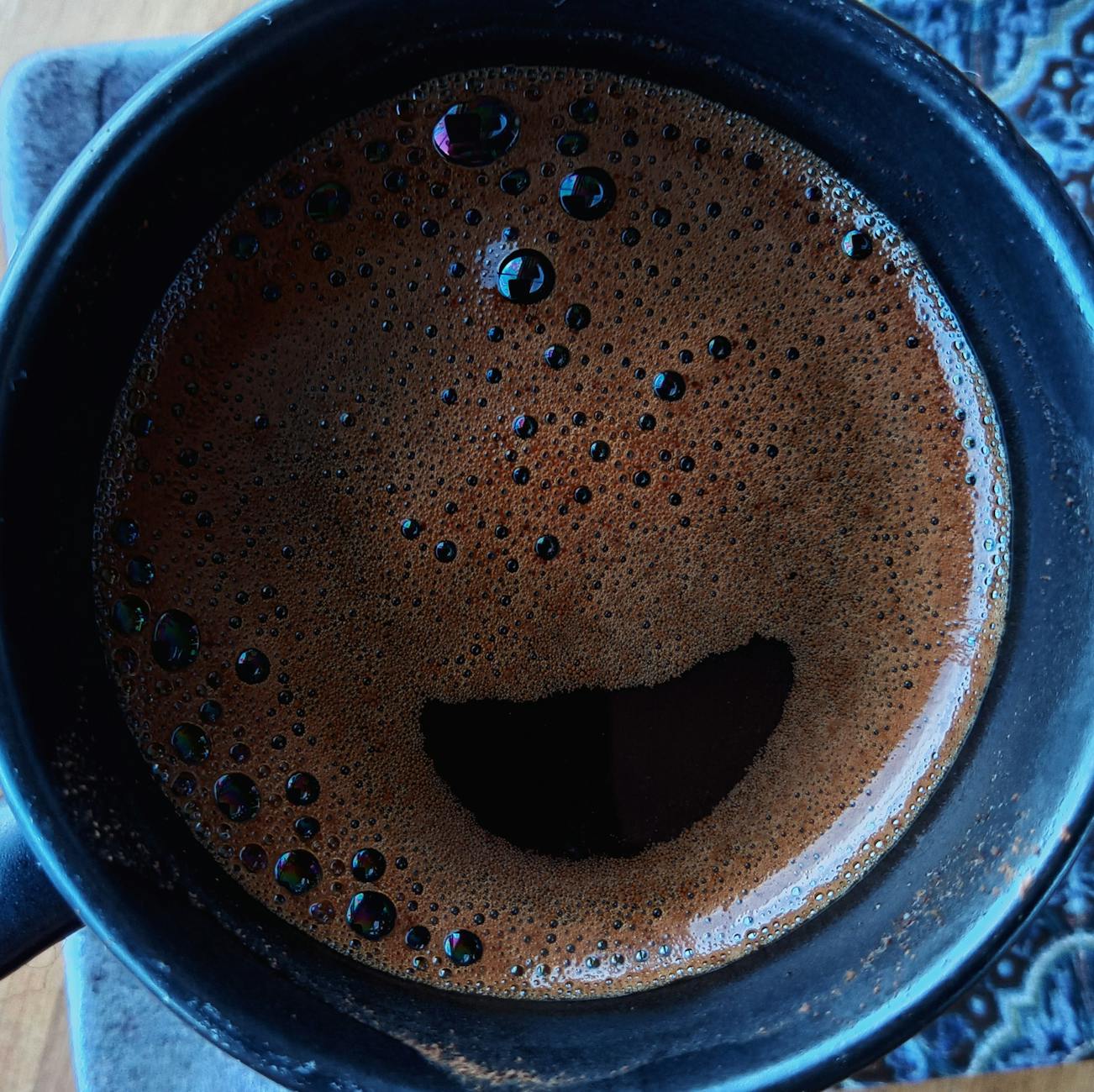
New Year’s Eve, a poem by Christina Cummings
How the wind howls.
Sharp blasts hurl insults at the roof tiles;
they cling to the rafters, like scared mice.
I sip cocoa as the fire dies.
It always dies, well before midnight,
before I head up the chilly stairs, to bed.
My dog, ears cocked to the creak of the gate,
growls.
And wrapping the shawl about my tired frame,
I rise to peer out at the night, silenced yet before the clink of crystal,
before the hoots,
before the coil and spray of golden trails,
a psychedelic pyrotechnic battlement above the steeple,
above the schoolhouse and the butcher’s shop beside the King’s Arms.
There, stood quiet as a fir tree, on my porch
a man, his hand outstretched, waits.
A knock never sounded with such certainty.
I hover and pace,
but beckoning can never truly be ignored.
‘Stay close,’ I whisper to the dog, who slinks away on timorous paws,
and does not look back at me.
With one part curiosity and one part fear, I turn the latch.
An arctic cold steps through the threshold first,
as unwelcome a visitor as any stranger, as this stranger at my door.
I prepare to greet, however this should go,
but all that’s out there now is darkness,
darker even than the solitary coal abandoned on the welcome mat;
a symbol of Good Luck, like horseshoes or a four-leaf clover or a rabbit’s foot,
delivered by a ghost.
© Christina Cummings (December 2023).
What came of this year?
30th December, 2024
‘What came of this year?’ you asked.
I sighed.
‘Hush… don’t answer that!’ you said with lawyer’s breath. ‘A year is much like any other year!’
So instead, we settled on a trade,
through the meeting of our eyes.
No clues!
Just that I’ll read yours and you’ll read mine;
eyes cannot hold secrets,
at least… not for long.
You set down the tray
and draw in the dust with cold fingers,
as I recall for both of us,
those first months spent on trains,
on broken sleep and borrowed pillows,
while I watched you become a small thing.
We did everything we could.
And tapping the shell that embalmed you,
we coaxed a reprieve,
such that the year,
on borrowed time,
unfolded.
© Christina Cummings
If they are okay…
24th December, 2024
Let Them, by Cassie Phillips ( ©Cassie Phillips )
Just Let them.
If they want to choose something or someone over you, LET THEM.
If they want to go weeks without talking to you, LET THEM.
If they are okay with never seeing you, LET THEM.
If they are okay with always putting themselves first, LET THEM.
If they are showing you who they are and not what you perceived them to be, LET THEM.
If they want to follow the crowd, LET THEM.
If they want to judge or misunderstand you, LET THEM.
If they act like they can live without you, LET THEM.
If they want to walk out of your life and leave, hold the door open, AND LET THEM.
Let them lose you.
You were never theirs because you were always your own.
So let them.
Let them show you who they truly are, not tell you.
Let them prove how worthy they are of your time.
Let them make the necessary steps to be a part of your life.
Let them earn your forgiveness.
Let them call you to talk about ordinary things.
Let them take you out on a Thursday.
Let them talk about anything and everything just because it’s you they are talking to.
Let them have a safe place in you.
Let them see the heart in you that didn’t harden.
Let them love you.
Author: Cassie Phillips © Cassie Phillips
A Dash of Light
17th December, 2024
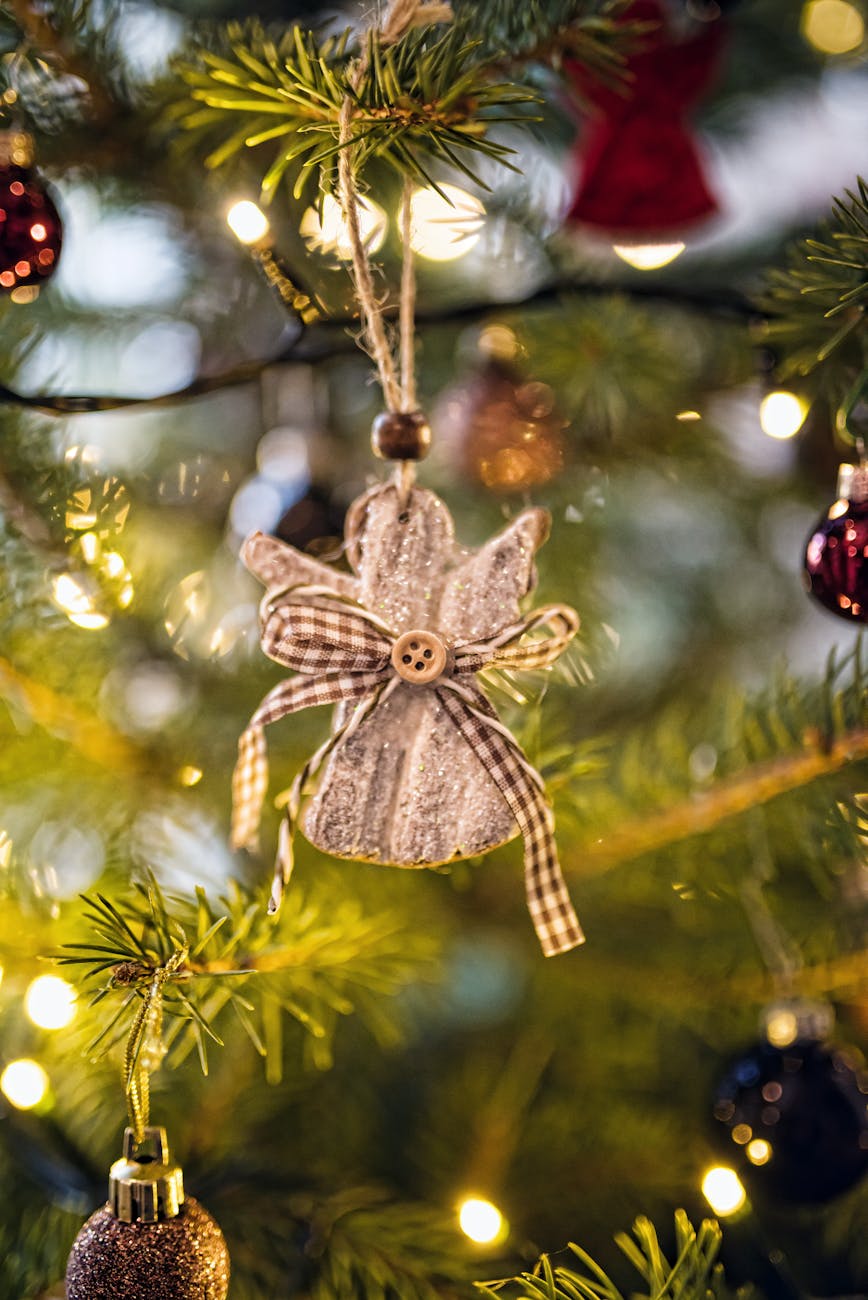
Plucked from its snowy forest the tree glittered and glowed, a nest for soft-winged angels that dangled from their knotted strings. We sat down on the old leather sofa, the one that swallows you slowly while you snooze.
We snuggled, my head resting on your shoulder. And for one special moment we were a family again. With images of reindeer, sure-footed, nostrils flared, racing through the night sky towards the chimney stacks, the children slept soundly.
We switched the TV on, quietly, so as not to wake them.
‘Wait,’ you said. ‘I’ll get the brandy.’
I heard the soft clink of glasses from the other room. And then the show began, so I pressed pause. But the screen went black.
A minute passed, then two, then five.
So, I went to find you.
‘The television’s broken again,’ I said, searching for you in the gloom.
You were standing in the garden, shards of glass scattered at your feet. I followed your gaze.
And I saw it too… a dash of light trailing off into the darkness.
A sleigh, perhaps?
And a bright red coat.
You reached out and took my hand. And we stood like that, side by side… just staring.
© Christina Cummings 2019, republished 2024. An excerpt from ‘Christmas Past’, part of my short story collection.
Would You Like to See the Menu?
3rd December, 2024

Imagine a restaurant, part of a nationwide chain, offering a full menu to all those who dine there. You’ve no food at home, and it’s the only establishment in town. So you set off with a hopeful heart, and gratitude that such an organisation exists to cater for the people in your community. You see, the food is free ~ so everything will be okay. Right? You might be dining alone or with a hungry young family, or an elderly relative. Either way, our bodies need fuel to function, to stave off illness and to keep us active and warm. So, with no other choice you head to the restaurant… because we need to eat to stay alive, essentially.
On arrival you’re told there’s a four hour wait. There are chairs, but never enough of them. So, you may have to stand, or find a space on the floor. All about you waiters are scurrying, taking orders, carrying bowls and clearing tables, balancing whole towers of plates that threaten to slide to the ground at any moment. The Maître’d looks stressed. She has a queue of people lining up to make complaints: the soup is cold, there’s no ice for the drinks, the salt and pepper shakers haven’t been replenished, there’s too much dill in the sauce. While trying to do her job, she’s fending off hostility and trying to appease and placate, but with no compensation to speak of, all she has to offer is an apology on behalf of the chain.
Over by the window seats, there’s some kind of emergency. The staff are running. The diner does not look good at all. This does not bode well. You decide you might not be hungry now, but you’re too weak to get up and leave. And finally someone has come to take your order, their pen is poised. They note something down and disappear… for what seems like an age.
We know that resources, when stretched, cause pressures, omissions, mistakes and delays. These are the last things any service system needs. When the kitchen staff are trying their best, but the serving staff are leaving in their droves for a better life elsewhere and the cupboards are bare and the chef has no ingredients and few utensils with which to cook, it’s little wonder that things crash and burn. But, it’s within this order of chaos that we find ourselves. Just over seventy-five years on from the birth of our NHS, despite good intentions for best practice, the reality is stark. Nothing, it seems, is free. That much we knew. We work to pay for this, but when it’s needed we find the ‘owners’ have mismanaged the funds. The original promise is not sustainable within a society that manufactures equality like it’s going out of fashion. Inequality rules. Fact.
You whisper to the ‘diner’ next to you whose ‘starter’ has been served: ‘How long did you have to wait?’ They look pale and tired and it takes all their breath to speak: ‘I’ve been sitting in this chair since Monday,’ they reply. You smile, meekly, and recall that it’s Wednesday morning now. And so you settle in for the long haul; your life depends on it, after all.
Peace On Earth
27th November, 2024
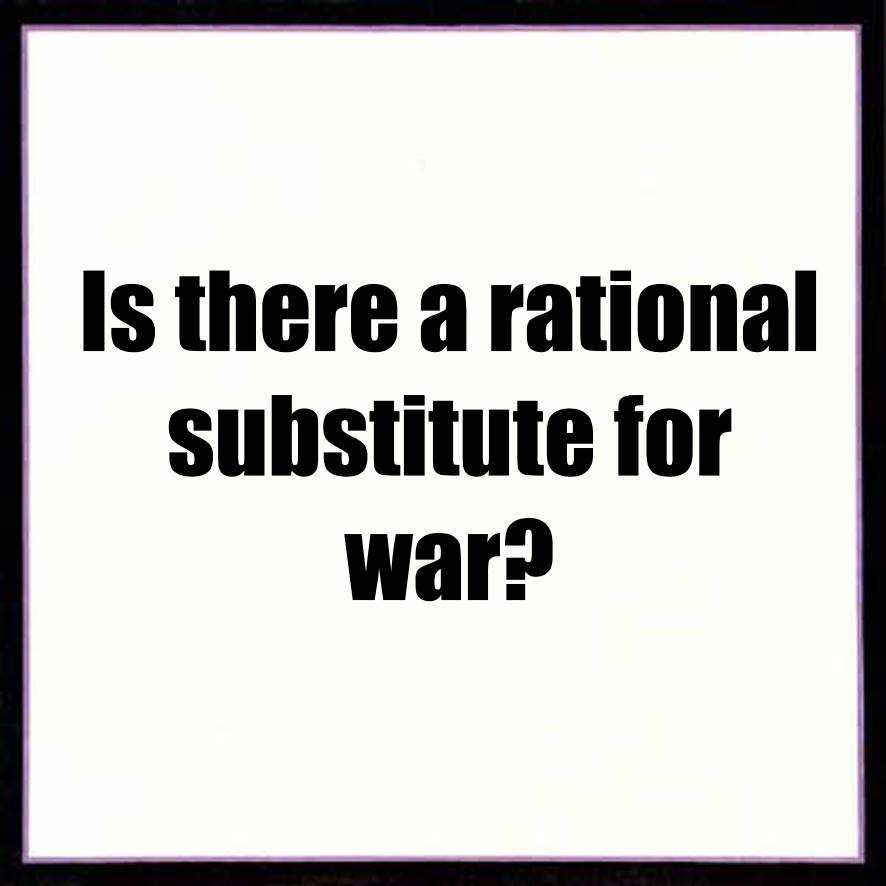
War. Humanity has so far found no other way towards peaceful progress, despite discussion, despite claims that avoidance of the last resort has been accounted for. Such global disruption is a major, ruinous factor that governs our lives, still. So, how then can nations, or sects, reach agreement? Is there a rational substitute for war? It seems we haven’t found it. Perhaps we never will. How bleak a contemplation! For those who leave their warm beds to keep us safe in ours, we feel, if not always voiced, immeasurable respect and gratitude. For those who did not, (will not), come home… and for those who have returned, forever changed… we honour them; for in their bloodiest moments, we find peace in ours. But is it true and lasting peace? Can it be anything but uneasily received, when it’s been ‘won’ through such savage idiocy?
Gift Wrap
25th November, 2024
Whether or not we celebrate Christmas, with regard to religious or secular rituals, we will at this time of year be reminded of the festive traditions we once thought magical. Remember waking, as a child, in the half-light, to the proof that Santa had affirmed we were Good? Even the non-Christian, anti-materialistic, or the sceptics play their part in the Yuletide message. Some might volunteer to soften the harsh lives of those who have no oven in which to cook, they might hang a pretty wreath upon the door as though to announce that joy resides there, or they may peddle their wares to those who hunt the malls and boutique shops, searching for the perfect gift to give. Indeed, as Scrooge’s nephew, in Charles Dickens’, A Christmas Carol found:
“There are many things from which I might have derived good, by which I have not profited, I dare say; Christmas among the rest. But I’m sure I have always thought of Christmas time, when it has come round ~ as a good time; a kind, forgiving, charitable, pleasant time; the only time I know of, in the long calendar of the year, when men and women seem by one consent to open their shut-up hearts freely, and to think of others as if they really were fellow-passengers to the grave, and not another race of creatures bound on other journeys.”
There is, for each of us, a time when struck by awe or tragedy or even the undervalued comfort of mundanity, we suddenly get ‘it’. ‘It’ being such things as our purpose, our relation to others and our innate selves. We see more clearly, as though a veil has lifted, the patterns and events that govern our lives. Such epiphanies are not always born from rock-bottom disaster, they can just happen. Or be. And sometimes they’re borne from a kind of fixed perspective, like when we make ‘the same old mistakes’, which is essentially reiteration in its most hapless and stubborn form. Here, the universe is showing us that there’s a lesson to be learned. It is a gift, in a way. A gift, not just for Christmas, but, for all year round. A gift we can share, not only with those we love, but with the wider world and the ‘strangers’ there; our ‘fellow-passengers to the grave.’ It’s just a matter of this: are we ready to receive it?
© Christina Cummings 2024.
Head Shot
2nd November, 2024


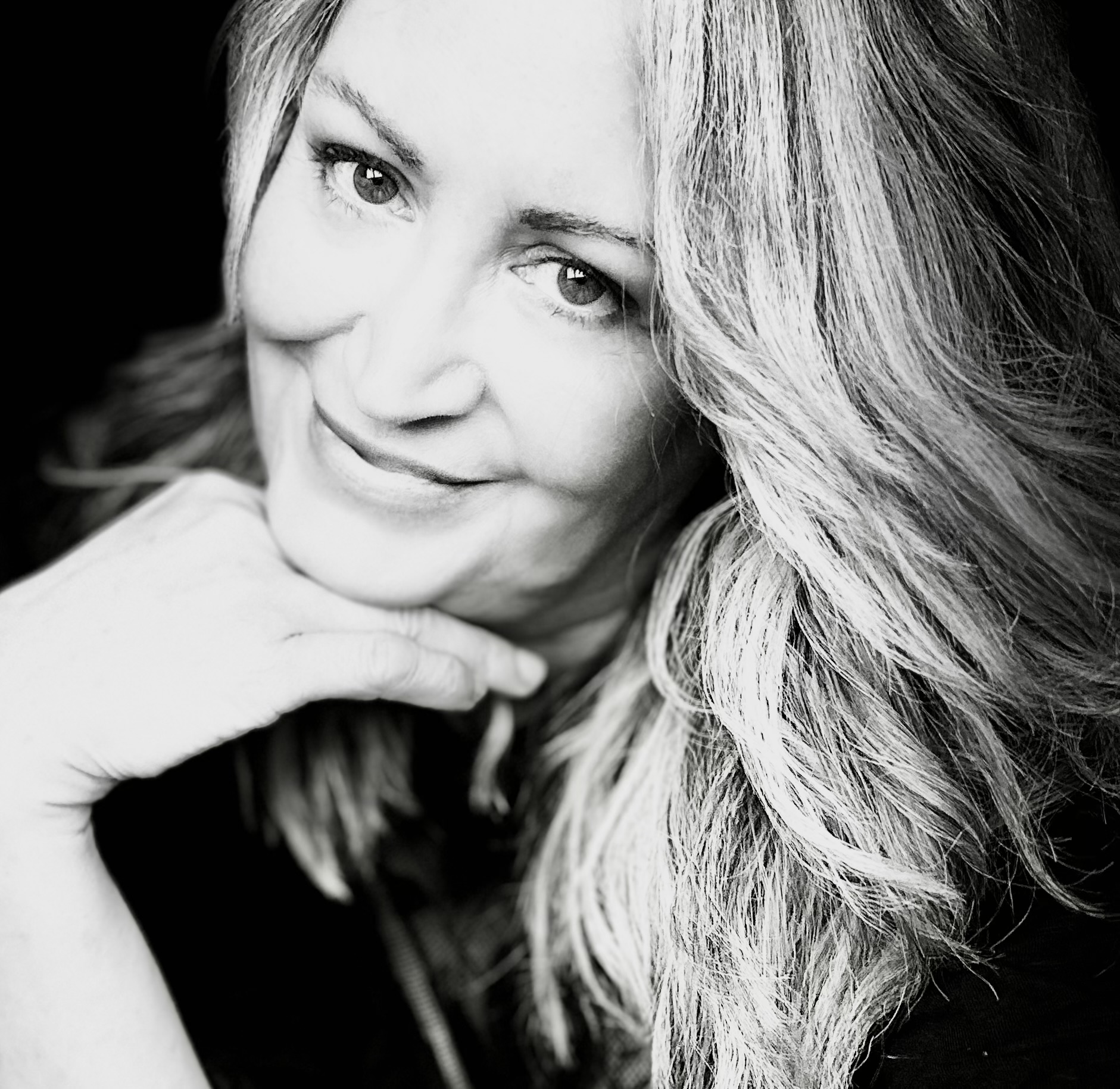
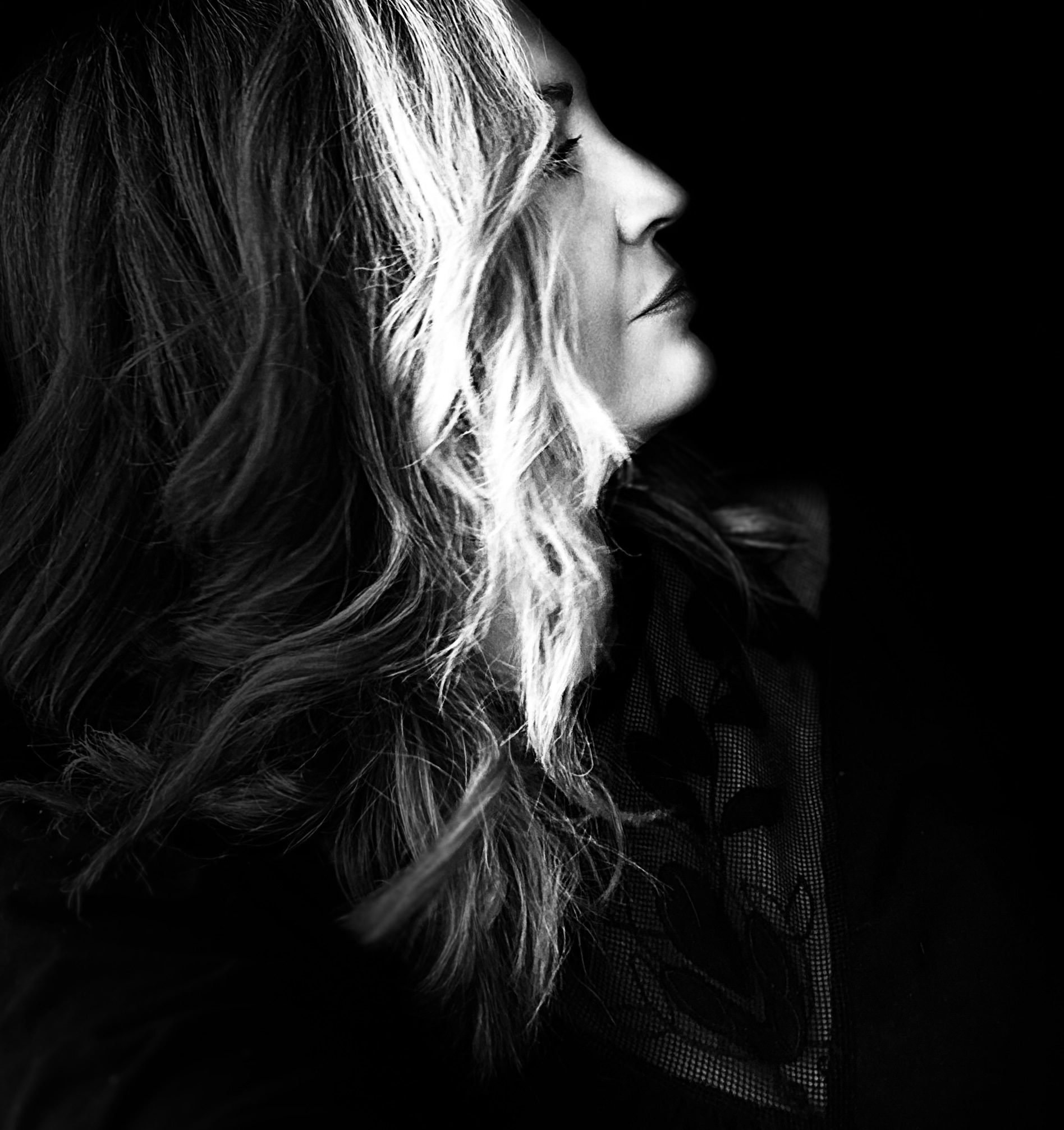


© Christina Cummings 2024
The Grand Array
16th October, 2024
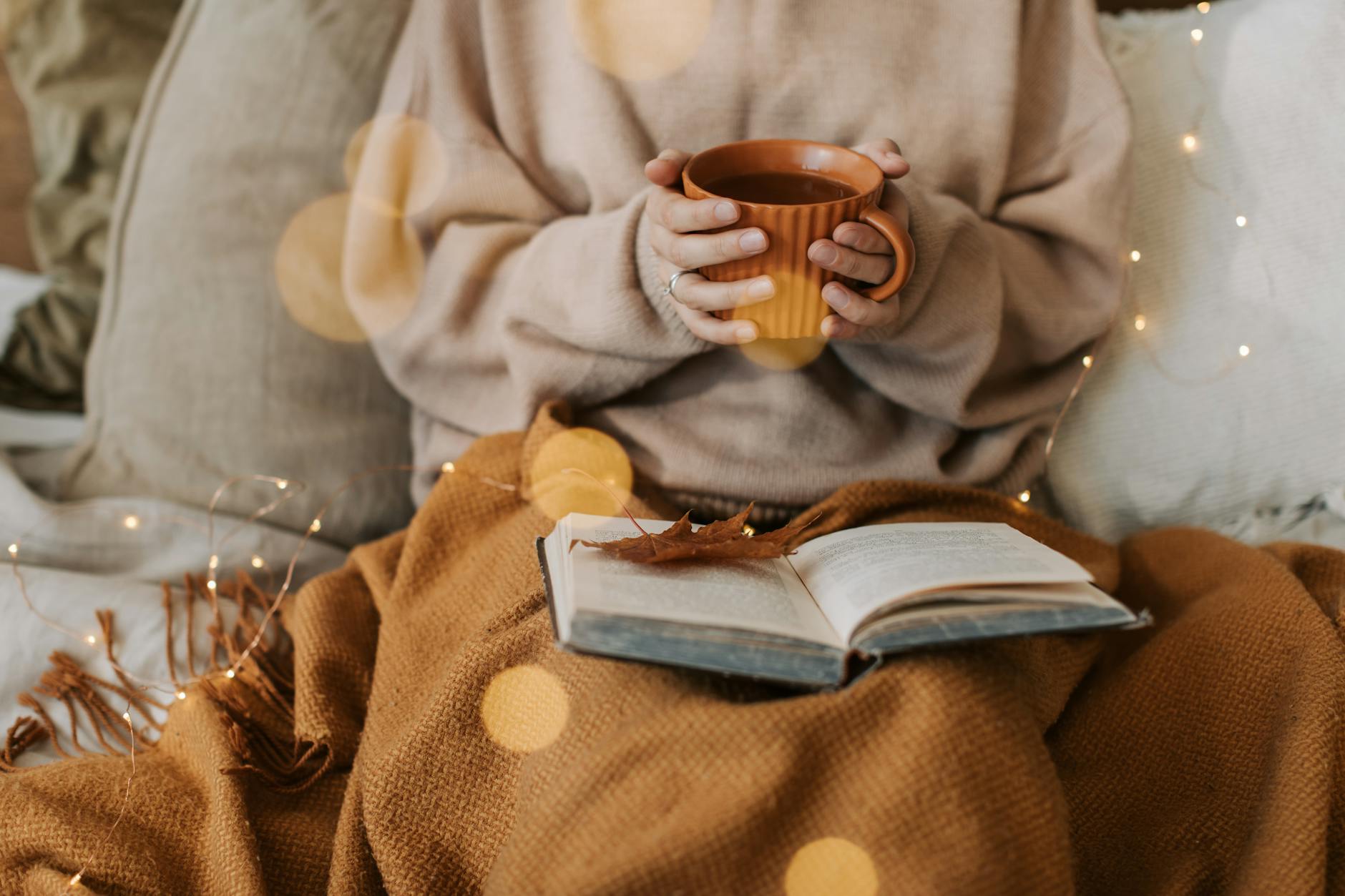
Rainy days call for comfort; hot chocolate and a blanket, and a favourite poem to read within its soft embrace.
EVERYTHING IS WAITING FOR YOU, by David Whyte
Your great mistake is to act the drama
as if you were alone. As if life
were a progressive and cunning crime
with no witness to the tiny hidden transgressions.
To feel abandoned is to deny
the intimacy of your surroundings. Surely,
even you, at times, have felt the grand array;
the swelling presence, and the chorus, crowding
out your solo voice. You must note
the way the soap dish enables you,
or the window latch grants you courage.
Alertness is the hidden discipline of familiarity.
The stairs are your mentor of things
to come, the doors have always been there
to frighten you and invite you,
and the tiny speaker in the phone
is your dream-ladder to divinity.
Put down the weight of your aloneness
and ease into the conversation. The kettle is singing
even as it pours you a drink, the cooking pots
have left their arrogant aloofness and
seen the good in you at last. All the birds
and creatures of the world are unutterably
themselves. Everything is waiting for you.
QUOTE: “Human beings seem to carry a sense of anticipation with them wherever they go, sometimes it is in the form of dread, when we feel we are not equal to what we find, sometimes it is that rare sense of an about-to-happen joyful meeting. In the extended disciplines of silence we start to see that actually, everything is also anticipating us, everything is trying to find us, everything is looking and trying to see our essence. The bringing together of these interior and exterior forms of anticipation creates a radiant identity that lives at a vibrant and conversational edge and that enlivens everything and everyone we touch and see”.
~ David Whyte ~
‘Everything is Waiting for You, from EVERYTHING IS WAITING FOR YOU, Poems by David Whyte
© David Whyte / Many Rivers Press
Drastic Turn
11th September, 2024
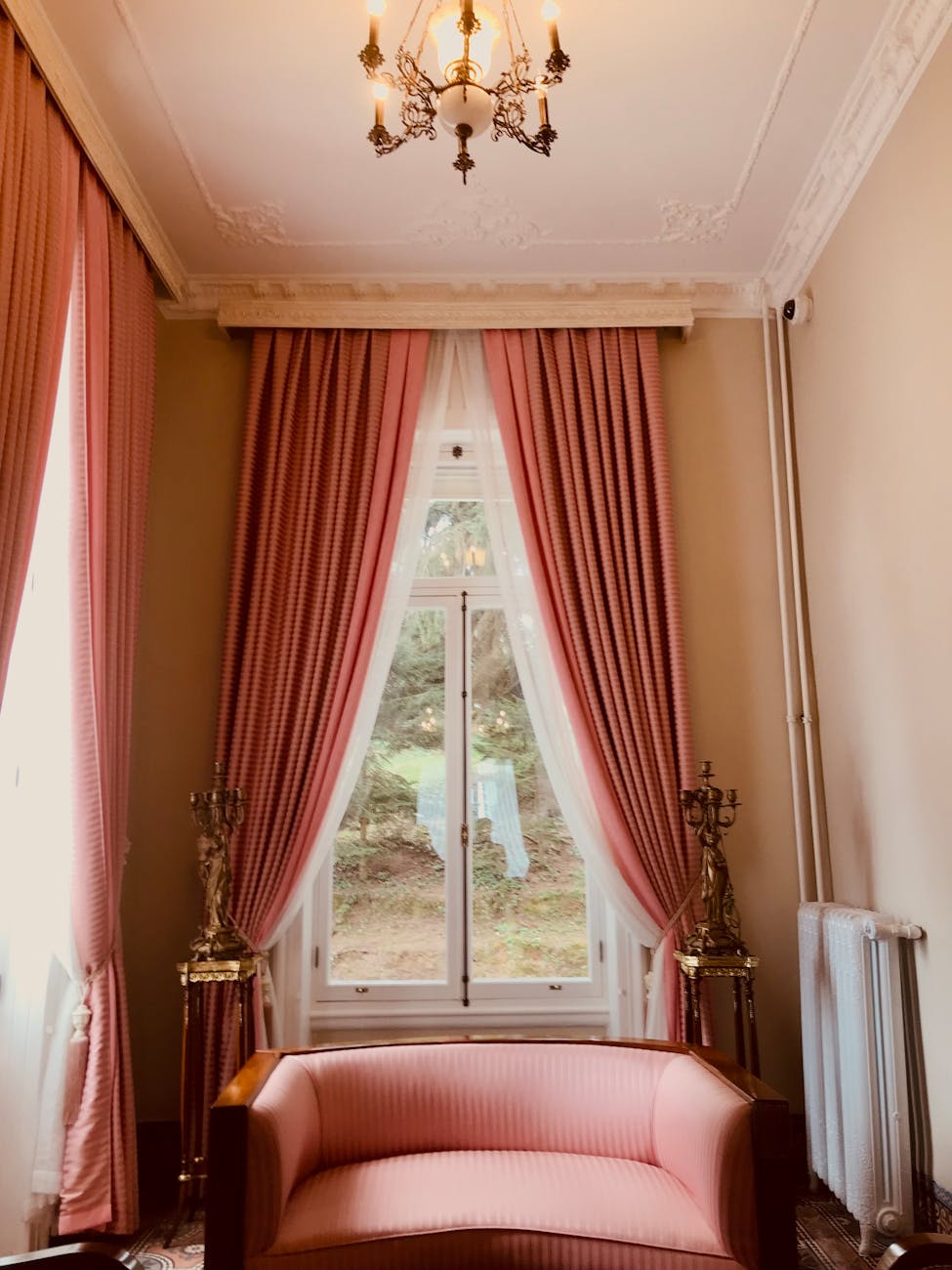
This is the start of a story, inspired by one of the interactions I had while doing my day job. The character is based on a patient, (who remains anonymous), whose life had taken a drastic turn.
Excerpt, Chapter One
Bone broth, on the hob, simmers, like a marrowy-syrupy diffuser. Even the pink drapes in the back rooms upstairs seem like they might taste of lamb. A fire, set with kindling, but not yet lit, layered with the folded sheets of a free newspaper, waits until sundown. The formulaic headlines of football scores and tragic world affairs interlock senselessly, mere numbers and letters of the alphabet now. And in any case, who reads the papers anymore? Old news is old news.
Over by the bay windows, a tired wasp struggles to comprehend glass. And outside through a sideways kind of rain, and failing light, there at the furthest end of the garden between the shed and the laburnum tree you can just make out the pond. Even at this hour it looks a baby-green, but maybe not as innocent. The tap drips so that the granite sink, cave-damp, gleams. Laundry hardens on the indoor rack. Oh, and there’s me; stood alone, in the entrance hall, holding a cutting board and a sharp knife. That’s all there is, nothing else to see here. That’s right folks, move along… except… please don’t! Please stay. We’ll all be the wiser, if we stop a while, just long enough to set the world to rights.
I’d offer you a drink~ take your pick: I have black tea or chocolate-flavoured almond milk. Or whisky, enough to go round. Drag stools or cushions over to the grate; I’ll be lighting it soon (I have logs to last ’til Friday, but no more after that). It might appear that times are tight. But there’s a lot to be thankful for. For one, at least that poor lamb didn’t die in vain. It provided sustenance for Sunday roast, (our Last Supper). And a round of sandwiches teamed with a peppery watercress crunch. Even now it yields a grade one stock for sweet potato soup; hence the cutting board. The sharp knife, still in hand? We’ll get to that in a moment. For now, watch as the long match catches the puzzle page and small flames flicker. Hear the sap crackle and then the roar; a fire craves an audience. Let us all relax and sip our drinks. Before I forget, here are some snacks; olives, still with their stones inside and blue-veined cheese. Right, if it’s okay with you, I’ll tell my story first…
Late summer always surprises. Before the first leaves fall, we are silently grieving the loss of childhood summers, all over again, wishing we’d made more of the evening’s light and the balmy afternoons, when even the crows were still. There’s an anxious claw somewhere deep in the pit of our stomachs; the dreading. Not so much now, perhaps, but from our ‘other life’, where taunted by the ‘back to school mode’ our mothers seemed intent upon, we mourned.
Ah, and the shoe fittings! The toe-curling public shame of it. Forced to make excruciatingly awkward laps of the shop, shuffling between full-length mirrors and racks of high-heeled boots, we lumbered, knock-kneed, in what felt like two canoes. Or was that just me? Even as we watched from the corners of our eyes, our mothers unpick last year’s trouser hems, we tried to ignore the impending curfews of the looming term. But herded, like hapless calves, into a corral, we had little choice. Autonomy is a false promise. But what has any of this to do with anything, I hear you ask? It will all make sense, you’ll see, just hear me out…
© Christina Cummings 2024
Forevermore
31st August, 2024

We park up in a place with a view,
as is our habit,
and toast the silver waves with bitter beans.
Van-snuggled, we wait
until the sky turns pink.
Then you grab your camera
and we shuck our clothes.
And we run,
shorewards,
like children spilling out of an old school gate.
The sky is violet now, streaked with orange ribbons
and we are dancing shadows from a J.M. Barrie book.
Over by the rocks, where you set it up,
the tripod waits like a patient father,
’til the supper-call-sun casts one last fiery glow,
making us molten
and drug-red wild-eyed,
And then, quite suddenly,
you stop.
And taking my left hand in yours,
with presciently consented surety,
you adorn me with forevermore.
With your promise.
With your love.
With… you.
© Christina Cummings 2024
Gallery Glimpse
28th August, 2024
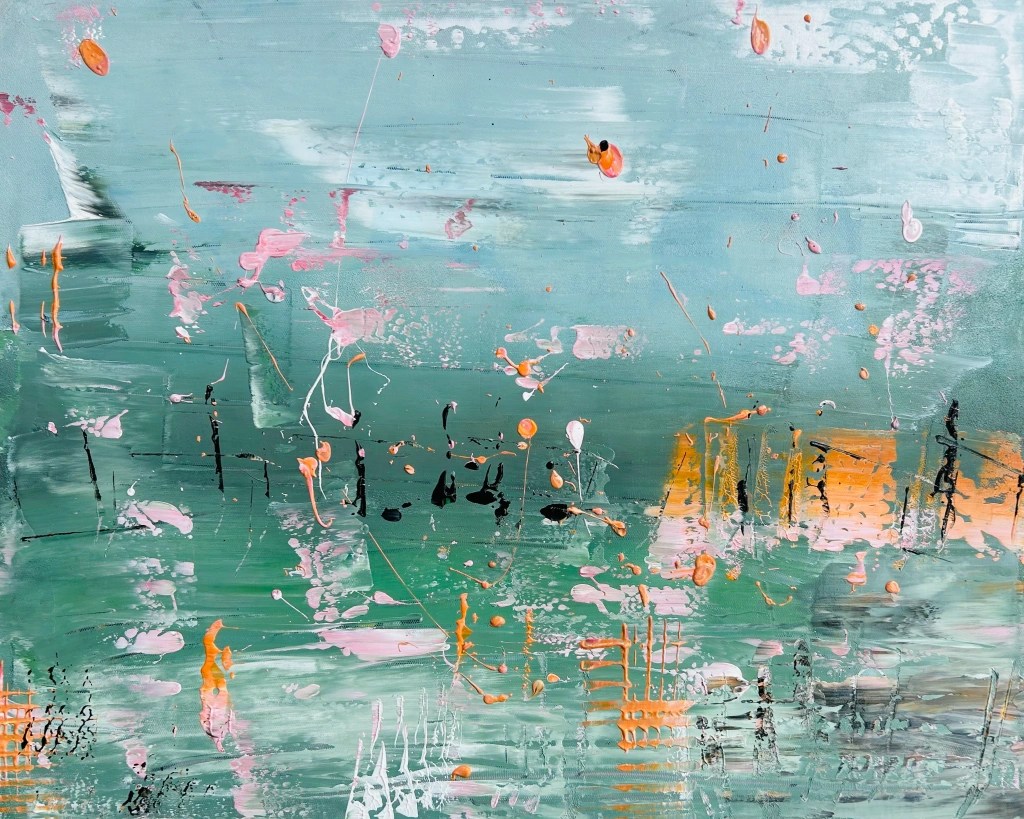
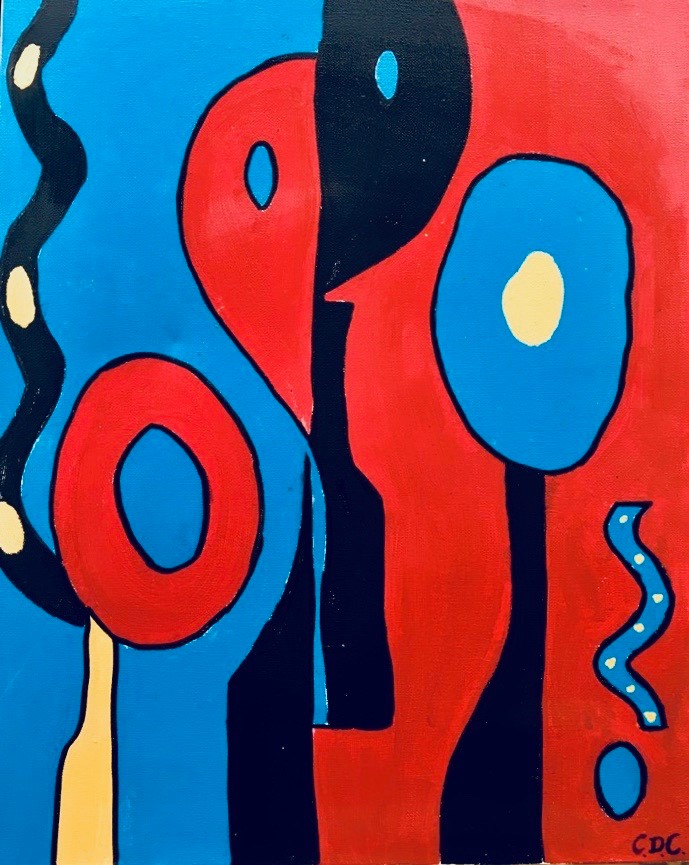
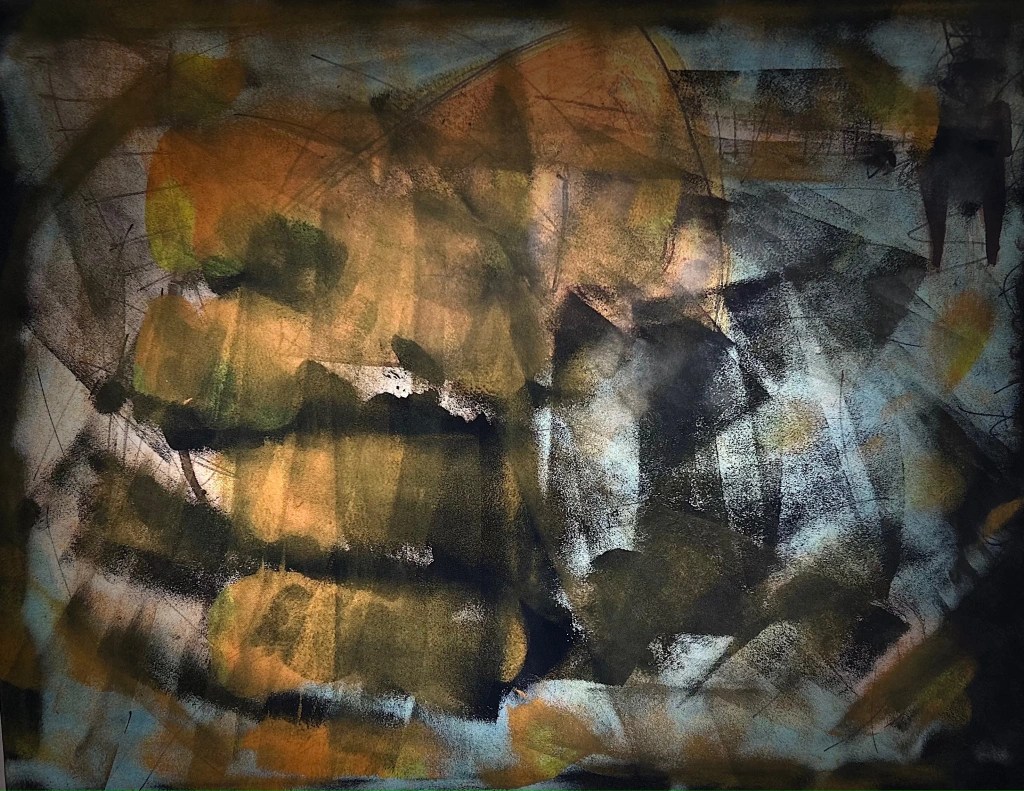
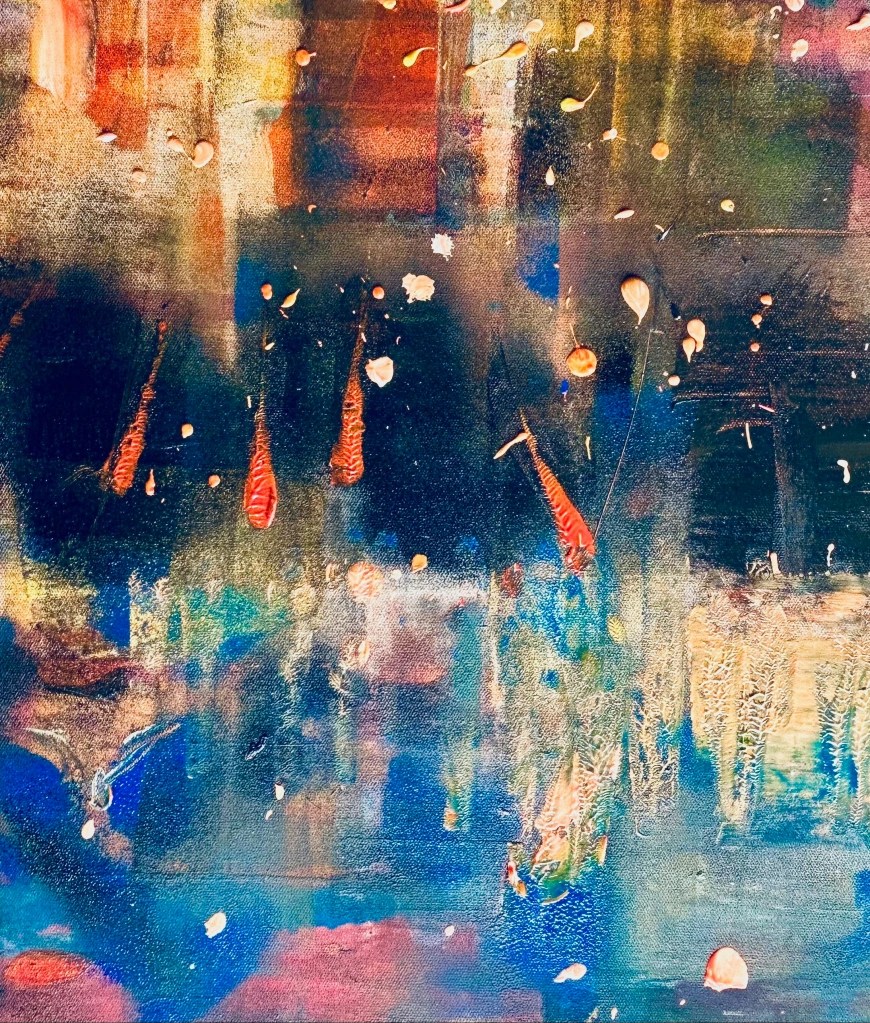






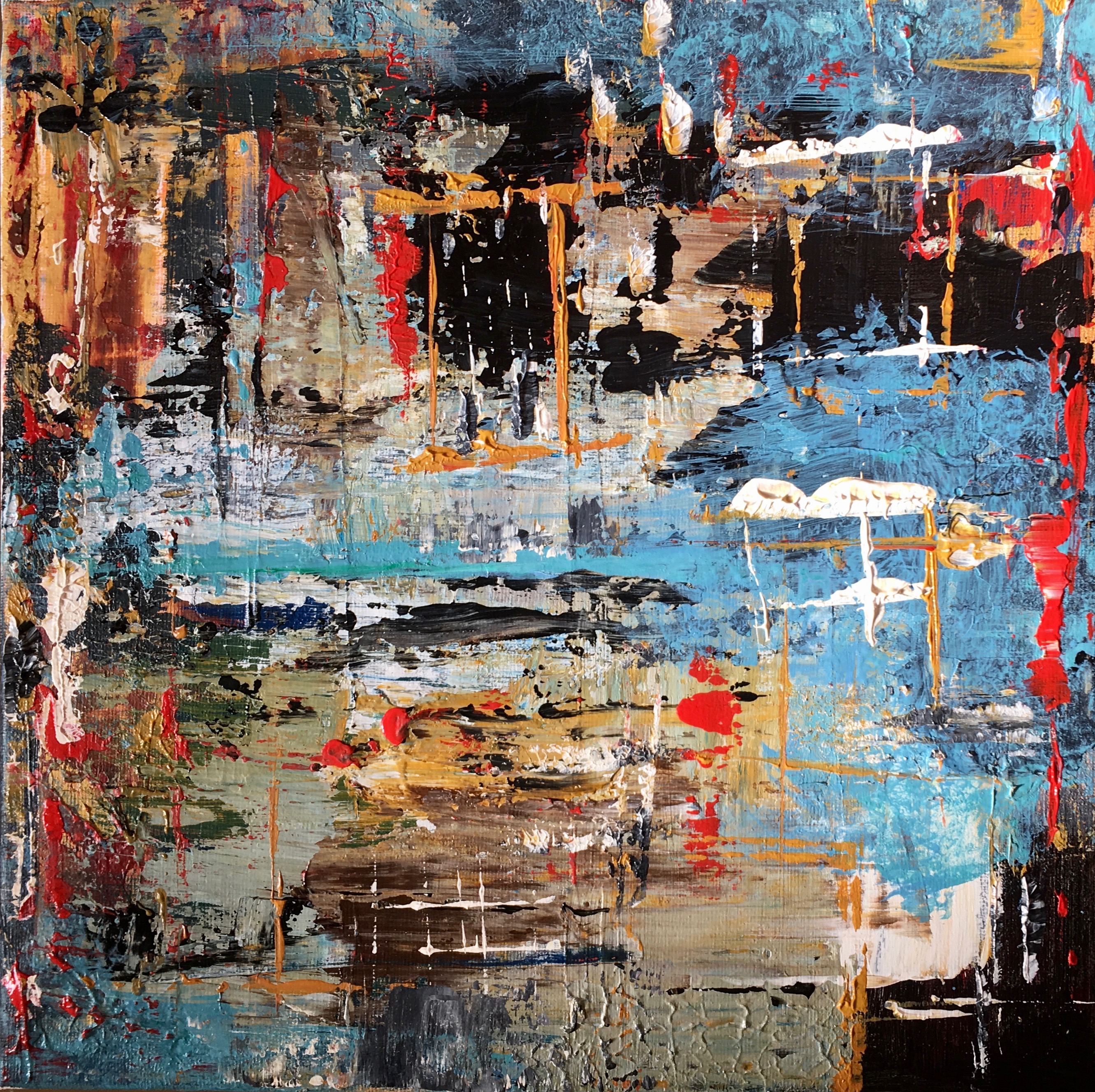
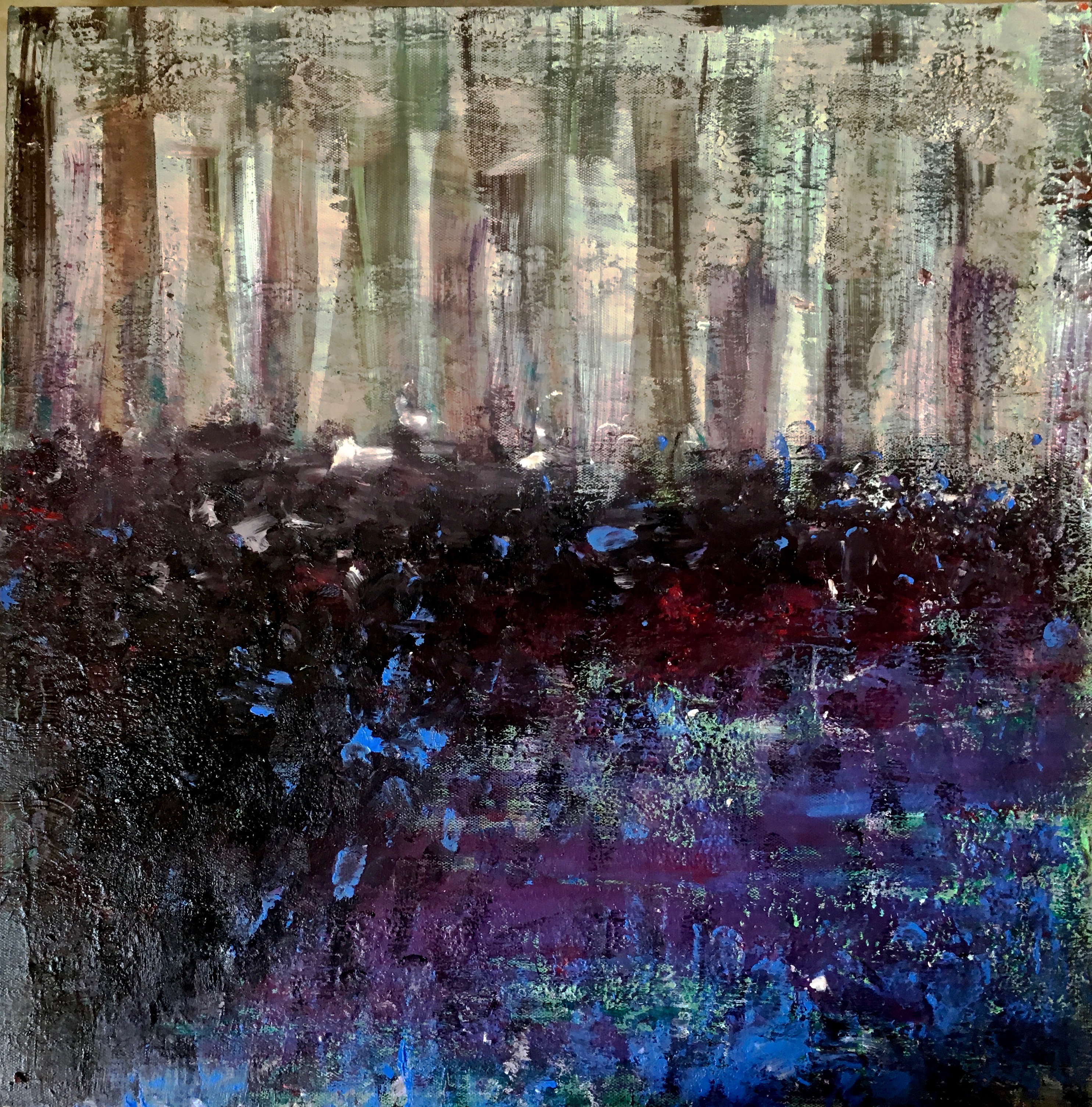
Late Summer Stroll
24th August, 2024
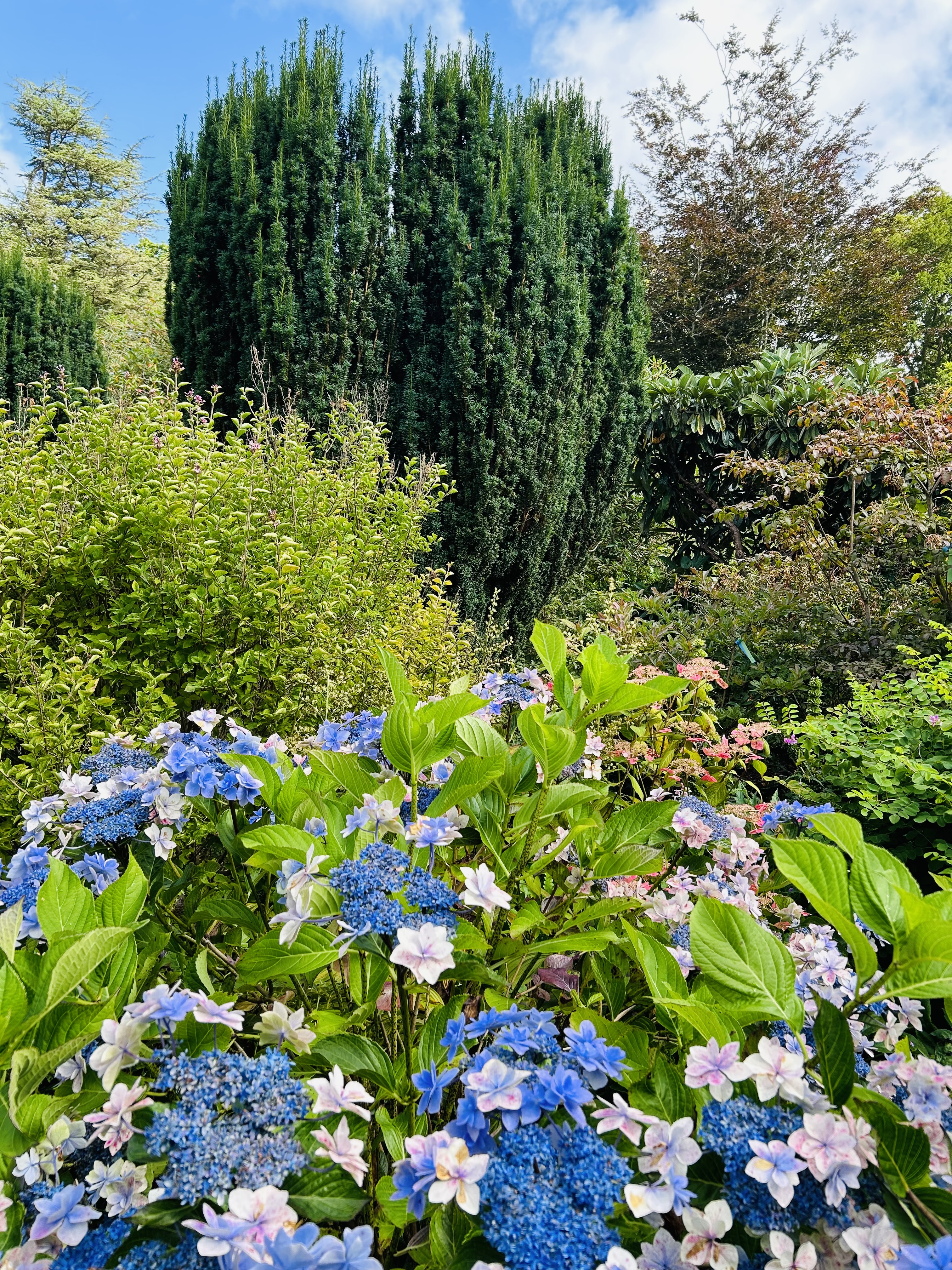
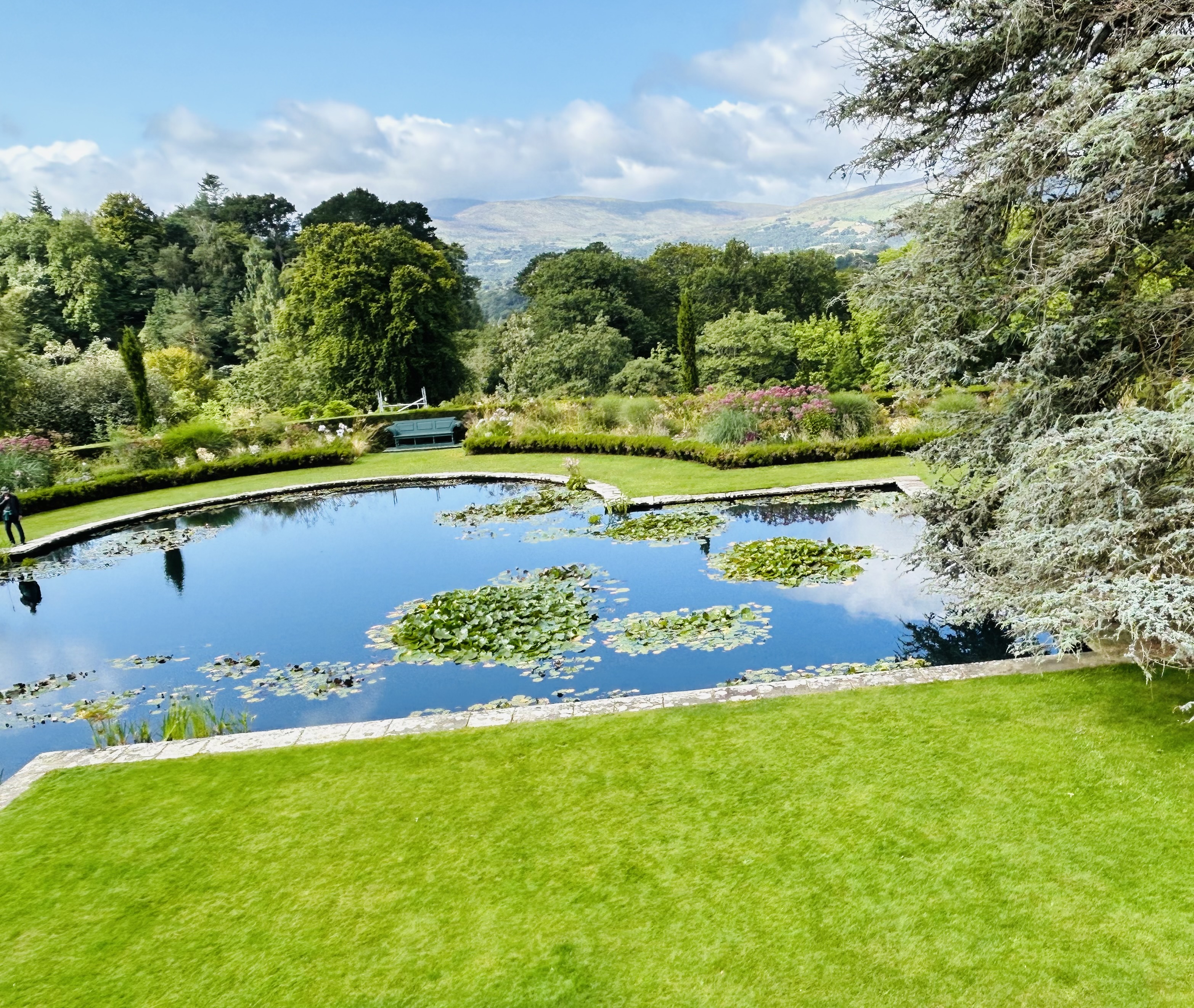

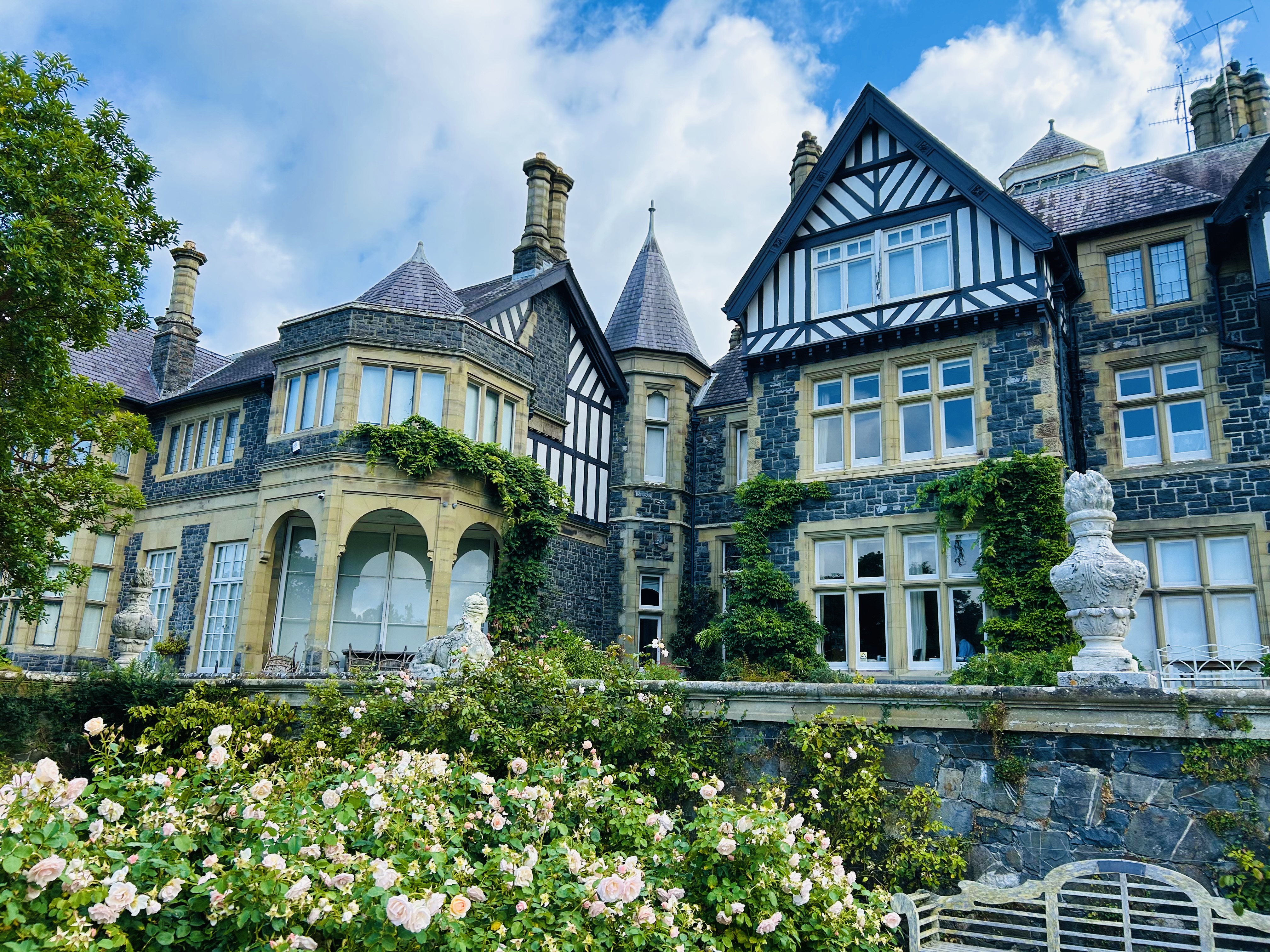
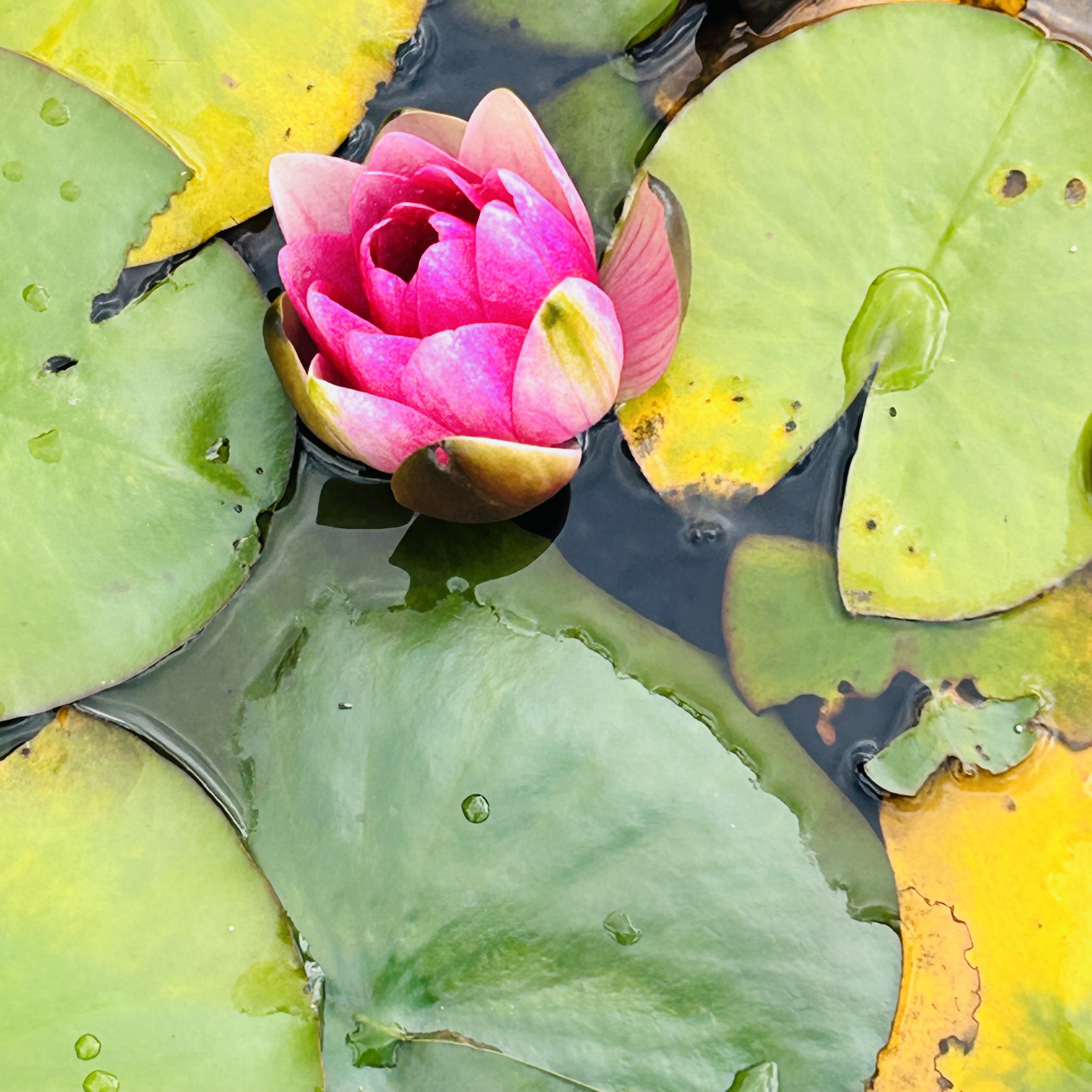
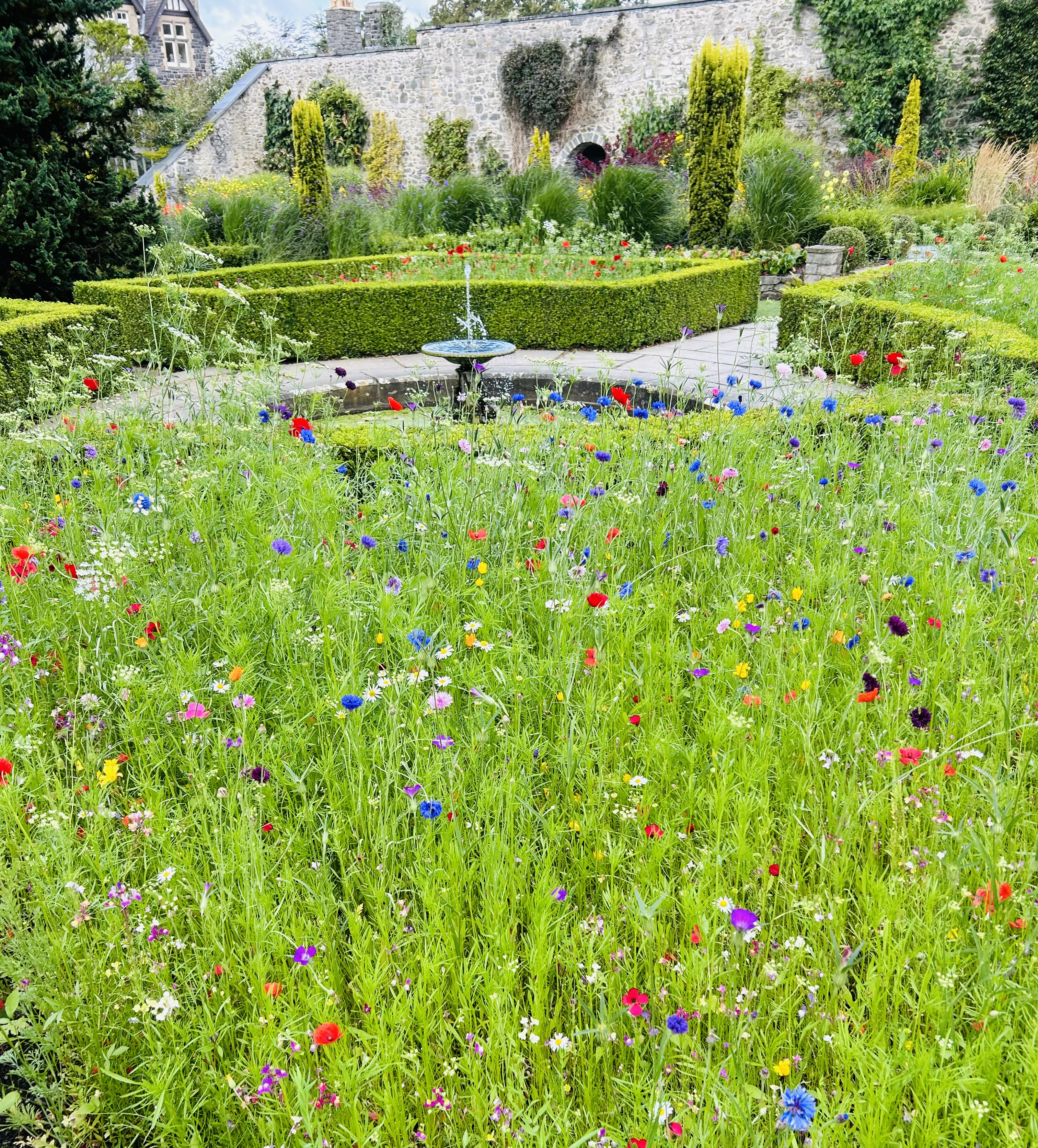
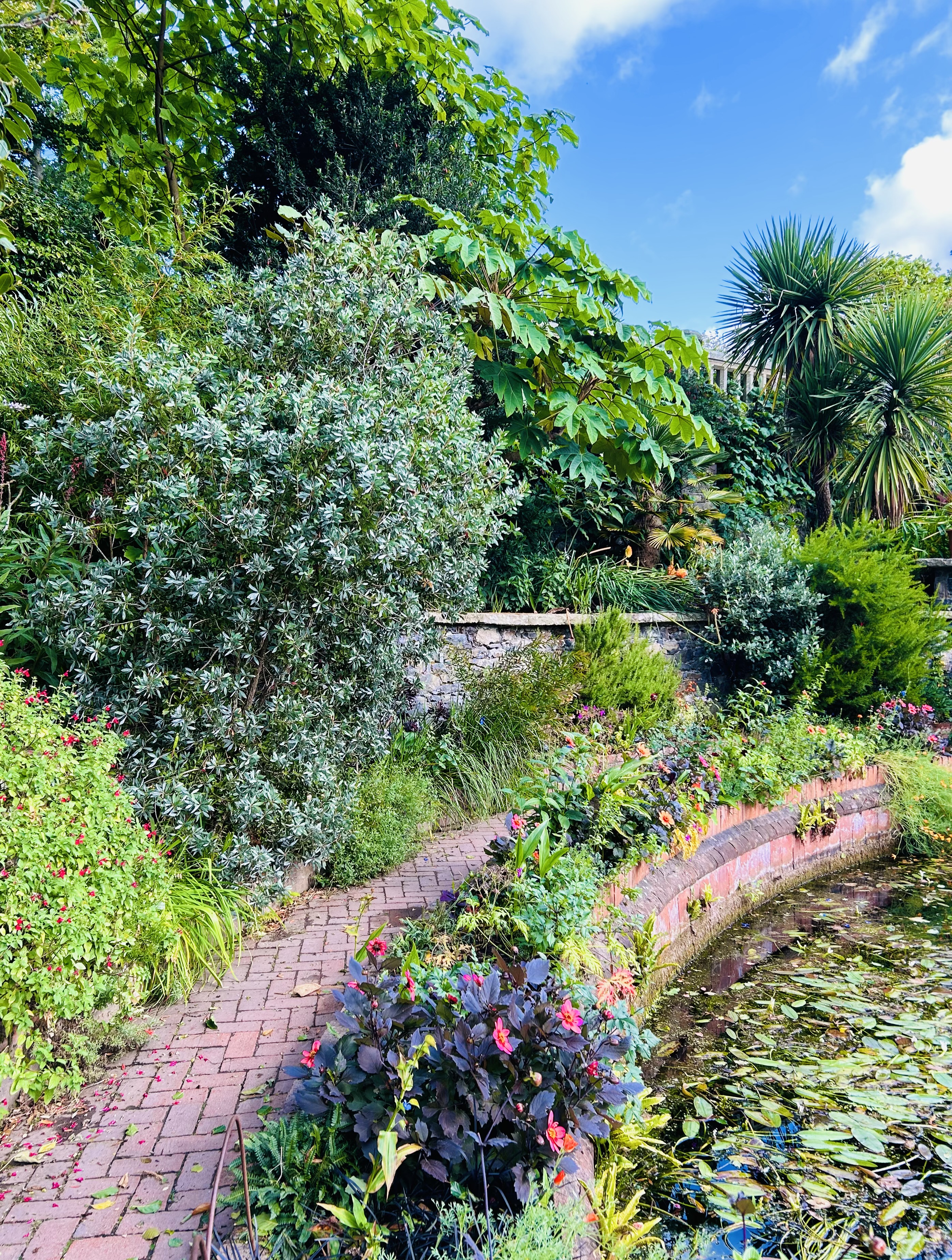

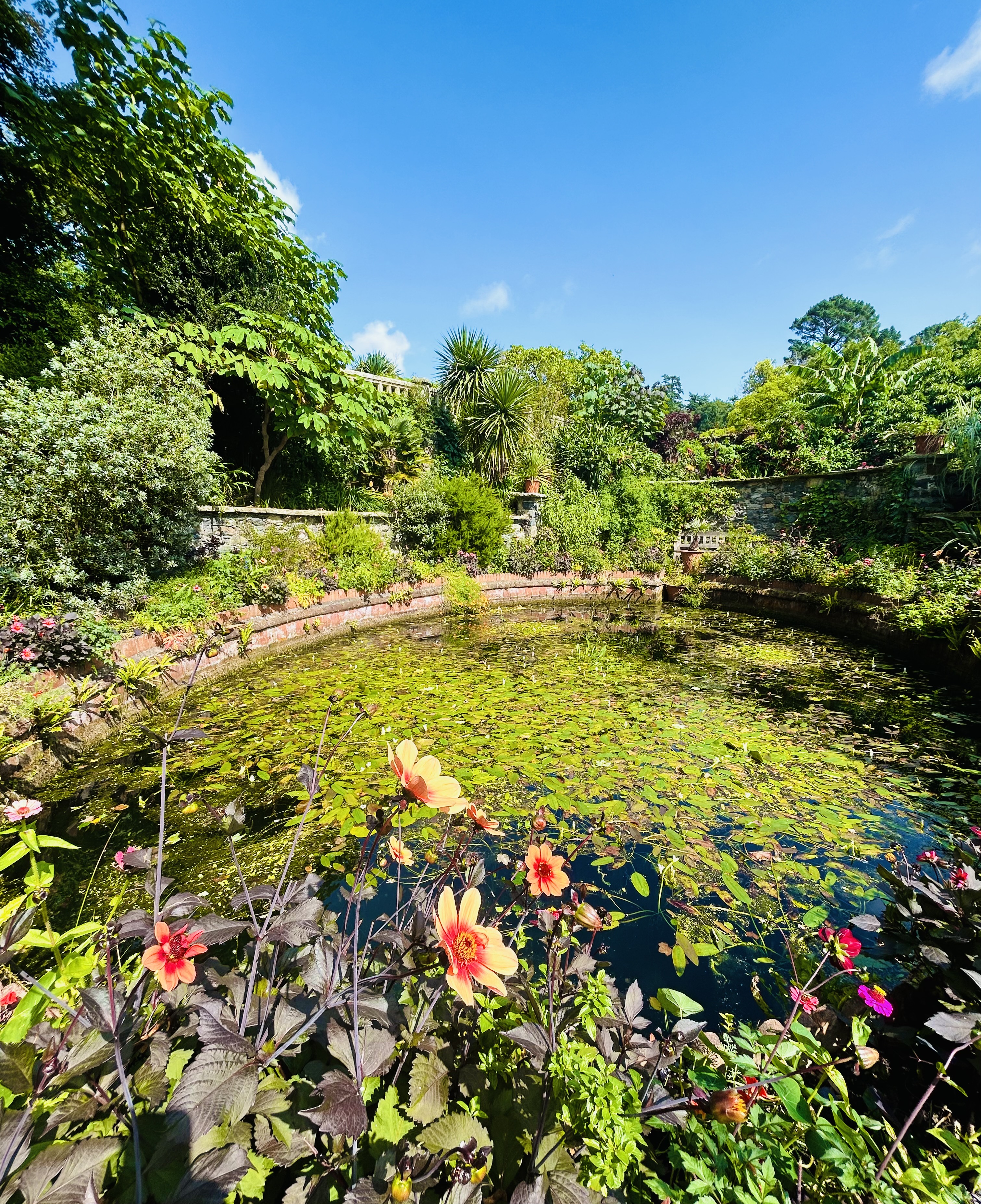
My recent visit to Gardd Bodnant, near Conwy in Wales, was a real joy. Renowned for its Italianate terraces, its tropical dell, the many varieties of rhododendron and a gold laburnum arch (of late spring), it’s the sort of garden that pleases even the weariest of souls. And it’s full of surprises too, in the shape of nooks and streams and meadows and juxtaposition, where wilderness and water fountains make a perfect marriage. The sloped pathways wind their way with gentle torque, and splice just beyond the brows to create meeting points. One can quite easily picture the well-heeled of centuries-past, who would meet for leisurely walks. Here, secrets might be told; hands clasped, breath fast, eyes aflutter. Lives unearthed. And with that, skirts might sweep away, like the Swamp Rose Mallow on a westerly breeze. And top hats tipped, knowingly, as the trees, turning their blind leaves to the timely gust, would rustle so loud that even the Phlox might scold them.
© Christina Cummings 2024
However Happy
20th August, 2024
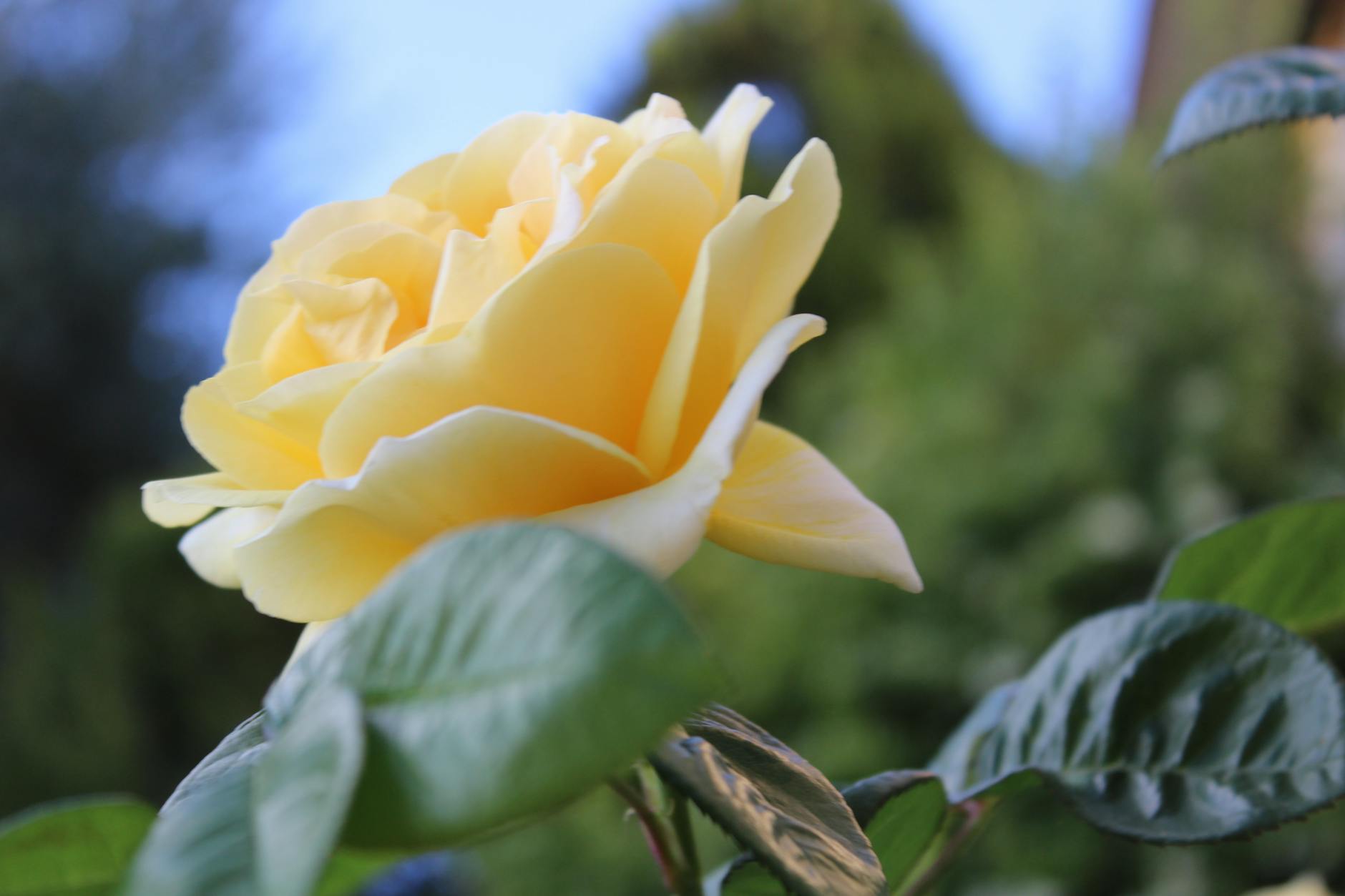
One of the things I just love about writing is that no matter how I’m feeling, or what’s currently going on for me or in the wider world, I always have a sanctuary, a refuge, a place of my own where I feel safe. And not just safe, but strong too. I think that’s part of why I feel compelled to write, because it takes me out of the fears I have, the scared narrative that has governed my life. Like the chicken and the egg analogy I’m not sure what came first. Did this beautiful act of release spring forth from the demons I endure, or did the demons lead me to this place?
That’s not to say I have the same feeling for my art. Painting is an active pursuit. There’s more intention, more effort. Writing, to me, is the opposite of that. It spills forth. Flows. Where art feels more structured, even in its abstract, free form, writing bleeds from a pierced vein. Yet there’s an equality to both, where commitment to the canvas or the page takes courage.
There was a street along which I walked to school. It’s lined with tidy houses, each with a small, walled garden at the front. Those gardens were barometers of the means and aptitude of whoever lived inside. While a row of pampered, scented roses brimmed from one, defiant dandelions filled the barren cracks of another neighbouring yard. I recall that as I walked along, I’d known even then, even as a child, that fortune favoured the rose.
I carried a satchel, with black straps and fluorescent yellow stripes. I felt organised, by the mere tying of its silver buckles. I carried it with pride, and despite the ever present threat of ‘fear’, I felt safer by its presence, because surely purpose outsmarts randomness? As I passed by each house, I’d notice small things; a milk bottle waiting to be rescued, its foil lid bulging as the cream top warmed, a hastily discarded bike, its front wheel stuck at odds with its frame, like a fallen horse struggling to get back up. Even then I was taking in the world in such a way as if to be able to understand things I needed to describe them, not just accept that they were there.
Language is the most powerful force in the universe. Consider the words we use. Consider our actions. Because these are the things that will come to define us. These are the things that will shape our lives. There’s a quote by P.D. James, that explains why writing is my saving grace: ‘Nothing that happens to a writer ~ however happy, however tragic ~ is ever wasted.’ And that’s the take away message here, I guess.
© Christina Cummings [Republished 2024]
Needs of Time
11th August, 2024
Another little excerpt from Until You by Christina Cummings:
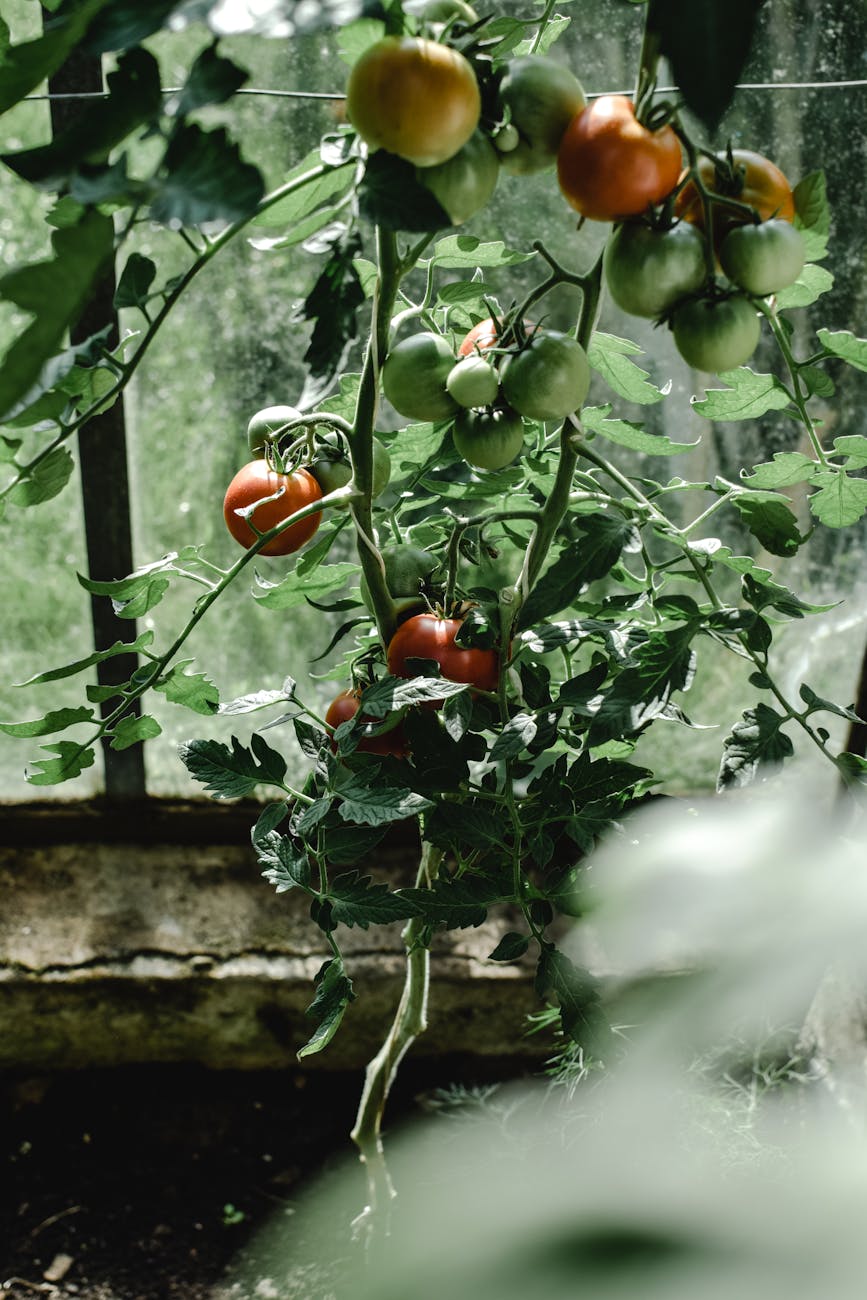
At the far end of the yard, before the lawn slopes seawards, the greenhouse is a quiet beast, as though it has hunkered down in submission to digest its prey. And there’s something of a menace about the glass panes and the rusting tools that lean jauntily upon the wooden slatted shelves. And pots, half-filled and sprouting, abandoned by the fickle needs of time, seem to grow new kinds of things in a Frankenstein’s monster kind of way. Gone are the rows of tomato plants; the fast-ripening Pixies and plum-shaped Super Romas. And the Tigerellas, known as Mr. Stripey because of their yellow and red bands, are just a memory on my taste buds ~ their unique tangy flavour stokes my senses even now. When this garden was a kept one, regularity was key. Schedules for watering were strict and the roof vents were set ajar to prevent such diseases as blossom-end-rot and leaf mould. I recall the slow evenings of summer when we’d fill an old washing-up bowl right to the brim and carrying it as though the Crown Jewels were resting on a satin pillow, we’d return to the kitchen to tip them out into the granite sink for sorting. And with that, the greenhouse might let out a sigh. And in the last of the light, it might gleam with purpose.
© Christina Cummings
Touch of Magic
22nd July, 2024

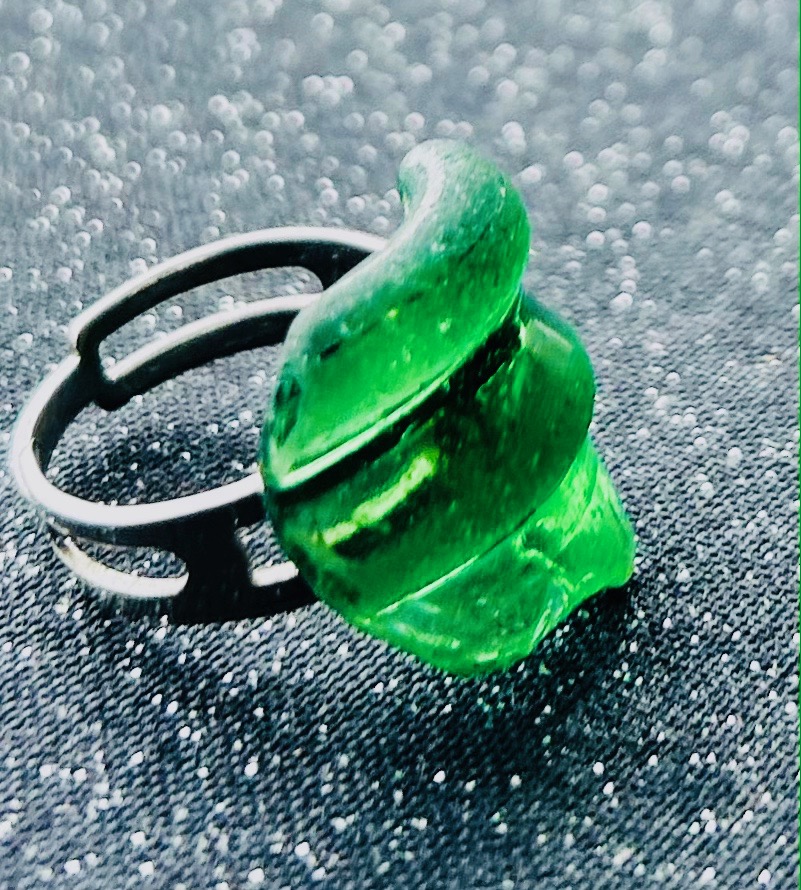

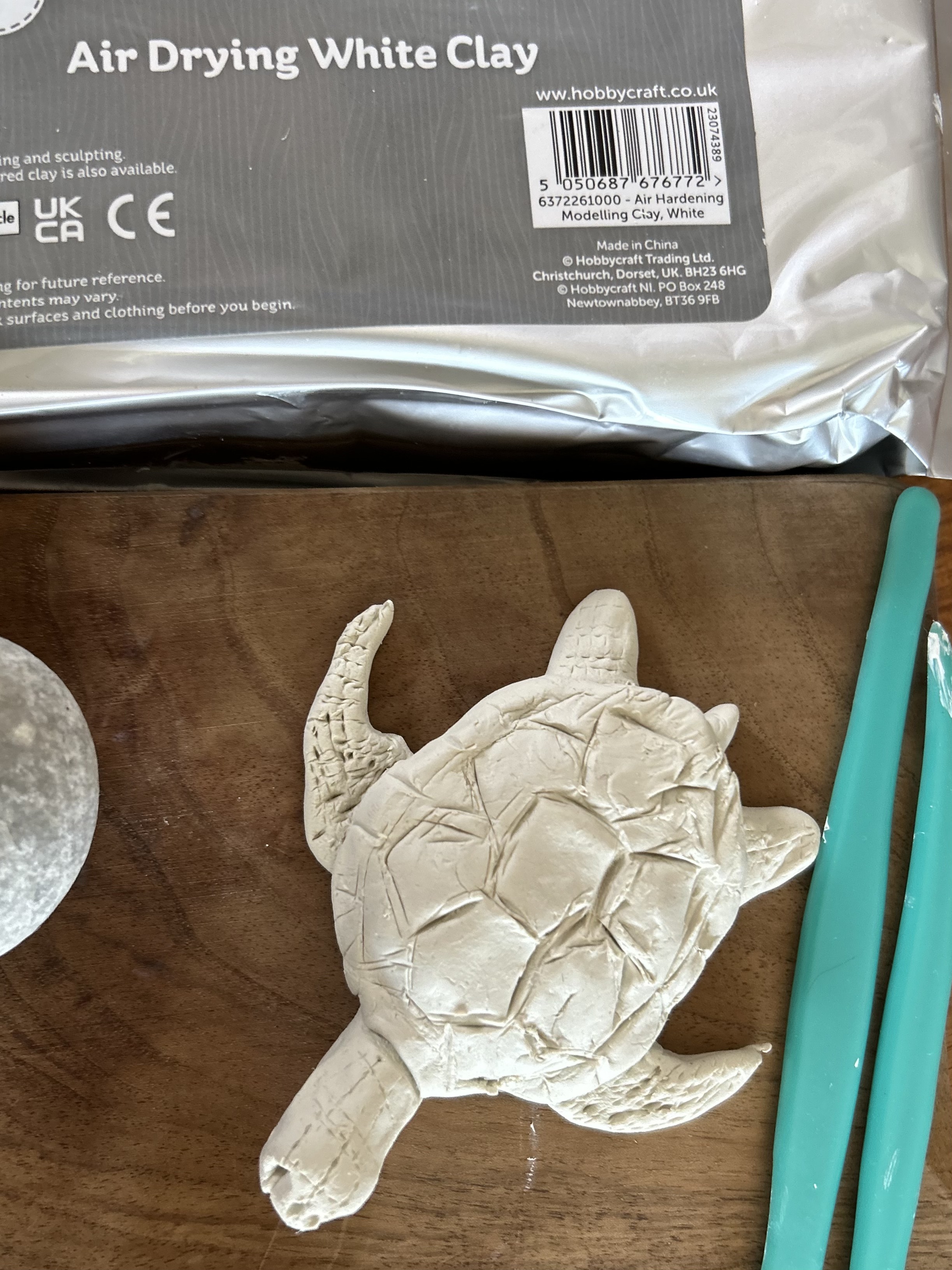


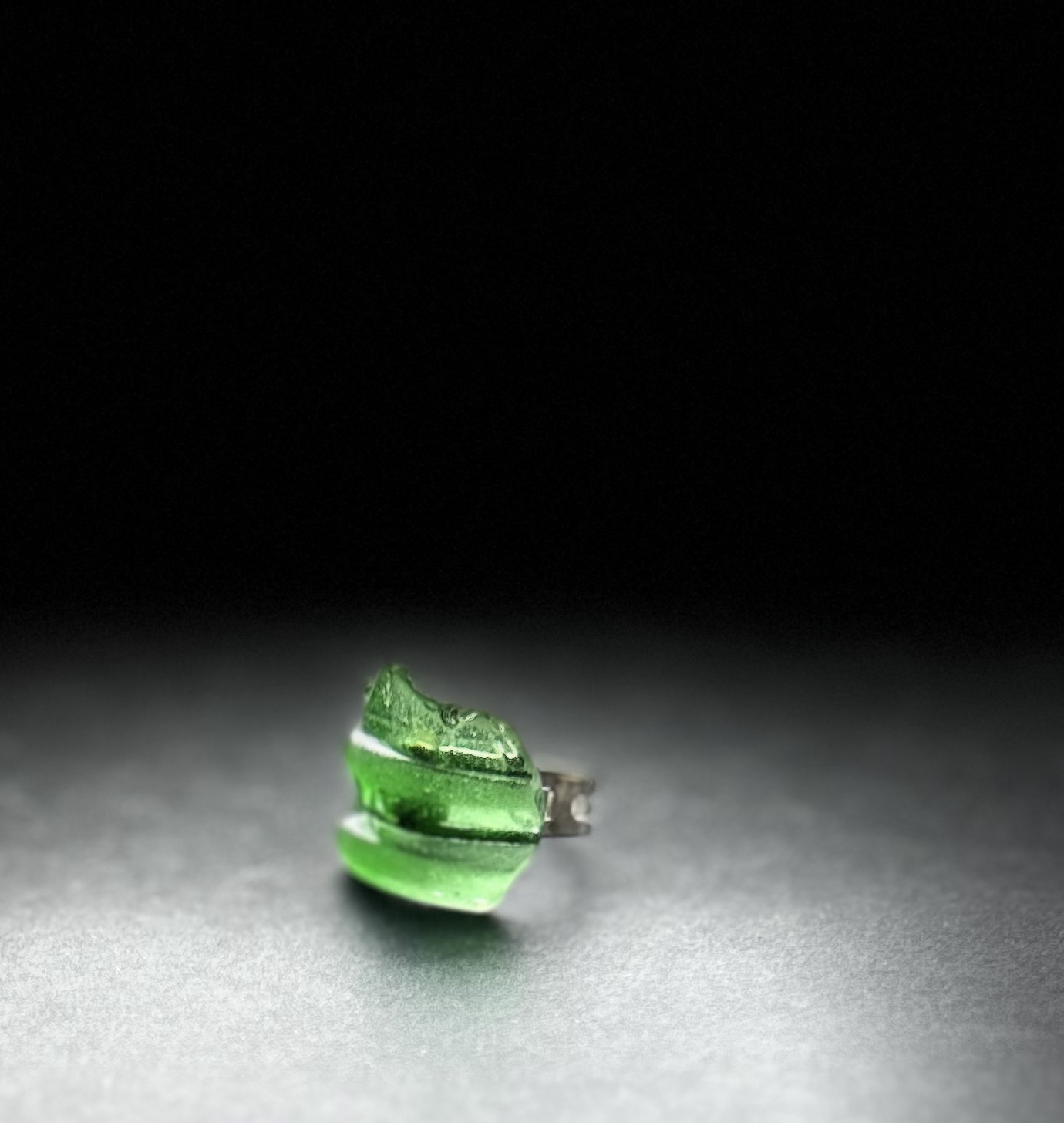

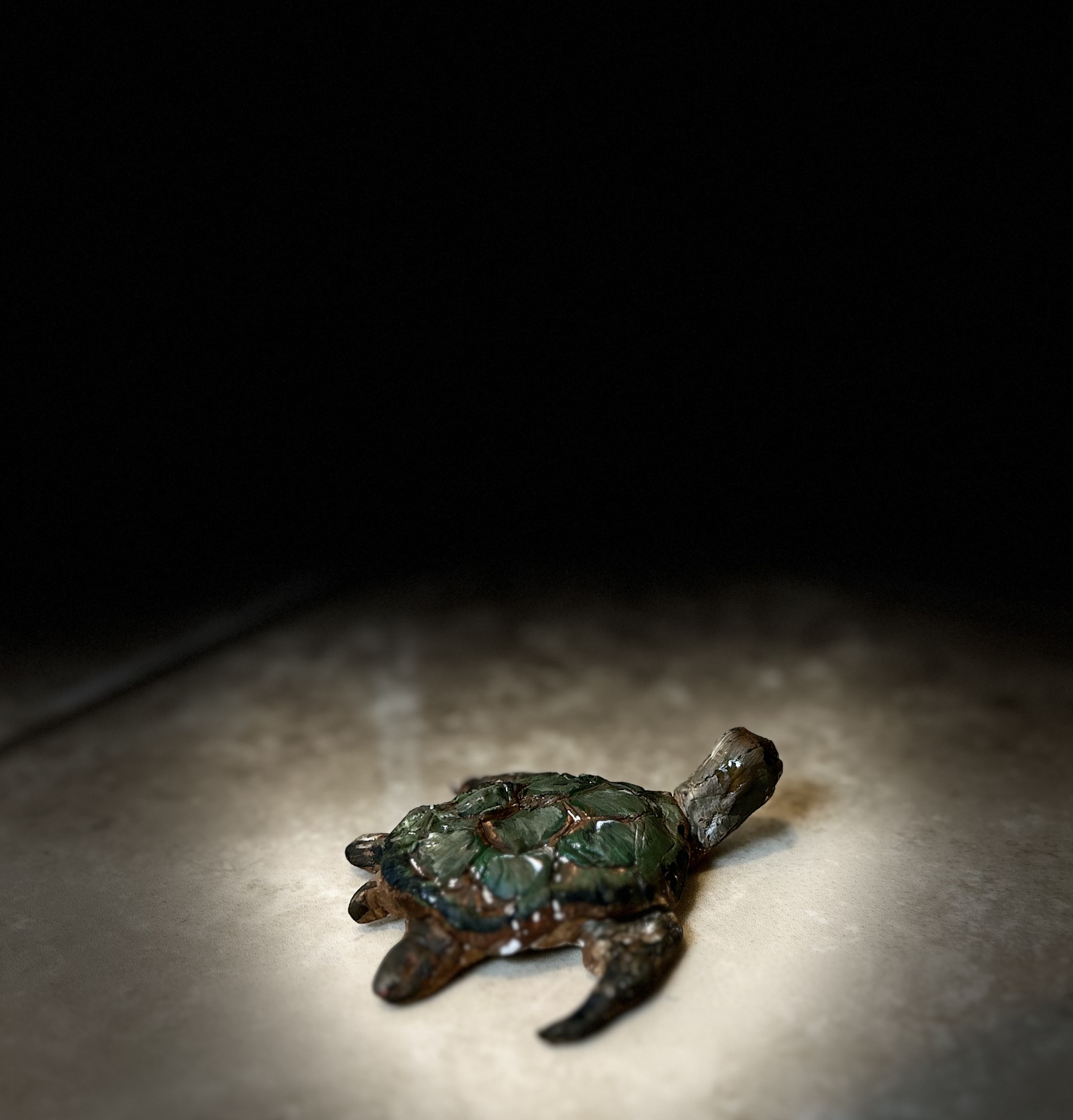
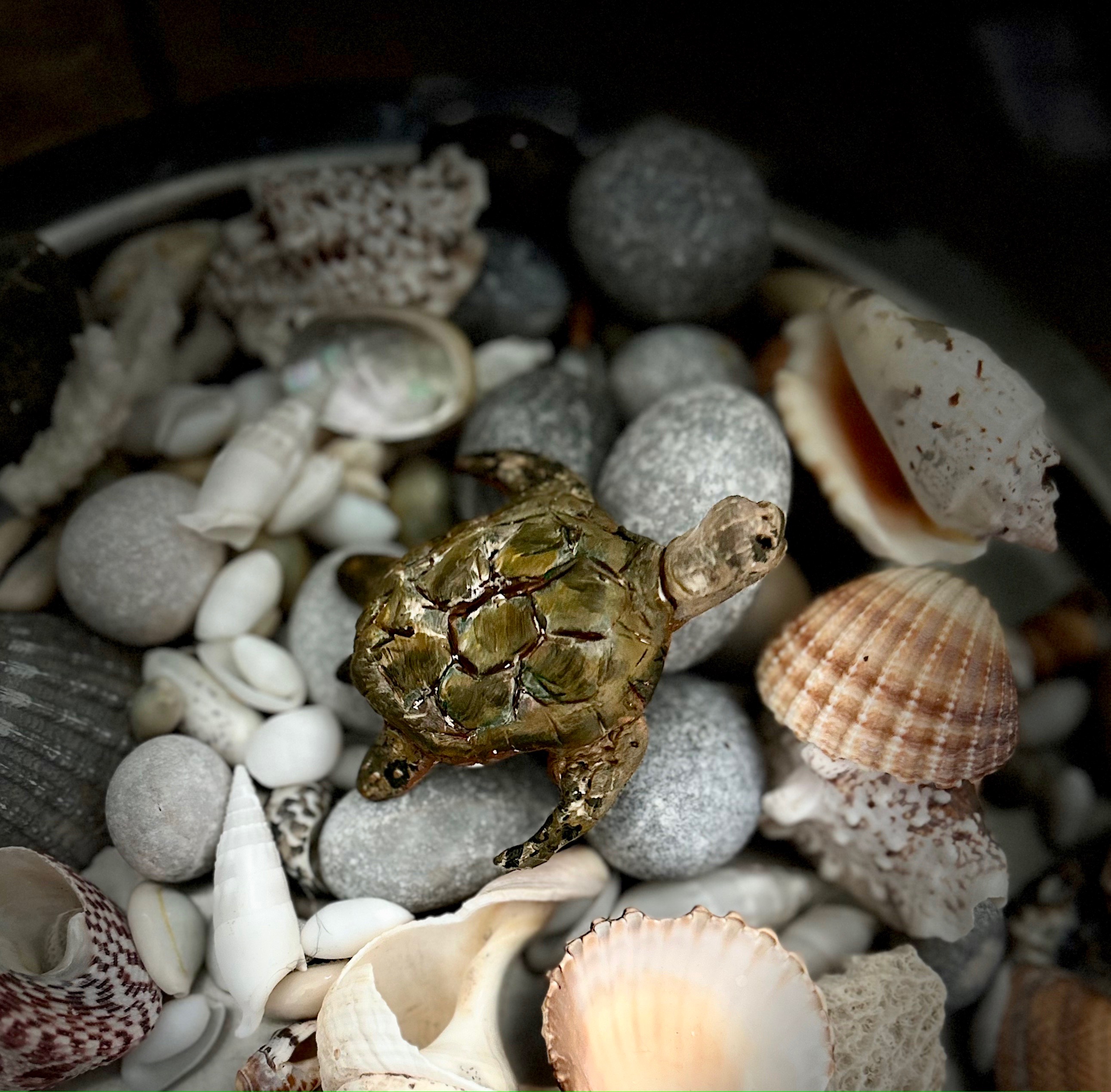
I can be methodical. When the universe aligns that is. Mostly I do things on a whim. Mostly that’s how I’ve lived my life, often times with brutal consequence. Sometimes, though, whims have brought with them a touch of magic. Inspired by my recent swim with a wild sea turtle ~ quite a graceful creature, floating almost, to the surface for air, then foraging for kelp, happy to share this little moment with me ~ I got some clay and tried to conjure a resemblance; I fear I did not do it any justice! But later, while the paint dried, I re-purposed some sea glass I’d found amongst the grains of sand along the shore. The neck of a beer bottle, perhaps, not quite worn by time, yet curved perfectly, curled like the greenest wave ~ now wrapped around my finger, like I took a piece of ocean with me.
After all these Years
19th July, 2024





Time keeps me on my toes, grounds me to the inexorable decline of youth. It is a reminder that all days pass with a reluctant sigh. Succulence will bow out, leaving some kind of other thing, like wisdom. Or wistfulness. Or the dying husk of certain dreams. I’ll take that. I’ll gather up all my memories, and carry them, in tender happenstance; swinging a wicker basket as I rove the lanes of yesteryear. Some of them I’ll wear as a wreath of shells about my neck. Or tuck them, like flowers, into the strands of my hair. And I will love all that came my way, like a brave bird in a storm.
Endless Dream
3rd June, 2024

A Poem by Christina Cummings.
Endless Dream
A wave must crash, no matter how it curls.
And though it might not break,
it will unfold.
It will disappear.
That is the very nature of all grand things.
Listen, as the roar spills upon the shingle-shore.
Inhale the brine.
And, over there, see with narrowed eyes,
far off, in the haze,
past seagulls coasting on the breeze,
and boats,
their sails like those in children’s picture books;
there…
you will find our endless dream,
of how we once were
and
of how you linger here,
still.
© Christina Cummings, 2024.
That Much
23rd May, 2024

‘Today I asked my body what she needed’, A poem by Hollie Holden:
Today I asked my body what she needed,
which is a big deal
considering my journey of
not really asking that much.
I thought she might need more water.
Or proteins,
or greens,
or yoga,
or supplements,
or movement.
But, as I stood in the shower
reflecting on her stretch marks,
her roundness where I would like flatness,
her softness where I would prefer firmness,
All those conditioned wishes
that form a bundle of
Never-Quite-Right-Ness,
She whispered very gently:
“Could you just love me like this?”
© Hollie Holden
Another Life
18th May, 2024
Excerpt from Until You by Christina Cummings:
It rained and rained, all the rain for a whole month, the day we went to the zoo. God, the flamingos looked forlorn in that drizzly shit. Feathers dripping, heads hung, they were not at all the symbols of Tropicana, so out of place here in the grey city, like Christmas decorations in the month of June. Yet despite the weather, there was still a crowd of wet ghostly figures shifting from cage to cage. You see all kinds of folks: the two point five children rushing ahead of strained-faced parents, the loved up couples, conjoined, oblivious, and the loner peering in at the snakes. We weaved our way through them all.
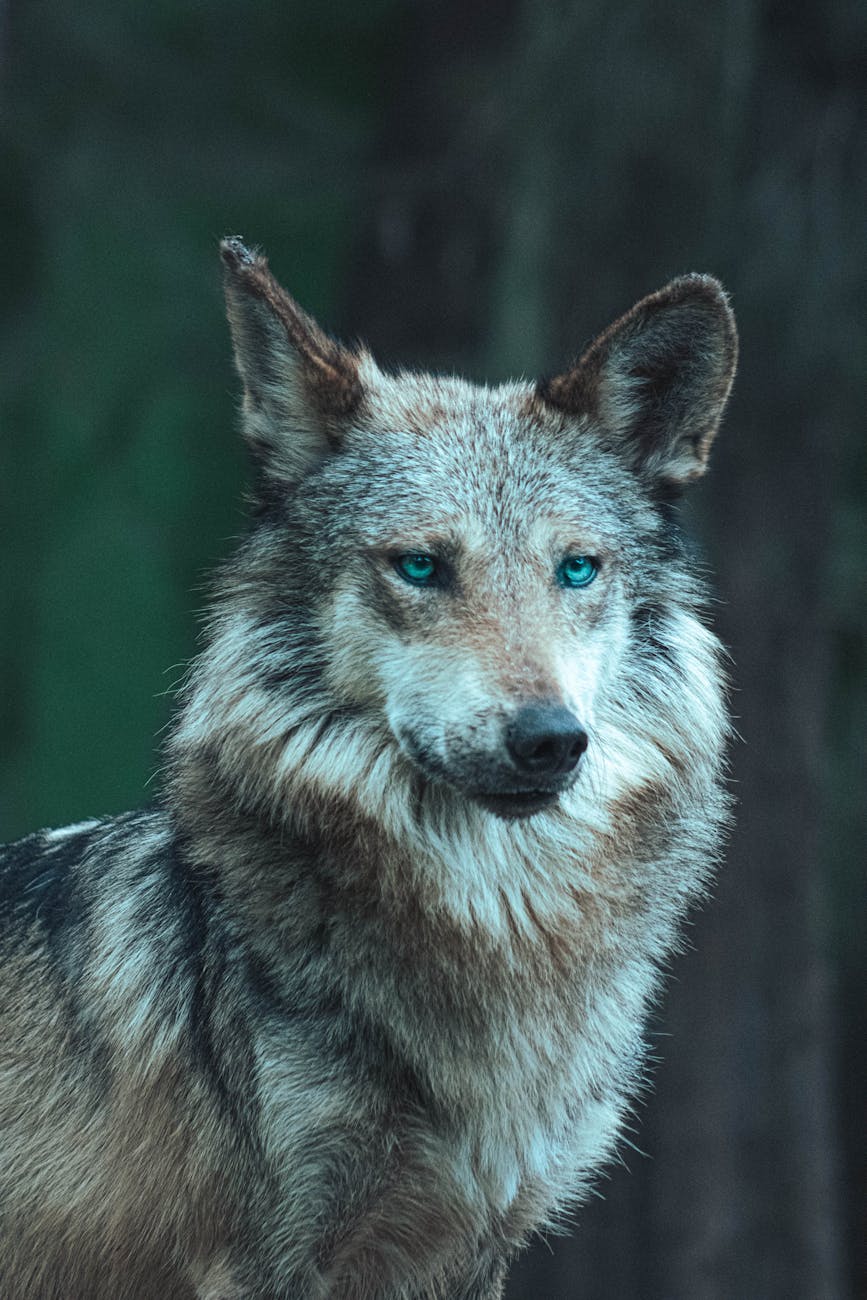
A lone, grey wolf, her eyes damp in the corners, as though she’d just recalled another life, paced the length of her concrete floor. I wanted to leap the wooden fencing, and take wire cutters to the boundary, her prison cell. She’d approach, cautious at first. Curious. Then sniffing the air, she would take to a trot and then a full out running speed. And she would not stop. Not until she’d found her real home.
But, you were tugging at my elbow, steering us into a café called Safari Snacks, pointing out the vats of ice-cream behind the polished glass. Minty-greens, caramels and raspberry-pink-pastel shades glistened. We chose a three-scoop cone to share. And you kissed me with creamy lips. And the wolf was unaware that her life had ever been contemplated, her freedom imagined by another soul.
Excerpt from Until You by Christina Cummings
© Christina Cummings 2024
Until You
13th May, 2024

She writes in chalk across the board. Students yawn. Until she stops and, in uncomfortable silence, takes her hand and rests it on her chest. She waits, until there is no air left in the room. Then tells those still awake, to place their hands over their hearts, at least once a day. ‘It craves your touch,’ she says. She has a point; we’re always searching for someone who will tend to us the way a gardener might prune the rose bush of a favoured client. A caretaker of our soul. We’re like a pot of marigolds, in a drought, who in silent earnestness hope not to die. Water me, we plead. And yet… we are the custodians of self love. Of self like. Waiting for someone else to do that for us… well it’s like waiting for a rainbow in the night sky.
Excerpt from Until You by Christina Cummings.
© Christina Cummings 2024
Topical Steroid Withdrawal Awareness
23rd April, 2024
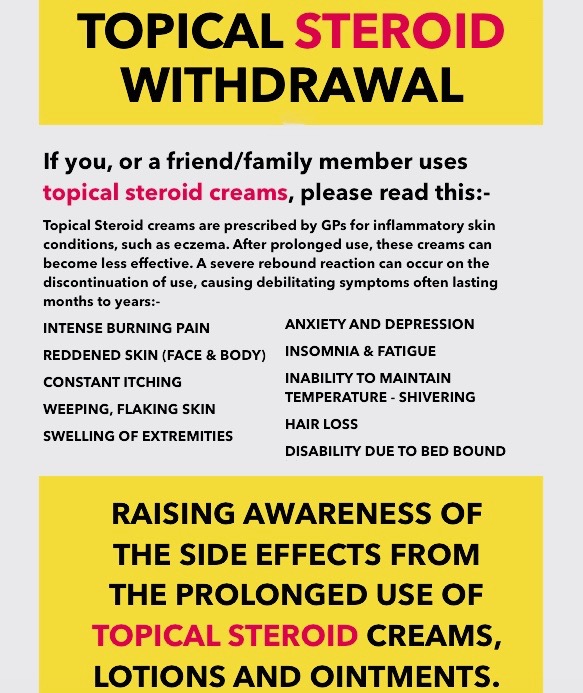
Someone very dear to me is going through Topical Steroid Withdrawal (TSW).
There is very little support for people who are affected and an almost complete denial of this disease, from GPs to Consultant Dermatologists. The symptoms are severe and debilitating and can last months to years. Those who are suffering are left feeling ignored, confused and scared ~ as well as severely affected and often bed bound.
Things need to change. Research into this, now widely emerging iatrogenic disease, needs to get underway. Support, both for the physical symptoms and the mental anguish it entails should be provided. People with inflammatory skin disease should be fully informed about the possible* side effects of these medications. Other treatment options should be explored, rather than prescribing topical steroids as first line treatment. Healthcare professionals should be educated about the risks, prevention, recognition and management of TSW.
Currently I am writing (emails!) to everyone I can reach, to raise awareness in the education system, the NHS and at Government level ~ MPs, Councillors, the Health Minister, the Heads of Faculties of our Universities, Deans, Professors and Lecturers in Medicine, Pharmacology and Health Sciences, plus the Dermatology Departments of all major UK hospitals. At least if our next generation of doctors are equipped with the knowledge, then their patients will be better taken care of. It may take some time…
* N.B. The prevalence of TSW is not known, due to it being under-recognised, under-diagnosed and dismissed, despite the evidence: “Corticosteroids suppress the inflammatory reaction during use; they are not curative and on discontinuation a withdrawal reaction (rebound or flare) may occur.” BNF, 2024.
For more information please refer to the ITSAN website. ITSAN stands for International Topical Steroid Awareness Network. They provide Topical Steroid Withdrawal Syndrome Support for sufferers and their loved ones. #TSWWarriors
Not to know
19th April, 2024
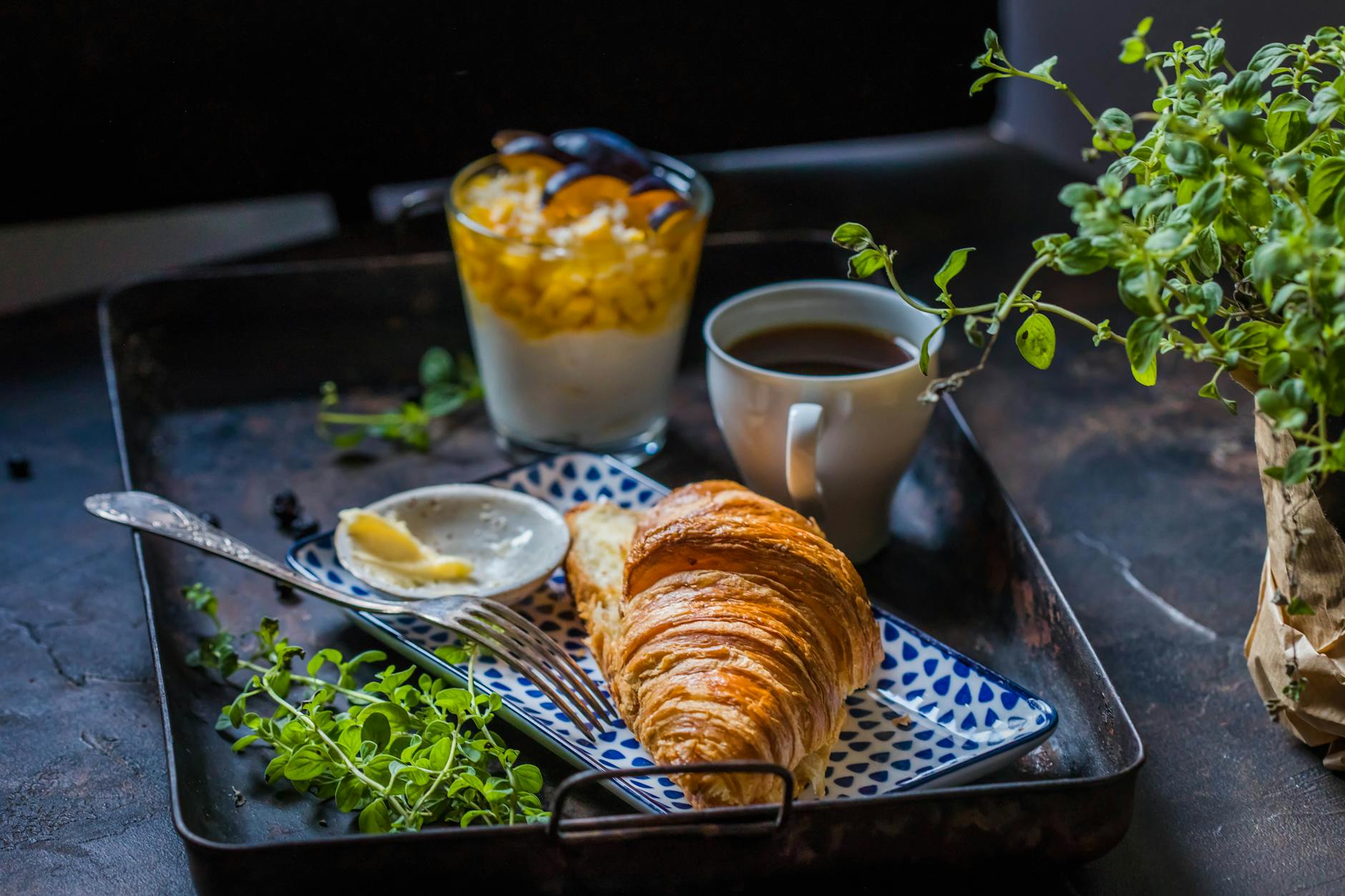
As I sit here with a cup of black tea and a warm croissant, buttered lavishly, I’m reminded of a little piece of writing from a story I wrote a year or so ago. My own four-legged pal sits in hopeful submission. This is the only time she avoids eye contact. I guess her modus operandi is to look so nonchalant as to make me forget myself, drop my guard. Okay, I tell her, you can have some. And she gently takes a pinched piece from between my finger tips, soft as a graze. Quietly, as if I’m not to know.
Here’s the Excerpt:
‘Kulfi, drop!’
Andrei is lying flat to the floor, half of him buried underneath the double bed, the other half sticking out, like a car mechanic. He grapples with his arms, but can’t quite reach the puppy, who has grown exponentially these last few weeks ~ she’d tucked herself square in the middle and looked justifiably smug.
‘Drop!’ he commands.
Kulfi looks at him from her vantage point, then turns and casually scampers away through the other side of the bed and down the stairs, the Hermés tie dangling from her mouth like flaccid prey.
In the kitchen, Annabel is toasting croissants under the grill. Kulfi sits at her feet, her eyes following Annabel as she walks with slow-slippered feet from the stove to the fridge and back to the stove again.
‘There you are!’ Andrei says, as he scoops his tie up off the floor where Kulfi had abandoned it, like so many toys. Dogs know only how to live in the moment. And when there’s the promise or even just the chance of food they’ll move with fickle speed to procure it.
Breakfast is served in the garden. Kulfi sits between them both. Her head tilts as she listens for the final clink of the butter knife. It does not take long to learn the order of things. And even though they’d both agreed they wouldn’t feed her at the table, Kulfi knew different. When Annabel wasn’t looking, Andrei would break off a piece and hand it to her, surreptitiously, the way an uncle might press a ten pound note into the hand of his favourite niece. Kulfi would even chew more quietly, as if in on the secret. But what Andrei didn’t know was that when he was away on business, Annabel did the same. And Kulfi, like all loyal dogs, kept up the pretence; she knew on what side her croissant was buttered…
© Christina Cummings 2024.
The Moment
14th April, 2024
The Moment, A poem by Christina Cummings
The arrival of a box,
the colour of tamarind,
is the start.
I hear the van reverse
and through the rain smudged window
note the delivery’s been placed,
the right way up,
on the dry mat,
as though it had evoked such care,
that inside a kitten calls for its mother, perhaps.
I pull on a woollen thing with sleeves longer than my arms,
fasten wooden buttons with cool fingered deft
and unhook the latch.
I breathe in morning first;
notice there are more magnolia petals on the lawn than on the tree,
hear the distant bark of a lonely dog.
And breathe again.
I hold on to the moment, I try
(I do this a lot, though the moment moves on ~ it always does),
just after the rain
where wetted tarmac
fills the air with scent,
or when a favourite song comes on the radio,
or that moment just before a kiss,
or at the arrival of a box.
© Christina Cummings 2024
Cupboard Love
12th April, 2024
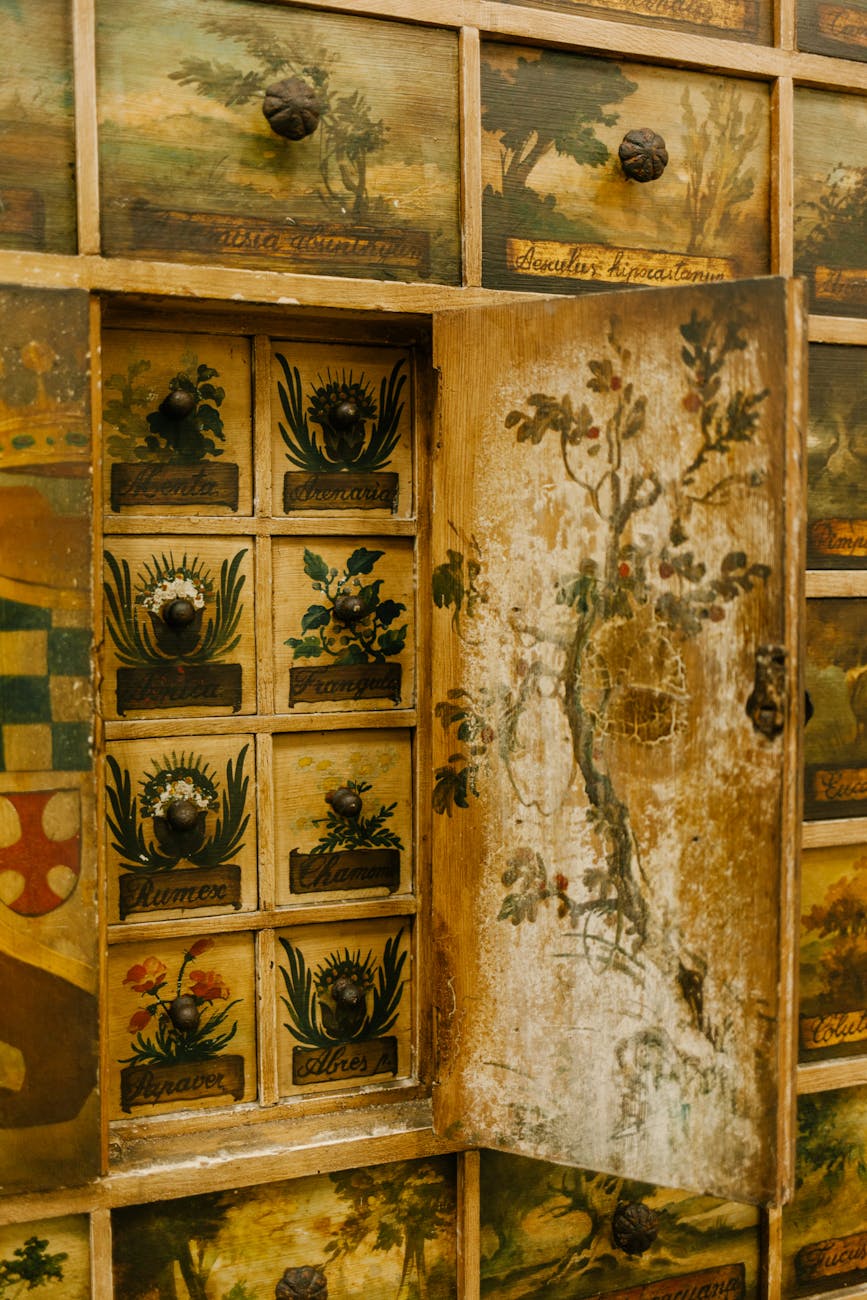
Cupboard Love
A poem by Christina Cummings
In the furthest corner of the highest cupboard,
behind a box of twine
and an envelope of Pak Choi seeds
and half burned candles, like the ones in church
and a folded map,
lies her diary;
its cover bent, its pages creased,
a little.
Placed there in secretive will:
Please, let no-one ever find me.
She had stood on tippiest-toe on the tallest stool,
which had wobbled dramatically.
She’d reached as far as her limbs could go,
stretched like a spoon of stiff treacle on her morning porridge,
her hem had raised as she did so
and her calves had ached.
Then with a last shove,
the book was gone from sight.
A diary is not so much a record of the everyday.
It is the exhalation of a heart.
A blood-letting, if you will.
© Christina Cummings 2024
From Home
11th April, 2024
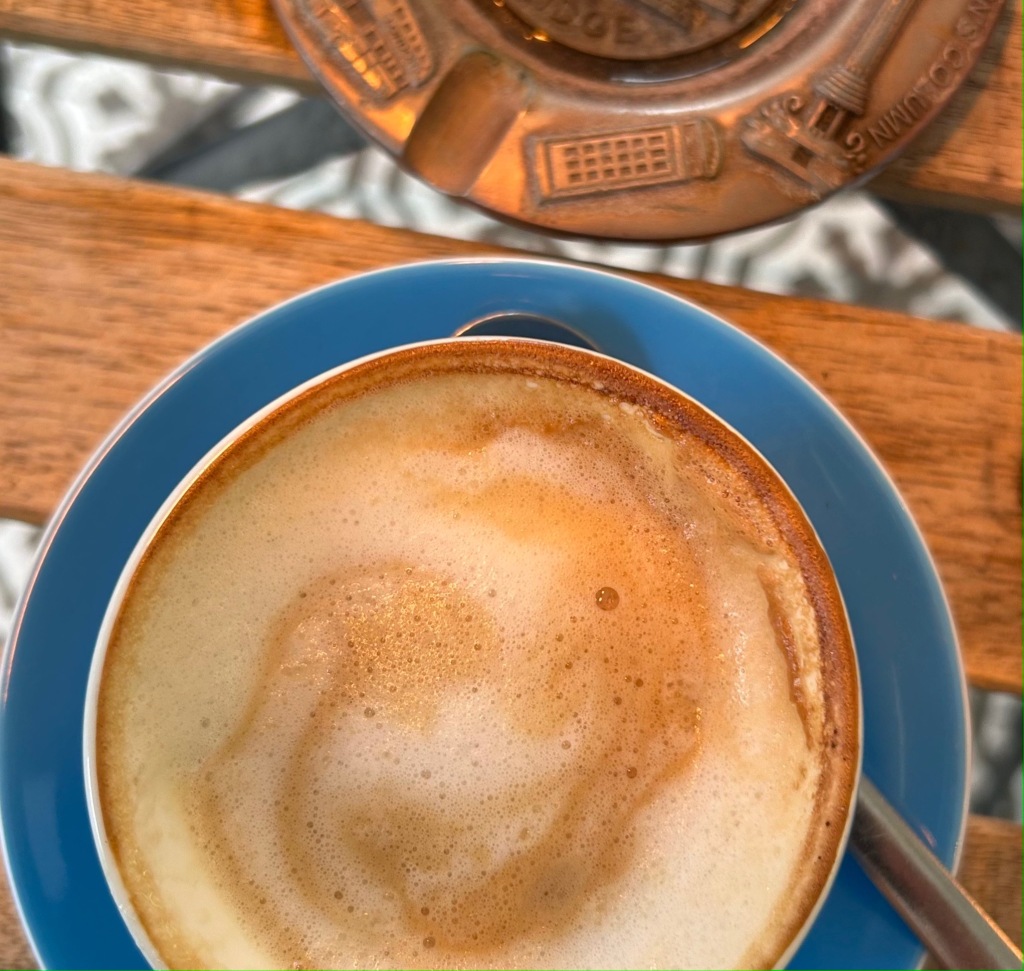
Unfamiliar coffee shop. Door ajar. The herbaceous smell of roasted beans. Light rain, the kind you can only see by the tiny ripples it makes in the soup-black puddles. Come to think of it that coffee shop must have sprung up ‘overnight’. Last week, it was as empty as a discontented soul. I feel unbalanced as I cross the cobbles, though through no frailty. A more subtle, easily-solved condition; my shoelaces; too loose on the left foot, too tight on the right. But I don’t stop to remedy this ~ one can live with disorder in small amounts. I wander past the last few shops. A dying fly trembles on a shelf in the discount store, its last resting place between cartons of fruitless juice, lagoon-blue (who drinks these?), and medicated shampoo in jumbo bottles, their neon lids coated in a light dust ~ trade must be low on those. The shrill brakes of an Uber, as it slows to a changing traffic light. That niggling claw in my hypogastrium. Again. Overhead, a flight. To Canada, perhaps. Or Seoul. Passengers might glance below. How small everything seems, they might muse, as they sip on their breakfast mini-gins. This mindfulness technique serves only to distract. It is a shroud for an open mind. And I notice way too many details to find it calming. But it helps, sort of. It guides me. It’s that feeling. You know. It’s hard to define. It’s akin to curiosity, but not the kind where you must have answers ~ it’s more restful than that. It is, perhaps, like that feeling you get the first time you wake up in another city, where fear and elation vie, and then the familiar sedates the unfamiliar, so it’s like a home away from home in the end.
Not even now
9th April, 2024
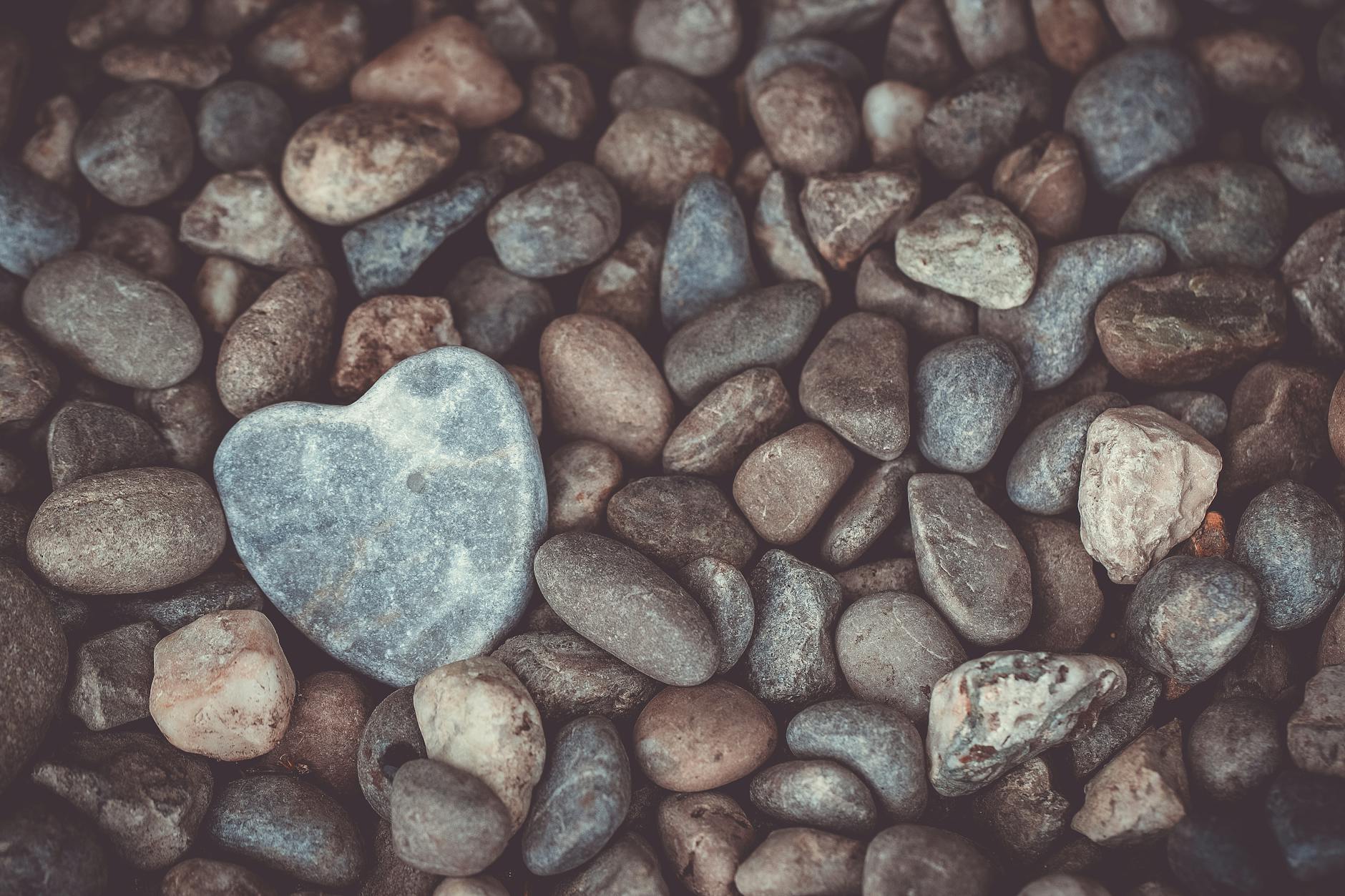
It was over, even before it began.
He said.
You recall, don’t you?
He pours tea at a generous angle.
I do.
I whisper.
The shrapnel of a courtship imploded catches in my throat.
Again.
I thank him for the tea.
And sip.
And lick the heat from my lips.
My lips; barren since, no matter the suitor.
It’s been too long.
And, actually, that’s not how I recall it.
It began.
And it was never over.
Not even now.
© Christina Cummings 2024
The Human Race
30th March, 2024
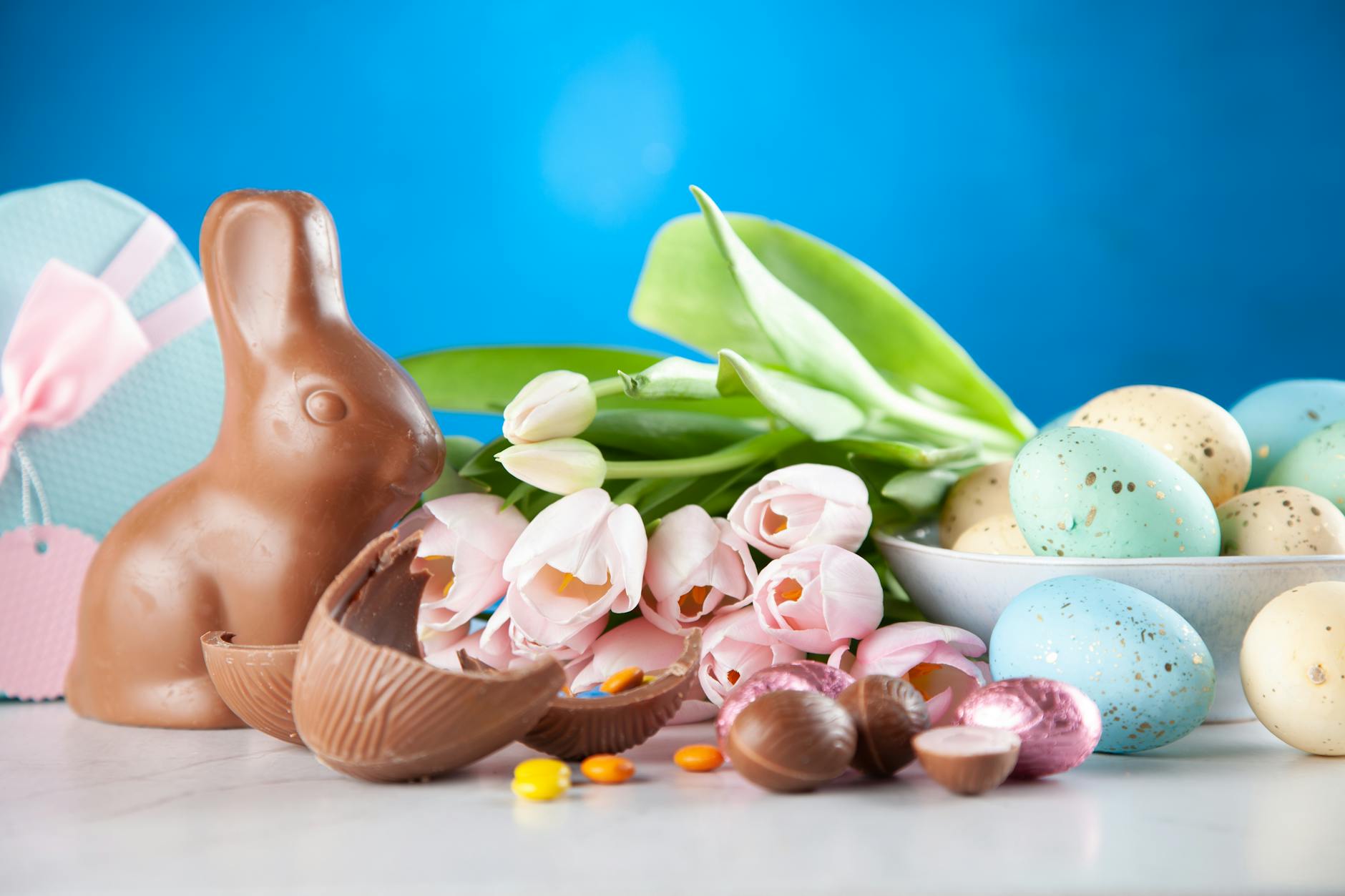
Sacrifice. That’s the underlying take-away of the Easter story, whether or not it’s accepted in the religious sense. And yet… was there another way? To literally remove the possibility of all other solutions, to deny the value of one’s own worth, in the pursuit of inspiring or helping others ~ is it really as noble (humble?) an act as it’s claimed? Or is it a chocolate-coated version of events? I was agonising over this recently. For my children I would sacrifice anything: how else would the human race survive? In my profession, there are countless acts of selfless courage which I gladly do, daily: how else could a patient trust their nurse? But, as I felt my own life quietly ebbing, I realised that in order to inspire or help others, I needed to be strong. And strength is in itself not stoicism or brute force, it is true sacrifice. Because it means remaining present, even when the will to live has gone. Light over darkness. Or in the spiritual sense, the birth of spring, of new life, in all of us. And perhaps therein, lies the meaning of Eastertide.
The Cares of the World
29th March, 2024
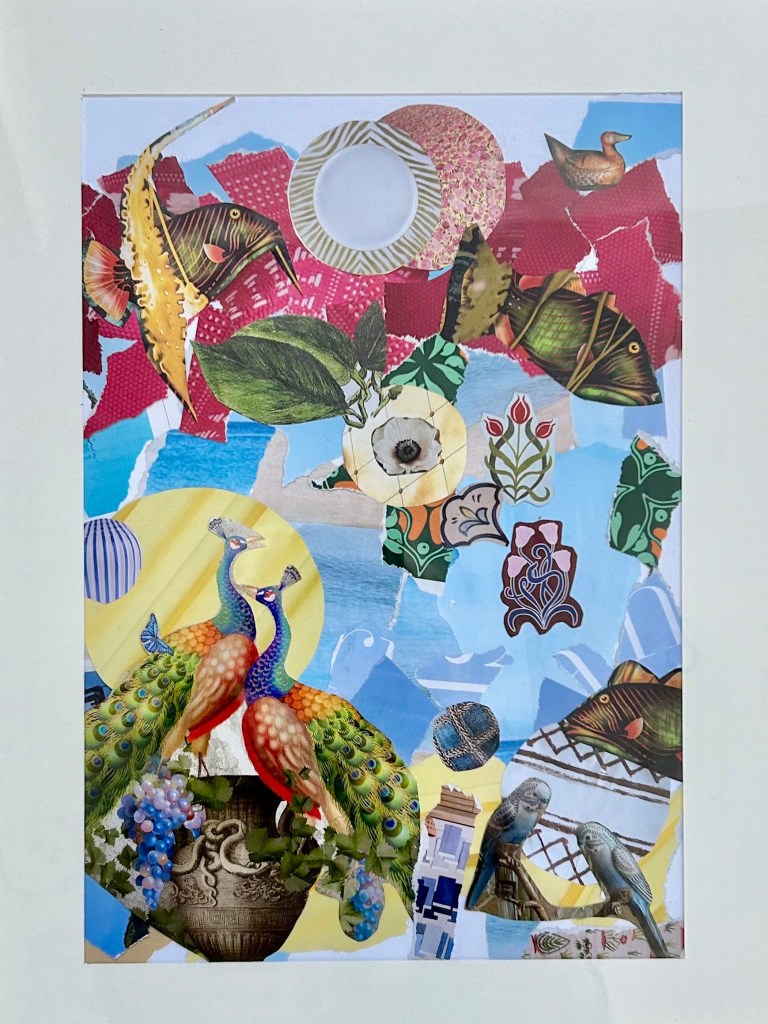
So, I took a pair of scissors to a glossy magazine and rummaged around for an old stick of glue. And this happened. I didn’t use precision or pretension. I just turned my mind off from the cares of the world. Sometimes it’s nice to just sit in unencumbered wonder. And I’d forgotten how much my inner child still needs me.
Before you became a cloud…
23rd March, 2024
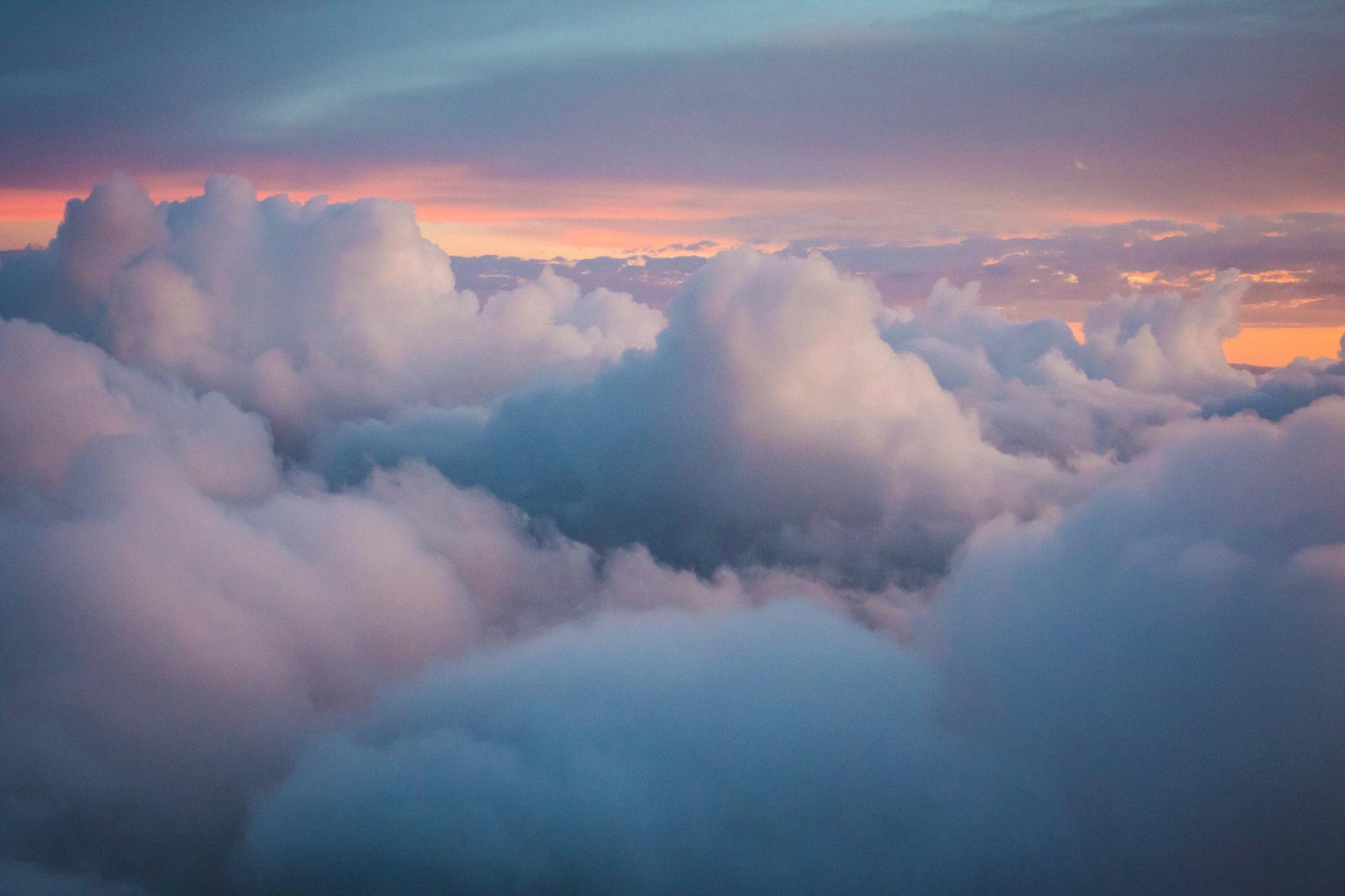
Cloud by Sandra Cisneros
Before you became a cloud, you were an ocean, roiled and
murmuring like a mouth.
You were the tears of a man who cried
into a plaid handkerchief.
You were the sky without a hat.
Your heart puffed and flowered like sheets drying on a line.
And when you were a tree, you listened to the trees and the tree
things trees told you.
You were the wind in the wheels of a red bicycle.
You were the spidery Maria tattooed on the hairless arm
of a boy in downtown Houston.
You were the rain rolling off the
waxy leaves of a magnolia tree.
A lock of straw-coloured hair
wedged between the mottled pages of a Victor Hugo novel.
A crescent of soap.
A spider the color of a fingernail.
The black nets beneath the sea of olive trees.
A skein of blue wool.
A tea saucer wrapped in newspaper.
An empty cracker tin.
A bowl of blueberries in heavy cream, white wine in a green-stemmed glass.
And when you opened your wings to wind, across the punched-
tin sky above a prison courtyard, those condemned to death and those condemned to life…
… watched how smooth and sweet a white cloud glides.
© Sandra Cisneros
Bumblebee Queen
24th February, 2024

Bumblebee Queen, A Poem
I heard you yesterday.
A sign that all is good, again.
A reassuring hum,
the softest thrum,
whisked the air beside me as I walked.
Your sound startles still;
a childhood wonder turned nuisance
(sorry for that my little friend);
To me, now, you mean the world.
© Christina Cummings 2024
My Birthday Month
5th February, 2024
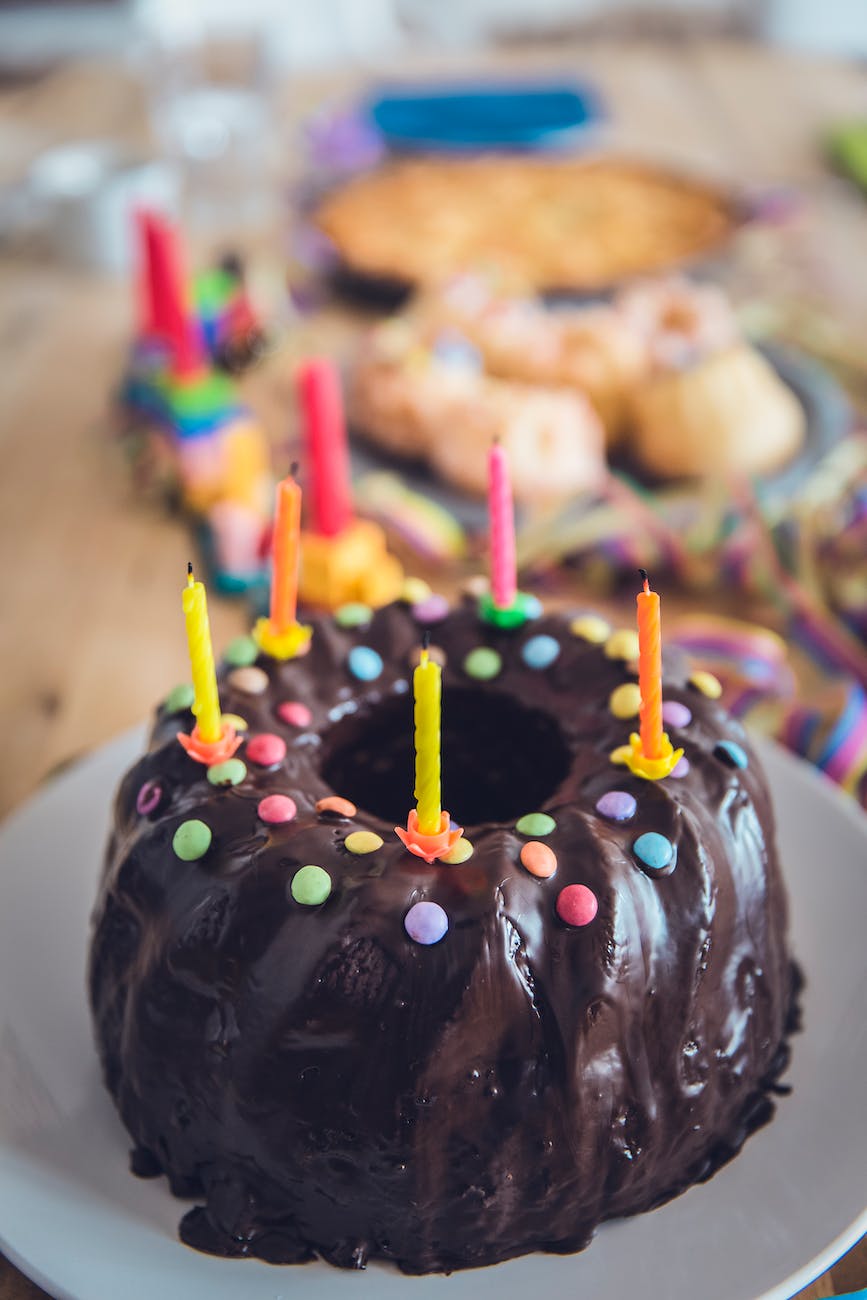
My Birthday Month – A poem
Before my Tomboy days,
I wore plastic beads,
like bale twine,
wrapped twice around me,
and a Paisley dress that skimmed the floor,
to half-term parties
with pretty friends from school.
Lime-green jelly gleamed in un-scraped bowls,
and gifts were wrapped
with a love
I felt
I did not deserve.
I recall
that one year,
where, in Norfolk drizzle,
with a hint of Spring,
there was
a deadly frost,
as though
my birthday month
was teaching me a lesson.
Oh February!
You are not so much a celebration…
you are truth.
Where life begins
and ends,
in equal measure.
© Christina Cummings 2024
Some Winter Poems
16th January, 2024
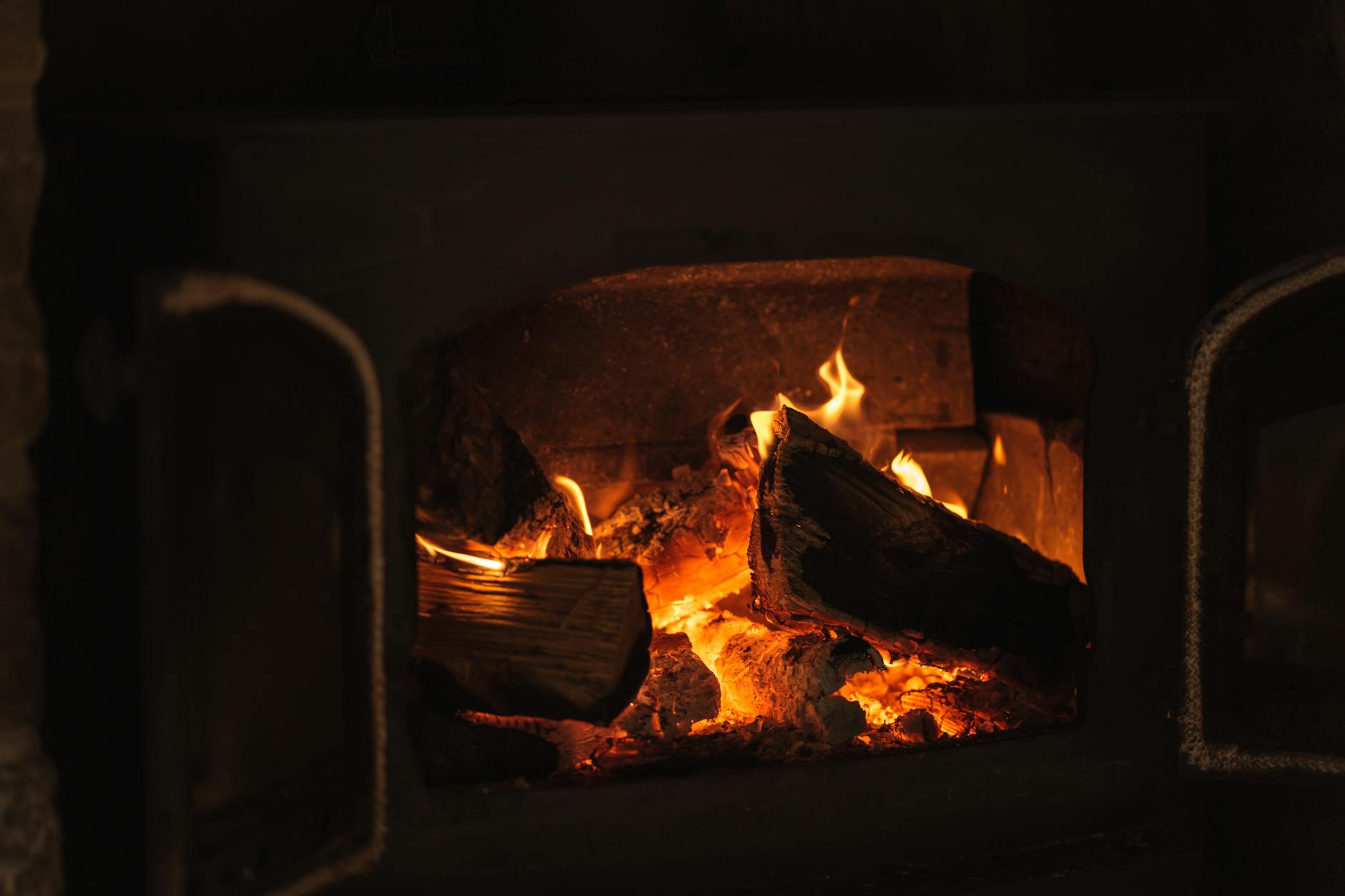
Fire-warmed
I wish I’d gathered up that view;
and stuffed it,
carefully,
into the side pocket of my backpack;
the one with lip balm and odd coins
and a shell,
torn from the vastness of white-washed sands
and resting now upon the fire-warmed mantelpiece,
between the swaying candlelight
and that card you sent.
Our Love
Cherry-cheeked and blue-lipped folk, stride
across the fields where
ice cracks under the tread of heavy winter boots.
Winter is a hall clock in slow deliberation;
it presses us with urgent need,
to come indoors.
It awaits our love.
When Hygge came to rest.
It was not a perfect day;
it was a rough seas spied through a porthole kind of day.
A tangled string day.
A lost day.
But, within the slow hours,
through the snow-slushed streets,
they all arrived
with faux pigskin bags
and wine, in bottles green as the forest,
and home-baked cakes with decorated tops.
And when someone sang,
and we all, in shearling-slippered feet,
drew closer to the fire-lit grate,
the room was warmed as much by us as by the flames.
And the apple-tree smoke, like holy incense balm
gave blessings to us all.
© Christina Cummings
Roadtrip
14th January, 2024

This year I’ll be revisiting beautiful Romania; a country that holds a special place in my heart. I’ll be travelling, adventuring, with a dear friend of mine and together we will retrace the poignant steps of yesteryear, as mentioned in this excerpt from a 2020 blog post:
I was twenty-three years old when news reached me that my father had died. He was fifty-nine. I was volunteering at an orphanage in post-Ceaușescu Romania at the time. One afternoon, as I sat with colleagues on a tea break, I was called to the Director’s office, wondering what it was I’d done. I’d been warned already about my attire; apparently the slashed denim just below the back pocket of my jeans, though de rigueur for 1990, was deemed inappropriate.
As I was led along the gruel-coloured halls I prepared to defend my choice of clothes citing they were all I’d packed with me and that all young Romanian women would soon be wearing them too. In any case, I’d taken to donning a pair of bubble-gum-pink boxer shorts underneath my jeans, (as they were en vogue back then too), so that no bare flesh was revealed.
The director indicated for me to sit. His office was orderly to the point of extreme. Each book, the lay of the functional furniture, the hang of a faded landscape painting on the wall above his desk, the placement of a heavy looking ashtray lined with half-smoked cigarettes, all seemed strategically arranged. He adjusted the height of his heavily padded, black leather swivel chair and leaned forwards. ‘Your father has died,’ he said.
Delivered with such brevity, one could say that it was very much to the point. And the tone; it was solemn, but matter-of-fact in a ‘Your soup got cold’ kind of a way. Back then, a letter would have taken two weeks to arrive and phone calls had to be pre-booked. Somehow my uncle had managed to contact the hotel where I’d been staying and a fellow volunteer there had traced me to the orphanage.
It was the one-year anniversary of Nicolae Ceaușescu’s downfall. The austerity measures under his communist rule had all but ravaged the country. People were still queuing for bread. Early protests in 1989 had led to riots and street violence as the people and the military clashed. With human rights restricted, including censorship and the invasion of privacy by the secret police, or Securitate, people felt (were) suppressed. Furthermore, Ceaușescu had enacted an appallingly aggressive natalist policy, which included the banning of contraception and abortion and even taxing the childless. These draconian policies resulted in the deaths of over 9,000 women and over 100,000 children were put into orphanages by heartbroken parents who could not afford to raise them.
Not only was food rationed, but electricity and gas supplies too. In the cities, people turned to ‘butelli’, or charcoal stoves, to heat up soup or to warm their bones. Food shortages were the result of crops being exported, albeit under-priced, in a bid to fund industrialization and clear the country’s debts. Sunday curfew was instated and television, one of the few distractions and pleasures, was reduced to one single channel broadcasting sensored programmes for just two hours each day. Everyone worked hard to do their best but, still, life was incomprehensibly harsh.
By December 1989, cars were burning in the streets. Flames reached into the sky, like desperate hands. Smoke drifted through broken window-panes filling homes with fear and hope. Days passed in gun shots, threats and bullet holes. The words ‘Down with Ceausescu’ were carved into freshly fallen snow. Until, on Christmas Day, in a courtyard, the people’s wish came true.
One year on, and a coup was taking place. Flights were grounded. And now the lines were completely down. I was stranded at the airport. If it hadn’t been for the benevolence of a British Airways pilot flying journalists and charity workers back to the UK, I’d not have made it home. I remember being helped up off the floor of the departure lounge by my new friends, hugged goodbye and bundled onto the plane. I had no strength left. Let’s just say, the two days I’d spent in shock, trying to fathom my father’s death and ponder its cause, had all but consumed me.
As the plane took off and headed to Heathrow, I felt I’d been hollowed out, my spirits crushed, every cell of my body depleted and my psyche drained. Dwelling on a person’s demise, as a result of being spared the details of their final throes, becomes an obsession. The surprisingly few ways in which we might actually die, become overwhelming when the disturbingly unique circumstances to which they can be applied are imagined. It is, though, a natural reaction to the striking bewilderment that death affords us. The effects of this experience have lasted to this day, in the form of a debilitating, excruciating anxiety which I’ve tried every day since to stave ~ not always successfully. And yet, there are moments of serenity and calm. Though rare, they are beautiful, where life feels okay again.
© Christina Cummings
Fireplace
11th January, 2024

Winter, I dreaded the depth of you,
flinched at your low growl,
as you approached.
When you showed up, again
with sharpened claw,
I cursed your bitter pinch.
And yet, …
now…
even as you rattle every rafter,
make haste through any door,
I find,
in my refuge,
saved by the dragon
in my fireplace,
I’m glad of you
once more.
© Christina Cummings
The Hour
10th January, 2024
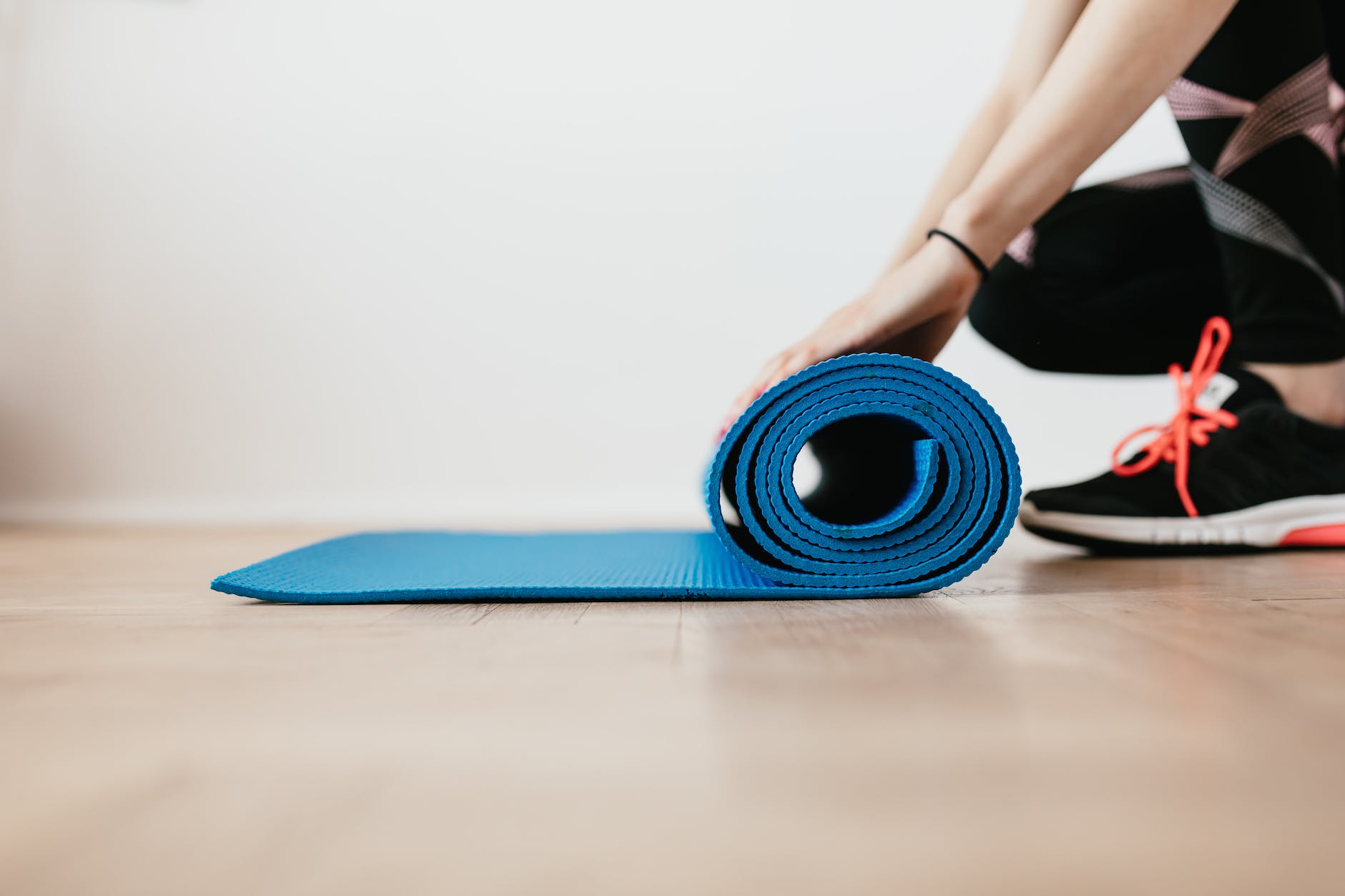
So I’m driving to my Pilates class ~ I’m fairly new there and they often switch the location, so I’m never quite sure I’ve got the right one, until I spot a woman hurrying along the pavement in the same general direction. She’s wearing trainers and lycra pants, so I figure I’ve got the right place this time. And rather more tellingly she’s carrying what looks to be a hall carpet rolled up tight and stuffed under her arm. And then I notice another person, and another, all carrying the same roll mats, until the street starts to resemble an episode of DIY SOS. It’s like we’re all headed to the village hall in a bid to re-carpet the linoleum before class begins.
And so I park up, well within the white lines. And I’m about ten minutes early, so I decide to have a quick scroll on my phone to catch up on some important things ~ like what my friends ate for dinner last night and whether or not they’d look sexy as a Viking ~ which let’s face it is purely subjective, because that ship has well and truly sailed. Then, even though there are dozens of free parking spaces dotted about, there’s always that one car ~ you know the one; you watch them as they enter the parking lot. They slow down, and take a wide gander and then they head on over to the empty space right next to yours. You wonder if they’ve clocked that you’re sat in the car trying to look nonchalant, or whether they think there’s no one about so they might as well take their chances. You tense up a little as they position themselves ready to park, in reverse. And then the manoeuvre begins. And as they’re inching closer and closer you wonder where your horn is located (because being British we rarely ever use it) and moreover, you wonder whether or not, and at which point, you should toot it. And so your hand hovers, while they perform the obligatory straightening up, which invariably means that when you come to exit your vehicle you’ll need to do an undignified shimmy to disembark.
The Pilates instructress is petite. She’s in her mid-forties, and has the figure of a lead ballerina. She’s incredibly kind and patient with the class, some of whom have the flexibility of Tin Man, from The Wizard of Oz. (That is, before Dorothy’s oiled him up!) We breathe and stretch and focus on our core, all the while cursing the chocolates and cheese boards of Yuletide festivities. Calming music plays. The hour passes, well. And to quote author and professional organiser, Christen Fackler: “when you’re consistently achieving your goals, you’re creating good habits.” And so, with this in mind, there’s a smug sense of satisfaction on the drive home, that lasts… for the rest of the day, at least.
Ghost Train
7th January, 2024
An excerpt from, ‘The Smallest Footprint Possible‘ ~ a piece of my writing that was performed at the Winchester Discovery Centre, spooky stories event, by White Rabbit productions.
Excerpt:
‘A funfair?’ I look over at Khalid. He’s eating a heaped bowl of Frosties.
’God, I haven’t had these for years,’ he says, wiping a rivulet of milk from his unshaved chin.
I wait for him to reply. He always makes me wait.
‘Yeah. A funfair. What’s the big deal?’ He tips the bowl to make a sugary pool and spoons it up like soup.
‘Well, for one thing, you hated funfairs as a child. You said they were risks not worth taking. You used to harp on about derailings and loose bolts… and decapitations.’
‘Well, what can I say? I’m feeling reckless. And I’m not talking roller-coasters, I’m talking magic mirrors, dodgem cars… the ghost train!’
I pour out a second mug of tea and stir. I watch Khalid as he holds the bowl up to his mouth and drinks the last sweet dregs, and think ‘Fuck it, why not?’
We are the only two guys at the funfair. It’s mid-week, and the only other patrons are mothers and grandmothers, walking behind pushchairs, their shoulders stooped unbecomingly. Khalid buys tokens from the kiosk and hands half of them to me. They look and feel like foreign coins.
‘I can’t believe we’re doing this,’ I say.
A gull flies overhead. A string of shit slides down the side of the Helter Skelter. The smell of hotdogs and fried onions are carried on the breeze, along with diesel from a generator pump.
‘Yeah? Well at least we’re doing something.’ he says.
I have to agree. Logic is a never-ending argument.
The ghost train looks smaller to me now. As a child I had considered it to be an endless maze of tracks and tunnels, but it is really just the size of a large lorry. I feel foolish as we sit, with very little legroom, side by side in the rickety carriage and as we begin to trundle along passing through the gash in the black sheet of cloth and disappearing inside, I hold my breath. The place is darker than I had expected. Almost at once we are serenaded by a mix of loud rock music interspersed with the maniacal laugh of the crazed axe-man of cheap Hollywood movies. Dry ice escapes from some hidden valve; it’s as though we’re entering the bowels of some rock ’n’ roll hell. A rubber bat whooshes past our heads.
‘My hat!’ I shout, louder than I’d meant to, though the words are lost in blasts of treble and bass.
‘Scared?’ Khalid teases.
I knock him with my shoulder. ‘Fuck off!’ I say. I knew this had been a bad idea.
The ride ends abruptly, after the perfunctory ghost jumps out at us from behind a cardboard tombstone, etched with the three unsettling letters ‘RIP’ and the headless mannequin of a peasant woman, a basket slung across the crook of her elbow, her neck just a red raw stump, watches us blindly, as we round the final bend.
The daylight surprises us, our pupils shrink to pin heads. A child has tripped over on the rocky turf, grazing its knees. It wears a Gap sweatshirt and faded jeans. It sobs, with shrill wretchedness into the arms of a young, tired eyed mother.
‘Thanks,’ Khalid says to the ticket guy, who just nods at us in bemusement, his hands jammed into the money belt slung around his scrawny hipsters.
‘I need to go back in there!’ I say, grabbing Khalid’s arm.
‘What for?’ Khalid shakes my hand away and walks off to get some candyfloss from a burger stand. He reaches up to un-peg a bag, under the watchful eyes of the vendor, who flips Frankfurters and onion rings, which coil and uncoil on the hot griddle.
‘I thought candyfloss was supposed to be pink,’ he says, eyeing the blue and green ball of sugar in the inflated plastic bag and unpegging it anyway.
‘My hat.’
‘You’re joking, right?’
‘Just wait here, I’ll be right back.’
The guy in charge of the ride gives me permission to go in and look for it. I push through the black cloth and step inside. I make my way along the thin train track past the painted ghouls and the two ancient mummies, who appear to step with benign nuisance from their tombstones. The dry ice has begun to settle. The last wisps diffuse slowly, like diaphanous beings from the spirit world. I talk to myself, like I sometimes do at home. ‘Where the hell is it?’ I say, rummaging around on the floor. I find sweet wrappers, an unused condom, an old glove. ‘There you are!’ I pick up my hat, and turn to leave.
And then I see her.
I step back so fast I trip on fake tree roots, cutting my leg on lengths of loose wiring, as I fall. She is slumped against a gravestone, her eyes just two black holes, in a face so contorted, so vile, I can neither look at her nor turn away. I am unable to move. I cannot catch my breath. I watch her as she turns to me.
***
‘What the hell are you doing in there?’ It’s Khalid’s voice.
I cannot speak.
‘Jay?’ Khalid is inside the ghost train, helping me to my feet. ‘What happened?’
‘I saw her …’
‘Who?’
‘Meera.’
‘Okay, that’s it!’ he says putting his arm around me, and helping me out. ‘I don’t care what you say, we’re going for a bloody drink!’
The nearest pub is called The Phoenix. It is small, tucked between a row of terraced cottages and would go unnoticed had it not been for the huge hand painted sign of the great mythological bird half consumed by bright orange flames, which swings in agitation in the stark wind. The doors have just been unlocked. The landlord greets us as though we’re a gust of wind off the sea. We follow him inside. ‘First customers of the day,’ he says. ‘What can I get for you?’
Khalid marches us both up to the bar and orders two whiskies. Neat.
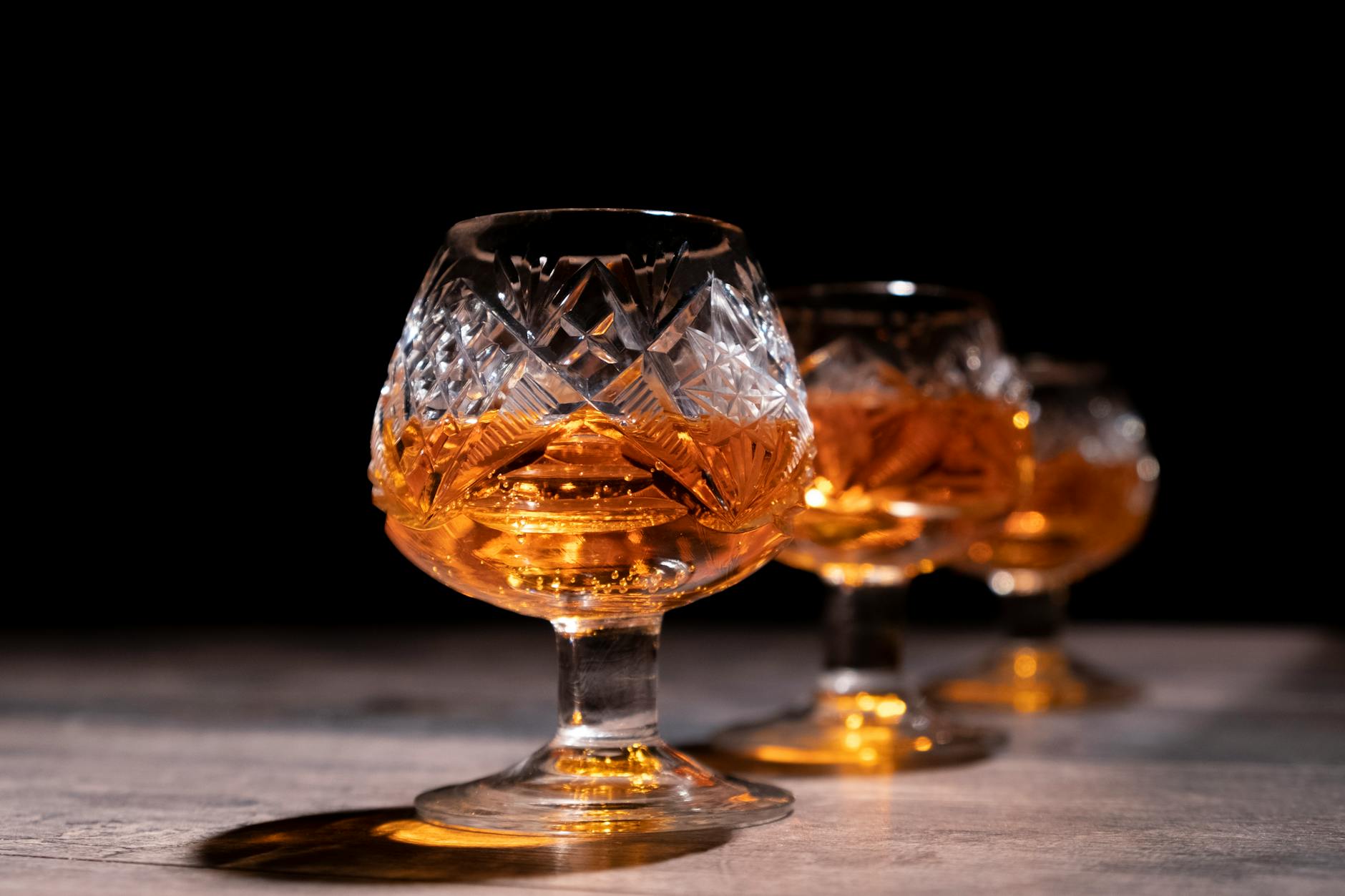
‘Drink up,’ Khalid pushes the tumbler over to where my hands are gripping the bar top. I know I shouldn’t, but the whisky smells good, like New Year’s Eve, and Khalid is doing his best to be kind to me, so I tip the glass up and swallow the whole shot down. I feel the immediate effects, the fuzzy warm feeling of vasodilatation. I feel a line of fiery console along the length of my chest, to somewhere just above my solar plexus.
‘Two more please,’ he says.
‘Make mine a double!’ I say. I’ve always wanted to use that line. I smile at the sound of my voice, as the words are delivered, like I’m some movie star, a smooth talker in a silk shirt with a swept back fringe. Grief and depression always look so honest up there on the big screen. You can literally feel the weight of the cut crystal, taste its contents, feel the tension melt.
In real life though, there are no clever camera angles, no script, no easy answers, no director to control the plot, unless of course you believe in a higher power, an executive producer called God. I feel as though I’ve lost something irreclaimable, like insults or wasted time. My sanity. I let the whisky work its magic, pulling me away from the abyss, stroking my temples, whispering seductively, ‘Relax, everything will be okay’.
© Christina Cummings
The Journey
4th January, 2024

We all have our own unique network of old, familiar journeys that form a memory bank of pathways; places we frequently tread, or once traversed along. Tracks with shortcuts or detours become our daily ritual. The circuits we run, the roads we cycle round, even the shortest of walks; these will become our elephant trails. One such passage, for me, is the drive north. Particularly in winter time. It is a catharsis like no other. A return to the spot where I entered the world, in the coldest month, over a half century ago, and where my son was born. Zoologists call it ’natal homing’. The journey though is bittersweet. It’s as though by leaving the south, I leave a part of me behind; my other home, and where my daughter was born. There’s a sense of abandoning both nests. And so it is that the route is not just a series of motorways and landmarks and narrow country lanes, it is the very link, the time-travelling portal between the past and the present, so that to drive in either direction, is not so much concerned with traffic, or weather, or cheese and tomato sandwiches wrapped in foil, as with a mental balancing act where achingly fond and savage recollection vie, quietened only by the knowledge that this quote rings true, for us all: “wherever you go, there you are.”
Dog’s Tale
30th December, 2023

A vision, no a sense, of your wet nose nuzzled to my bare breast; ahhh, it draws me back to the most basic of human desires ~ that is of loving and being loved in equal measure. That you were a dog. That you brought laughter and such wisdom. That you died, a week before Covid lockdown, in my arms. That I lost something more meaningful to me than… well, than all else. That silently, (before the melancholy) that the boldest of sunsets and the warmest of smiles curse the purest of hearts ~ you give me comfort, still. That is your legacy. And when, as we all will pass, from this living life to the next existence; a place with no attachment or the blunt futility of ‘body’, of bones and flesh ~ which were for what? For toughening… before our ultimate weakening? Where there is at last a universal rest? When all of the squats, the lunges, the lean meats, the turmeric, the meditation, the late nights, the early nights, the work, the plans, the lazy mornings; when all of that… when it is gone. I’ll lie with you again, and I’ll know love. Love, transcended.
Christmas Song
24th December, 2023

Wishing all my readers a very Merry Christmas! And what better way to convey the often unexpected emotions we can all feel at this time of year, than by song? Let me introduce you to the very talented, very wonderful composer, songwriter, singer, guitarist and all round amazing guy, Marc McQueen. Come on into the warm and take a listen to his very special, heartwarming Christmas song. Listen here.
© Mark Thompson 2024. #marcmcqueenmusic #soundcloudplaylist #loveisallaround #originallyrics #ChristmasSongBattle #popmusic #GetMorePlays #ChristmasSongs #wham #musician #MerryChristmas
Earthquake Bird
21st December, 2023

I had the opportunity of interviewing author Susanna Jones after her first novel The Earthquake Bird was published. A haunting psychological thriller set in Japan, it tells the story of a murder investigation complicated by a love triangle, using flashbacks and mystery in its prose. It’s now been made into a film starring Alicia Vikander and Riley Keough and aired on Netflix.
Interview with Susanna Jones:
Q. Your writing has been described as “compulsively imaginative..beautiful..and concise.” Who would you say were your greatest literary influences – both in childhood and adulthood?
As a child I loved fiction that had a strong sense of place, the Laura Ingalls Wilder books for example, Swallows and Amazons, but I read anything that appeared in front of me from Roald Dahl to Enid Blyton. In my teens I moved on to the Brontes and I stayed in the nineteenth century for a while with Hardy and Austen. It’s hard to see influence on one’s own writing, or feel its presence clearly so I’m not sure which contemporary authors have influenced me. I studied drama at university and love theatre. I’m certain that watching and reading lots of plays has influenced my approach to writing fiction.
Q. Writers seem to have quite varied and diverse work schedules and needs when writing. What’s a typical day for you when in the throes of writing a novel?
It depends on where I am in the book. In the early stages I find it hard to write much in a day so I go for a lot of walks, read as much as I can and seem to mess around a lot not really doing anything. I used to worry about this and think of it as Writers’ Block but now I just see it as part of the way things work for me and know I’ll get past it to a more productive stage. Once I’ve got a good way into the book then I can write happily all day but I don’t tend to stick to a particular routine for long. Sometimes it’s good to write late at night and sometimes on the train to work (I teach part-time and travel regularly between Brighton and London) so I go with what seems to be working at the time.
Q. Whilst you were writing your first novel, were there any moments of doubt about finishing it? And, if so, what elements helped you to succeed?
No, when I wrote The Earthquake Bird I knew quite early on that I would finish it. I had the title before I started writing properly and I knew exactly what I wanted to do, even if I didn’t know quite how I was going to do it. I ended up finishing it much sooner than I expected. I had written a novel before that (unpublished) which was much harder work and I had to force myself to get to the end but that experience of getting from the beginning to the end of a novel – even if I didn’t think much of the final result – made me feel freer and more confident when starting The Earthquake Bird.I think there’s always a point during the writing of a novel where it feels as though the novel is an enemy, on a mission to finish its writer off but, if there isn’t that element of struggle, the novel is probably too safe and not very good.
Q. Aspiring writers, (whether they admit it or not), find solace in hearing that even successful authors have received rejections before they got the golden “Yes”. Was this true for you, and if so, how did you deal with rejection and carry on?
That first novel was turned down by a couple of agents but I already knew it wasn’t the best I could do so I just stopped sending it out and got on with the next thing. I think my advice to any rejected author would be to move forward and work on something new – because that’s what you’d be doing if your work had been accepted. It’s important not to get stuck with a piece of work that isn’t getting anywhere. You need to feel light on your feet and ready for fresh ideas.
Q. Do you have days when inspiration just can’t be conjured? What are your coping mechanisms for times when the words won’t flow?
Yes, I do but, as I said above, this is mostly in the early stages of the book. I find that going for a run or a walk always helps ideas move around and I come back with an answer to a problem or something new to work on. I always feel stuck for a while when I’ve just finished a novel and then I’ll just spend some time ‘filling up’ again by reading lots of new writers, going to the theatre, exhibitions and by travelling.
Q. Which character (from your books) seems most real to you, and why?
Whichever one I’m writing about at the time. At the moment it’s Grace Farringdon, narrator of my new book When Nights Were Cold.I finished writing the book a year and a half ago but she’s still very present in my thoughts.
Q. Once you have an idea in mind, how much of the story is organic – that is: does the story try to turn away from how you’d planned it? And if this happens, which way do you go?
I don’t plan to begin with. Once I have a sense of where the novel is going, I’ll start planning but, yes, things inevitably change during the process and I go with the changes because the plan is only ever a starting point, a means of thinking things through. The narrative structure will always go through several changes as the story itself develops so I would never close down possibilities because a plan tells me to. I do write a lot of notes and diagrams but I rarely look at them once I’ve written them down. It’s the putting them onto paper that’s helpful.
Q. As a writers’ group we share our writing, for feedback – sometimes right from its raw state. Do you think that there are some times when writing should be shielded from criticism until it is in a more mature state?
I think it depends on you and when you feel that feedback will be helpful. Sometimes it’s good to keep a piece of writing a secret and work on it until you know that it needs to be read and needs a response. I suppose it depends on the sort of feedback you’re hoping for and what the group can offer. If you want detailed technical advice that will help you shape and develop your very raw piece of writing, and your group has a good editorial eye, then it might be helpful to show it at an early stage. If you’re not ready for that then having a group correct grammar or tell you how your characters should behave might be exactly what you don’t need. Trust your own gut feeling. Do you want someone to read this piece and what are you hoping they will give you?
Q. Which one of your novels would you say was the ‘easiest’ to write? And why?
From a technical point of view, many aspects of writing have become easier with experience and yet each novel has been difficult in its own way. There was a kind of excitement to writing The Earthquake Birdbecause I had no agent or publisher, no expectations from anyone except myself. I felt very free and I think that made it seem easier. Or perhaps I’m just being nostalgic…
Q. Do you find that you have, in mind, ideas for the next novel… and the next… that just won’t rest until you’ve written them down? How do you decide on ‘the one’?
I’ve always got some ideas – well, not really ideas so much as images and fragments of voice or scene – and it’s usually when some of these start banging into each other that I can see a novel coming. It’s all fairly nebulous until I’ve done a lot of work so I can never be sure, before I start, that I really have got something. A lot of ideas get ditched or shuffled to the back for later.
Q. When, and what, was the last time you read a book that you just couldn’t put down?
I’ve just read The Siegeby Helen Dunmore and it was utterly compelling. I can’t think why I didn’t read it sooner. I’m reading Sarah Hall’s short story collection, The Beautiful Indifference, now and find her writing mesmerising.
Q. To a writer who falters when they’re, say, three chapters in – what three words of encouragement, which perhaps you’ve held dear in your own experiences, would you say to them?
Put chapter three down for a while and have a go at chapter nineteen or thirty-two. Sometimes working backwards is much more effective than going in a linear fashion from the beginning. It’s good to keep things messy until you really know your novel. If you get stuck at chapter three you probably haven’t spent enough time thinking about the whole novel.
Also, don’t be put off by how bad the first draft of your first novel seems. Of course it’s bad; it’s your first draft of your first novel and it’s just a lump of clay to work with. It isn’t supposed to be good and you don’t have to show it to anyone if you don’t want to. As long as you can make some improvement with each new draft, you’re getting closer to having something good.
Q. Could you recommend your top non-fiction books for learning the craft of creative writing?
A lovely book, not so much on craft but on being a writer is Sally O’Reilly’s book, How to Be a Writer (Piatkus Books).It’s full of advice and observations on every stage of the writer’s career and I recommend it.
© Christina Cummings / Susanna Jones
[Republished article]
A Generous Slice
20th December, 2023
Take all your fears, your doubts, the harsh lessons and the losses. Stir well. Add a pinch of wisdom. Spread a layer of hope. Dust lightly with love. Serve it up with a splash of pride. Use the best dish in the cupboard. Savour every spoonful, with a dollop of joy! Share with others ~ the biggest slice of kindness and courage, of peace and compassion ~ for these are fuel for the soul.
You Chose
19th December, 2023

You Chose
If it had been… sometime
later on that day,
when the sky cools to a slate grey.
If there had been rain,
enough to drench the hills
and the ploughed fields below.
If dinner had been served,
on time.
And the wine,
poured,
with steady hand,
from rugged vine.
If, if, if.
If.
But the clock,
its hands were tied.
The music stopped.
And the fire died.
You rose.
You turned.
You left.
You chose.
Ah, yes, you chose to go.
© Christina Cummings 2023
An Autumn Poem
26th November, 2023

An Autumn Poem
If you stand there long enough,
you will see…
they tumble,
rather than float.
Torn from the faded promise of rheumatoid branches,
snatched,
perhaps by a gust of wind.
When there is no circus parade,
or palms laid,
when the red carpet rolls,
but not for the feet that carry you or me,
there is always a sea of leaves
to make a child of us all, again.
© Christina Cummings 2023
Play/Write
18th November, 2023

I’ve started up a local, collaboratively run literary group called ‘PLAY/WRITE’. If you’re a Chester area/North-East Wales resident do get in touch if you’re interested in writing, sharing a work-in-progress, play reading and discussion, theatre and cinema trips, poetry, literature festivals and literary days out. It’s intended to be fun, informal and ever-evolving. And, all things literary, of course ~ with some wine, cakes and popcorn thrown in! Come along!
Travel Mug
13th November, 2023

Somewhere along the M6 I lose my bank card,
in that nook where the console meets the dashboard.
Literally last seen, tucked like a dollar in a thong, it was there
between the Munchies and the travel mug.
I’d placed it, at the ready, for the Toll.
The Toll that takes no cash or pay-by-phone
The Toll that, un-personned, acts like a haughty barricade,
remote, unwavering,
a border crossing in some place of dereliction,
the set of a horror film perhaps,
where zombies creep like mold,
ever closer,
in my pursuit.
Hah! So this is how it ends!
So much for being prepared!
And yet, as I sail the slip stream of lane two,
along the pulped-fiction-Tarmac,
where romance blooms (Google it: type M6, Mills and Boon),
towards the plaza where the booths stand,
and the barriers wait,
like the arm of a bodyguard holding back a baying crowd
unsympathetic to this fine predicament.
I tip the contents of my bag
onto the passenger seat ~ currently occupied by an empty space,
And with blind fingers, rummage through old receipts,
some postage stamps,
and a bottle of Jo Malone ~ Peony and Blush Suede,
mere vapours now.
It’s not in there, I know!
It’s somewhere though.
© Christina Cummings 2023
Raise a Tusk
9th November, 2023
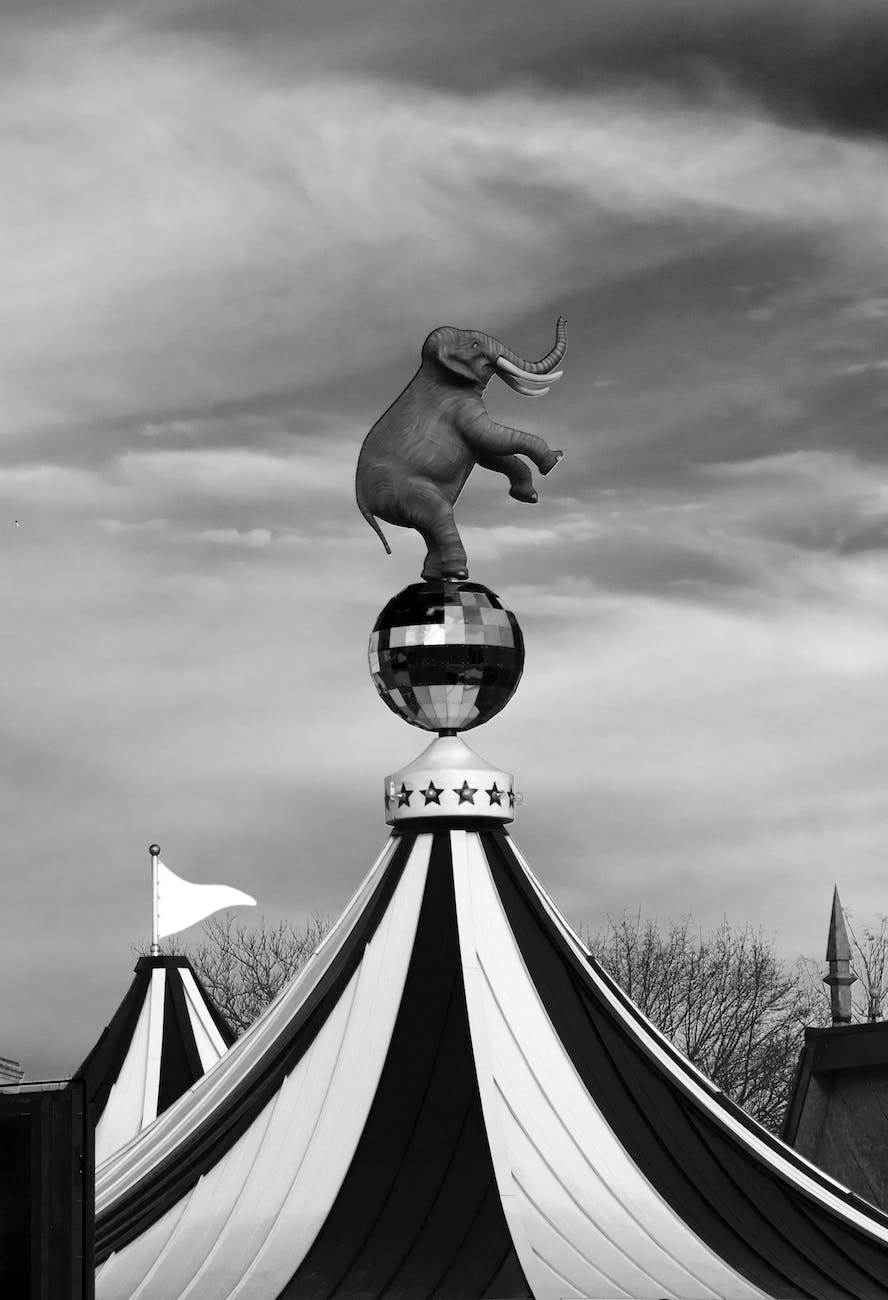
If an elephant was in the room, right now; let’s say the global conference room… it would not know where to look, or what to do, or how to dress or be addressed, or whether it should bow, kneel or stand. Or cry. Or do tricks above the circus tent, anything to wow the crowd before the clowns come on with their buckets and their bumbling sadness. Can you picture that poor elephant, pacing perhaps? Awkward, embarrassed yet emboldened by equal amounts of defiance, disgrace and dismissal? Lurking, its trunk tucked, then pumped towards the sky, the ceiling, like a trumpet in a psychedelic Disney montage? A big, bold emblem of so much adversity and misfortune. A monster of our creation, both discussed and ignored, keeping vigil in the corner, behind the chaise and the hat stand, while all the rest of us try to sneak out, past the picket fence, out into the fields and plough on like tired old horses, tilling the unforgiving ground. Here our trials are caked by the dirt of millennia, marred by the many hardships we yet endure and by the many missed opportunities we each were given to embrace our one existence on this earth. To nurture. The elephant, with serious concern, might raise a tusk to the notion that as we churn the little light we have left, as we eliminate suffering with suffering, greed with greed, hate with hate, judgement with judgement, horror with horror… as we turn from the truth, indeed, we have become… the elephant in the room.
© Christina Cummings 2023
Matter of Time
28th October, 2023
Dodging puddles as we run to the school gates in our stiff new shoes, we have a sense that beginnings are both hopeful and exhilarating, yet they’re pretty scary too. And there is no newer beginning than the start of autumn term. The safe refuge of the summer holiday is replaced with uncertainty and challenge. Even the weather gets serious as the days shorten and the trees shrug off their kaleidoscope of tired leaves. The alarm clock silenced, bowls of porridge scraped, uniforms hunted for and hastily buttoned, we arrive at our desks ~ the homework we did by last night’s lamplight handed in, and our text books, once heavy burdens in our bags, now come to rest.
In this moment there seems to be an order to things. A structure on which we can rely. The subject may or may not hold our interest. We may exchange unnoticed whispers with our friends. The pencil case we brought will hold a keepsake, a pen perhaps, from a gift shop that reminds us of a happy time. The teacher will ask that one pupil who hasn’t prepared, to explain the evolution of an ox bow lake. The lesson bell will ring just before the hour but will startle, still. And so, the day unfolds. Until we’re headed home again, to biscuit tins and TV shows. And then, one day, quite unexpectedly, we are adults.
Hard-wired to the chronology, the ‘back-to-school’ feeling of childhood still resounds, as we’re reminded that our lives are governed by the seasons of time. And as we add a splash of Chianti to our slow-cooked casseroles, summer salads now a distant culinary memory, that sense of transition, of getting our lives in order, glimmers, fiercely. Just as the squirrels are gathering their winter stores, we too, must draw the curtains against the cold. For in the face of uncertain times, there is solace in the order of things. There is comfort in routine.
Autumn may spell a new beginning, despite the chill, despite the loss of light and leaves. Yet, in that first hint of bonfire smoke, in hot spiced drinks, in new woollen scarves, we slide inexorably towards wintertide, braced, but with thankful hearts. This is the season of festivals that celebrate these transitions and other significant holy days ~ Harvest, Thanksgiving, Rosh Hashana, Divali, Mawlid al-Nabi and the new Chinese Moon. Each one symbolized by a shared gratitude and the gift of candlelight.
But, indulging in a little bit of darkness, if so inclined, seems to suit this time of year. I’m often drawn to ‘magic realism’ and horror. They’re seen as genres that can’t be counted as ‘literary’, but I suggest otherwise. I have a broad appreciation for the arts, for philosophy, for poetry, short stories and the novel. The wizardry of magic realism is that the subject need not be dark. The prose though, should conjure at least one imperceptible shiver, as the streetlights glow outside ~ whereas horror addresses the subjects we find appalling, all the more disturbing when written in a subtle manner.
In 2007, I wrote a short story that touched on domestic violence, a dark subject indeed ~ and one on which light must be shed. Like any other previously taboo subject it jars, yet it features in many literary works. From Shakespeare’s ‘Othello’, to Anne Bronte’s ‘The Tenant of Wildfell Hall’ and ‘The Girl on the Train’ by Paula Hawkins, writers have not shied away from the notion of taboo, because life, for all of us, is full of difficult topics.
On a side note, my story was also the product of having read two great books that year. They were set around the pagan festival of Halloween, and their writing styles greatly influenced my own scribblings at the time…
In Ray Bradbury’s 1962 novel ‘Something wicked comes this way’, the opening lines plant intrigue…
First of all, it was October, a rare month ~ not that all months aren’t rare. But there be good and bad as the pirates say. Consider August, a good month: school hasn’t yet begun. July, well July’s really fine. June, no doubting it, June’s best of all, for the school doors spring wide open and September’s a billion years away.
But you take October, now. School’s been on a month and you’re riding easier in the reins, jogging along. And if it’s around October twentieth and everything smoky smelling and the sky orange and ash grey at twilight, it seems Halloween will never come in a fall of broomsticks and a soft flap of bed sheets around corners.
One year, Halloween came on October 24, three hours after midnight. That was the October week they grew up overnight, and were never so young anymore…
© Ray Bradbury, 1962.
We are drawn in, right from the first chapter of Stewart O’Nan’s 2003 novel, ‘The Night Country’…
Come, do you hear it? The wind – murmuring in the eaves, scouring the bare trees. How it howls, almost musical, a harmony of old moans. The house seems to breathe. Leave your scary movie marathon; this is better than TV. Leave the lights out. The blue glow follows you down the hall. Go to the window in the unused room, the cold seeping through the glass. The moon is risen, caught in nodding branches. The image holds you. Black trunks backlit, one silver ray fallen across the deck, beckoning. It’s a romance, this invitation to lunacy ~ lycanthropy, a dance with the vampire ~ elemental, yet forbidden, tempting, something remembered in school.
Don’t you ever wonder? Don’t you want to know? Come then, come with us, out into the night…
© Stewart O’Nan, 2003.
In fact, Stewart O’Nan, a self-confessed admirer of Ray Bradbury’s work, dedicated his book to the author, so influenced was he by the use of disquieting prose. So, in that same spirit, this excerpt from the preface of the short story I wrote in 2007, entitled ‘The Last Treat’, has elements of both their writing styles…
The wind is discreet. It filters through the birch trees, barely kissing them, funneling, like cigar smoke from old lips across the lawn; the cut grass unaware. It stops at the door, timidly, as though seeking permission to enter here. This stale room screams for its life; begs for air. Throw open the window, and you’ll gulp for the lack of it. You’ll hear nothing out there in the half-light, see nothing. Night has its purpose. It reminds us that we must stop awhile, shed our drowsy, too-familiar skins, lay down our smoky birthday-candle-wishes in place of dreams. Restore. But some nights, if we wake before we’re ready to, it can feel like a death, sudden and silent, and… and most nights, now… it feels more like our own.
You must recall that first time. It was late autumn, the windowsills and doorsteps in the crescent glowed with the bared and snarling teeth of carved pumpkins. Wood smoke lingered in the night sky. Indoors, locked safe from the witches and zombies that roamed the neighbourhood in search of treats, we shared a bottle of Château La Garde and bowls of lamb ragout. You said I’d never looked prettier. I believed you. A lovers’ truth in the shape of a kind lie. But the promise that evening held was stripped and maimed. You remember, don’t you? It was the wine perhaps.
Yet, in the morning, turning up the collar of my coat as I faced the world, I was hardened. Treading reluctantly upon this inexorable path you’d steered us on, my love, you must have known that it was only a matter of time…
© Christina Cummings
[ Re-published article, from 2019 © Christina Cummings ]
Nude Woman
27th October, 2023
Impossibly Paleolithic, you are! Yet the slope of your breasts, swollen as the stretched and hanging fruits on sun-drilled slopes, suggests otherwise. Behold the curve of your stomach ~ a haven for life, conjured there, as much a miracle as any biological delight. Indulge yourself on rare meats and figs and stiff cheese churned from the milk of bleating goats with mayoral beards. Take a swig from the cider jar, apples have never been so sweet. Wipe what’s been spilled and as you rest, pillowed by wide-angled buttocks, may you sleep like the goddess, whose name you’ve been given. Venus of Willendorf, it says, a post-prescient prerogative of history books. Named at all, but that you’d been found, nude woman, once hidden in your earthly tomb. Your ochre skin kept as soft as the day you were made.
© Christina Cummings 2023
‘Venus of Willendorf’, or ‘Woman of Willendorf’, is an oolithic limestone artefact ~ possibly an early fertility deity ~ carved over 30,000 years ago and unearthed in Austria in 1908, by a team of archeologists. The artist, whose manifestation is both an exaggeration and a true likeness of womanhood, inspired me to write a few lines of appreciation, as I sipped my morning tea.
The Last Shroud
25th October, 2023

Is it possible to feel love for a mountain peak? For tyre tracks and unmarked trails? For horizontal rain? And gullies, formed where puddles rarely blot? At the very start of the track, just behind the strip of tarmac where the 4x4s huddle, there is an iron gate. To pass through is to make a promise. No point walking just a hundred yards; the only way is to the top. The trail winds, like a wisp of birthday candle smoke, the kind that leads off into some unruly scrub. Unseen from the road, it meanders slow as a lover’s first kiss and weaves the slopes, unhurriedly. It remains a hidden place where only those who know its secret tread. They move with the sure-footed tenderness of deer who slide behind the trees like shadow puppets in a cardboard theatre house. The mist will settle and that will be the moment when all feels lost. There will be rest stops and thirst and aching limbs. And the trail will stretch and stretch and stretch like cheap taffy in a seaside shack. But the peak is the place; high above the valley, with a curlew’s eye the grasslands are a rolling sea. And up there, where clouds and stars are the last shroud to all those you’ve ever held… well, yes, it feels like love.
© Christina Cummings 2023
Into Your Arms
8th October, 2023

Someone’s Muse
A poem, by Christina Cummings.
Autumn nudges me, with a shiver,
closer to the hearth.
Cosy to the bone, I sit,
watching lit flames;
glad of their joyful capers.
Last year,
Autumn glowed
with all the promises you made,
as I danced into your arms.
But years seldom pass
without lessons.
Tomorrow, when the grate is tomb-cold
and I’ve drunk coffee
from my favourite cup,
I’ll crawl into the attic,
through webs,
to find that winter coat,
the one I bought in Paris,
in the rain,
on a wine-glazed shopping trip.
It will suit this season;
umber and ochre go well with October,
with its steel blue skies,
and grey-mist mornings.
I’ll tie the belt at a jaunty angle
and set the hood, like a widow walking out of church.
I’ll pair it with knee-high leather boots,
the kind an actress in a cine-film would wear with nonchalance,
like I’m in an outtake,
where I’m caught off guard,
like I’m someone’s muse.
© Christina Cummings 2023
Briefly Held
18th September, 2023

Scattered wildflowers, their milky stems severed,
form a bunch in my fist.
Harebells, daisies, cowslip,
sheep’s sorrel and the pear-green-purple corn mint.
I twirl them, in the low light of reluctant sundown,
and breathe in their mingled scents,
my exhalation, more of a long slow sigh, ruffling their petals.
I have a furrow to my brow, that yields only when I touch my cheek
to find the tear that like a lonely dewdrop settles there.
And as I weave the gravel path that cuts the churchyard into two neat halves,
the bells jar and clang so loud the whole world might hear them, even as it sleeps.
I stand, before the wooden doors, amongst the metamorphic blocks, the storm-grey flurried angel’s wings and marble, stolid, white as clouds.
The menthol vapour rises from the wilting blooms.
And all seems lost to me,
save for our hearts welded, ethereally now, like the iron pickets of the churchyard gates.
How we lived! We did, didn’t we?
And yet… how tight we clasp to last goodbyes…
to all the last unknowing things we briefly held.
© Christina Cummings 2023
*************************************************************
The Hands of Evil
21st August, 2023

She rightly predicted one thing: Scrawled across a chaotic post-it note, were her prescient words: “I’ll never have children or marry, I will never know what it’s like to have a family” This being just after her 2018 arrest indicates that she knew, that somewhere down the line, she would be found guilty of her murderous crimes and would never again set foot outside the walls of prison. Because her crimes were heinous, only fitting for the most grotesque of horror films; the kind that make you physically sickened, it’s hard to believe. Yet, beyond all comprehension, for the tiny babies whose lives she stole and those who, not unscathed, escaped her clutches, this is most tragically, a true story.
I still shiver as I walk by the maternity unit, on my way into work through the front entrance of The Countess of Chester Hospital. Not least because of the unthinkable pain and suffering she caused to the most innocent and vulnerable babies that were being cared for, there, but because my own son was born there, thirty years ago. Ironically his birth was shortly after the 1990 newborn kidnap case, at St. Thomas’ Hospital. I was so fearful that my son might be abducted in the same way, that I did not leave his side the whole time, not even to go to the bathroom. It made for an anxious start to motherhood, and though the staff there were not a threat to us, I couldn’t wait to get out of the unit to the safety of home.
As a fellow nurse, it shocks to the core and saddens me, deeply, that anyone could find it in their heart to carry out such wicked and calculated acts of inhumanity. To get up in the morning, to eat a bowl of cereals with a sprinkle of sugar perhaps, while contemplating the day ahead, to tie loose hair up into a smart ponytail and proudly pin a name badge to a uniform. All innocuous stuff of course, unless that name happens to be, ‘Lucy Letby’.
Watching the Judge, Mr. Justice Goss, read out the sentencing today, it’s hard to imagine the scene across the courtroom, where the parents and families of the babies whose lives she so callously disregarded waited to hear his decision. Their pain is simply inconceivable. Their trust broadly damaged beyond all repair. The ramifications of which are felt by us all. Who can we trust, if unknowingly, any one of us might place our good faith into the hands of evil?
Literary Group
17th July, 2023
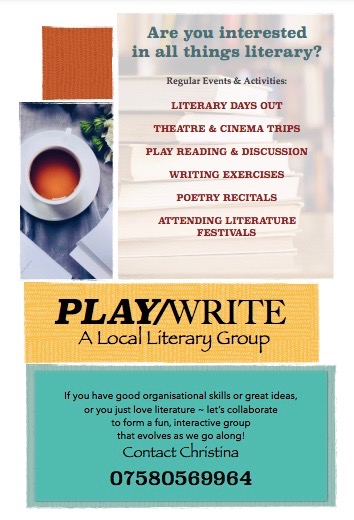


I’m starting up a local, collaboratively run literary group called ‘PLAY/WRITE’.
If you’re a Chester area/North-East Wales resident do get in touch if you’re interested in writing, sharing a work-in-progress, play reading and discussion, theatre and cinema trips, literature festivals and literary days out. It’s intended to be fun, informal and ever-evolving. And, all things literary, of course ~ with some wine, cakes and popcorn thrown in!
Food for Thought
27th June, 2023

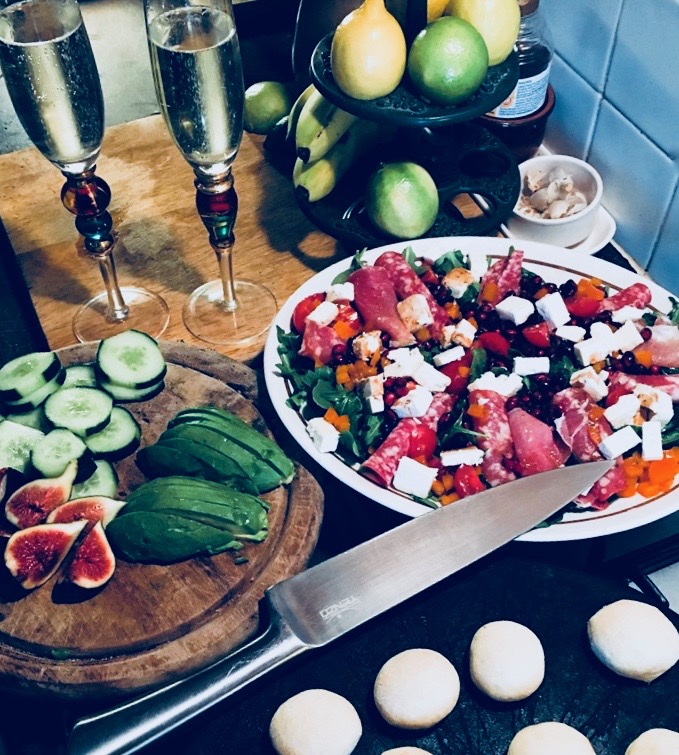
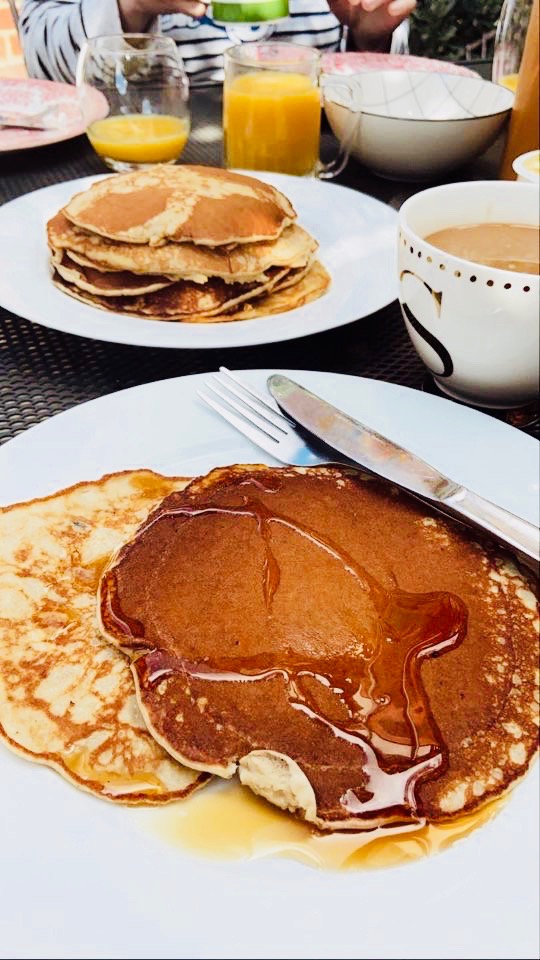

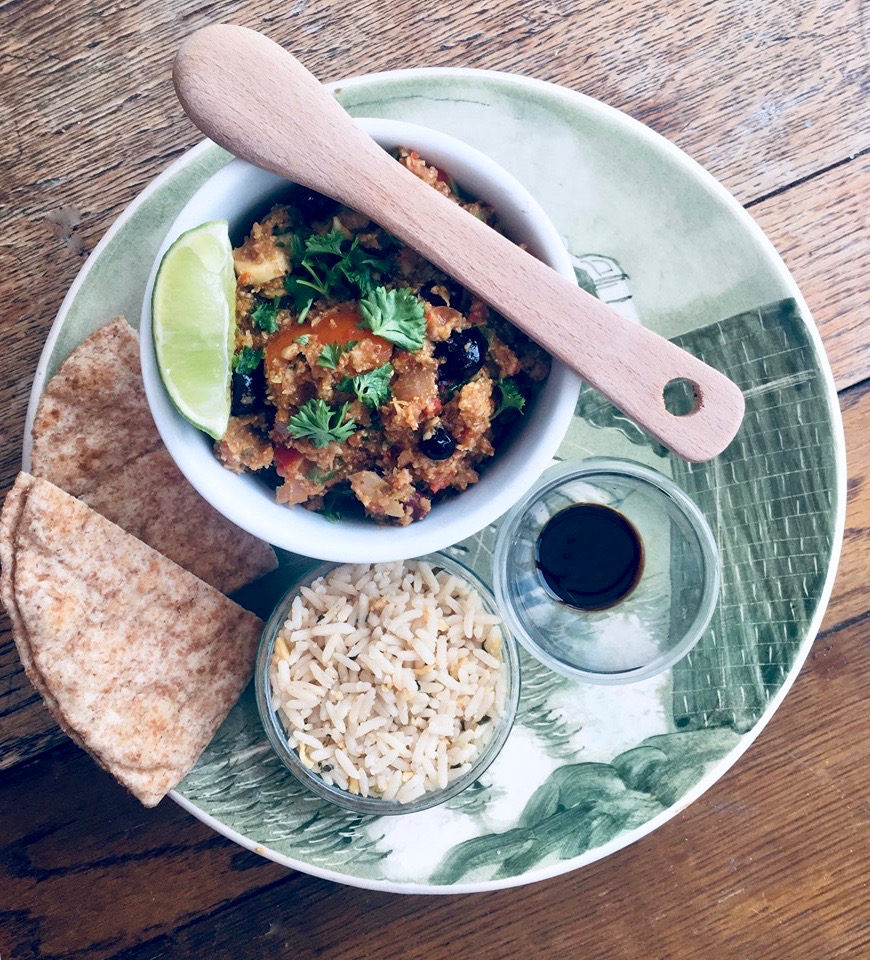




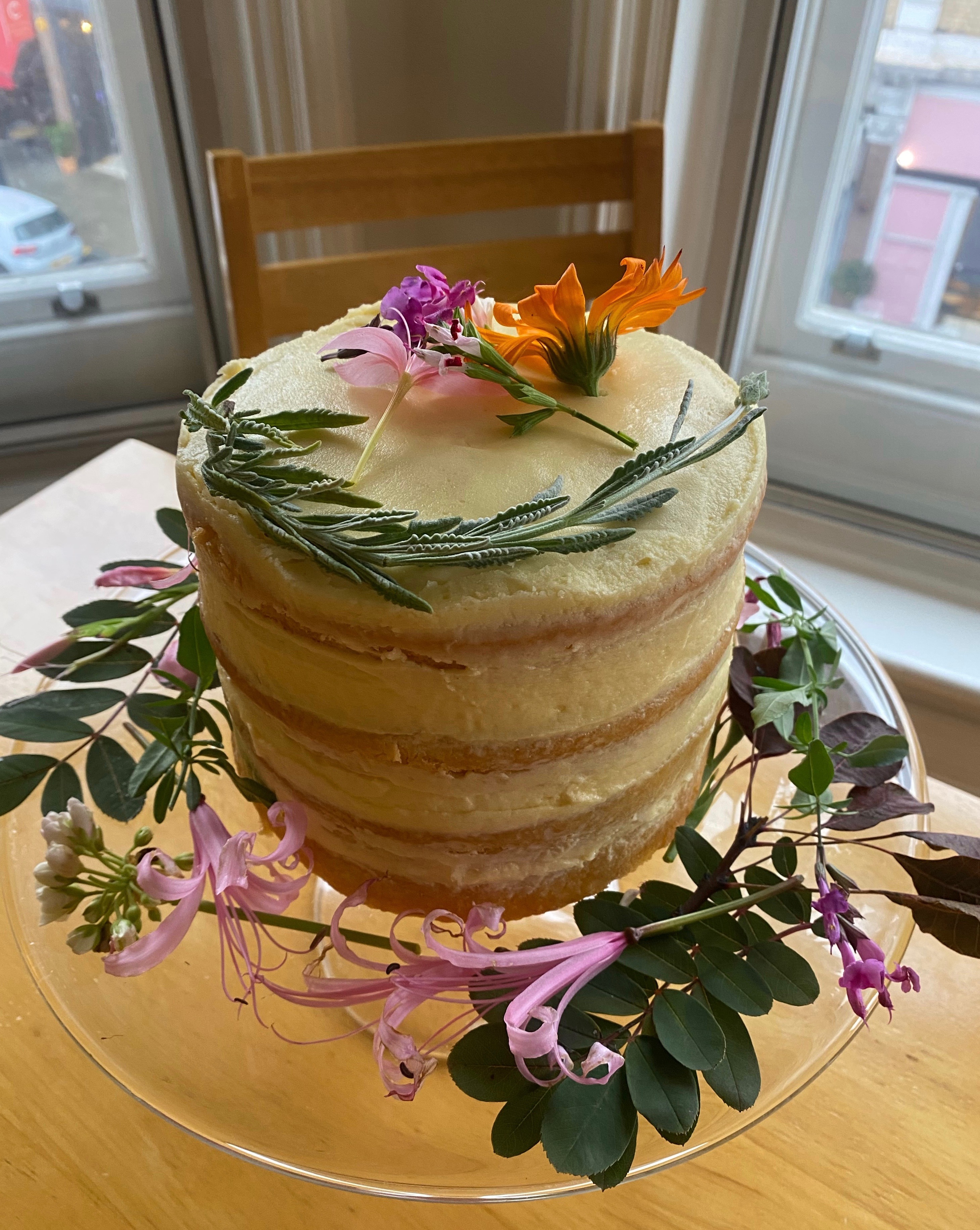


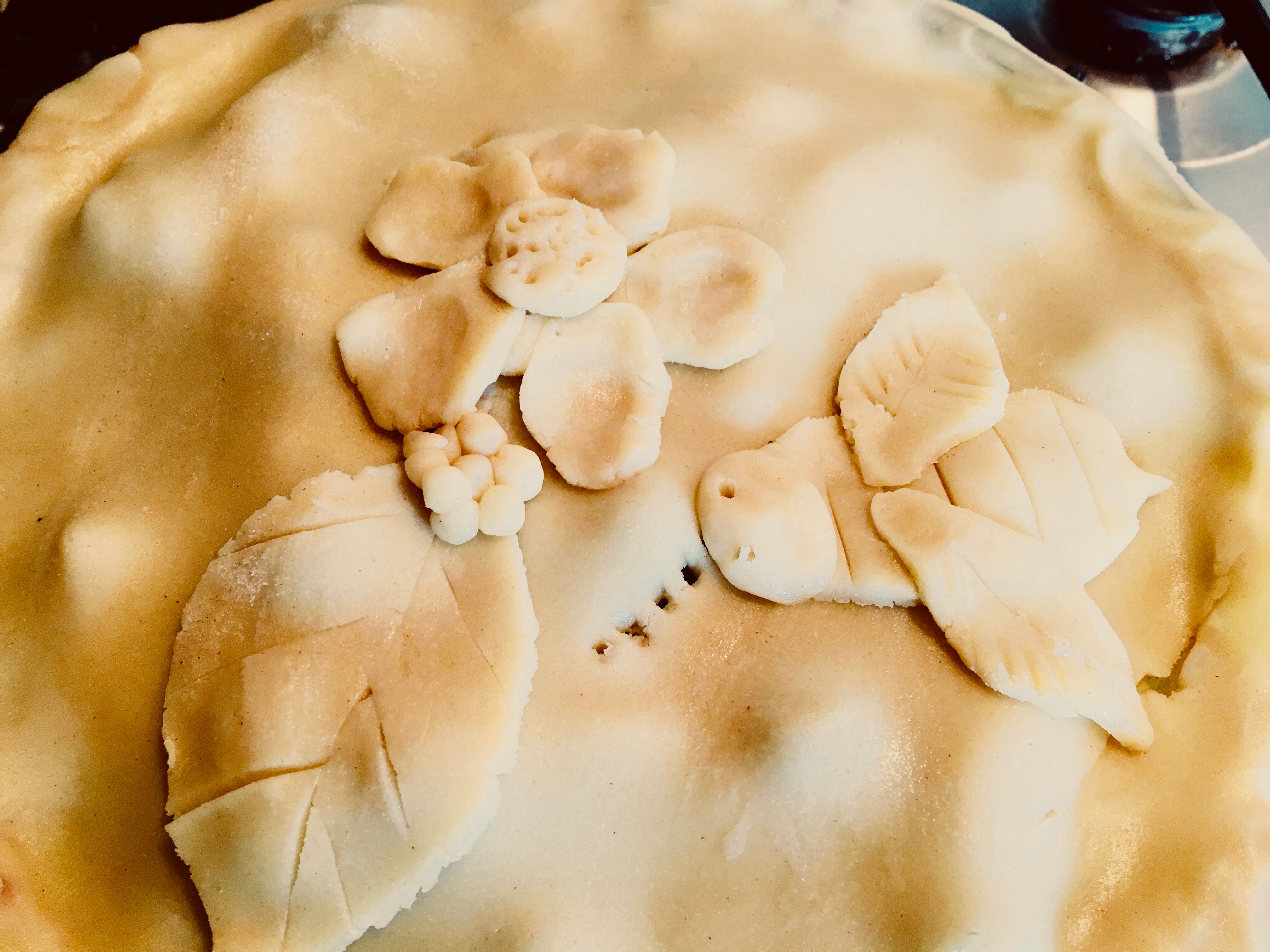
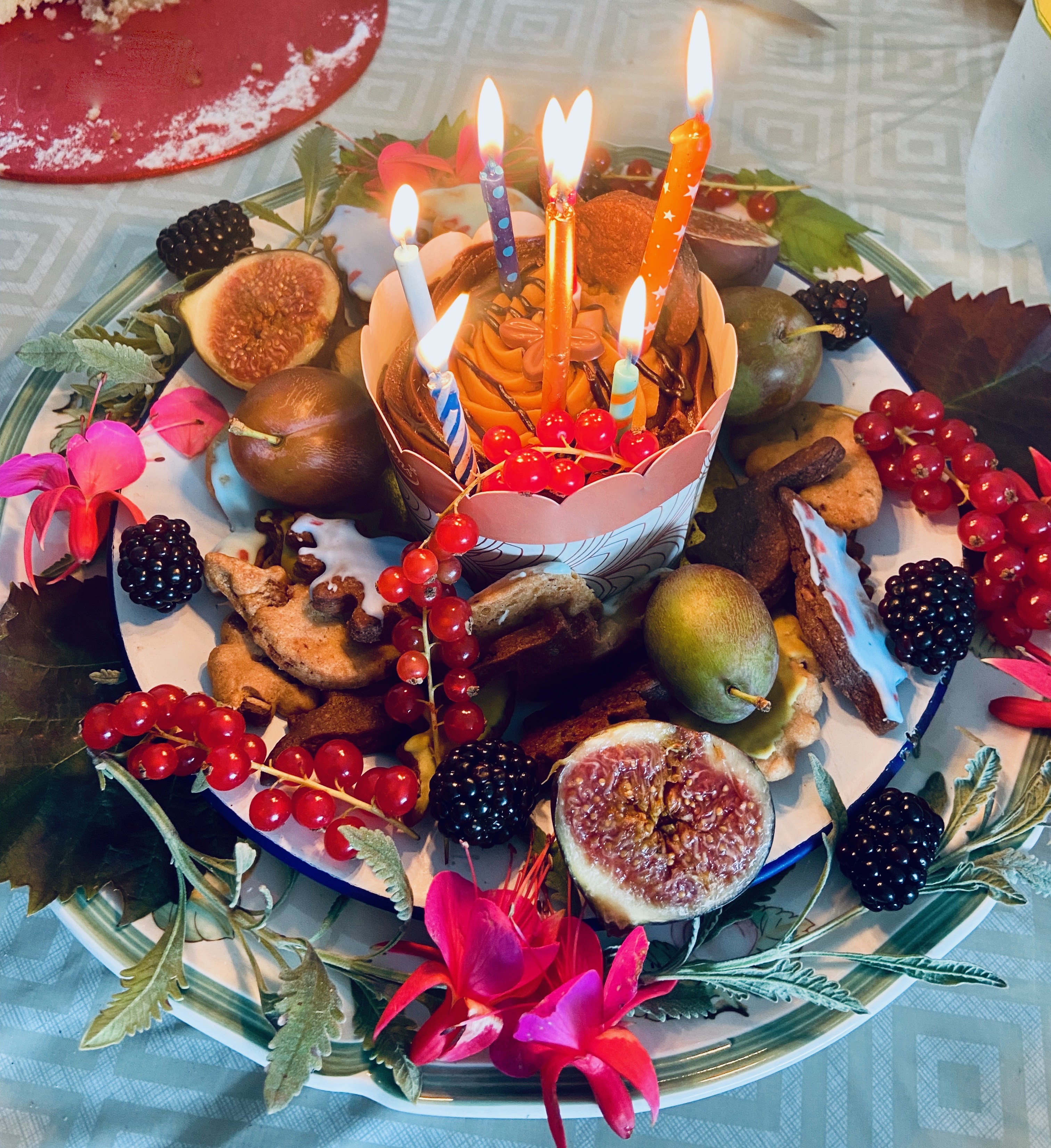
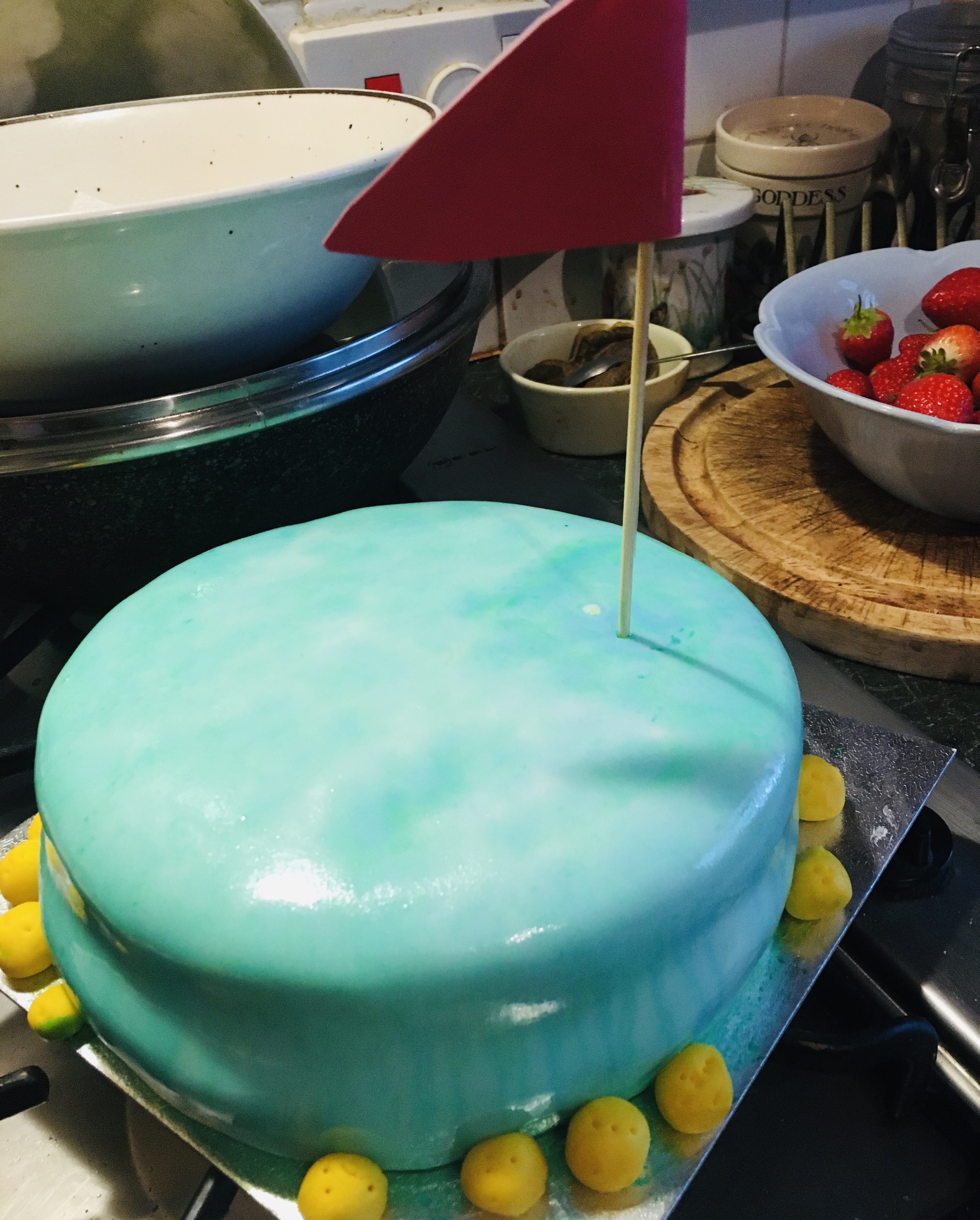








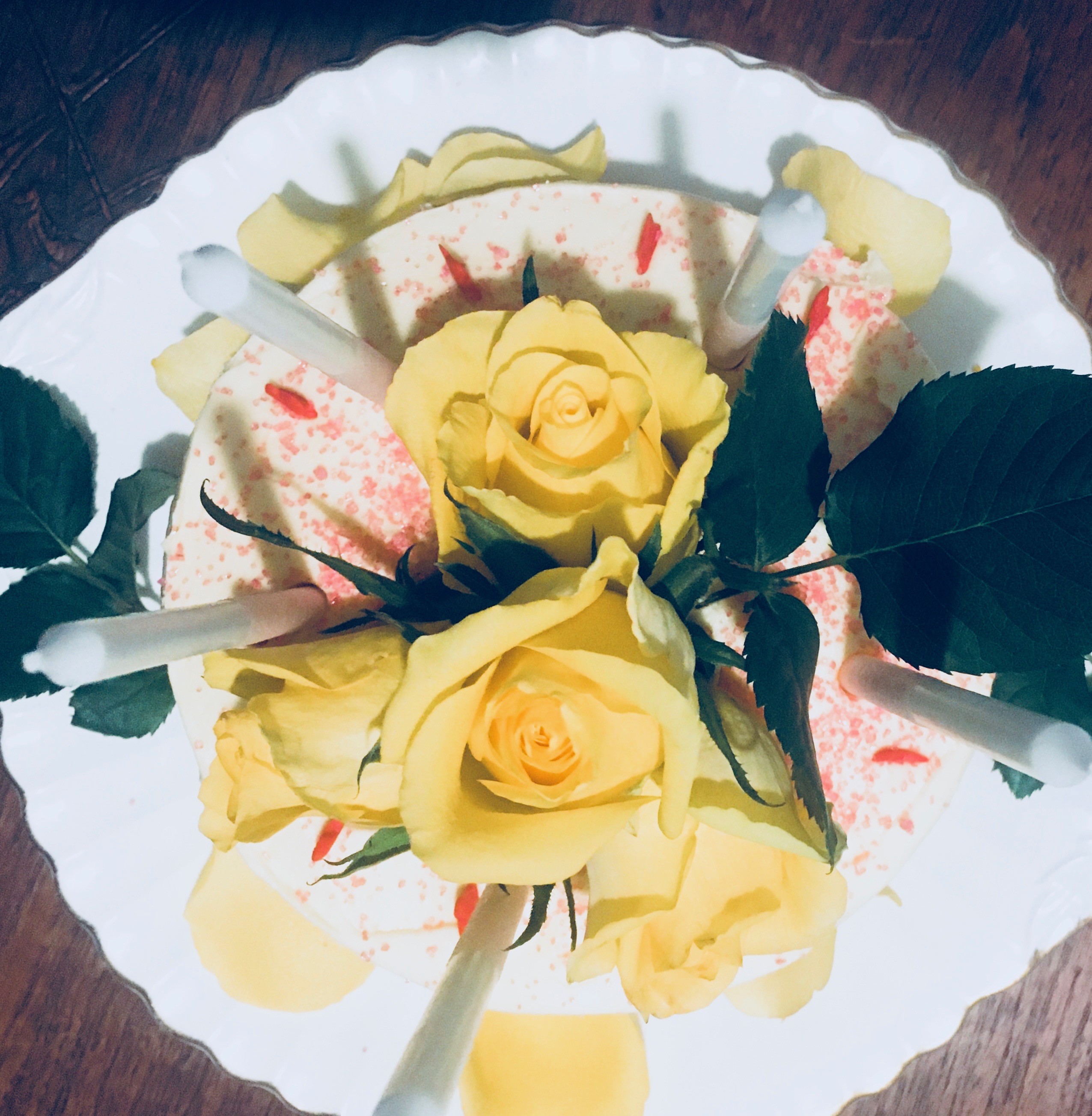


I was going through my old camera rolls and decided to make an album of some of the food that I’ve made in recent years ~ hence the photo drop! I love to cook, to bake, to decorate ~ assembling it all before it’s devoured. And, of course, it inspired a quick poem…
Cakes and Other Things
You have flour on your shirt,
daubs of white, like you’ve stepped from a cartoon explosion,
slightly bewildered, but otherwise unharmed.
I take the soft tea towel from its perch
and with a playful flick make a powder puff of you.
You surrender to it.
And then we wait ~ we’re like children again, in the kitchens of our respective mothers.
The timer set.
The big bowl licked and already soaking
in lemon-scented suds.
The air filled with hot vanilla.
You used proper plates back then, and a silver fork.
I used my hands, straight from the oven.
How we do things differently!
It’s like that, I guess, with cakes and other things.
© Christina Cummings 2023
Open Road
3rd June, 2023
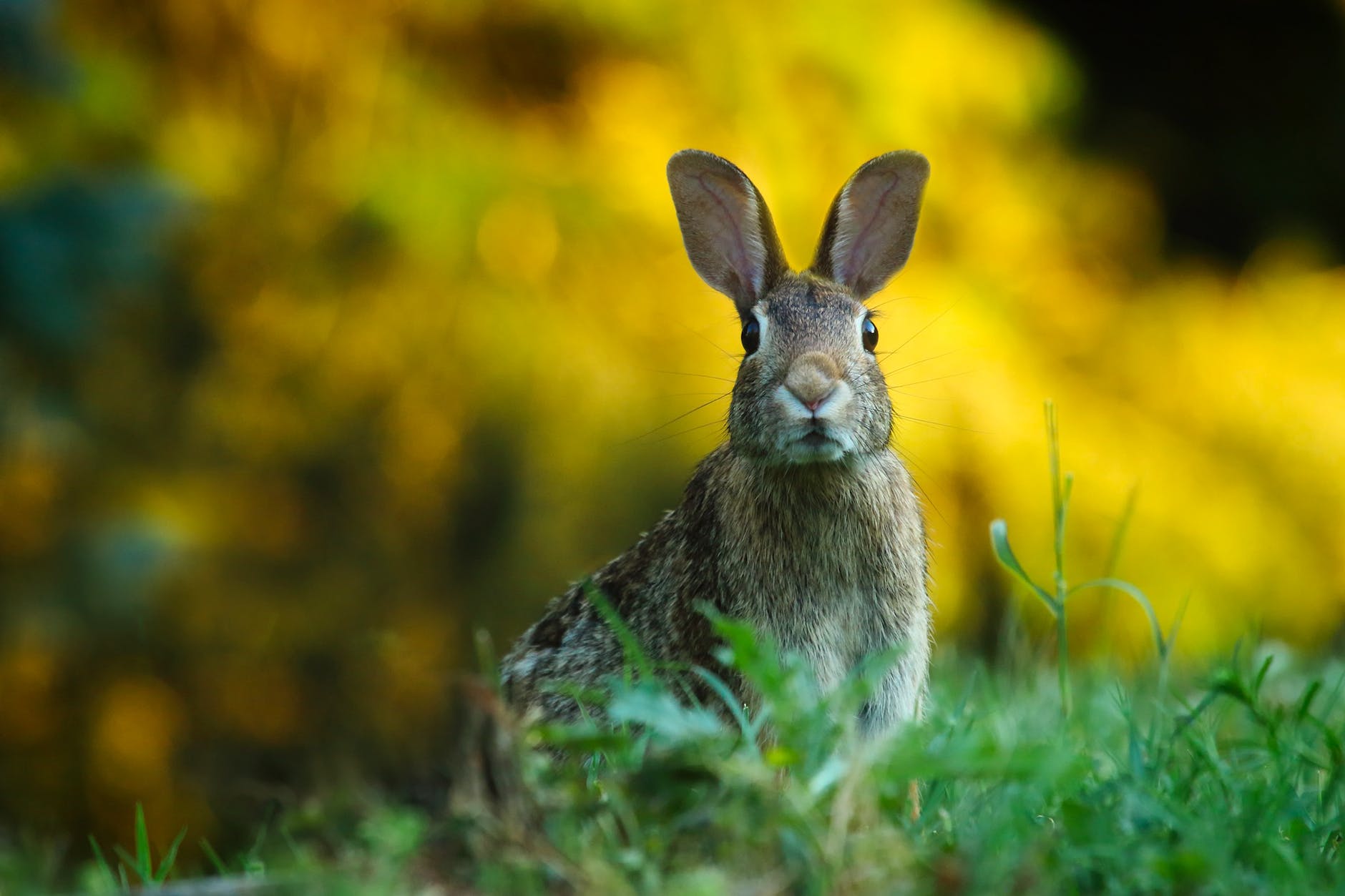
The Drive Home
Driving home, about an hour before sundown,
the roads are quieter,
save for the pigeons and the crows that by near-day’s-end have had their fill,
Of tiny snouts and purple hearts and pink livers that were pumped with blood this morning.
These scavengers (not my word for them) settle on the tarmac, heavily;
it takes them longer when they take to flight,
so I’m braking every quarter mile, to spare them.
Ahead of me, five rabbits dash across the lanes,
They’re baby ones, all nut brown ears and amber eyes.
I fear, ‘What if there’s another one?’ A last one? A timid one? A mischievous one? A frightened one?
So I decelerate to almost-stop and cruise by the hedgerow, slow as a ship to port.
I pull away again to the open road,
and imagine if I listen,
carefully,
I will hear the mother’s breath…
…release…
as the last one reunites with her,
and her litter is complete.
© Christina Cummings 2023
To write like Virginia Woolf
8th May, 2023

Excerpt from, To The Light House by Virginia Woolf.
So with the lamps all put out, the moon sunk, and a thin rain drumming on the roof a downpouring of immense darkness began. Nothing, it seemed, could survive the flood, the profusion of darkness which, creeping in at keyholes and crevices, stole round window blinds, came into bedrooms, swallowed up here a jug and basin, there a bowl of red and yellow dahlias, there the sharp edges and firm bulk of a chest of drawers. Not only was furniture confounded; there was scarcely anything left of body or mind by which one could say, “This is he” or “This is she.” Sometimes a hand was raised as if to clutch something or ward off something, or somebody groaned, or somebody laughed aloud as if sharing a joke with nothingness.
Nothing stirred in the drawing-room or in the dining-room or on the staircase. Only through the rusty hinges and swollen sea-moistened woodwork certain airs, detached from the body of the wind (the house was ramshackle after all) crept round corners and ventured indoors. Almost one might imagine them, as they entered the drawing-room questioning and wondering, toying with the flap of hanging wall-paper, asking, would it hang much longer, when would it fall? Then smoothly brushing the walls, they passed on musingly as if asking the red and yellow roses on the wall-paper whether they would fade, and questioning (gently, for there was time at their disposal) the torn letters in the wastepaper basket, the flowers, the books, all of which were now open to them and asking, Were they allies? Were they enemies? How long would they endure?
So some random light directing them with its pale footfall upon stair and mat, from some uncovered star, or wandering ship, or the Lighthouse even, with its pale footfall upon stair and mat, the little airs mounted the staircase and nosed round bedroom doors. But here surely, they must cease. Whatever else may perish and disappear, what lies here is steadfast. Here one might say to those sliding lights, those fumbling airs that breathe and bend over the bed itself, here you can neither touch nor destroy. Upon which, wearily, ghostlily, as if they had feather-light fingers and the light persistency of feathers, they would look, once, on the shut eyes, and the loosely clasping fingers, and fold their garments wearily and disappear. And so, nosing, rubbing, they went to the window on the staircase, to the servants’ bedrooms, to the boxes in the attics; descending, blanched the apples on the dining-room table, fumbled the petals of roses, tried the picture on the easel, brushed the mat and blew a little sand along the floor. At length, desisting, all ceased together, gathered together, all sighed together; all together gave off an aimless gust of lamentation to which some door in the kitchen replied; swung wide; admitted nothing; and slammed to.
© Virginia Woolf : To The Lighthouse c1927
Gentle Reminder
1st April, 2023
It can, at some point, feel like the very things we seek no longer thrill us. Or, even if they do, the effects don’t last as long as we’d like. Perhaps this explains the restlessness that vies for our attention, fuelled by the fear of failure in our life-goal expectations. No wonder we’re confused. What if we did everything right? Concentrated just enough at school to pass our exams. Resisted the temptation to raise a hammer to the piggy bank. Treated people well. And now, in fair to middling fortune, despite nursing some losses and reaping an abundance of rewards, there’s a sense of lacking. And no amount of things; air travel to exotic places, bench presses at the gym, rear-view mirror flirtations at the lights or even good red wine appeases that tiny voice that in the early hours whispers: ‘What now?’
For some, it may be enough just to be alive. That’s to be admired. To be alive is a mind-blowing concept, steeped in elemental wonderment and mystery. We doff our existential caps to the mere notion. But to ‘feel’ alive? To truly live? Isn’t that the antidote to fear and doubt? I’m not so sure. Perhaps restlessness is a requirement for that. And as Aristotle said: ‘The person, then, who faces and who fears the right things and from the right motive, in the right way and from the right time, and who feels confidence under the corresponding conditions, is brave …’
And so when the whispery breath of doubt intrudes, take heart. The only thing lacking from our lives, is our ability to embrace the restlessness and its gentle reminder to be kind to ourselves.
Y Mis Bach
11th February, 2023

Aaah February, the giver of snowdrops and the sturdy primrose and brimming hearts. I sense the days stretch, as winter wastes away. Anticipation and relief combine to form a most perfect cosiness. Ideal conditions for writing. Let the creativity flow. Goodbye my little Blog, for a good while anyway.
Monochrome Series
6th February, 2023



Everything’s not always black and white, and some poems don’t rhyme. Here’s one.
Lost In Transmission
Snow Angel to Spring Frost!
What’s my signal strength?
Can you hear me?
Go ahead.
Roger that!
Affirmative.
Say again.
Stand By.
Wait Out.
Whispers: India…Lima. Oscar. Victor. Echo.
Stand By.
Yankee. Oscar. Uniform.
Message received and understood.
Over and Out.
© Christina Cummings 2023
For a Terrible Fever
5th February, 2023

I set down the heavy pan and holding a struck match to the stove watch yellow tipped flames leap to life. A sturdy slug of oil and the herbs I’d picked from the un-shady side of the walled garden fill the kitchen with the scent of ancient rites. Rosemary, for remembrance; the earthy-green oil drifts from its spiked needles, like a volatile cloud. One branch has flowered. I picture a wedding in ancient Rome, the river-blue petals entwined in a bridal wreath. The tiny calyx uncurls like slow fingers as the oil burns.
Rump, bathed overnight in whisky sour ~ a recipe I’d conjured once, when uncorking a stout red I’d brought back from France, I’d finished off the bottle, even before the meat had thawed ~ is placed, gently, onto the base of the pan, the way a sleeping pup might be returned to its litter. As the pink flesh browns, I add the liquor, inhaling the fumes like they’re menthol vapours mixed for a terrible fever. I add shallots and sticky lardons and enough garlic to keep the vampires away, and then the whole pan sizzles.
There’s a clearing at the table, among the books and the pots of paint and bright shells plucked from the coasts of foreign climes. I set my plate down, and take a bread knife to the sourdough. One slice will suffice. I look across the table, as was my habit, and I see your placemat peeking out beneath a folded map and a newspaper cutting. The empty space that was your favourite chair, seems to me more filled with your presence… now that you’re gone. Life is inscrutable that way.
© Christina Cummings 2023
Mercurial Skies
4th February, 2023
Just a bit more fiction writing, another excerpt from my latest work in progress…
You could get old here. That is if you listen to those who say that youth is wasted on the young, blah, blah. Youth is not a one-chance commodity, it is a life-long frame of mind. It’s like capers, or a Pecorino stagionato kept for years, still just as good and as strong as when first procured. Youth does not inhabit flesh nor bone, it is the mitochondria of the soul. And as I kick my shoes off at the door, I’m inclined to think, to believe, that, like the contents of my fridge, (since I left the flat all those weeks ago, before I was summoned to The Manse), youth never moulders.
I switch on the one bare bulb in the hall. Boots and coats spring forth. The kitchen, set off to the right, is just as I had left it. Even the cigar I’d puffed on while awaiting a taxi to the airport, lies stubbed on a plate with an air of frantic abandon. And the hand towel I’d forgotten to fold, lies scrunched on the dish rack, dried to leather now.
I place my briefcase on the counter top; it seems to be judging me. After all, it has been my only companion for these past few weeks, traversing miles of pitted tarmac and endless, mercurial skies, with me at its side; the ‘me’, that is, when I’m not stuck here with potted plants that droop, now, in fatal curtsey and the slew of dead flies on the coffee stained windowsill. I open the fridge. There must be something I can have; I know there’ll be beer, at least. I twist off the lid and toss it into the sink, like I did with those coins into that fountain (the one where we said our last goodbye). And then I swig at the cold bubbles, like a thirsty child. The other contents, it appears, did not survive. Perhaps my metaphor for youth was said in haste and it is only the true and gritty parts of us that make it past our ‘use by’ date. In any case, three beers in, and none of it matters. None of it matters, in the end.
That is, until my home screen glows and your message comes through. I imagine the trepidation of opening a telegram, or further back, unravelling a scroll. A slow reveal. Time to grit one’s teeth. To breathe. Yet, there they are, naked on the screen, the words that started this whole thing off. The sudden departure, the eery manse. Don’t tell me you didn’t find it scary too. I could tell. Your eyes darken when you’re least yourself.
© Christina Cummings 2023
Make the Moment
30th January, 2023
We all get stressed. Even those with the most laid-back-tomorrow’s-another-day-it-is-what-it-is approach to life’s niggles and battles ~ even they lose it at times. I’m not one of them. And by that I mean, I’ve never been laid back enough to not overthink, to not care. Until recently that is. I’ve been on a journey of miraculous self discovery. I used to worry all the time. Before being diagnosed with generalised anxiety disorder, a few years back, I genuinely thought that it was just ‘me’. That somehow my personality was a fixed supposition, like my date of birth or DNA. It didn’t occur to me that the ‘me’ I’d become was shaped as much by circumstance as my reaction to it. Moreover, it seemed wrong to try and change it. ‘This is me,’ we all say, ‘I am what I am!’
Not so.
Just as we are often blind to ourselves, we all have the capacity to challenge ourselves. To recognise when we’re not our best, when our old ways don’t serve us anymore. Our stubbornness or procrastination, our over-reaction to a throw away comment; these traits are not pre-ordained. We learned early on that certain ways of being got us noticed. Behaviours that ensured our survival brought about reactions in others. Cry; you got milk. Scream; you got the toy. It was all so simple. Until we reached adulthood and things weren’t quite the same. Or were they? Adults are, after all, just bigger versions of the helpless newborn we once were too. All of us longing to be noticed, just so we can thrive. All enacting ‘ways’ and behaviours to either give or gain something back. Approval, respect or even punishment by isolation. Sulk; you might get flowers. Snap; you made your point.
Yet we don’t just have such traits to annoy those around us. We are in fact just trying to avoid danger whilst provoking it at the same time. The yin and yang of thrill and peace. A balance, some might argue, that is a lifetime’s work. Danger comes in many forms. A volcano threatening to blow, a ravenous tiger, a tidal wave. These situations would be rare for most. All too often though, our sense of self and calm is threatened by something un-wild, something commonplace; we are, quite vulnerably so, at the mercy of ‘moods.’ Mood can make the moment. Perhaps if we hadn’t lost our keys that rainy day, or if we’d slept for an extra hour, drank less coffee, given more hugs, then maybe, just maybe, we would not have made that wrong left turn or shouted at the cat. Maybe we wouldn’t have broken up with the person we still think about. Or stayed with the one we don’t. Maybe, just maybe, it is our moods and those of the people around us that makes our moments, our choices, our decisions. Our destiny. Tomorrow is another day, until it’s not. So let’s challenge ourselves to make it the best it can be.
Such Sights Colder
16th January, 2023
Spring and Fall
A poem by Gerard Manley-Hopkins
Margaret, are you grieving
Over Goldengrove unleaving?
Leaves like the things of man, you
With your fresh thoughts care for, can you?
Ah! as the heart grows older
It will come to such sights colder
By and by, nor spare a sigh
Though worlds of wanwood leafmeal lie;
And yet you will weep and know why.
Now no matter, child, the name:
Sorrow’s springs are the same.
Nor mouth had, no nor mind, expressed
What heart heard of, ghost guessed:
It is the blight man was born for,
It is Margaret you mourn for.
© Gerard Manley Hopkins (1844–1889 )
#BrewMonday ~ https://www.samaritans.org/wales/support-us/campaign/brew-monday/
Satisfying Thud…
14th January, 2023

A little sample of my recent writing, taken from the latest work in progress…
If you’d placed your hand flat, like a high five, onto the flocked wallpaper at The Rat Catcher pub, your palm would stick ~ but that was back in the day, when a century of pipes and fat cigars were exhaled by the beer-lined throats of townsfolk and travellers who, passing through, admired the bugles slung above the fireless grate. Touch thumb to fingertip and for a good while after they’d have tap-tap’d in irritating tack ~ you know, the way it feels when you’ve just wiped honey from your chin. But now, the walls are cleansed in shades of Peignoir and School House White and above the wood burner licked by flames, an abstract painting hangs. If you gaze at it hard enough, you might see a tigress with turquoise stripes or an Icelandic mountain range. Or when the lights are dimmed for cocktail night, a secret Caribbean cave. Over in the far corner, low-lit by a bottle-glass window overlooking the high street, are empty time machines: four upright chairs, where the whist players used to sit, oblivious to the steel-tipped darts that whirred past them, like arrows through the pines of an ancient forest. If you listen close, you can almost hear them, still, as they’d pierce the board with a satisfying thud.
© Christina Cummings 2023
Mirrored in Songs
8th January, 2023
One of the things I loved about being in Winchester was the proximity to a writer whose private life and untimely death I found intriguing. I had my photograph taken sitting at Miss Austen’s writing desk in the Chawton cottage where her novels were created. As I held the quill, I promised myself that I too would be a published author. And to this end, I still aspire. Having seen many adaptations of several of Jane Austen’s works, both on stage and on screen, I watched the Netflix film, ‘Persuasion‘ with trepidation having read the negative reviews. But, to hell with the opinions of those who can’t appreciate the evolution of story telling! I thoroughly enjoyed it, not least because it got me writing again. It’s been a few months since I last picked up my work in progress. And, furthermore, because it reminded me that all good stories can be mirrored in songs, like this one from the final scene…
Quietly Yours
White sails and off shore lights
We were passing ships in the night
Now I’m tracing shadows on your back
Like I dreamt so many times
Oh, for so long I’ve been waiting
For so long, for a love like this
And I was so sure, baby
I’d lost you for a minute but
There’s the sweetest
Spring at my door
Can you feel it?
Just the same as before
Many years have gone by
But I knew you’d come
Quietly keeping
This hope in my heart
Prayed the night bring
Back what I lost
Many years have gone by
But I never forgot
I’ve always been yours
Only yours, mm
There was a time when I let you go
Allowed myself to be swayed and pulled
But for all my days I make a vow
No words could ever shake me now
‘Cause for so long I’ve been waiting
So long, for a love like this
And I was so sure, baby
I’d lost you for a minute but
There’s the sweetest
Spring at my door
Can you feel it?
Just the same as before
Many years have gone by
But I knew you’d come
Quietly keeping
This hope in my heart
Prayed the night bring
Back what I lost
Many years have gone by
But I never forgot
I’ve always been yours
Only yours
Quietly yours
Only yours, mm
I’ve always been yours
Only yours, yeah
Quietly yours
Only yours, yeah
Source: LyricFind
Songwriters: Jasmine Van Den Bogaerde
Quietly Yours lyrics © BMG Rights Management
Stranger
1st January, 2023

New Year’s Eve, a poem by Christina Cummings
How the wind howls.
Sharp blasts hurl insults at the roof tiles;
they cling to the rafters, like scared mice.
I sip whisky as the fire dies.
It always dies, well before midnight,
before I head up the chilly stairs, to bed.
My dog, ears cocked to the creak of the gate,
growls.
And wrapping the shawl about my tired frame,
I rise to peer out at the night, silenced yet, before the clink of crystal,
before the hoots,
before the coil and spray of golden trails,
a psychedelic pyrotechnic battlement above the steeple,
above the schoolhouse and the butcher’s shop beside the King’s Arms.
There, stood quiet as a fir tree, on my porch
a man, his hand outstretched, waits.
A knock never sounded with such certainty.
I hover and pace,
but beckoning can never truly be ignored.
‘Stay close,’ I whisper to the dog, who slinks away on timorous paws,
and does not look back at me.
With one part curiosity and one part fear, I turn the latch.
An arctic cold steps through the threshold first,
as unwelcome a visitor as any stranger, as this stranger at my door.
I prepare to greet, however this should go,
but all that’s out there now is darkness,
darker even than the solitary coal abandoned on the welcome mat;
a symbol of Good Luck, like horseshoes or a four-leaf clover or a rabbit’s foot,
delivered by a ghost.
© Christina Cummings, 2023.
Ungelīc is ūs
31st December, 2022

I could listen to Old English for hours. Its earthiness emits a bold grit and otherworldly wisdom, touched with the rawest of love’s elements, even without the lilt of modern languages synonymous with romance. Here, in our homeland, people spoke this earliest form of the English language during Anglo-Saxon times, spanning from c. 450 AD until c. 1150 AD. Only a small record of the written words survived, compiled in what is known as the Exeter Book, a codex of Old English poetry, riddles and charms. Here’s one of those poems, the elegy or villanelle, Wulf and Eadwacer. It has been classified as a lover’s lament.
Listen to the poem, Wulf and Eadwacer read in Old English.
Listen to a beautiful rendition of Wulf and Eadwacer sung by Brian Kay.
Sweeter Manners
22nd December, 2022

RING OUT, WILD BELLS, by Alfred Lord Tennyson
Ring out, wild bells, to the wild sky,
The flying cloud, the frosty light:
The year is dying in the night;
Ring out, wild bells, and let him die.
Ring out the old, ring in the new,
Ring, happy bells, across the snow:
The year is going, let him go;
Ring out the false, ring in the true.
Ring out the grief that saps the mind
For those that here we see no more;
Ring out the feud of rich and poor,
Ring in redress to all mankind.
Ring out a slowly dying cause,
And ancient forms of party strife;
Ring in the nobler modes of life,
With sweeter manners, purer laws.
Ring out the want, the care, the sin,
The faithless coldness of the times;
Ring out, ring out my mournful rhymes
But ring the fuller minstrel in.
Ring out false pride in place and blood,
The civic slander and the spite;
Ring in the love of truth and right,
Ring in the common love of good.
Ring out old shapes of foul disease;
Ring out the narrowing lust of gold;
Ring out the thousand wars of old,
Ring in the thousand years of peace.
Ring in the valiant man and free,
The larger heart, the kindlier hand;
Ring out the darkness of the land,
Ring in the Christ that is to be.
© Alfred Lord Tennyson – (1809 – 1892) – English poet. Poet Laureate during much of Queen Victoria’s reign.
The Bell of Wessex
20th December, 2022
Excerpt from, ‘The Dog Stalker Bites Back’
We’ll call him Hal Watkins, it seems a plain enough name. Just three syllables; not hard to enunciate. And plain enough is he, himself. We could say he’s tall, but not in the commanding sense, rather like a weed that’s sprouted too soon, all arms and legs, and a rangy, sagging thorax pitted with moles. He never seems to be anywhere, as such; though he lurks and skulks admirably. And he’s loyal to those he thinks are his friends, who behind his back, sigh with resignation when he joins them at the pub. The Bell of Wessex; the sort of pub where alcoholics marinade in the dark nooks, and the highlight of the menu is an unmasticatable steak and onion pie, bought frozen and thawed in the oven as the chef texts his mistresses and stubs his fag out on the grill.
Hal, rarely seen without his sidekick, Reno, his overindulged mutt who sits patiently at his feet, downs his pint, his little lips pursed around the rim. Once a business man and a family man to boot, now, he scrapes by, walking dogs for a living and rattles around in his empty, loveless house. You can see him striding about the countryside, as is his habit. His smugness is palpable. ‘Who,’ he sneers, ‘gets a dog and can’t even walk it?’
He stands at the cross roads and blows into his bony fingers, clasped like Scrooge’s when he sees his future strife. And in his pocket is the gold and jewels and papers he now touts, the ones he took from your house. When you were out at work, saving lives in the Covid pandemic. Hal, who only got away with his crime, because he ensured that another, equally unsavoury character sullied the waters, hums to himself. Ah, Hal, you hapless, gurning fool, so unaware that revenge will soon come knocking…
Winter Words
15th December, 2022

When people ask the dinner party question: ‘Which famous figures would you have…?’, I’m often at a loss to choose who’d sit around my table. Hypothetical as it is, it still raises the notion of relevance and justification and that just fuels my struggle with ‘decisions’. However, there is one person, I’d like to have sat and talked with ~ Sylvia Plath; writer and poet. She departed this world in the tragic circumstance of love, soured and a deeper melancholy that drenched her soul, and ultimately took her life. But her poetry, her words, well… they live on.
‘Winter Words’, a poem by Sylvia Plath
In the pale prologue
of daybreak
tongues of intrigue
cease to speak.
Moonshine splinters
as birds hush;
transfixed the antlers
in the bush.
With fur and feather,
buck and cock
softly author
icebound book.
No chinese painter’s
brown and buff
could quill a quainter
calligraph.
On stilted legs the
bluejays go
their minor leagues a-
cross the snow,
inscribing cryptic
anagrams
on their skeptic
search for crumbs.
Chipmunks enter
stripes of black
in the winter
almanac.
A scribbling squirrel
makes a blot
of gray apparel,
hides a nut.
On chastely figured
trees and stones
fate is augured
in bleak lines.
With shorthand scratches
on white scroll
bark of birches
tells a tale.
Ice like parchment
shrouds the pond,
marred by misprint
of north wind.
Windowpane wears
gloss of frost
till dawnlight blurs
and all’s erased.
© Sylvia Plath
The End of Love
11th December, 2022

Consider Disney’s Lady and the Tramp, a film you likely watched as a child. I’m sure you can picture the iconic scene, where at a table set for two, an Italian waiter serves a heaped plate of spaghetti and meatballs. Proceeding to serenade the diners, he sings the hopeful lyrics; “Oh this is the night, and the heavens are right, on this lovely bella notte.” And yet it’s not the music, or the flickering candlelight or the star-stippled sky that creates the romance here, or the moment when unwittingly the pair pick up the same spaghetti strand and touch lips for the first time, causing Lady to turn away in coyness. No, it’s the moment Tramp nudges the last meatball to the other side of the plate as a sort of offering, a sacrifice. And it’s not so much a cliché embedded in our young psyche, but a gesture we associate with love. This tiny moment is magnified in Lady’s eyes. We see her gratitude, which isn’t based on grandeur, but in the smallest of gestures made grand, precisely because Tramp has nothing else to give her but this last morsel. Raised on a diet of movie moments and fairytales and badly written ballads, we’re hungry for meet-cutes and love notes and grand gestures and yet our expectations are dashed far more often than they are fulfilled. In a world where the next suitor can be conjured from an online App, chosen from a mostly unappealing menu, where possibilities are expendable, why would anyone make a sacrifice for love? How’s this for just desserts? The death of the grand gesture means the end of love, actually.
Hearth
7th December, 2022

OUR GINGERBREAD HOUSE
A poem by Christina Cummings
I made the walls too thin.
That’s when my hands pressed down
on the wooden pin,
as I rolled and rolled,
ironing out this knot
in my throat.
That’s fine ~ that’s where the tree will stand,
a broad and snowy fir,
plucked from a plastic forest.
***
The roof tiles are not straight.
That’s when my hands shook,
and the icing trailed off,
like a kite string pulled by a ghost.
Still, I’ll place a chimney there;
don’t all homes need a hearth?
© Christina Cummings
Floodlight
16th November, 2022
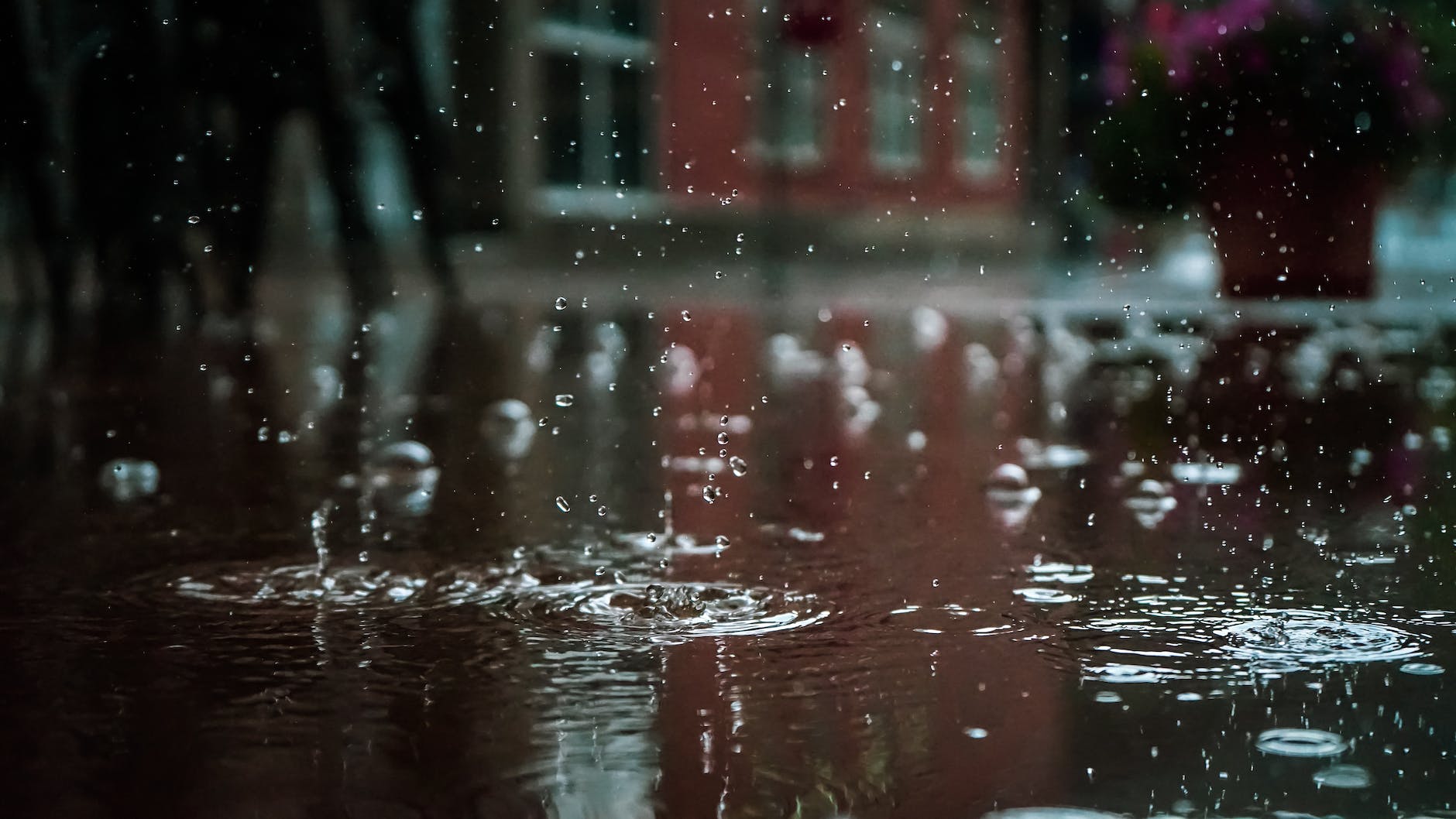
I’ve been sorting through volumes of my old manuscripts. Some of it is fairly naive, but that’s all part of the creative writing process. Here’s a short excerpt from a long forgotten story, entitled ‘Floodlight‘:
The roof stretches above him; tiles and timber mere leather pulled across a drum, so loud is the rain. A tug of guilt makes him sit up and swing his legs around and feeling for the slippers he seldom wore (could rarely find), he tracks through the dark house to rattle stale cat treats at the door.
‘Panther!’ he yells, though his voice is thrown back at him like a bucket of water over a clown.
He studies the bits of garden he can just make out; the wheelie bin leaning up against the wall ~ a strip of rockery where jagged boulders had once been whitewashed.
‘Panther, it’s your last chance!’ He peers into the darkness for a while then closes the door.
Feeling guilty still, he flicks the kettle on. It hisses and clicks and plumes of steam billow from the spout like angry breath from a bull’s nose. Pouring the boiling water from a great height over the wetted leaves that still sulk in the pot, he watches the tea strain, meekly, as he stirs.
A yellow light illuminates the kitchen, when he opens the fridge. It seems to seep, like oil, trickling over the utensil rack and gilding the tiles. Yoghurts, days past their sell-by-date lurk behind a plate of lamb. From out of the corner of his eye, he notices a slight movement. A twitch.
He turns.
Curled up in the vegetable rack, a stripy tail draped over a tiny nose and two front paws, like she’d been tucked in, Panther sleeps soundly.
‘There you are!’ he says, scooping chunks of cream off the top of the milk and smearing them onto a saucer, placing it as a sort of offering, by Panther’s sleeping form. Panther’s like that: a loveable yet testing cat.
Mug in hand, and a half packet of biscuits clamped under his elbow, he clambers back to bed. And he sleeps then. Soundly. Never mind all the nights he’d lain awake, all those cigarettes and late-night sit-coms; no, this night, he sleeps through everything. Through Panther’s wails, through text messages: seven of them, from worried friends. Had he been woken by the 3am text that said, simply: ‘Look outside!’ – he’d have seen it – raised up from the river, dragging earth and worse with it, probing the walls of the house, tickling the stairs.
When he wakes, he’s instinctively scared. It’s like, you don’t see it first, you smell it, that wet smell you get on country walks. He stands stock still, just staring at the flood; at the brown surface, black in parts with bits of his living room floating like dead sheep, as he backs up the stairs ~ backing up like a coward, up the damp staircase, to find his phone, the one he’d bought on Ebay, the one that needed constantly to be on charge.
‘Call me back, Khaleif!’ he shouts into the receiver, but leaving a voice message for Khaleif was as good as not leaving a message at all. He mostly never calls back. He’s either out of credit, or in a stupor. Or both.
At least Sara answers.
‘Have you seen it?’ Sara asks, not waiting for his reply. ‘We managed to get out. Took the back roads to the station and got the last train. How about you?’
‘Well, here’s the thing, I’m sort of… well, …’
He hears a bump then, and looks down the stairwell to see Panther standing on a tray, the weight of her flailing paws dragging the corners down, and then she slides off, her eyes wild, and before he could reach her, she’s swimming like a mad thing to the third step, emerging embryonic from the water (the river, mind) and skittering up the rest of the steps to shake out on the landing.
‘… I’m trapped!’
The line dies then, like it always does in horror films, severing his only link to the outside world.
*******
A shrill whistle pierces the night, in short, sharp bursts and then, from a loudspeaker he hears the words, ‘Search and rescue here! Please call out if you need help!’
He rushes over to the window shouting like a child, ‘Up here!’ He shoves the sticky latch with his shoulder, and leans out, and there in the gloom are two figures in fluorescent jackets, like beacons, sent to rescue him.
And so, here he is, sailing down the avenue with Panther on his lap, perforating his knees, watching the town slip into the murky breath of dawn. They moor up at the rugby club. Someone is making tea. Plastic cups are passed around like gold, and for a moment the only sounds are slurping, sipping and steamy exhalations. He glances round the room. Half the townsfolk are here, wrapped in foil. All of them, in shock, nursing the thought of losing all their things, of returning when the flood retreats, to find tide marks on the walls and all the photographs of youth and their belongings washed away like dirt. He curls himself into a ball, on a gym mat for a bed and hides beneath a knitted blanket the colour of unripe limes.
‘If you need another pillow, you only have to ask. We have plenty more.’
A woman, wearing a sticker, that reads ‘Volunteer‘, carries a tray of yet more tea. She leans over him and smiles. He notices she looks relieved. Christ, he thinks to himself, I know I’m not my best, but a corpse? He takes the plastic cup and returns the smile.
The volunteer looks down and the light catches her eyes, pale eyes, like Glacier mints that could be rinsed away by tears at any moment. She stops, and reaches deep into one of the pockets of her fleece.
‘Here,’ she says. ‘Have this.’
Pitiful times call for compassionate measures.
He unwraps the chocolate bar and sinks his front teeth in, and as he chews on the soft caramel centre, he’s reminded that in life’s darkest moments, things could always be worse.
© Christina Cummings 2022
In pursuit of meaning
14th November, 2022
“You don’t become happy by pursuing happiness. You become happy by living a life that means something” ~ Harold S. Kushner.
A short time before the Covid-19 virus hit our shores, I wrote about the sense of ‘meaning’ that, for me, conjures happiness. Each of us has vastly differing parameters for our own wellbeing and contentment. Our own joy. Much of that arises from giving to others, in such simple acts as choosing a gift you know they’ll love. That’s, in essence, the essential ingredient; the cherry on the top. Durkheim states that ‘collective consciousness binds individuals together and creates social integration’, and although this is true, the disintegration of our society is the current trend in which we find ourselves trying to find reasons to even want to care. This is partly the consequence of economic divisions, and partly, the conflict between where we place our values and whether or not we uphold them. In the light of the pending nurse’s strike, the answer to the question: ‘What are nurses worth?’ is a never-ending discourse. There will be varying public opinion, even within the nursing profession itself. I don’t make the rules, but I do know that, in life, somewhere between the limitations and personal choice, we all get one bite at the cherry, and whatever that is, for each of us, there has to be some meaning. And for me, even in the face of economic inequality, I’d choose nursing again. As Marx put it: “If we have chosen the position in life in which we can most of all work for mankind, no burdens can bow us down, because they are sacrifices for the benefit of all; then we shall experience no petty, limited, selfish joy, but our happiness will belong to millions, our deeds will live on quietly but perpetually at work, and over our ashes will be shed the hot tears of noble people.” And therein lies the conundrum.
This is the piece I wrote, back then:
Ask any nurse: There are no words that adequately describe how it feels after working a busy 12.5 hour shift. Perhaps a marathon runner wearing lead boots, who’s just disembarked from a long-haul flight that had been delayed for hours at an airport with no bar and who now finds that they’ve yet to get across the country by a slow, meandering replacement bus service, before reaching the sanctuary of home… perhaps they might have an inkling. But, there is meaning in the tiredness. A sense of purpose, of personal satisfaction, of camaraderie, of having mattered and made a difference to another soul. Nursing is in itself the reward. We look after our patients and the friends and relatives who keep vigil at their bedside; the advocates, the cheerleaders, the loved ones. Seeing people recover and go on to live well together again is at the heart of our profession. And it’s a privilege to witness these precious bonds that outlive even the most tragic of circumstances. And so, despite the lack of recognition, the gruelling pace and scope of the job, despite the ridiculous, inappropriately low wages. Despite being so tired sometimes that it physically and emotionally hurts… as the lead boots slide off, there is a sense of meaning, and in that there lies happiness.
The Thing
31st October, 2022
Among the arrowhead and lily pads, a bright object, unknown, lies half submerged; not from your creation, but some thing trapped between two worlds. Mine, of sturdy boots and straining dogs. Yours of teaming silence. Save for that last wave of heat that saw you bake to bone, you’re deep enough to sink a boat, so I search for a suitable stick: Bo-Peep, herself ~ she must have placed it here, with its crook at one end fitting neatly in my palm. I tip toe to the edge, your indiscernible edge, where the bogginess threatens to swallow me whole, and reach, as though a ballerina torn from the troupe in the tragedy of Act Two.
‘Got you!’ I say, and drag the object of my quest, in a Hook-a-duck-of-a-moment where pale goldfish regard the world from a plastic bag that dangles overhead, before being plucked for a prize. The thing feels heavy as a corpse as I ease it along and makes its way slow as a swan, threatening to disengage at any moment. It arrives at port, where my toes cling to the solid bits of earth and it seems to rest, like a tired swimmer, in the shallows. I bend down to peer and prod at it, uninteresting, now it’s been revealed. Old sheeting from a neighbouring farm, blown here like a magic carpet on the wind had pierced your perfect skin like a splinter of wood in a clean cut wound. The ripples in your wake are smoothed now right up to where the lilies were disturbed. And, save for the dogs who tear at the thing with playful teeth, all is still again.
© Christina Cummings
As the Oak Trees…
8th September, 2022
It’s 1979. I’m eleven and a half years old. I recall the plastic Union Jack flag that I waved frantically, seemed a silly, frivolous gesture, at the time ~ embarrassed as I was by a rejoicing public, (such is the curse of my lifelong social anxiety). As the Queen was driven past us, her white-gloved hand fluttering behind the tinted glass window of the royal car, a part of me, even then, felt the conflicting feelings that we all have known at some point in our lives: the submissive shame of being a mere commoner, and a reverence for something greater than ourselves.
I had just passed the entrance exam to the independent girls’ school, The Queen’s School, Chester, named for Queen Elizabeth II’s great-grandmother, Queen Victoria. I knew I was fortunate to be studying there, not because there were any airs or graces that came with that, but because my peers from primary school who went on to the local state school derided the notion of it. I became aware of societal divisions, yet with parents who worked exceptionally hard, my father an electrical engineer and my mother a nurse, I had no qualms about what privilege meant. Privilege may well afford a step up to a life free from the miseries that poverty taunts, but it does not come without fortitude or skill, or serendipitous prosperity or the graft and grit of our ancestors or indeed ourselves.
We all can agree that respect is commanded, not by title, but by a humble yet demonstrative show of resilience and loyalty and kindness. Our late Queen, whose 70 year reign has been as much a part of the fabric of the backdrop to our lives, exemplified these qualities. As sure and solid as the oak trees that tower over the swing sets in the local parks where we, as children, played, the loss of such a reassuring presence, means that there is a truth we must yet again face; that all things must come to an end.
We’ve always known this, of course, having had our own unique experiences of personal loss and grief. And it is the seemingly eternal things that soothe us when the anxious attachment to the transience of life overcomes us. How then to reconcile the fact that nothing lasts forever; that rivers run dry, that the glowing stars combust, that dogs age seven times faster than their beloved, that even the mighty oak, a symbol of strength and endurance, will, one ordinary day, take its last sip from the earth? Perhaps the answer lies just beyond our understanding, and therein we are not discouraged, we are emboldened by the knowledge.
RIP Her Majesty Queen Elizabeth II
Camera Roll
7th August, 2022





Fruit Fool
17th July, 2022
Fruit Fool
Plum; the tart flesh clings to its skin.
Mango to the bone.
Peach, let me at it!
So soft, so tender are the fruits;
Let them live upon the tree for one more day.
Yet, I, in carnivorous act
Craving the sweet sate of juice,
Take blade between my teeth
And resting on the cutting board,
Slice through.
© Christina Cummings 2022
To the sun
5th July, 2022

To the Sun, by Christina Cummings
In any case, I don’t recall.
You may have been stood,
facing away from me,
your back turned to the sun.
You had your blue shirt on,
for sure.
I remember how it clung to the
grand breadth of you.
I didn’t see your eyes;
that much is fact.
For, had I looked into the
epicentre of your soul,
I’d have read you like
the worn pages of
a classic paperback,
thumbed to death.
And therein would have
teased the truth from you,
like a burr from the belly of an old dog,
who, regarding me with deference, blinks.
But, truly, now…
I really don’t recall.
© Christina Cummings 2022
Catmint Blue
25th June, 2022

Pond, a poem by Christina Cummings
You startle me!
Quietly hidden here,
Behind these reeds.
A secret I will keep.
What are you, pond?
You’re hard to know!
Are you a sort of catmint blue?
No, you’re greener than that!
More like mermaid’s tail with hint of Tuscan roof.
You’re the sludge of acrylics on the tilted palette
of a painter, who,
with wine-breath’d contempt,
strives to find the right hue.
Pond, if you’d been a more obvious shade,
I would still have been startled by you.
© Christina Cummings
Old Chair
22nd June, 2022
OLD CHAIR
There’s an old chair in the garage,
upturned, like a dead sheep floating on a lake.
The antithesis of comfort.
With a carved back and fluted spindles,
it was quite a smart thing in its day,
when, once, part of a matching pair,
it stood, sentinel, upon the landing,
of a tidy house,
often with a book,
or a doll,
or a pile of socks for sorting
resting on its velveteen forest;
the gilded ferns, once a bold choice,
faded now from sunlight’s curse.
It was rarely sat upon,
save for weary souls who
with no other quiet place to go
would sit, for a moment,
pondering their next move
before rising, stiff kneed, to descend the stairs
with a long sigh,
as the chair, unburdened, creaked.
© Christina Cummings 2022
Unknown to Ourselves
10th June, 2022
This excerpt, I’ve printed here before, is from an early story I wrote called, ‘The smallest footprint possible’. It depicts the moment when you revisit a place that holds a meaning in time… and the realisation that it can never be recaptured. Not in quite the same way.
Excerpt…
I am compelled to go inside, to walk again through those heavy elm wood doors ~ to be a latent witness to the briefness of our special day. I stare at the altar where we both had kneeled to say our vows. Perhaps I shall capture some indelibility, that through time-passed has lingered. Perhaps I’ll hear your voice.
Golden vine leaves grasp the thick pedestal of the marble lectern from which countless readings have resonated throughout the years. In the stained-glass window above the font, disciples, their palms outstretched like beggars on an unforgiving street, reach toward their saviour. The morning sun casts their hopes, bright and surreal, scattering them like the splinters of a frosted rainbow onto the cold flagstone floor.
But this place, it holds nothing of us here. Instead, the smell of ancient rites suffocates. The void elicits fear. The faithless know this fear, despite their smug assumptions. It is not a fear of God, or death, or loss. It is a fear we all share: to leave this existence unknown to ourselves.
© Christina Cummings
Beachcomber Bae
16th May, 2022
Beachcomber Bae, a poem by Christina Cummings
It’s a summer’s eve at the car park by the shore;
I wait in the truck for you.
I watch as you bend, like a cockle-picker,
Sifting through that stretch of sand where the wrack line weaves.
You’ve found something small;
I see you turn it over in your hand,
Brushing the coarse grains from it with a soft sweep of your thumb.
You tuck it into the pocket of your Henri-Lloyd, the charity-shop-find you wear when you don’t know what the weather holds,
And then you stand, the swift effortless motion of vigour,
And you head towards me;
the wind catching in your throat.
You do that half wave thing you always do,
when you spot me.
And I go to wave back,
but you’ve turned now,
And you’re stood, facing east, taking a last glance at the sea as it’s tugged by a silent moon,
And I feel lost to you, as you picture a different shore I know has made you sigh.
And I’m lost to you.
I’m lost to you.
I’m lost.
To you.
© Christina Cummings May, 2022.
Matters of Trivia
8th May, 2022
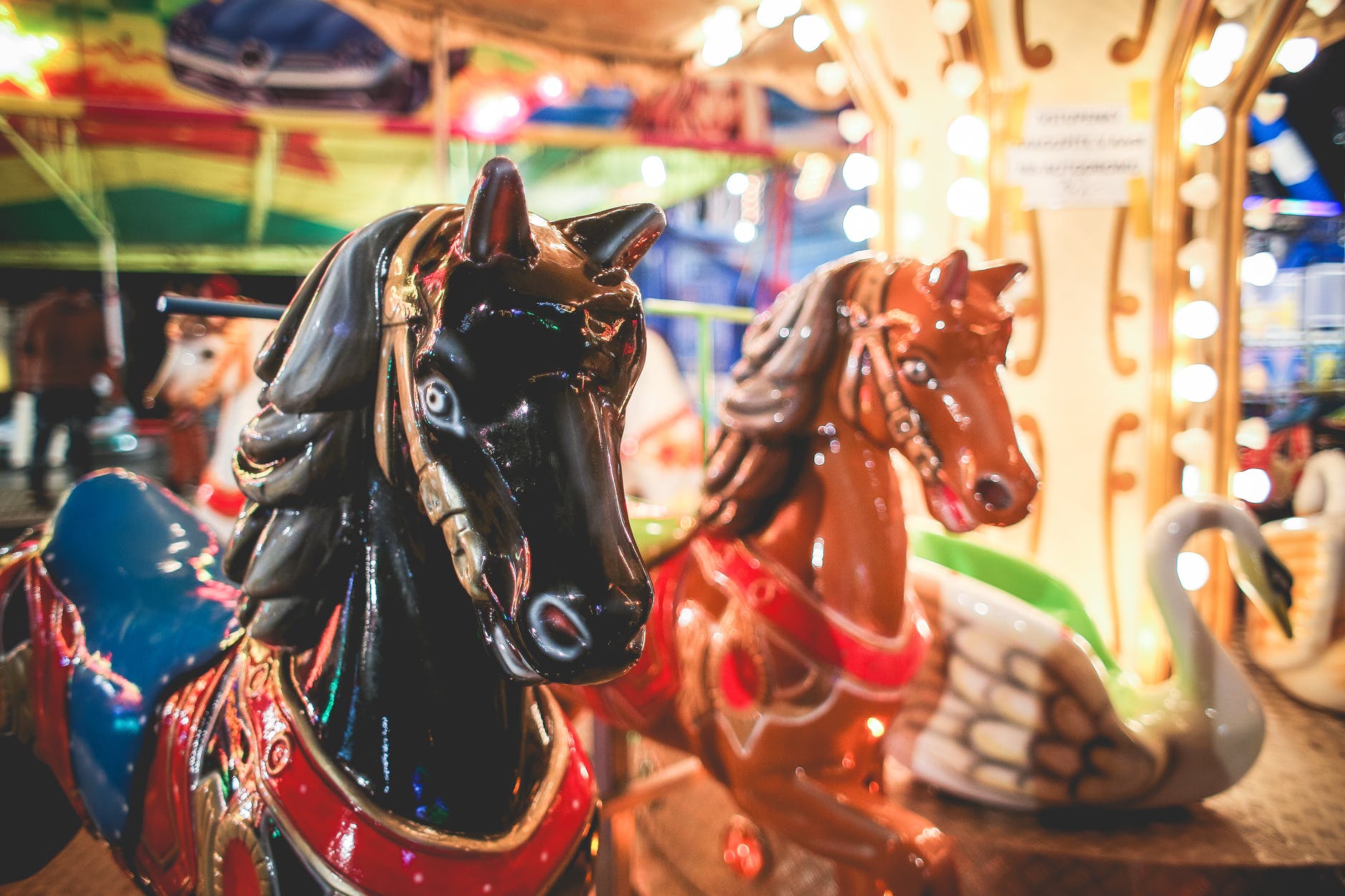
Matters of Trivia, a poem by Christina Cummings
In the backdrop to our lives
myriad elements jar.
Omniscient perspective; making one thing look foolish,
when compared to another.
While one grave and serious issue plays out
in one tiny corner of the world…
In one suburb,
In one field of Rape,
In one empty nest, save for the last inhabitant, who imagines their sad routine equates to life,
At a table for two at The Steamed Crab Shack,
At your place? No, mine!
At the second exit from a roundabout the GPS will not acknowledge,
At a party, where smoky-birthday-candle wishes are inhaled, like a potpourri of dreams,
In one heart where that last sliver of glass you finally plucked from the meat of it
has been stuffed back in, like a clove, pressed to the bloody core with your own firm thumb,
… there carries out in some other nook, or bench, or bed, or boat, or in Seat 11D right next to the wing,
matters of trivia.
Or so they appear.
Whichever they are depends on us.
We are, within us, both Peacemaker and Warrior;
Each vies at the dressing room mirror, (the backstage theatre kind, with lights),
while we try on their hats for size.
Don’t listen to that old metaphor, as it whispers, sweet-yet-stubborn as a toffee bon-bon: ‘The Mirror Never Lies’.
Ha! It is the master of deception!
And each bare lightbulb that surrounds it glows, like a cheap casino in a seaside town
or a carousel with painted foals,
and drowns the very choroid of our eyes
as we stare into our reflection, with the gaze of a clown.
© Christina Cummings May, 2022.
May Day
1st May, 2022
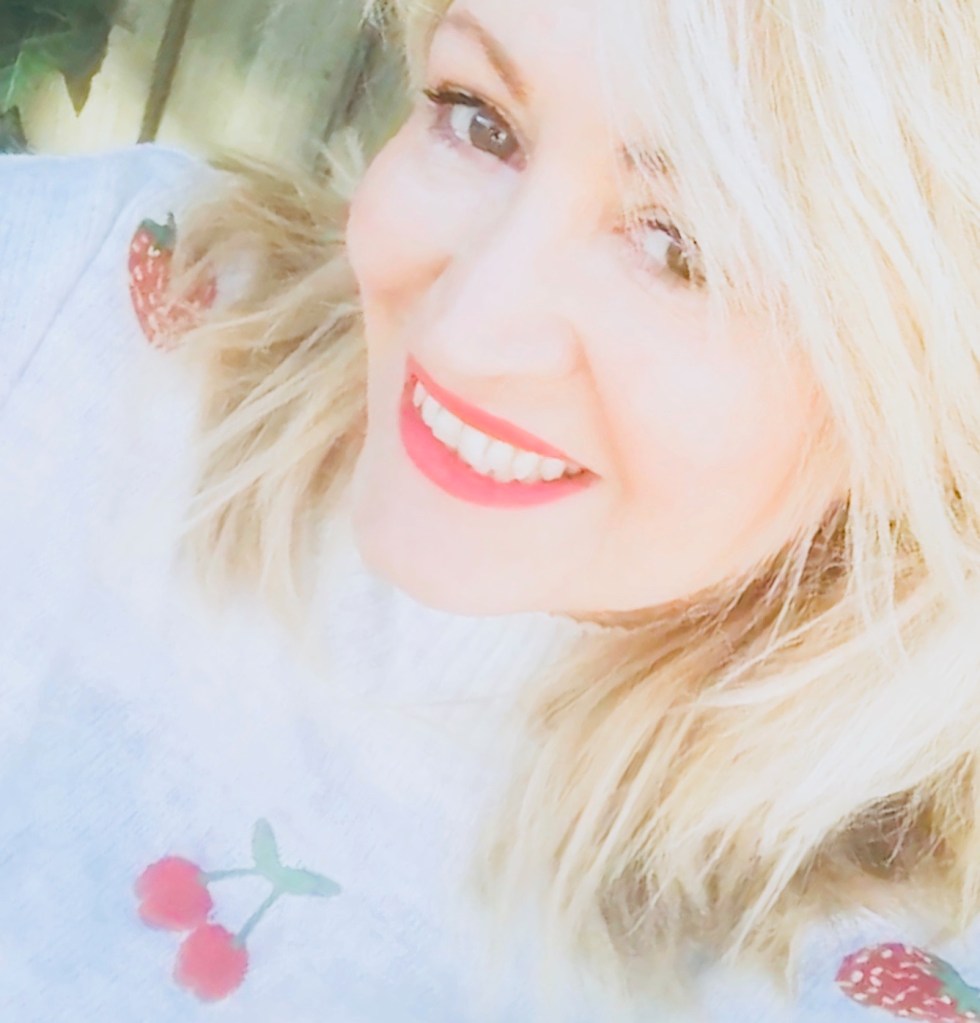
I’m working on a writing project at the moment, in between office hours and play time and my abstract art work and endless chores and… well, life! So, in lieu of a blog, I’m posting more poetry ~ just because I love reading them. They’re small meditations for the soul.
Here’s Helen Hunt-Jackson’s poem, ‘May’.
Sweet May! Without an envy of her crown
And bridal; patient stringing emeralds
And shining rubies for the brows of birch
And maple; flinging garlands of pure white
And pink, which to their bloom add prophecy;
Gold cups o’er-filling on a thousand hills
And calling honey-bees; out of their sleep
The tiny summer harpers with bright wings
Awaking, teaching them their notes for noon;
O May, sweet-voiced one, going thus before,
Forever June may pour her warm red wine
Of life and passion; yet sweeter days are thine!
No blossom blooms upon thy brightest day
So subtly sweet as memories which unfold
In aged hearts which in thy sunshine lie,
To sun themselves once more before they die.
© Helen Hunt-Jackson
1, Mississippi…
29th April, 2022
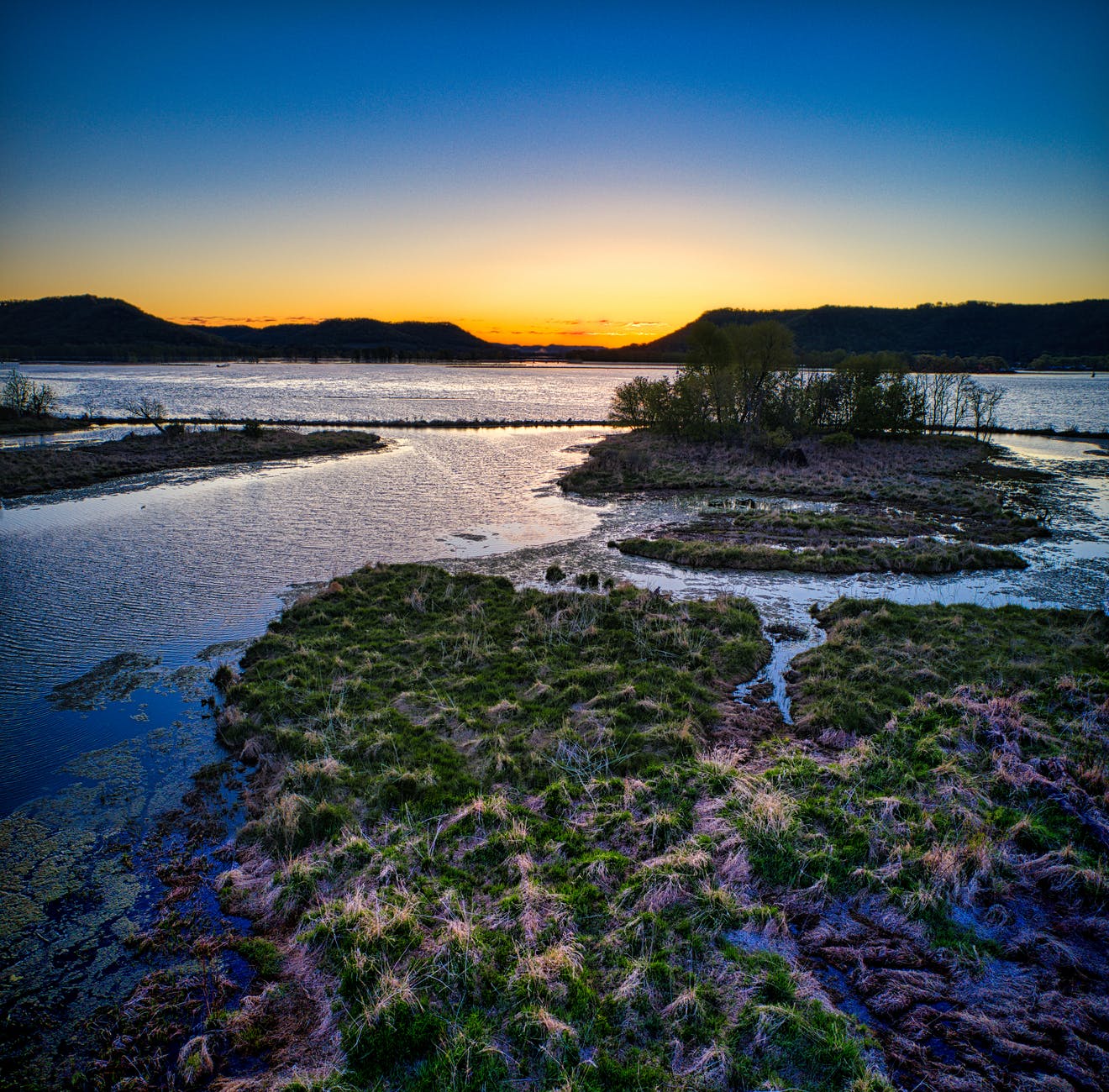
‘In the grand scheme of things,’ they say. ‘Does it really matter?’ How many times have we heard this well-meaning platitude? Perhaps even more than the hot dinners we’ve consumed. Yet by contemplating the grand scheme of things ~ like how it takes one drop of water ninety days to travel the length of the Mississippi River, or how when travelling anywhere by train on a Sunday, one will inevitably end up staring out of the smeared window of a replacement bus service, with no wifi or snacks ~ we’re left with one truth: that the so-called insignificance of our life’s difficulties, losses and fears, will, despite the grande scheme, be extremely painful thorns that stick not only in our sides but will firmly and resolutely occupy our every waking moment; until they’re done with us, that is. That means to say that we have to honour the process of realigning our thoughts, observing them with benevolence and gentle acceptance, in order to heal. In order to live in peace. And, let’s just say that even in the grandest of schemes, it really does matter. Quite a lot in fact.
To Perfect Laughter
26th April, 2022
Roll the Dice: Going All the Way, A Poem By Charles Bukowski
If you’re going to try, go all the way.
Otherwise, don’t even start.
If you’re going to try, go all the way.
This could mean losing girlfriends, wives, relatives, jobs and maybe even your mind.
It could mean not eating for three or four days.
It could mean freezing on a park bench.
It could mean jail.
It could mean derision, mockery, isolation.
Isolation is the gift.
All the others are a test of your endurance, of how much you really want to do it.
And, you’ll do it, despite rejection and the worst odds.
And it will be better than anything else you can imagine.
If you’re going to try, go all the way.
There is no other feeling like that.
You will be alone with the gods, and the nights will flame with fire.
Do it.
Do it.
DO IT.
All the way.
You will ride life straight to perfect laughter.
It’s the only good fight there is.
Listen here: All the Way by Charles Bukowski, read by Tom O’Bedlam
Spark
21st April, 2022
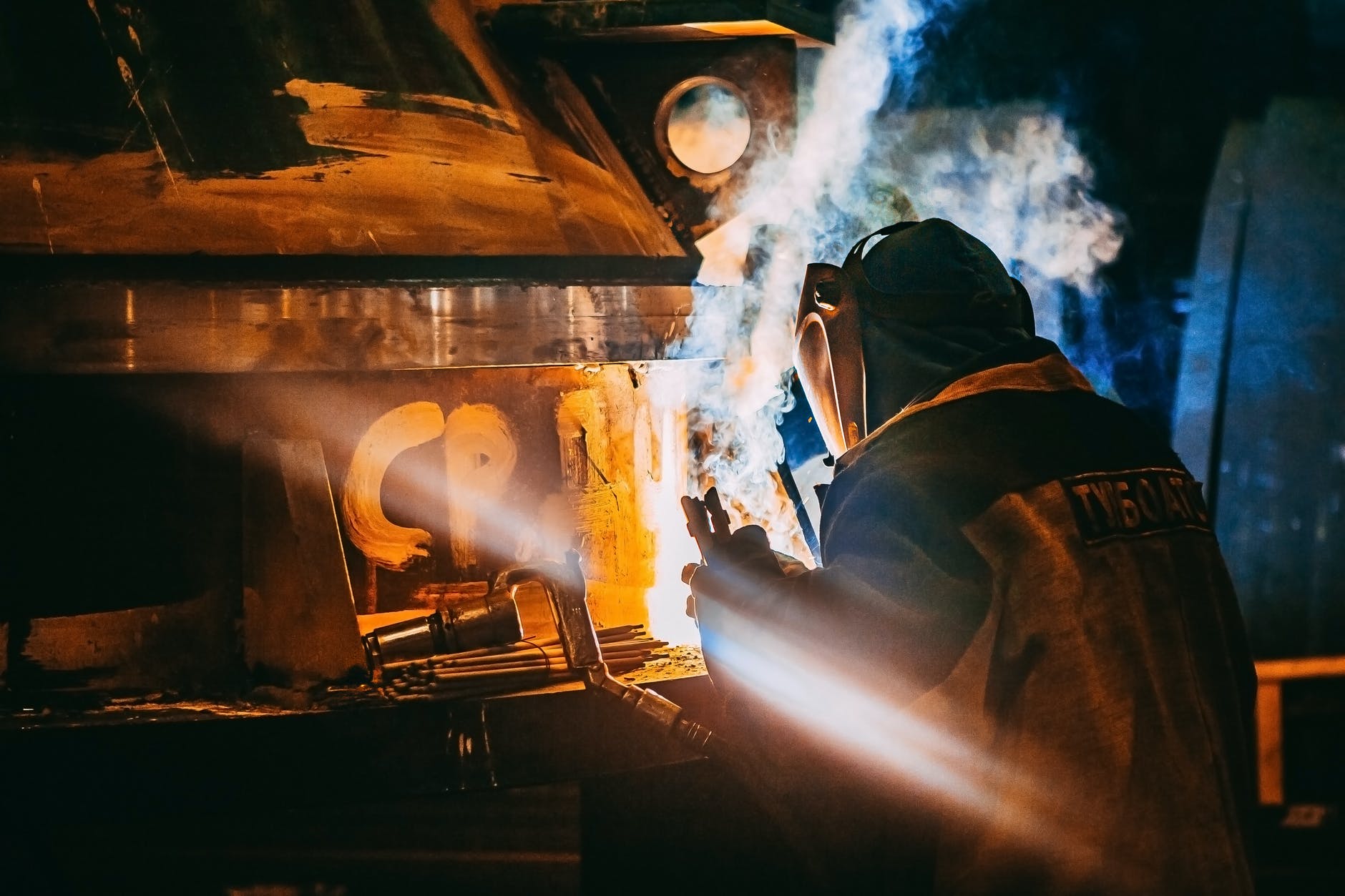
They just descended. Four of them. I was transfixed as they roared past in serpentine-like order and rounded the bend. Those who know me well, know I don’t know car ‘breeds’. Not to say I don’t notice the tiny details of things; I just don’t have car type recognition. Perhaps I don’t care. But these cars were different. They intrigued me. They were uniquely shaped, their colours even were raucous shades of spearmint green and pearl, with hints of copper and a red I’d say was almost vascular. Hugging the road like roaches, they were far ahead of me by now. Instinctively my foot went down*, and I pulled out to overtake, settling safely in the fast lane with one mission: to find out what they were. Who they were. As I closed the gap, I could see in the exhaust pipe of the rear car, a white-yellow flame flickering, like a welding spark, and with my window down a crack, the low thrum of 1970s Le Mans reverberated through my lungs. Nudging closer, I felt a part of them. A sense of thrill, like I was driving that car in ‘No Time to Die’ on the set of ‘Mad Max’. But try as I might, I could not catch up with them, and so I pulled over into the slower lanes, and I noticed that the trees that lined the road, like royal servants, had blossomed, a heavenly confetti of flowers. And the carbon footprint guilt consumed me.
(*Disclaimer: within the legal speed limits)
One wild and precious life
17th April, 2022
I’ve discovered a poet, whose writing in all its simplicity creates, for me, the soft, buttery bread roll to the three course meal. I’m satisfied with the first bite, but I’m hungry for more. Mary Oliver: her poems are beautiful. I tear into them and stuff my soul until I’m sated, craving her words until all that’s left are crumbs.
Her poems are a celebration of tiny joys. They’re a slow walk through the natural world. I feel calmed by the unpolished nuance and the surprises ~ luring the reader deeper and deeper into the forest, such as in her poem, ‘The Moths‘, where she gives an unexpected glimpse into their fleeting lives:
“At night, sometimes,
they slip between the pink lobes
of the moccasin flowers and lie there until dawn,
motionless in those dark halls of honey. “
And in her poem ‘Praying‘, she speaks to the reader, as though she knows that somewhere in the tangled wilderness of complication and stubborn woe, there is always an answer:
Praying, by Mary Oliver
It doesn’t have to be
the blue iris, it could be
weeds in a vacant lot, or a few
small stones; just
pay attention, then patch
a few words together and don’t try
to make them elaborate, this isn’t
a contest but the doorway
into thanks, and a silence in which
another voice may speak.
And she asks of us profound questions, set in the subtle clasp of uncomplicated frankness, like the closing lines of her poem, ‘The Summer Day’:
“Tell me, what is it you plan to do
with your one wild and precious life?”
Just, heck! They’re good. Why did I not discover them sooner? Discover, her? To have read them while she was still alive, instead this posthumous discovery is like finding a letter of love sent to the wrong address. Only the words are universal. Her poems ~ they’re an antidote to melancholy; my melancholy. They’re like the soothing hand of a beloved. Or a warm shoulder. They make me smile. And I’m a little bit in love with her.
April is the cruellest month
4th April, 2022
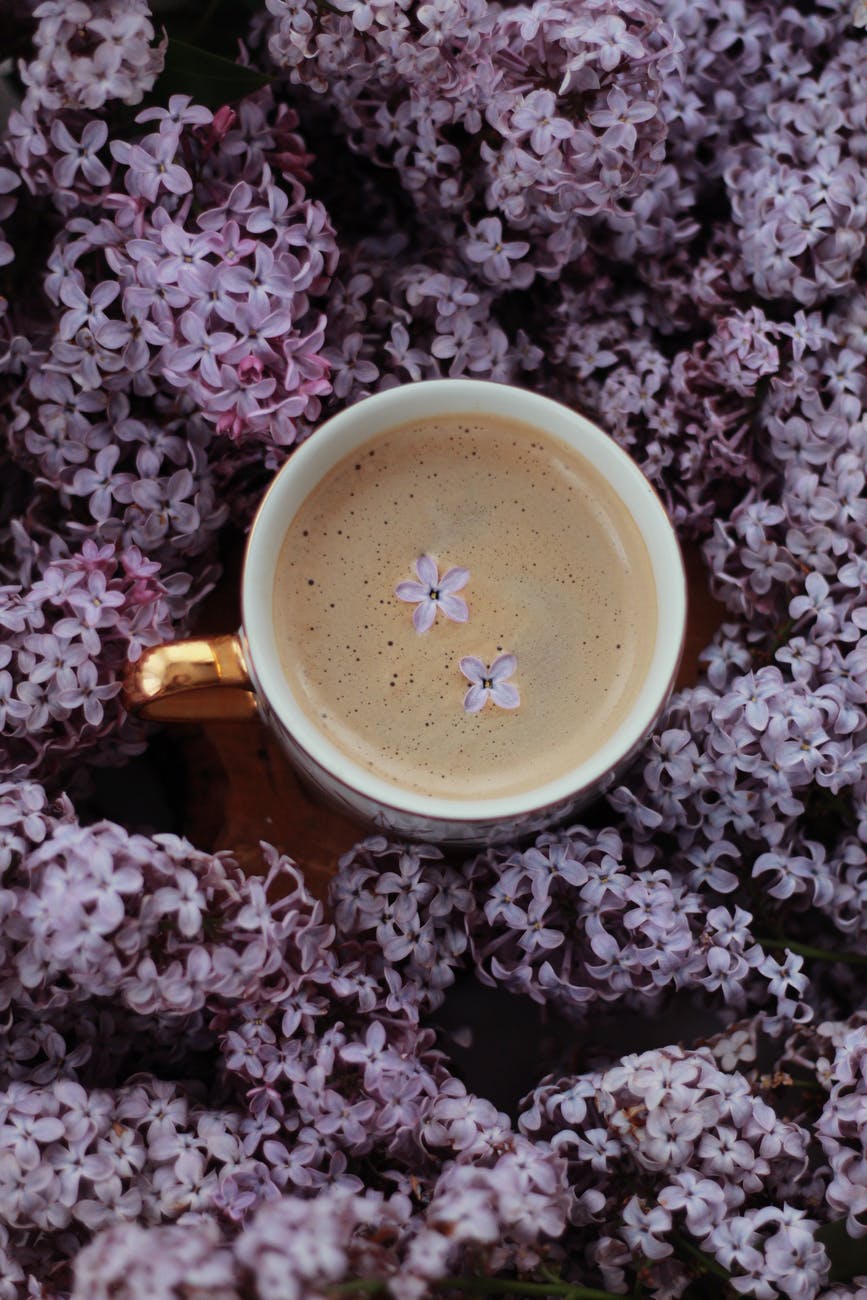
Poet, playwright and publisher, Thomas Stearns Eliot remains, inarguably, a central figure in Modernist poetry. His connection to England came by way of his talent and passion for academia, which began at Harvard, USA. Born in St. Louis, Missouri, in 1888, Eliot studied Greek, Sanskrit and Philosophy, taking up a teaching position at Merton College, Oxford, as a visiting Fellow. It was here he was introduced to a Cambridge governess, who he subsequently married.
In a post-WWI Britain, he took time out to take care of his own struggling mental health. This was the time in which ‘The Waste Land’ emerged. In later years he was said to have denied that his epic poem was intended as a commentary on generational disillusionment. Adding that if readers interpreted it as such, then it was their own illusion of that, as reflected by the renewal and expectations, and the disappointments that ensued during the rebuild of modern society after the devastation of battle. Written by hand, as he sat convalescing in the chill breeze that coursed off a grey sea, huddled in the safe harbour of an old Victorian shelter, The Nayland Rock Promenade shelter overlooking Margate sands, the verses nevertheless reflect brokenness and loss.
Heavily edited by fellow poet, Ezra Pound, ‘The Waste Land’ was first published in 1922, the same year as James Joyce’s, Ulysses, and is still regarded as one of the most important poems of the 20th Century and beyond. The infamous, often quoted, opening line reminds us that in the renewal of Spring, that sense of hope we all feel, brings with it equal sorrow, a suggestion perhaps of times passed and promises that never came to fruition.
Opening lines of The Waste Land by T.S. Eliot
April is the cruellest month, breeding
Lilacs out of the dead land, mixing
Memory and desire, stirring
Dull roots with spring rain.
Winter kept us warm, covering
Earth in forgetful snow, feeding
A little life with dried tubers.
Summer surprised us, coming over the Starnbergersee
With a shower of rain; we stopped in the colonnade,
And went on in sunlight, into the Hofgarten
And drank coffee, and talked for an hour…
…
To be, to do
2nd April, 2022

The last time I saw my father he was standing on Platform 3, at Chester station. At 6ft 4”, he was a tall man, and I could see his arm, like a mighty signal post, waving, even as the train gathered speed. Trying to capture a view through a closed and moving window means that the full picture is partially obscured, but no matter, it was the earnestness in that last wave, that bid me well; its prescience had not yet broken me. It’s hard to imagine a life, isn’t it, without those who’ve been by our side. How will we go on without them, we ask; as go on, we must. In the words of J.R.R. Tolkien, the pathway forwards is inexorable. “You cannot always be torn in two. You will have to be one and whole for many years. You have so much to enjoy, to be, to do. Your part in the story will go on.” I hadn’t known it at the time, but that train journey that heralded the start of my youthful adventures was, unwittingly, the last goodbye. I never saw my father again. Fate would have it that he was already ill, and unbeknown to all of us, he was already dying even as he stood and waved. He was fifty-nine. Looking back over the years that passed since then, it’s true, the story does go on. And every part of what has gone before, never leaves our side.
Inner Sky
29th March, 2022
In Medieval India, devotional poetry evolved from a need for expression that was inclusive, combining two perspectives: knowledge and love. The philosophical pursuit was to understand life from these positions, to accept oneself in the broader sense of the Universe, and to nurture those things that require growth, such as our habit and our truth.
“Touch your inner space, which is nothingness, as silent and empty as the sky.
It is your inner sky.
Once you settle down in your inner sky, you have come home,
and a great maturity arises in your actions, in your behaviour.
Then whatever you do has grace in it.
Then whatever you do is a poetry in itself.
You live poetry;
your walking becomes dancing,
your silence becomes music.”
Osho, Ranjeesh Chandra Mohan Jain, Mystic Guru
Van Life
27th March, 2022

Having driven an automatic car for the last seven years, I thought the main concern about my van rental was going to be using a gear stick and three pedals again. Well that, and the size of the thing! A long-wheel-base van feels like a scary prospect for someone who’s never driven one before. I was dreading it in fact. But I take dread now as an opportunity to try a new way around things, and in many ways the van represented something of a new challenge. Firstly, did I mention it’s quite big? And on top of that, there’s no rear view mirror and a disconcerting wobble when you hit top speed. And when it’s loaded to the hilt, it takes a bit more foresight on the brakes.
I thought at least the route up North is mostly straight, mostly motorway, but a diversion around Solihull saw me brush up well on my rusty manual skills. Thank goodness for my trusty co-pilot; with a sixth gear I kept forgetting I had, the gentle reminder saved a bit on gas. But more importantly he kept me well fed on sandwiches and cakes and he told me I was doing a good job, which was exactly what I needed. And although I say it myself, my reverse parking skills at Warwick Services were pretty neat.
When I arrived back South again, I had to move my car to park up. My car felt small and clunky and I had the sense that I was going to miss the van, even though we’d only just become acquainted. But sometimes, it’s the briefest moments that stay with us the longest. That journey represented something else too: change. But that’s not so much of a challenge, since change becomes, quite quickly, by its very definition, the new normal. As Marcus Aurelius once said: ‘Observe constantly that all things take place by change, and accustom thyself to consider that the nature of the Universe loves nothing so much as to change the things which are, and to make new things like them.’
Layers
25th March, 2022

Layers
Light. Love. Layers.
Wrap up in them, they’re pure.
Like medicine yet not conceived,
They are your only cure.
© Christina Cummings 2022
Peachy
20th March, 2022

A young family are nestled, like bears in a cave, bathed in the soft lit darkness of a budget hotel. It seems they’re all asleep, save for the mother, Rosie, the protagonist of the story. Unable to relax enough to sleep, she quietly rises and stares out to the city lights of Northern Dublin. Her eyes scan the room, to her husband, who, shattered from his job, lies on a fold out mattress on the floor; the King size bed having been appointed for the children, who have school to attend the next day. The youngest child clutches onto a stuffed toy, a floppy eared rabbit called Peachy. Peachy represents stability and every time he’s nearly lost, it’s a metaphor for the loss of home, since home represents comfort and safety. As the sun rises over the cityscape and the children wake, hungry and still tired from the unsettling routine, Rosie delves into one of several bin bags to find a clean uniform for her oldest girl.
Spending most of her day in the car, phoning round to find a place of shelter from the streets, the exhaustive list brings the same answer: There are no rooms. Because they’re already taken. By other homeless folk. This is a heartbreaking scene from a film called ‘Rosie’, but it’s the stark reality for countless thousands. Written by Booker Prize winner, playwright, teacher and novelist, Roddy Doyle, it is a sobering peek into a world we all dread most. Homelessness is not just a sleeping bag in the doorway of store, or a pair of fingerless gloves wrapped around a begging jar, or a person with a dog called Coops. It is real people, hardworking, able in mind body and spirit, who have fallen between the cracks, between literal bricks and mortar, into a place where there is no place, not even to set a toothbrush down.
Social welfare in the UK is part of a political system we advocate for maintaining the notion of ‘society’. And we crave the blended, harmonious chocolate-box image of that, especially in the face of crime and reality and consequence. Where a safety net is put in place, to protect those who through loss of income, illness or industrial accident, for instance, those who might otherwise find themselves as outcasts from this picturesque, imaginary neighbourhood, we can all sleep soundly. The basic human need of our fellow citizen, though, seems to bring with it as much disgust as it does our empathy. Where those who vote for the safety net, want to ensure that a warm and well fed child can do their homework at a desk, those who oppose a welfare state, would happily take the pen-knife wedged between their teeth and cut through the ropes that tether us. There’s us and them, they say. But life is messy. Not everyone is born with the same functional ability, the same background, the same breaks. Without the inclusivity we take for granted, what would become of any one of us, if we’d been dealt a different hand?
Safe Sanctuary
18th March, 2022

One of the things I just love about writing is that no matter how I’m feeling, or what’s currently going on for me or in the wider world, I always have a sanctuary, a refuge, a place of my own where I feel safe. And not just safe, but strong too. I think that’s part of why I feel compelled to write, because it takes me out of the fears I have, the scared narrative that has governed my life. Like the chicken and the egg analogy I’m not sure what came first. Did this beautiful act of release spring forth from the demons I endure, or did the demons lead me to this place?
That’s not to say I have the same feeling for my art. Painting is an active pursuit. There’s more intention, more effort. Writing, to me, is the opposite of that. It spills forth. Flows. Where art feels more structured, even in its abstract, free form, writing bleeds from a pierced vein. Yet there’s an equality to both, where commitment to the canvas or the page takes courage.
There was a street along which I walked to school. It’s lined with tidy houses, each with a small, walled garden at the front. Those gardens were barometers of the means and aptitude of whoever lived inside. While a row of pampered, scented roses brimmed from one, defiant dandelions filled the barren cracks of another neighbouring yard. I recall that as I walked along, I’d known even then, even as a child, that fortune favoured the rose.
I carried a satchel, with black straps and fluorescent yellow sides. I felt organised, by the mere tying of its silver buckles. I carried it with pride, and despite the ever present threat of ‘fear’, I felt safer by its presence, because surely purpose outsmarts randomness? As I passed by each house, I’d notice small things; a milk bottle waiting to be rescued, its foil lid bulging as the cream top warmed, a hastily discarded bike, its front wheel stuck at odds with its frame, like a fallen horse struggling to get back up. Even then I was taking in the world in such a way as if, to be able to understand things, I needed to describe them, not just accept that they were there.
Language is the most powerful force in the universe. Consider the words we use. Consider our actions. Because these are the things that will come to define us. There’s a quote by P.D. James, that explains why writing is my saving grace: ‘Nothing that happens to a writer ~ however happy, however tragic ~ is ever wasted.’ And that’s the take away message here, I guess.
Indiscernible
15th March, 2022
Spring ~ Part Two
The absence of goodness is evil; a word that makes us shiver, like rain sodden trees. Yet even as evil lies in those who cause, who relish in the suffering of others ~ instigators of war ~ predators laced with a poison, indiscernible at first, vacuous creatures so brittle and broken by their own greed, or lust, or by their own pitiable existence of which they have little insight and even less regard ~ in the dark space they occupy, there lies an endless winter. So, Spring, let us relish in the lessons you impart; that the light of one’s own spirit will endlessly conquer a darkness like that.
Over three million people, including newborn babies and children have lost their homes and all of their possessions. On top of this, they are now refugees of war. To help those affected, donate here.
#UkraineCrisis
Omniscient
14th March, 2022

Spring ~ Part One
Aaahhhh, the coming of spring. That yearning. The first humble snowdrop that sprouts forth from the frozen hedgerow, silent as a butter knife. Delicate defiance in equal measure, its bowed head makes way for the squat primrose and later, the boldest of bluebells. Emerging from darkness, as though throwing off a winter coat, dawn’s early light becomes the antithesis of gloom. An equinox that like a kind, devoted mother, divides the year into equal slices. Seasons, omniscient, despite or by virtue of God, they give structure to our lives. Even in the atheistic of hearts, there’s no denying this celebration of new life. Of nature. Of the goodness of things.
Nothing to Hold
6th January, 2022

This poem by Fellow of the Royal Society of Literature, Ivor Novello Award winner, BAFTA winner, Professor of Poetry at Leeds, Keats-Shelley Award winner and Poet Laureate, Simon Armitage (who just happens to be one of my muses, especially when he reads aloud in his distinctive west Yorkshire dialect), speaks of the fleeting nature of precious things. Here, he wishes to give a present to his daughter, an icicle, which doesn’t last the journey home…
The Present by Simon Armitage
I shove up through the old plantation – larch
out of season, drab, drained of all greenness,
widowed princesses in moth-eaten furs –
and stumble out on the lap of the moor.
Rotten and rusted, a five-bar gate
lies felled in the mud, letting the fields escape.
Winter is late and light this year, thin snow
half puddled, sun still trapped in the earth,
sludge underfoot all the way to the ridge.
And none of the stuff that I came here to find,
except in a high nick at the valley head
where a wet, north-facing lintel of rock
has cornered and cupped enough of the wind
for running water to freeze. Icicles:
once, I un-rooted some six-foot tusk
from the waterfall’s crystallised overhang,
lowered it down and stood it on end, then stared
at an ice-age locked in its glassy depths,
at far hills bottled in its weird lens.
These are brittle and timid and rare, and weep
in my gloved fist as I ferry them home.
I’d wanted to offer my daughter
a taste of the glacier, a sense of the world
being pinned in place by a diamond-like cold
at each pole. But opening up my hand
there’s nothing to pass on, nothing to hold.
© Simon Armitage
The heart of things
4th January, 2022
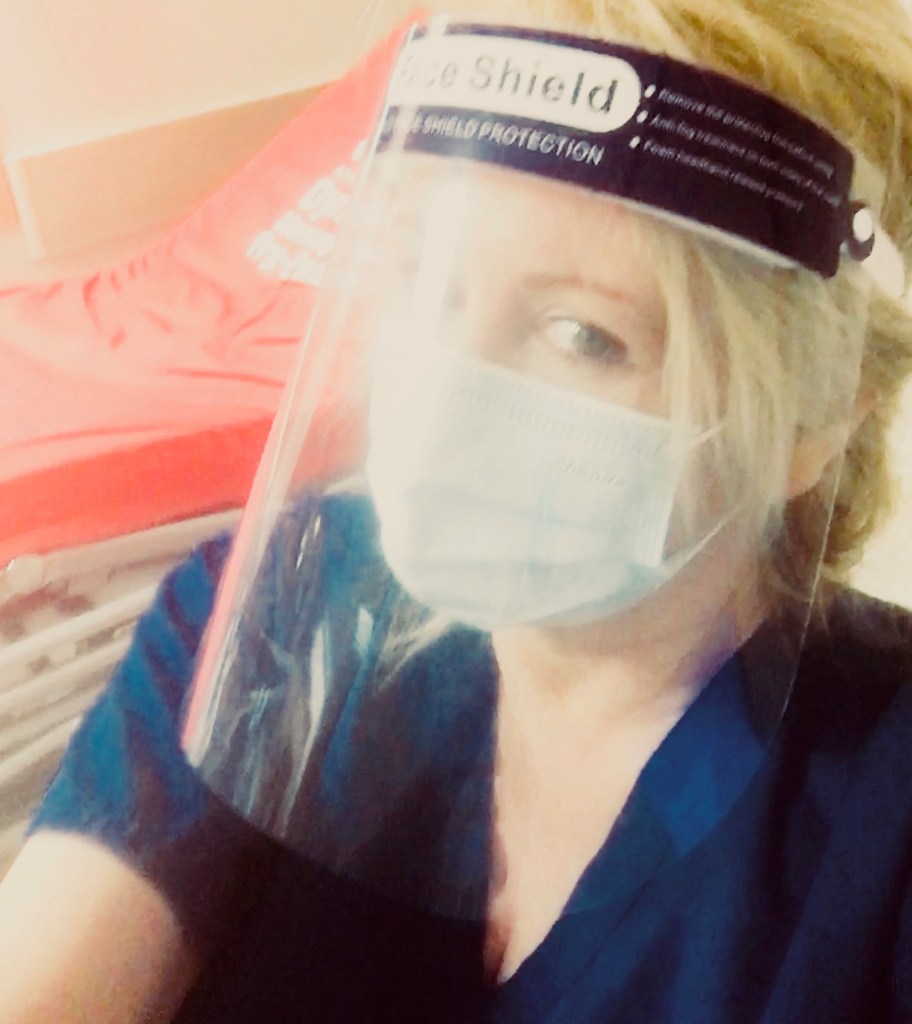
After a decade of below-inflation pay rises, nurses have worked in their chosen profession declaring “this is my calling”, thus complicit in the already lowly wage, so that they’ve been, in effect, indentured servants to their cause. Add into the mix the misogynistic, patriarchal society in which we still live, where women (such precious, sought after jewels) are never rewarded as they should. Women make up over 90% of registered nursing staff. Go figure.
My mother was a nurse. I recall as a child, her returning home in the early hours, with that carbolic hospital smell on her hair and hands; her face a full smile. I know I was proud of her. And I came to nursing, by way of somehow honouring her.
So, it’s with much sadness that I leave the NHS. Not for good; I’ve joined the Bank Nurse Team, having been coerced, (despite clear evidence of robust natural immunity), into having my first of two mandatory vaccines, which landed me in A&E. There, I was nursed by colleagues who were exceptional in their care for me, as I lay scared on a hospital trolley. It’s not often you’re on the receiving end of things, on your own home turf. Their love and compassion made me believe in nursing even more.
My penultimate shift was an under-staffed, over-worked affair. As per. How we got through the day at all, is testament to the courage and commitment of skilled individuals in a never-ending machine that will always stretch beyond its normal limits. Super-human. Heroes, heroines, if you will. And I’ll look back on my small part in this pandemic, the patients I took care of, who even in their most frightened moments, knew I had their welfare truly at the heart of things. I even made most of them laugh. I’ll miss that the most.
Wrongdoer
3rd January, 2022
Having recently been betrayed in the most insidious way possible, robbed not only of small pieces of worth, but of the biggest slice of trust ~ and having had more than my share of betrayal through the years ~ I still take the path of forgiveness, for the sake of peace, even when it’s not deserved. How many times can one do that? As many as it takes, it seems, if, as I do, one would rather be a trusting soul.
If you have been the victim of a crime, have had to report a crime to the police or are struggling with the aftermath of being betrayed by someone known to you, contact Victim Support for ways to help you to cope and move forwards.
‘Forgiveness’, John Greenleaf Whittier
My heart was heavy, for its trust had been
Abused, its kindness answered with foul wrong;
So, turning gloomily from my fellow-men,
One summer Sabbath day I strolled among
The green mounds of the village burial-place;
Where, pondering how all human love and hate
Find one sad level; and how, soon or late,
Wronged and wrongdoer, each with meekened face,
And cold hands folded over a still heart,
Pass the green threshold of our common grave,
Whither all footsteps tend, whence none depart,
Awed for myself, and pitying my race,
Our common sorrow, like a mighty wave,
Swept all my pride away, and trembling I forgave…
© John Greenleaf Whittier
Stars over the Dordogne
1st January, 2022

Stars over the Dordogne,
by Sylvia Plath (one of my favourite poets)
Stars are dropping thick as stones into the twiggy
Picket of trees whose silhouette is darker
Than the dark of the sky because it is quite starless.
The woods are a well. The stars drop silently.
They seem large, yet they drop, and no gap is visible.
Nor do they send up fires where they fall
Or any signal of distress or anxiousness.
They are eaten immediately by the pines.
Where I am at home, only the sparsest stars
Arrive at twilight, and then after some effort.
And they are wan, dulled by much travelling.
The smaller and more timid never arrive at all
But stay, sitting far out, in their own dust.
They are orphans. I cannot see them. They are lost.
But tonight they have discovered this river with no trouble,
They are scrubbed and self-assured as the great planets.
The Big Dipper is my only familiar.
I miss Orion and Cassiopeia’s Chair. Maybe they are
Hanging shyly under the studded horizon
Like a child’s too-simple mathematical problem.
Infinite number seems to be the issue up there.
Or else they are present, and their disguise so bright
I am overlooking them by looking too hard.
Perhaps it is the season that is not right.
And what if the sky here is no different,
And it is my eyes that have been sharpening themselves?
Such a luxury of stars would embarrass me.
The few I am used to are plain and durable;
I think they would not wish for this dressy backcloth
Or much company, or the mildness of the south.
They are too puritan and solitary for that—
When one of them falls it leaves a space,
A sense of absence in its old shining place.
And where I lie now, back to my own dark star,
I see those constellations in my head,
Unwarmed by the sweet air of this peach orchard.
There is too much ease here; these stars treat me too well.
On this hill, with its view of lit castles, each swung bell
Is accounting for its cow. I shut my eyes
And drink the small night chill like news of home.
© Sylvia Plath
Cup O’ kindness
31st December 2021 ~ 1st January 2022

Slaying Dragons author, Richelle E. Goodrich, whose other books include Smile Anyway and Being Bold, has been quoted many times in published works, such as the Oxford Philosophy Being Human, and Chicken Soup for the Soul. This quote of hers seems as apt as any for New Year’s Eve’s approach, before it slides into the New Year, in a frenzied countdown. It’s about not knowing what the next year holds, whilst all the while hoping, praying perhaps, that it’s going to be good.
“Past and Present I know well; each is a friend… and sometimes an enemy to me. But it is the quiet, beckoning Future, an absolute stranger, with whom I have fallen madly in love.” ~ Richelle E. Goodrich.
So what of enemies and friends? Might they be both? Surely not. Those who rob us of our time? Our peace? Our golden coins? Those whose paths we crossed by chance, as they blundered along theirs, blind to their own shortcomings? Guess what? They never were our friend. Or, as proverb would have it, ill-gotten treasures have no lasting value. And those in unlawful possession of another’s… well… they are the ones of no value at all. They may sleep soundly, for now, drooling with greed filled mouths onto their unholy pillowslips. But, unknown to themselves, they’re loathed, despised essentially, even by their own rotten soul.
The absolute stranger, will soon be revealed… because the past and the present were a beckoning future once. Should auld acquaintance be forgot and never brought to mind? Only those who have no place in our lives. So, let’s take a cup o’ kindness yet for those we will cherish, always, and for the days of Auld Lang Syne.
Like Wine from Grapes
Undated
There’s no finer feeling than belonging. Fundamental to our wellbeing, the sense that we’re accepted and liked, drives our innate need to be known. As we navigate the unspoken societal boundaries and norms, while there’s a part of us that may sometimes stray from these, the greater part of us strives with all their might to belong. Consider the moments of your life; perhaps you’re about to walk into a room, knowing you’ll be watched, noticed for the things you can and can’t control. Yet you push the door wide open anyway and step inside. One of the inevitabilities of belonging is that we’re being judged. A terrible, politically challenged word that means the opinions of others are being formed. About us. So we try to be natural, but do we also act? Does being liked mean we’re untrue to ourselves, at times? So, at this point we surrender: we’ll either belong, or we won’t. And here’s the fear: what if we don’t? As every tiny nuance of our being is squeezed from each encounter, like wine from grapes, consider the source of the judgement: after all, we only wish to belong to those worthy of our presence. Those who seem to like us, know us, for who we truly are.
Bittersweet
20th December, 2021

If Christmas could be bottled, there’d be cinnamon and church candles, peppermint, brandy and clove might follow and a hint of orange zest would vie with the wood smoke of a blazing hearth. But surely, pine would be the top note? The forest dweller dragged into the living room, its sap not yet crystallised, its boughs as green as a wreath for now. Until they scattered. While searching for that last gift beneath its prickly branches, how those sharp needles would pierce your knees and socks. For as long as I can remember, we always had a real tree. Who questions the traditions of childhood? Even now, my tree is real. Yet each year the mulled wine is sipped with an ounce more of guilt that this once living thing now sighs its last breath even as the lights glimmer, like that last charred log on a late-night fire.
I did some poetry reading last night, with a mug of dark cocoa bittersweet with honey and my sweeter dog nestled like a fine jewel in my lap. This poem was new to me. It’s about how the value of things differ. And it was written over a hundred years ago, in 1916, by four time Pulitzer Prize winner, Robert Frost.
Christmas Trees
The city had withdrawn into itself
And left at last the country to the country;
When between whirls of snow not come to lie
And whirls of foliage not yet laid, there drove
A stranger to our yard, who looked the city,
Yet did in country fashion in that there
He sat and waited till he drew us out
A-buttoning coats to ask him who he was.
He proved to be the city come again
To look for something it had left behind
And could not do without and keep its Christmas.
He asked if I would sell my Christmas trees;
My woods—the young fir balsams like a place
Where houses all are churches and have spires.
I hadn’t thought of them as Christmas Trees.
I doubt if I was tempted for a moment
To sell them off their feet to go in cars
And leave the slope behind the house all bare,
Where the sun shines now no warmer than the moon.
I’d hate to have them know it if I was.
Yet more I’d hate to hold my trees except
As others hold theirs or refuse for them,
Beyond the time of profitable growth,
The trial by market everything must come to.
I dallied so much with the thought of selling.
Then whether from mistaken courtesy
And fear of seeming short of speech, or whether
From hope of hearing good of what was mine, I said,
“There aren’t enough to be worth while.”
“I could soon tell how many they would cut,
You let me look them over.”
“You could look.
But don’t expect I’m going to let you have them.”
Pasture they spring in, some in clumps too close
That lop each other of boughs, but not a few
Quite solitary and having equal boughs
All round and round. The latter he nodded “Yes” to,
Or paused to say beneath some lovelier one,
With a buyer’s moderation, “That would do.”
I thought so too, but wasn’t there to say so.
We climbed the pasture on the south, crossed over,
And came down on the north. He said, “A thousand.”
“A thousand Christmas trees!—at what apiece?”
He felt some need of softening that to me:
“A thousand trees would come to thirty dollars.”
Then I was certain I had never meant
To let him have them. Never show surprise!
But thirty dollars seemed so small beside
The extent of pasture I should strip, three cents
(For that was all they figured out apiece),
Three cents so small beside the dollar friends
I should be writing to within the hour
Would pay in cities for good trees like those,
Regular vestry-trees whole Sunday Schools
Could hang enough on to pick off enough.
A thousand Christmas trees I didn’t know I had!
Worth three cents more to give away than sell,
As may be shown by a simple calculation.
Too bad I couldn’t lay one in a letter.
I can’t help wishing I could send you one,
In wishing you herewith a Merry Christmas.
© Robert Frost
Biostatistics vs Pertinaciousness
19th December, 2021
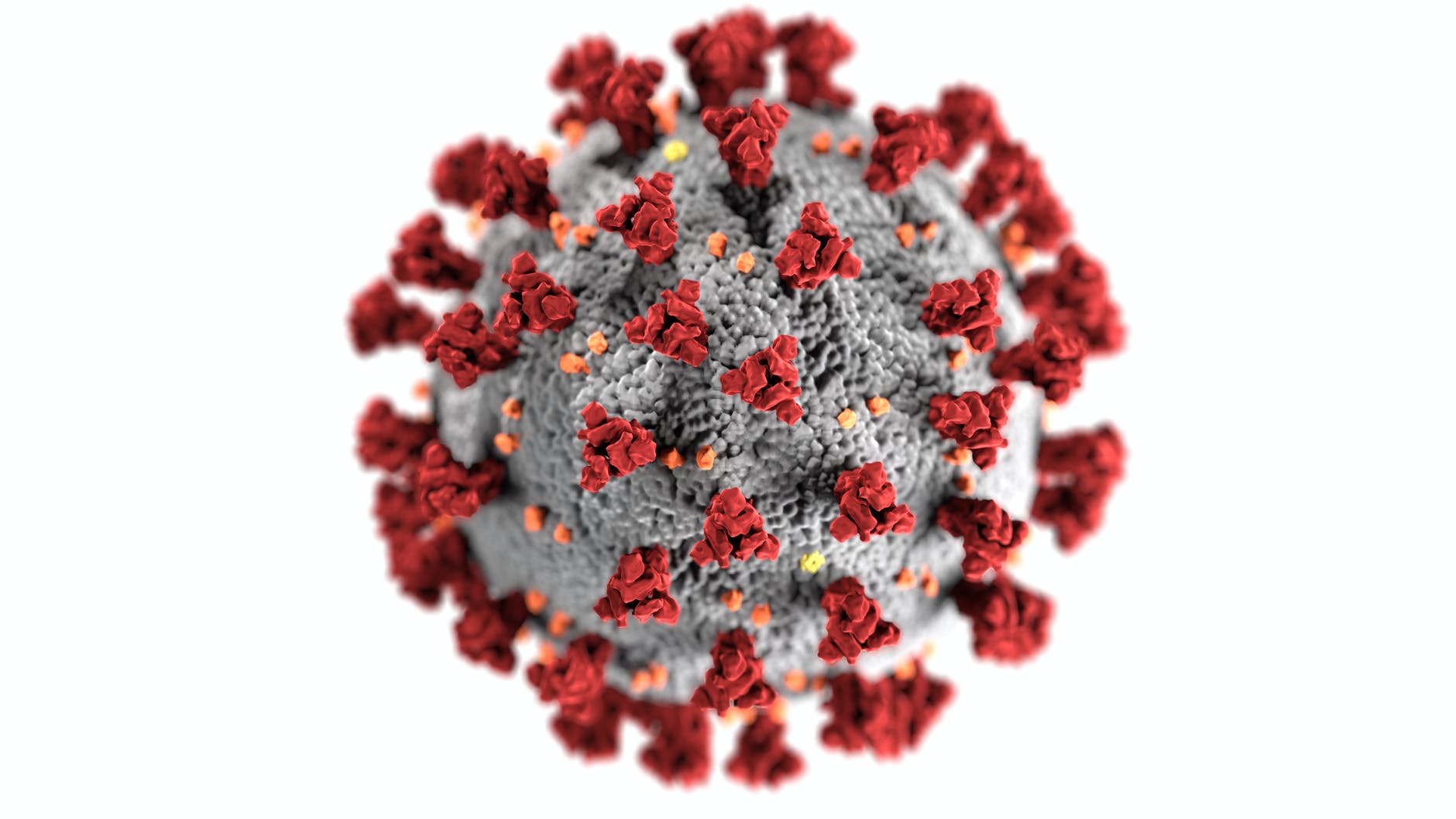
Harvard Medical School biostatistician and epidemiologist Martin Kulldorff, Stanford Medical School physician and economist Jay Bhattacharya and University of Oxford theoretical epidemiologist Sunetra Gupta surmised natural immunity to Covid-19, this way:
‘It is now well-established that natural immunity develops upon infection with SARS-CoV-2 in a manner analogous to other coronaviruses. While natural infection may not provide permanent infection-blocking immunity it offers anti-disease immunity against severe disease and death that is likely permanent. Among the millions that have recovered from Covid-19, exceedingly few become sick again.’
I can attest to this, as having recovered from Covid-19 (which according to WHO designated variants, may have been Alpha, Beta, Gamma or Delta variant), acquired on the frontline in April 2020, I went on to work in a less acute setting and was the only member of the team spared from Covid during the subsequent waves, both before vaccines were produced and after voluntary administration. That’s because those nurses were Covid naive ~ a term used to describe someone whose immune system has not yet encountered Covid, or has not had the disease, but has been jabbed.
During the early days of the vaccine roll-out, the elements of risk vs benefit verged on hysterical. Any statistician would tell you that vaccine induced acute mortality or illness (pericarditis, myocarditis, cardiac arrest, thrombocytopenia and major thromboembolic events) when held against the societal need for mass protection seems miniscule. Tell that, though, to those unfortunate ones who lost their lives for us. Life is after all a game of chance.
Anyone who’s seen the news or reads evidence-based research, will know that Covid naive people who have been double or triple jabbed, are still getting Covid. In my current role as a nurse on a Covid ward, and in the light of Omicron, we’re seeing this phenomenon, often. This means that a vaccinated person, can still get Covid and can still pass it on. It’s true that they may not become gravely ill or die, but they can still pass it on. And they might still need a hospital bed.
Those with natural immunity have a far lower reinfection rate. Which means, essentially, that natural immunity trumps vaccine induced immunity. Whereas a triple jabbed Covid naive nurse could, in effect, pass on Covid to a patient, despite the Covid vaccine pass ~ an unvaccinated nurse with natural immunity might not. In addition to that, a nurse (such as myself) who takes a lateral flow test on the morning of each shift, and who tests negative, poses zero threat (NMC, Duty of Care *).
When I started out in nursing, I had blood tests for HIV, Varicella, TB, MMR and Hepatitis B and C. These standard health clearance checks are carried out as pre-employment compliance, not only to protect nurses in their line of duty, but the patients in their care. If, however, immunity is detected, then a vaccine is not administered. Not required. Why then, does the government not recognise natural immunity for SARS-CoV2?
During 2020, I was part of an antibody trial at Basingstoke Hospital and then continued to have regular blood tests to check my antibody status. Even as recently as the summer of 2021, I had all three types of antibody {Ig (A), Ig (G) and Ig (M)} present, still.
Vaccinologist and professor in global health at the University of Southern Denmark, Christine Stabell Benn, says:
‘If natural immunity is strongly protective, as the evidence to date suggests it is, then vaccinating people who have had Covid-19 would seem to offer nothing or very little to benefit, logically leaving only harms – both the harms we already know about as well as those still unknown.’
Vaccine mandates that make no exception for those who’ve recovered from Covid-19, as enforced upon NHS employees, raises the moral question about the science and ethics of treating those with natural immunity as equally as those vulnerable to the virus. Surely by implementing a targeted vaccine approach rather than a compulsory one for nurses, vaccine availability would be freed up for those who are most at risk and for those countries who have not yet been able to acquire the pharmaceuticals.
It goes without saying that those at risk, which is anyone who has not yet had Covid, should be immunised. Stat. Vaccines can save lives. But to what extent does politics play a role in the so called scientific management of this pandemic? In the autumn of 2021, the government ~ despite their own flouting of restrictions and rules, as they indiscriminately mixed and mingled throughout the pandemic ~ announced NHS mandatory vaccination, in spite of immunity status, will come into force on April 1st, 2022. That’s April Fool’s Day, Boris.
A dash of light
18th December, 2021

Plucked from its snowy forest the tree glittered and glowed, a nest for soft-winged angels that dangled from their knotted strings. We sat down on the old leather sofa, the one that swallows you, slowly, while you snooze. We snuggled, my head resting on your shoulder. And for one special moment we were a family. Again. With images of reindeer, sure-footed, nostrils flared, racing through the night sky towards the chimney stacks, the children slept soundly. We switched the TV on, quietly, so as not to wake them.
‘Wait,’ you said. ‘I’ll get the brandy.’
I heard the soft clink of glasses from the other room. And then the show began, so I pressed pause. But the screen went black. A minute passed, then two, then five. So, I went to find you.
‘The television’s broken again,’ I whispered, searching for you in the gloom.
And there you were.
You were standing in the garden, shards of glass scattered at your feet. I followed your gaze. And I saw it too; a dash of light trailing off into the darkness. A sleigh, perhaps? And a bright red coat? You reached out and took my hand. And we stood like that, just staring. Side by side.
© CHRISTINA CUMMINGS – An excerpt from ‘Christmas Past’, part of my short story collections.
Clearly and Silently
16th December, 2021
‘A book is made from a tree. It is an assemblage of flat, flexible parts ~ still called leaves ~ imprinted with dark pigmented squiggles. One glance at it and you hear the voice of another person, perhaps someone who died a thousand years ago. Across the millennia, the author is speaking, clearly and silently, inside your head, directly to you. Writing is perhaps the greatest of human inventions, binding together people, citizens of distant epochs, who never knew one another. Books break the shackles of time ~ proof that humans can work magic.’
Carl Sagan, © Quote.
Our Gingerbread House
15th December, 2021

Our Gingerbread House
by Christina Cummings
I made the walls too thin.
That’s when my hands pressed down
on the wooden pin
as I rolled and rolled,
ironing out this knot
in my throat.
That’s fine ~ that’s where the tree will stand,
a broad and snowy fir,
plucked from a plastic forest.
The roof tiles are not straight.
That’s when my hands shook,
and the icing trailed off,
like a kite string pulled by a ghost.
Still, I’ll place a chimney there.
All houses need a hearth.
© Christina Cummings 2021
Torch
11th December, 2021



With her hair swept immaculately beneath a cotton cap, and her starched pinafore tied neatly at the waist over a long-sleeved dress, what would Florence Nightingale have made of my blue scrubs and messy blonde hair? I often think of her. A Hampshire girl, named for the Tuscan city where she was born, making a stride though the barriers of the 1800s and the expectations placed upon women then in high society. Her parents, the wealthy landowners of Embley Park, just outside Romsey, could neither have wished for nor foreseen the path she would choose.
Known as ‘The Lady With the Lamp,’ she made her rounds at night, checking on the soldiers who’d been injured on the battlefields of Crimea. They’d sustained not only the horrific wounds of war, but were faced with the ravages of typhoid and cholera. And disease can be as lethal as any weapon. Recognising the need for better hygiene, sanitation and dietetics and a structured approach to holistic patient care and infection control ~ under her management, the survival rates improved. Returning from the war as a national hero, she turned to writing. ‘Notes on Nursing’, first published in 1859, outlines the principles that underpin modern nursing today.
In a personal recollection by Elisabeth Robinson Scovil, on her first meeting with Florence Nightingale, she wrote: ‘Florence’s face lighted with a welcoming smile, as she held out the firm, strong, beautifully shaped hand, whose taper fingers had revolutionised the world of nursing, and took mine in it, bidding me welcome as a friend, because I was a nurse.’
So, thank you Florence, for your pioneering spirit, your influence on society and social reform and the risks you took, but most importantly for bringing to light the Nurse as a valued professional. It has been an honour to work through the pandemic in the very hospital you helped design. The Royal Hampshire County Hospital, here in Winchester, has been my home away from home. And all around the world, my fellow nurses carried your torch, fiercely, through the 21st Century battlefields of Covid. I still carry mine. And, P.S., just so you know, these pictures were taken after removing all of the PPE (goggles, visors, aprons, gloves, MP3 masks, surgical masks, hairnets and gowns), so please excuse the dishevelment. And, like you, despite all the things we saw, I am mostly smiling.
The Last Stroll
7th December, 2021
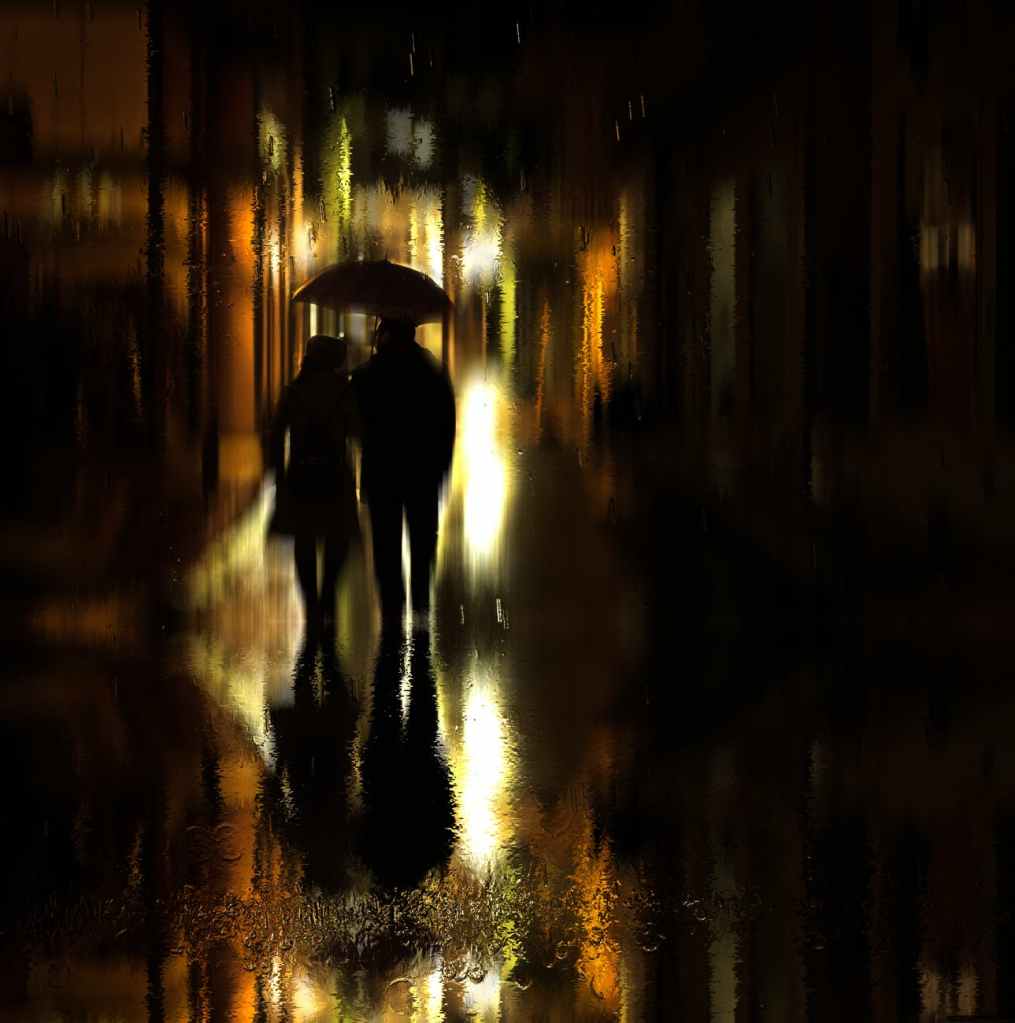
The Last Stroll
A prose-poem by Christina Cummings
In the frozen sky your exhalations linger, like drifting clouds.
I imagine if I held a jar to them and with swift, deft fingers, replaced the lid before they turned to rain, I could watch them swirl like minnows.
Night is darkest here, where beneath your black umbrella, droplets leap about our feet, as though sprung from the cobbles.
And just along from this, (our secret city-nook), the street lights pour into honeyed sight, the department stores and wooden benches and the cold pigeons, still searching for scraps.
We walk on, past the aromatic kitchens of the Turkish bar, where first we met: your arms no longer round me.
We stop in the moonless lee of the city wall and for now, everything’s familiar, still; your scent, your face.
I picture the narrow hallway of your home, the flagstone floor on which your shoes will dry themselves.
And the bottle of cologne that sits in the quiet heartache of your bathroom shelf, where dust will settle soon upon its glassy shoulders.
Until a new one takes its place.
© Christina Cummings 2021
Full-ey’d Love
6th December, 2021
THE GLANCE by George Herbert
When first thy sweet and gracious eye
Vouchsaf’d ev’n in the midst of youth and night
To look upon me, who before did lie
Weltring in sinne;
I felt a sugred strange delight,
Passing all cordials made by any art,
Bedew, embalme, and overrunne my heart,
And take it in.
Since that time many a bitter storm
My soul hath felt, ev’n able to destroy,
Had the malicious and ill-meaning harm
His swing and sway:
But still thy sweet originall joy
Sprung from thine eye, did work within my soul,
And surging griefs, when they grew bold, controll,
And got the day.
If thy first glance so powerfull be,
A mirth but open’d and seal’d up again;
What wonders shall we feel, when we shall see
Thy full-ey’d love!
When thou shalt look us out of pain,
And one aspect of thine spend in delight
More then a thousand sunnes disburse in light,
In heav’n above.
© George Herbert, 17th Century poet
Melankoli
5th December, 2021

In 1891, the Norwegian expressionist artist, Edvard Munch created a set of oil paintings entitled, ‘Melancholy’ (Norwegian: Melankoli). In one, now kept in a private collection, Munch makes use of a colour palette that, with hints of taupe and mauve and bottle green, gives an ethereal quality to the landscape. In the foreground sits a man, staring out to the shoreline, head in hand. One could say he was merely pensive, if not for the title of the painting. First exhibited in Oslo at the Autumn Exhibition, it stirred social conscience, not least because most of us have at times felt the same deep sense of sadness and despair. Yet despite the literal depiction, melancholy often smiles too. Here’s some prose I wrote, called One Wrong Turn. It’s fictional, and the narrator here is not me; it’s part of a longer story where the protagonist loses someone close. Here, he recalls his first experience of death, and the precarious, unforeseen steps to the unexpected.
One Wrong Turn by Christina Cummings
Back in middle school there was a teacher called Mr. Black. He was one of the popular ones, the kind of teacher that just gels intrinsically with the class, like he was someone’s cool older brother, a likeable guy, who didn’t need to work at discipline. The kids just always wanted to listen when he spoke. He was also my favourite teacher because he was head of the science department. He would write equations on the board, then sit down deliberately on the wooden chair behind his cluttered desk, in the centre of which stood a large globe plastered with neon post-it notes, reminders, notes-to-self, jotted down in hurried moments. Then he’d lean backwards with his hands in his pockets, one long leg crossed over the other, his trouser legs receding to reveal a pair of Formula 1 socks. He would smile at us and say: ‘What does this mean to you?’
On one hot July afternoon in the science lab, the windows were cranked open so far we could hear the First Years’ shouts as they played cricket on the games field and caught up on the soft breeze, particles of chalk dust and random filaments drifted and swirled, slow as a feather, toward the hardwood floor. The class watched as Mr. Black drew a cat in a box on the board. And beside it he wrote an equation of quantum mechanics, his lettering curly yet bold. ‘Can anyone explain this?’ he asked. ‘I’ll give you a clue. This is no ordinary cat. This is Schrödinger’s cat.’
Several eager hands shot up. Kids willed him to call out their name. ‘You!’ he said, that one time, pointing at me. ‘Go for it!’ I ached to get it right and replied carefully, ‘If you place a cat in a box with something that might kill it, but then you seal the box, you won’t know if the cat is still alive or if it’s dead, Sir.’
‘Correct! Go to the top of the class!’ Mr Black said, pointing at the ceiling with a fountain pen, as he always did, his whole being shining with the genuine elation that is a teachers’ fulfilment. ‘So,’ he continued.‘Until that box is opened, the cat is, in a sense, both dead and alive. In scientific terms, it means that a theory is neither right nor wrong until it can be tested and proved. But by opening the box, we would interfere with the experiment. By influencing the experiment, we will never know the true outcome. The answer we seek. And we can apply that same principal to life. To the uncertainties we all face.’
‘Now do me a favour,’ he said rapping the board with his knuckles. ‘Always remember that’. And I do remember it. Because that was the last science lesson taught by Mr. Black. And I can’t think of Mr. Black without the concurrent image of a bloodstained tent in the woods; a bright red setting sun dripping slowly down the side of the white canvas and drying to the colour of mud. And the horror of what lay inside. The Head Teacher’s announcement at morning assembly and the subsequent gossip that traversed the school gates and the rally of whispered disbelief that lingered in the locker rooms and between the Formica trays of fishcake and chips in the canteen and around the peeling goal posts at break-time, redefined the school. From the moment Mr. Black stole God’s will, the mauve painted hallways were haunted. After that, whenever I sat in Class 7B, I would see the Formula 1 socks, the questioning grin, and the back of his head as he drew concise diagrams depicting the theory of plate tectonics or the direction of flow at the magnetic North Pole, the white chalk flicking across the smudgy blackboard, as he became the exponent of the world’s vast composition. And I would wonder if he had been nursing the idea of his death even as he had stood there and inspired us. Even as he had called out my name in class that day and smiled.
Suicide means one wrong turn. It leaves us forever questioning, not just death, but ourselves. Questioning everything we thought we’d ever known. It is a thief, whose silent removal of all assumptions leaves in its wake the footprints of doubt. Let’s be thankful for tomorrows. For being able to open and reseal that box. By looking at the things that overwhelmed us yesterday, we can reflect and own even the smallest of triumphs. At least if it all goes wrong, there will be another box. Another tent. Another chance to make it all worthwhile.
© Christina Cummings 2020
You do not have to struggle with difficult feelings alone. Especially at this time. If you’re feeling like you want to end your life, it’s important to tell someone. Help and support is available right now if you need it. (NHS, 2021) Click the link below to contact The Samaritans:
Or call:
116 123
For a Deer
4th December, 2021

Poem for deer on the high hills (for Iain Crichton Smith)
By Gerard Rochford
It was open-mic time. A quiet man came forward.
The crowd whispered his name, the room fell silent.
He told an anecdote or two: teased those who’d gone before him, gently,
but with a touch of the blade.
Then seamlessly he flowed into a poem, Just written it, he said,
It’s about deer.
And almost as though he was weaving as he spoke an island cloth shot through with threads of gold
the verses were set free within the hall, down the granite stairway, into Marischal quad and up,
until they settled on the felspath pinnacles, scarfing those delicacies against the northern cold.
And when he finished still the room was silent, as if a chalice had been held on high to honour an angel,
thinking aloud about love, brutality, loneliness and beauty, in this city of stone.
© Gerard Rochford
Things unknown, but longed for still…
3rd December, 2021

Maya Angelou was not just a writer who I admired, she was so much more than that. In no particular order, she was an acclaimed African-American poet and playwright, a singer, a storyteller, autobiographer, actress, director, essayist, editor, dancer, civil rights activist and composer. She was also a mother. So many times in history, we’ve applied some of these labels to men instead of women and to women over men. In some cultures, some nations, still, women and men are cruelly oppressed and exploited. In this poem, Maya writes of two birds and the striking discordance of their lived experience.
Caged Bird by Maya Angelou
A free bird leaps
on the back of the wind
and floats downstream
till the current ends
and dips his* wing
in the orange sun rays
and dares to claim the sky.
But a bird that stalks
down his narrow cage
can seldom see through
his bars of rage
his wings are clipped and
his feet are tied
so he opens his throat to sing.
The caged bird sings
with a fearful trill
of things unknown
but longed for still
and his tune is heard
on the distant hill
for the caged bird
sings of freedom.
The free bird thinks of another breeze
and the trade winds soft through the sighing trees
and the fat worms waiting on a dawn bright lawn
and he names the sky his own
But a caged bird stands on the grave of dreams
his shadow shouts on a nightmare scream
his wings are clipped and his feet are tied
so he opens his throat to sing.
The caged bird sings
with a fearful trill
of things unknown
but longed for still
and his tune is heard
on the distant hill
for the caged bird
sings of freedom.
*her
(From Shaker, Why Don’t You Sing? © 1983 Maya Angelou)
Macchiato
2nd December, 2021

My first taste of coffee was like saying goodbye to childhood. The bitter beans wrung out so hard, that the dark extract felt like swallowing a rayless forest, whole and roasted. Childhood doesn’t end suddenly the day you turn eighteen. In the legal sense, yes of course it does. But somewhere along the continuum of life, childhood is with us always. Remember that piggy back your father gave you when your tiny being tired on the last leg home? Did you know then, it would be the last time? The last time you felt you could fly as he lifted you high as the treetops and carried you upon his still youthful shoulders to the warm hearth of home? And did you know he didn’t know it either? That’s the same bittersweetness of a cappuccino, or an espresso macchiato or the gingerbread latte you sip from a take-out lid, as you rush round town. You see the last pieces of childhood are not really lost to time, it’s just that memories can’t whisper to us now, ‘See, I told you to hold on to this moment, didn’t I?’
Heartstrings
1st December, 2021

The walls of the hospital chapel are a nauseous over-ripe peach, a warm shade at least, chosen perhaps for its non-clinical feel. It is past its open door that in the dark hours of a winter’s morning shift I walk along the corridor towards Nightingale Wing.
I’m not sure why, but today I turn back and wander in, my fingertips still numb from scraping the windscreen of my car. I feel them thaw. Sometimes we do things in a moment of spontaneity without cause or reason. But it feels as though I was meant to be here, like an appointment had been made. And I can’t help thinking that, in here at least, there is something of a quiet haven…
•••
I take a seat on the end of the wooden pew and close my eyes, until the world is gone, like I’m a child again, playing Peek-a-boo. But when I open them, the walls are there, still ~ less apricot, more nicotine now, which is strange because hospitals and cigarettes jar, like Christmas decorations in the month of June.
I look around and see a flyer. It has a picture, a logo, of outstretched palms and I remember that from the eerily quiet corridors of last year, when the sick were in wards or beds and the rest of the world stayed home. I remember the Chaplain standing at the exit point, handing out sweets to the tired nurses at the end of their shifts. And I wonder if she knew, I once took two.
I take a deep breath, in through the nose and out through the mouth. And though the mask affords ventilation, it’s not a calming breath. And I try to recall the last time I’d nursed without one on. Ah yes, it was nearing Valentine’s Day last year. 2020. I’d made paper hearts and strung them up like flags. I remember one of the matrons taking them down, plucking at them as though they were ripened fruits. I naturally enquired as to why. She told me that a wedding was about to be held. In one of the cubicles. She said she’d place them round the room, for when the ceremony took place. There was no time to waste. No altar here, no trailing flowers, no hymns. No champagne to sip from crystal glass. No tall cake, nudely frosted, as is the trend. Just vows exchanged, shortened by a cruel twist of fate, and my paper hearts, cut from printer paper with NHS scissors. And with no strings.
Loading the Blade
30th November, 2021

How glorious the feel of placing that first daub of paint to a canvas. Generally, I’ve already rollered a background wash to cover what was there, for the canvasses I use are the ones you find in charity stores. Upcycling, or ‘creative reuse,’ is the transformation of an unwanted item into something of worth, reducing the consumption of new raw materials, while producing something with greater artistic and environmental value. Besides the roller, which can be used for further layering, and the wide decorator’s brush, affording vast sweeps across the whole canvas, there exists a tool I love. The palette knife. From the sharp precision of flat lines to blurred and casual ambiguity, these instruments are an abstract artist’s must have. Indispensable, they allow the artist to create texture and the illusion of dimension and depth. By altering the angle held and the pressure applied, strokes can be crisp, broken, messy or softly defined.
Originally used just for mixing paints on the palette, while the brushes did the artistry bit, they were first introduced as a method of painting style in the 1800’s. Previously, the palette knife was seldom used, in deference to the brush, by the likes of Rembrandt (1606 – 1669) and Goya (1746 – 1828), but it was Gustave Courbet (1819 – 1877) who made use of their versatility, producing the rough atmospheric movement of wind and waves and clouds. The trend was set. Following this, the tradition of loading the blade to work with paint was widely used by Camille Pissarro (a student of Courbet), Cezanne, Chagall, and Henri Matisse. And not forgetting, Vincent Van Gogh, whose famous ‘Sunflowers’ was made so sculptural as to bring each flower head to life. Using a technique called ‘impasto’, an Italian word for ‘dough’, he laid the paint on unapologetically thick. And I know he must have felt the same glorious satisfaction that comes from that.
The Dating ‘Scene’
28th November, 2021
An Artist in love with a Writer
by Gordon Michael III
As a writer,
Pictures inspire the emotion:
The journal acting as the canvas,
And the pen being the brush,
And as a writer to an artist,
Black and white had never shown more beautifully.
Though as a writer dating an artist,
To view meaning within the basic lines of the world
Compares not to the placing of meaning atop the ones given.
For as a writer dating an artist,
A blank page envelopes more than unfinished work,
As any unfinished work soon becomes accepted beauty.
And as a writer dating an artist,
Seeing emotion in color no longer feels foreign,
Evolving old metaphors into nothing shy of the neanderthals.
Thus as a writer dating an artist,
I’ve begun to learn the way of the trade,
In fear for when my words run dry.
As an artist,
Words inspire the feelings,
The canvas acting as the journal,
And the brush being the pen.
And as an artist to a writer,
Silence had never been etched more enticing.
As the writer dating an artist-
I have become the artist in love with a writer.
© Gordon Michael III 2013
Few lessons
27th November, 2021
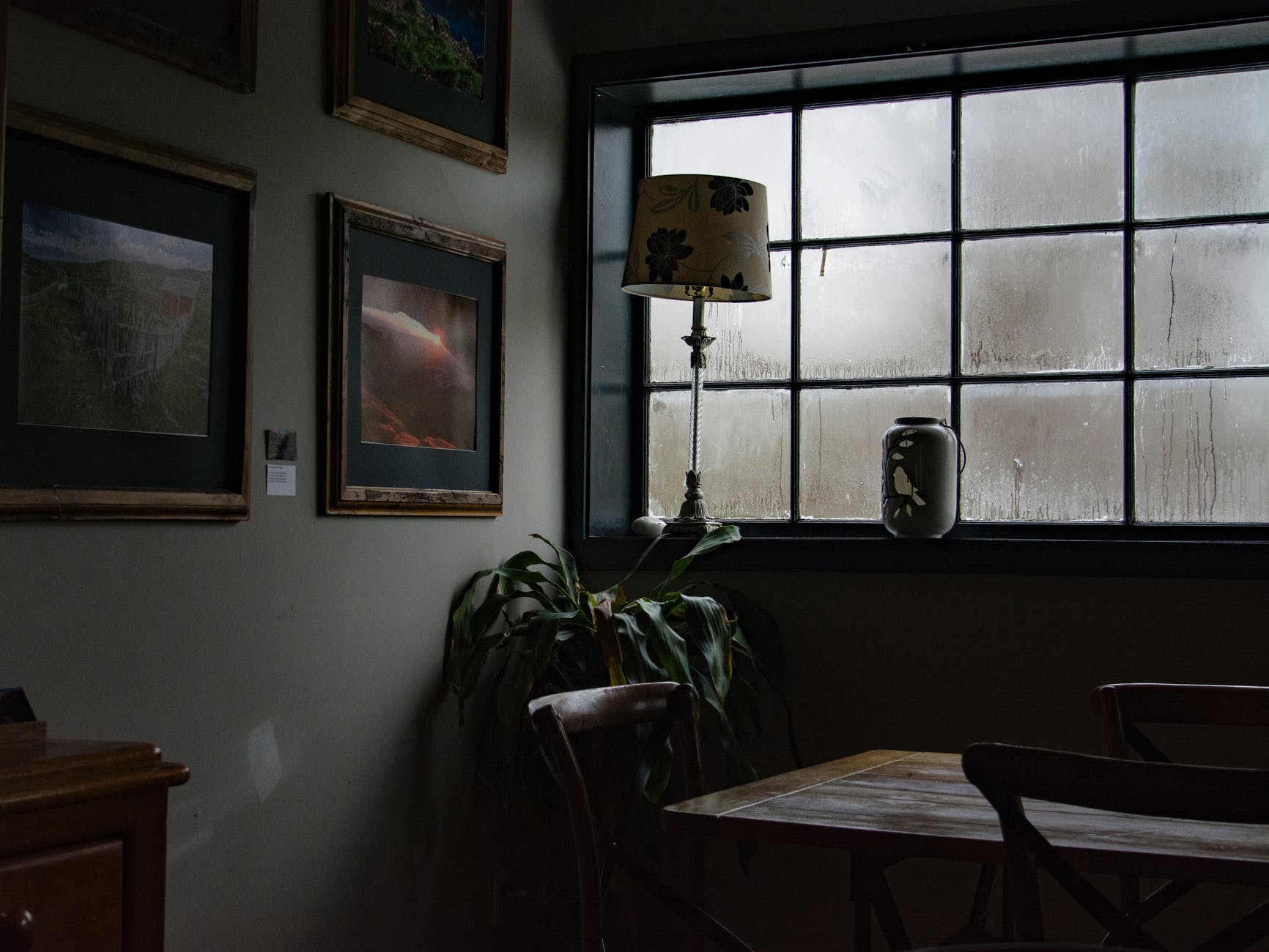
This excerpt from the story, ‘Layers‘, was written almost twenty years ago. There are some phrases in this piece that I’ve used in subsequent works. That’s the beauty of writing, there’s an ownership of words ~ a belonging. And sometimes in fiction, as in all things, there lies a deeper truth.
Excerpt © Christina Cummings
Already it feels like a year. At times a year can seem like a hundred dozen, and sometimes, like a lover’s missed kiss, it gives a mere fleeting glance at you, before moving on. Often it passes with few lessons, but hurt. But a year is a year nonetheless. I console myself that the one I spent with you was a perfectly lived year. Even the seasons executed their propensities with seamless precision; now winter’s cold punch imparts harsh truths while the lawn snow lies unspoiled. Yet summer’s evening balm can be conjured, still, so that the feel of it on my skin, is so real again. When the pain stings, I’m comforted by the notion that a heart, full of bittersweet precipitation, is if nothing else, a beating one.
Last night I dreamt of you (again). You were in your car on the highway, speeding. You were scared. I tried to flag you down, but you hit the pedal; you looked straight ahead. All that was left of you here, a trail of dust. I wanted to let you know that I’d waited there to see what it was you thought was chasing you. Hunting you. But, there was nothing there. You have to know… there was nothing there at all.
I boil water for tea. The fuse in the kettle has blown again, so I use a pan. I stare at the surface until the bubbles are born. The rain has been spitting thickly against the kitchen windowpane; the tedious sky has lost its temper again. Angry streaks are still visible in the half-light. I shuffle about the kitchen looking for a cup, some sugar, a spoon. I read somewhere, that when you’re going through the healing process after loss, you should set what you believe to be an appropriate amount of time to grieve, then double it. But, tell me… how can you double a lifetime?
© Christina Cummings, 2004
Rainbow Sherbet
26th November, 2021
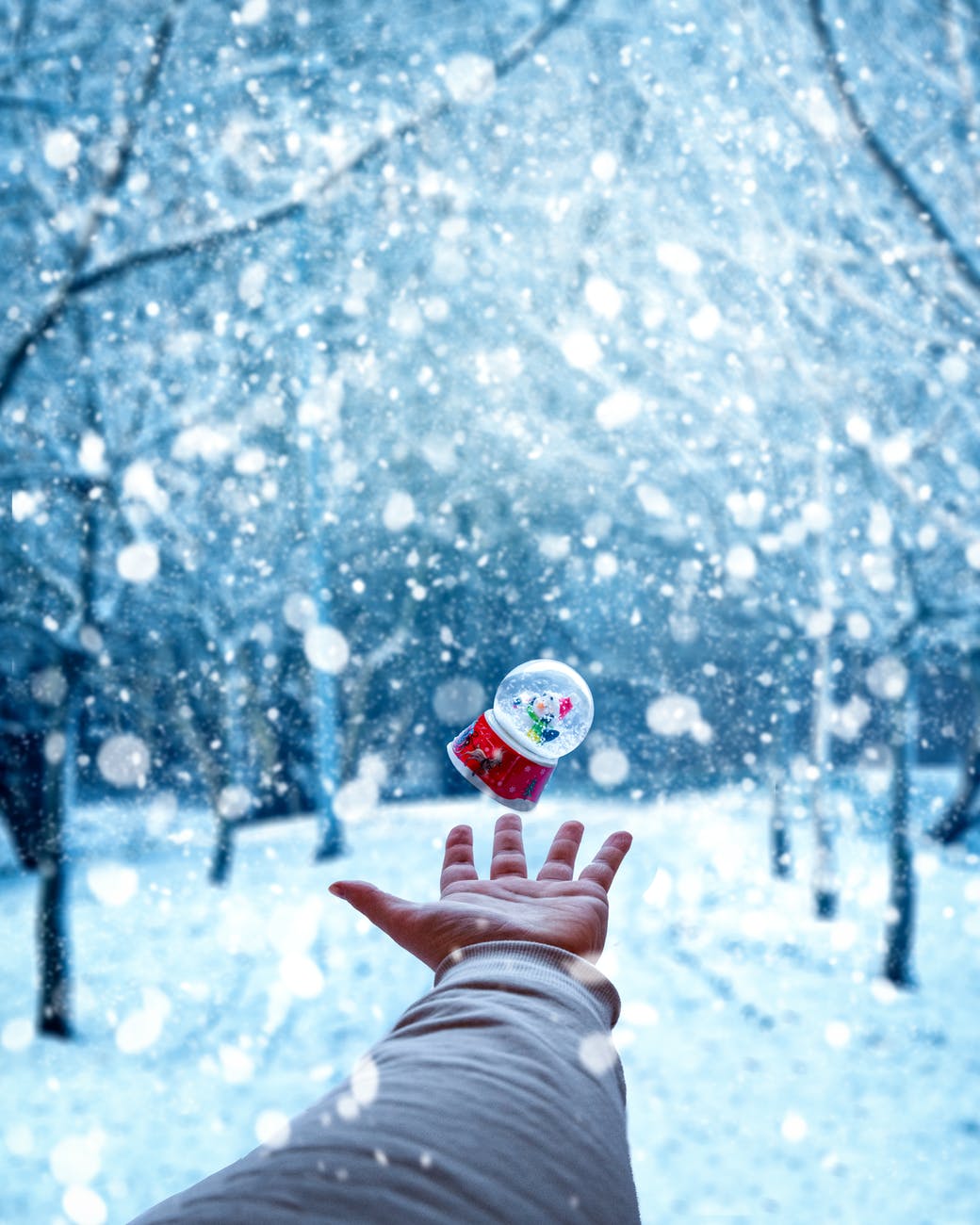
Thought it was time for another writing excerpt. This one’s from a short story collection published by the group collective, ‘Pencils and What-not‘, and it’s called Rainbow Sherbet. It’s a snapshot of time, illustrating a small moment on a bus, as witnessed by a passenger. And of a mother’s love for her child, even when she’s tired.
Excerpt © Christina Cummings
Brushing winter from the sleeves of my coat, I sense I’m being watched and look up to find enquiring eyes and tear-stained cheeks beholding me. A boy, no more than two years old, blinks away his mother’s harsh words. He’s facing backwards on the seat, kneeling up as though in prayer.
‘Sit down,’ his mother says. The boy looks at me, hesitates, then before he can sit, tired hands prise him, turn him and gently press him to the seat. This city bus accelerates sucked by the flow, absorbed by smog-choked streets. A moment passes. I hear the rustle of a paper bag and then, slow as he can, he steals a last glance at me. Beneath a stripy bobble hat, barely peeking, he gestures towards the grimy windowpane. Tiny damp fingertips, caked with coloured sherbet crystals seem to be saying, ‘Look!’
Outside, snowflakes, big as leaves, tumble from the greyness. They cartwheel and piggyback, melt into the tarmac. Pressing his nose flat against the glass to get a better view, I hear a happy gurgle escape from his lips.
‘Hurry,’ the boy’s mother says, and feeding his sticky hands into stale mittens, helps him along the aisle. She holds him up by the armpits to ding the bell. ‘It’s our stop,’ she whispers into his warm neck. Tucking the paper bag deep into the secret pocket of her shopping bag, she sets him down and together they sway and falter until the bus stands still. I watch them as they walk away, hand in hand along the tree-lined street, like two tiny figures now, in a giant snow globe. I watch them disappear as the bus pulls out again into the steady traffic.
Excerpt from Rainbow Sherbet, by Christina Cummings from short story collection, Pencils and What-not, 2011
© Christina Cummings
Mind the Gap
24th November, 2021
As reported in The Independent this month, a recent poll of UK women uncovered the very real and founded fears they have of being attacked on Britain’s streets. This fear was markedly heightened this year, by the kidnap, rape and murder of Sarah Everard. There was not a woman or girl in the whole of Britain who having read about the details of her last movements, as she walked home alone through Clapham, did not shiver to their very core. Sarah was someone’s beautiful and precious daughter. She was walking to see a friend. She wasn’t even out that late; it was only 9pm.
But it’s not just lone women who are targeted by predators in the silent moments when most of us are tucked up in the warm haven of home; women in pairs are often the victims of such violence. Just recently two women, at the ‘safe’ side of midnight, were brutally injured in an unprovoked attack. Despite the greater fear that women have, the violent crime statistics reveal that in fact it is men who are more likely to be the victims. This is known as ‘the fear of crime paradox.’ And according to the Office of National Statistics (ONS, 2021), violence against the LGBTQ community has, despite society’s so-called inclusion ideology, risen exponentially over the last decade.
From a sociobiological perspective, males commit more violent crimes overall. This can be explained by the deep-rooted evolution of traditional roles within child-rearing and in hormonal factors which drive the territorial impetus of species procreation. It is a disconcerting and disheartening fact then, that rape is on the rise again after lockdown restrictions eased. Our UK Police force has reported that despite the heinousness of this act against (mostly) women, it still carries the lowest conviction rate of any type of crime. To combat the rising levels of threat, patrols were increased to ensure our safety. Yet, despite this, the night hours in the world of pavements and unlit parks, of door ways and bus stops, train stations and dimly lit tunnels are no place for any one, at all. Especially at night.
Imagine yourself for a moment, in the context of these statistics. Perhaps you’ve no money on you or no card, and the battery on your mobile phone has died. Picture yourself sitting in the eerily quiet carriage of a late-night train, or navigating your way through the dark underbelly of an unfamiliar town. Is the stranger that approaches now, a cause for your concern? Do they have the same regard for your welfare as those who love you would? What if the answer’s no? And what of those whose callous abandonment leaves us vulnerable to these crimes? The innate chivalry of most is lost to those, who in the pursuit of selfish destruction or retribution, have fallen through the gap of common decency. Even in the face of perceived ‘provocation’, in the end, they become the unlikely victims of their own sententious acts.
The effects of violent crime are profound, affecting not just the individual, but their friends and family too. Yet, just the very ‘fear of crime’ affects us all. How many of us worry about a loved one, when we know they have a journey to make after sun down? It’s hard to sleep, isn’t it, knowing they’re ‘out there’ somewhere, like prey? I hate to think of the sleepless nights I’ve caused my mother, even now. ‘Text me as soon as you get home,’ our loved ones say, because home is the one place that separates us from the streets. I imagine Sarah Everard’s mother ~ what would she have given to have received a text, that night? How things would have been different if Sarah had been able to reassure her, that she was free from danger? If she’d been safe and well enough to write the words: ‘I’m home’.
The Sloth Club
23rd November, 2021
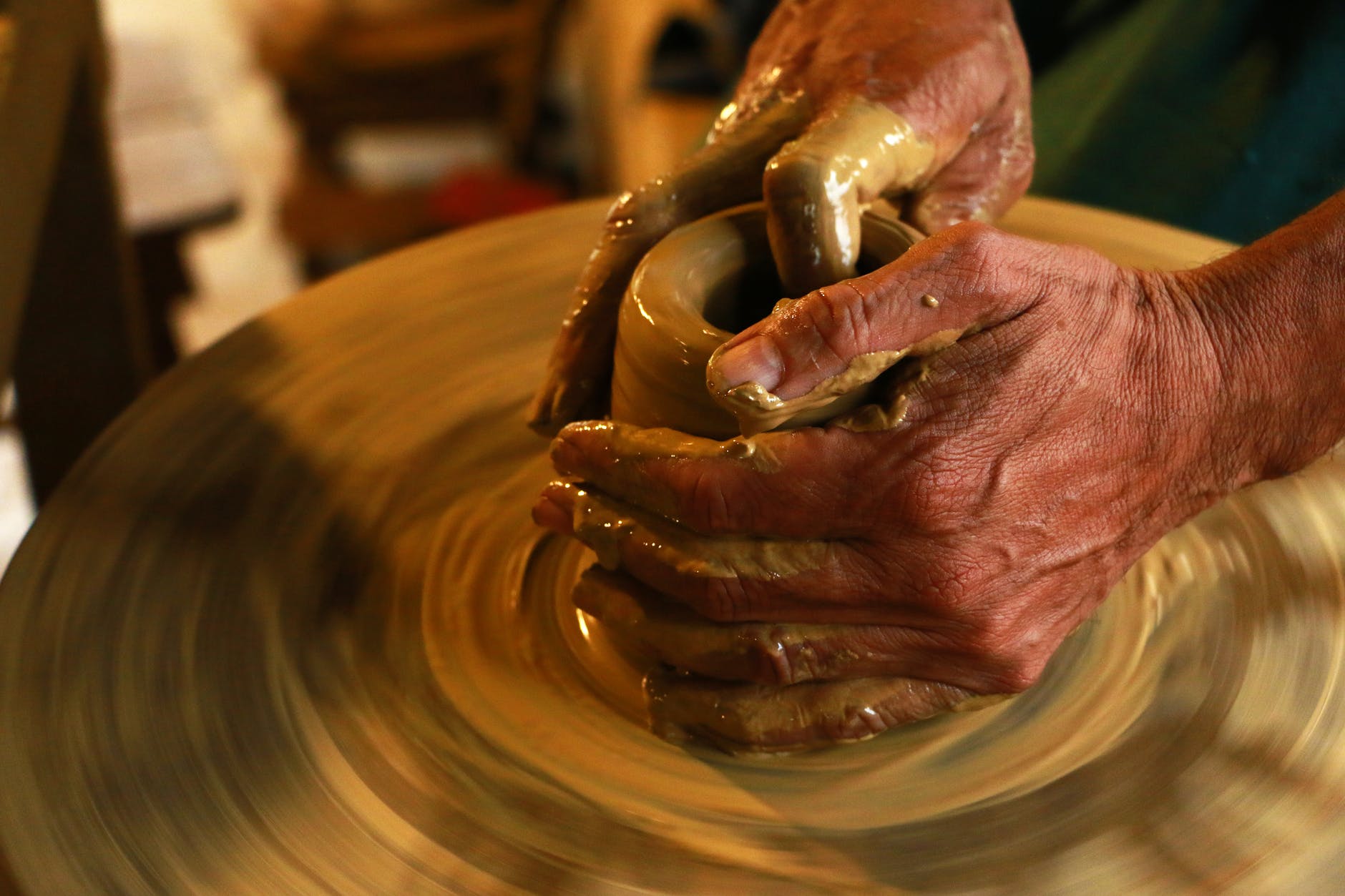
If someone invited you to join the Sloth Club, would you take up membership? Some would scoff at the term, as they headed out into the dawn mist to beat their personal best at Park Run. Others, picturing themselves in a room full of chaises longues, their shoes kicked off, their head tilted back and the distinctive, syncopated rhythm of jazz blues spilling from some faraway trombone, may well sign up. Yet this club, founded in Japan in 1999, isn’t about hanging around in narcoleptic stupor, it’s about the celebration of all things slow: Slow, here, is to mean ‘connection.’ Reciprocity in alternative ways, through sustainability, through simplicity. An ecological symbiosis. Connections between us and our environment, where attaining and nurturing nature within the urban and the rural, is our daily rite. It’s about being happier when interlacing ourselves within small moments, with our inner selves and with others. Consider the potter at their wheel; moulding the cold clod of clay, fingers pinching, teasing. Now inhale the invigorating aroma of peppermint tea lifted to the lips of a loved one, thankful for the potter’s artistry as the list of the cup’s brim allows the tea to be, in perfect synchronicity, both sipped and inhaled. Within these slow acts there lies slow connection.
Author and co-founder of the slow movement, Tsuji Shinichi (Keibo Oiwa), in his book Slow is Beautiful, explains the evolution behind the club’s ethos:
“Think about the following terms: Economic trends. GDP. Efficiency. Competition. Mass production. Mass consumption. Mass disposal. These catchphrases only made possible thanks to countless negations of our true selves, daily life, and original culture. Our humble but beautiful economy of traditional knowledge and life arts that once constituted our lives has been upended. Only on the corpses of traditional values can the attractively-named monster, “Affluent Society” flourish. In recent years the monster has grown to even more gargantuan proportions of speed and size and scope and with heavy steps sweeps across the Earth at terrifying speed. That is why our society and era are filled with curses of self-negation and self-hate. In protest, Slow is Beautiful is a personal incantation, a prayer, prescription, and mantra to protect ourselves from these times, and liberate our lives.”
I think what he is saying here is, in simple terms, to be aware. He suggests a way to reclaim the sense of how we might best serve our time on earth, knowing not only who we truly are, but those around us too. The pandemic unraveled some of the tightly bound cocoon of modern “civilisation“. Many of us took up yoga, baked daily bread, planted seeds. We became aware of our purpose. We donated, we volunteered. One might even say, we took up membership to the Sloth Club, and we liked it there.
The fleeting life of Keats
November 20th, 2021

Remembered for the romantic poet that he aspired to be, Keats’ first ambition was in medicine. Whilst training at Guy’s Hospital, (Kings College, London) as a medical student, the orphaned Keats became aware of his own revulsion for the squeamish gore of human pathophysiology. And so he turned to the written word for self-exploration and in some ways for accolade. Romanticism in poetic verse was wildly popular in his day, and was the seemingly perfect outlet for his yearnings. His contemporaries, Byron and Shelley, were at the time both his critics and his muses. These second generation poets, who followed in the footsteps of the sage and notable Blake, Wordsworth and Samuel Taylor Coleridge, all died at a young age. Indeed, the inscription on Keats’ gravestone, in his own words: ‘Here lies One whose Name was writ in Water’, suggests he knew the fleeting nature of his life, even before tuberculosis robbed him of his youthful lungs.
In the autumn of 1819, Keats disembarked at Southampton, having left Shanklin on the Isle of Wight in search of a ‘good library’ at Winchester. The precise location of his lodgings here remain unknown, but Colebrook Street has been suggested for its proximity to the route he daily walked.
So taken with the environs: ‘beautifully wooded… with dian skies… clear streams full of trout… and warm wheat-stubble-plains’, he was inspired one Sunday afternoon to write his now most famous poem ‘(Ode) To Autumn’. Yet it was in his letters and journals that he wrote his finest words. His fondness for the city of Winchester was an ever-present candle held to the beauty of its spirit. The week before he penned his autumn ode he wrote: ‘… the palatine Venice and the abbotine Winchester are equal; that is the great beauty of Poetry ~ it makes every thing, every place interesting’.
And I would add to that ~ as we live with the juxtaposition of the enduring and the fleeting, it makes us all equal too.
To Autumn
by John Keats
To hear the poem read aloud, courtesy of The Keats Foundation, click here.
Season of mists and mellow fruitfulness,
Close bosom-friend of the maturing sun;
Conspiring with him how to load and bless
With fruit the vines that round the thatch-eves run;
To bend with apples the moss’d cottage-trees,
And fill all fruit with ripeness to the core;
To swell the gourd, and plump the hazel shells
With a sweet kernel; to set budding more,
And still more, later flowers for the bees,
Until they think warm days will never cease,
For summer has o’er-brimm’d their clammy cells.
Who hath not seen thee oft amid thy store?
Sometimes whoever seeks abroad may find
Thee sitting careless on a granary floor,
Thy hair soft-lifted by the winnowing wind;
Or on a half-reap’d furrow sound asleep,
Drows’d with the fume of poppies, while thy hook
Spares the next swath and all its twined flowers:
And sometimes like a gleaner thou dost keep
Steady thy laden head across a brook;
Or by a cyder-press, with patient look,
Thou watchest the last oozings hours by hours.
Where are the songs of spring? Ay, Where are they?
Think not of them, thou hast thy music too,—
While barred clouds bloom the soft-dying day,
And touch the stubble-plains with rosy hue;
Then in a wailful choir the small gnats mourn
Among the river sallows, borne aloft
Or sinking as the light wind lives or dies;
And full-grown lambs loud bleat from hilly bourn;
Hedge-crickets sing; and now with treble soft
The red-breast whistles from a garden-croft;
And gathering swallows twitter in the skies.
© John Keats, September, 1819
Bed 16
November 11th, 2021
There’s a patient in Bed 16; he reminds me of my father had he lived into his nineties. Through the time-glass, his features are familiar, the high brow, the long nose, the same hazel eyes that once regarded me, the same hint of a smile at their corners. I pour some water for him from the plastic jug, and place the cup into his hand, weathered now with a delta of veins, sentinel and the blue-green of a lake at eventide.
He’s one of the oldest patients here; most are my age or younger. I work on a Covid ward. I’d moved away from the frontline after my own bout in April 2020 but then my new team was chosen to look after Covid positive patients in the cubicles and isolation bays. The irony was not lost on me ~ but I could have chosen to work elsewhere, to look for a new role in another department. Yet I did not. Armed with full PPE and natural immunity, confirmed by four positive antibody tests over fifteen months and with natural boosters from frequent exposure (daily) I felt a level of composure. Should I fall victim to a variant or a secondary infection, it could be that my symptoms would be less severe. Statistics for breakthrough infections, post-vaccination, show an upward trend, but picked up early by thorough and consistent testing, they’d be caught early. My duty is to protect my patients. Lateral flow tests carried out on the morning of my shifts, as I ate my tea and toast were reassuring. But there was another factor to consider. My colleagues. No longer workmates, they were the stalwarts of sanity. Though not one of us has come out of this unscathed, there are days when those who found it tough were lifted by a subtle eyebrow raise, an empathetic wink, a softly timed ‘Are you okay?’ With most of my new team, from the doctors to the domestics, I’ve only ever seen their eyes; the rest of their faces just a blue blur. Yet, no matter – in the camaraderie, in the care and the selfless stoicism of people doing amazing things for other people at this fragile time, it’s in those invisible things that we are truly seen.
One of the patients has pressed their call-bell. It’s Bed 16. He looks up at me from the envelope of crisp white sheets. ‘What can I do for you?’ I ask. He’d like the curtains opened, now that his headache has subsided. I walk over to the window, and gently draw them back. I turn to leave, and notice that the winter sun ignites his face, so that the lines and the hollows are smoothed and a smile of nostalgia forms behind my mask.
Eighteen months on…
October 1st, 2021

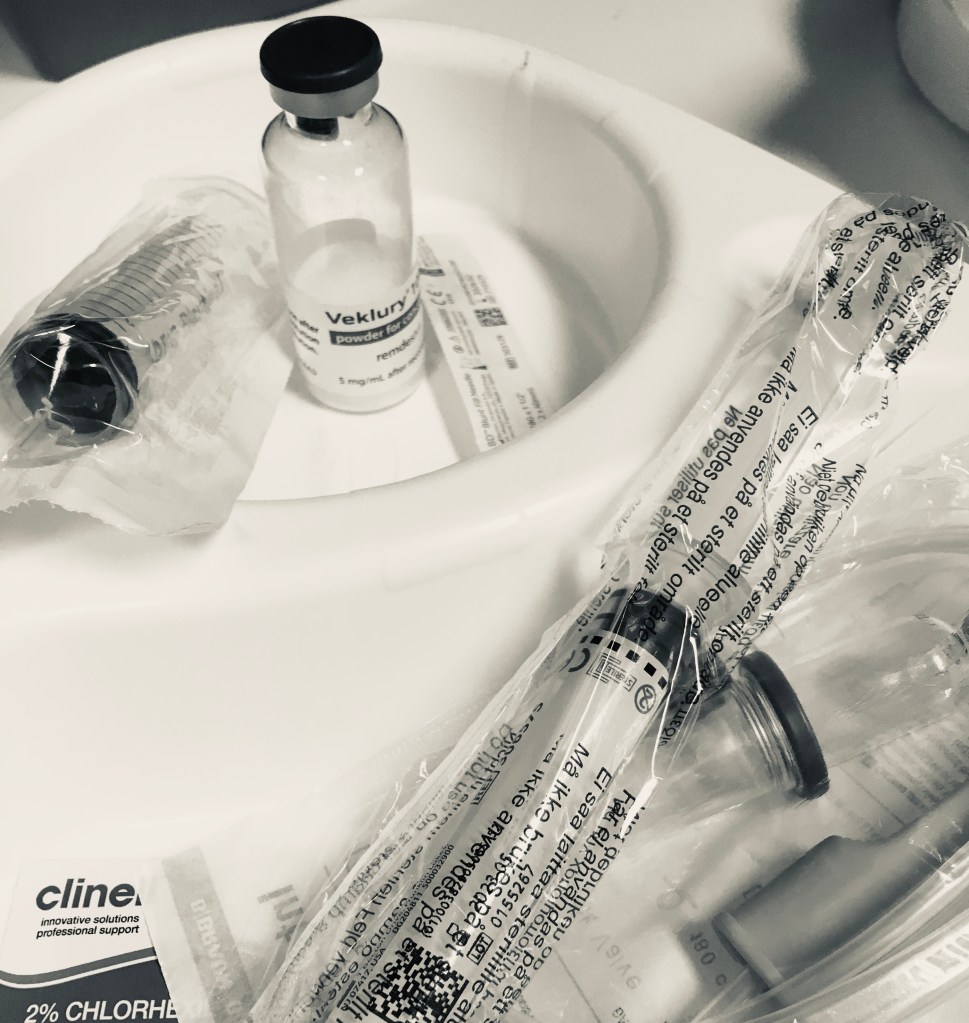




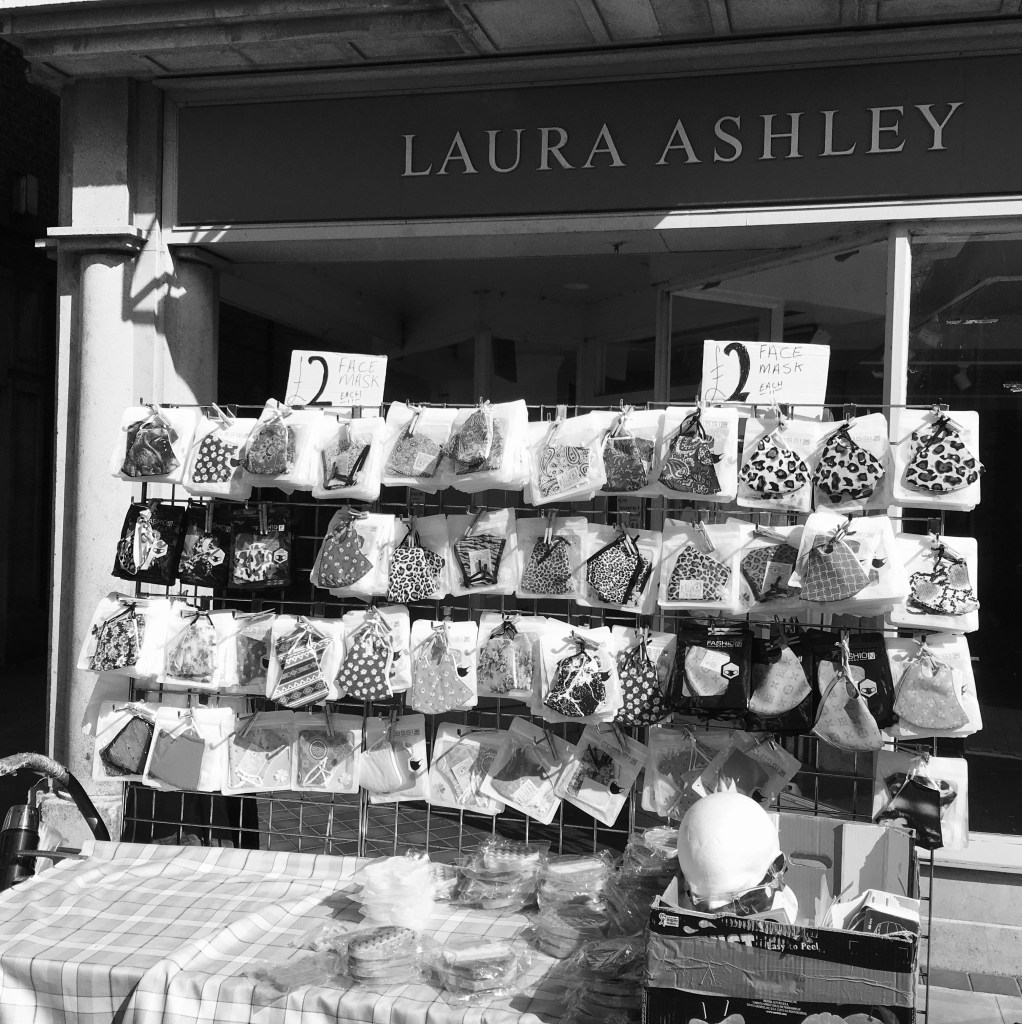
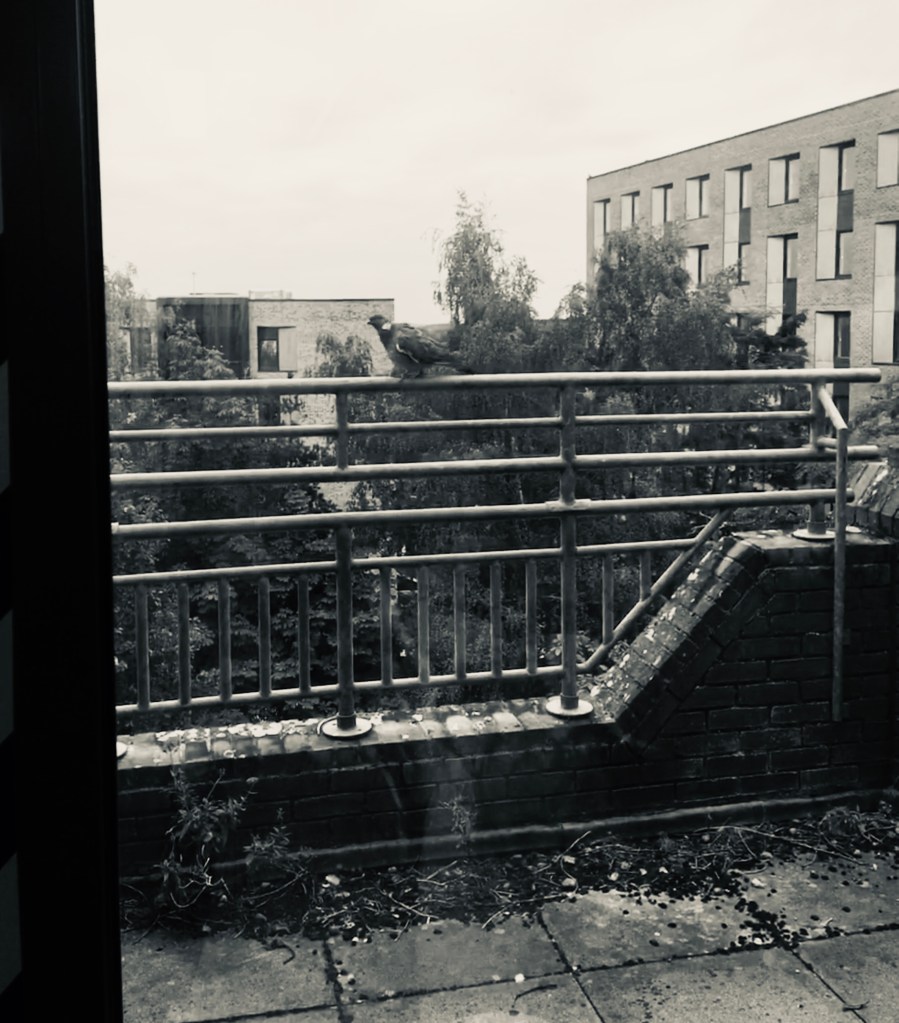
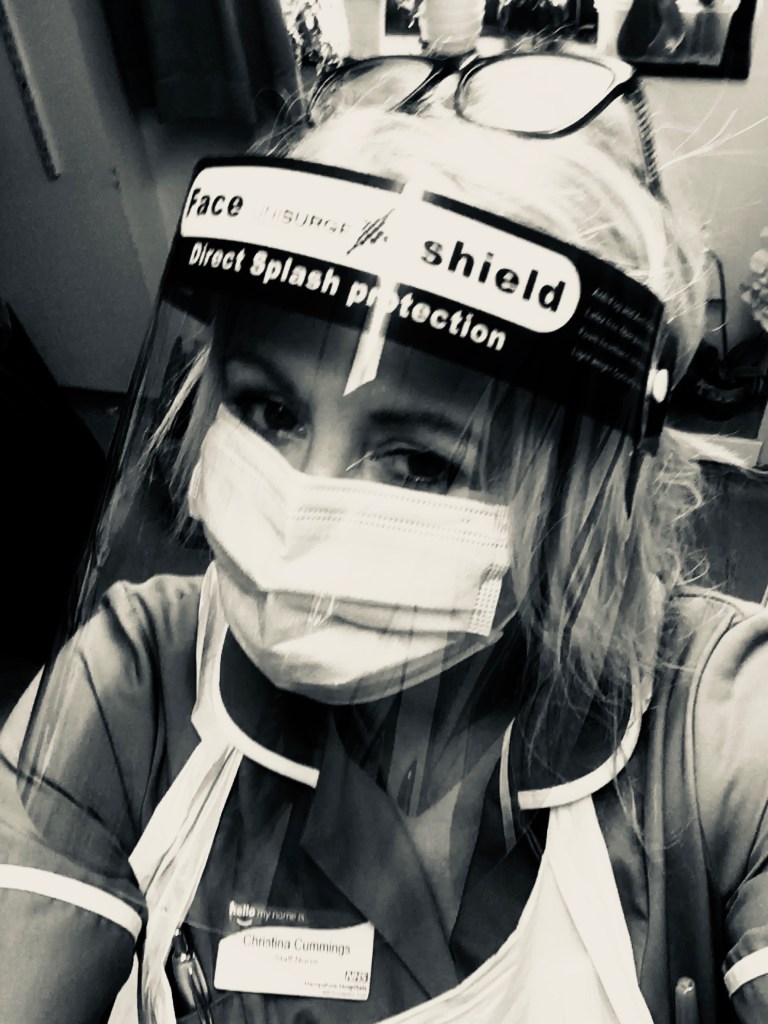
Abandoned
8th August, 2021
And so to take a break from my blog; I’ll be focusing on writing creatively and working on my novel. Plenty of tea and pondering walks with Pips, but even more actual pen to paper, though I mostly use my laptop when the muse flows. So here’s to the subtle ebb of summer, where the advancing dusk of evening’s end reminds us again of autumn’s nearing. Abandoned to the chill; here’s to the enduring spirit that can, it seems, withstand even the wildest storm.
The Rufus Stone
1st August, 2021
Unceremoniously positioned opposite one of the New Forest’s many lay-by/car parks, there’s a green bollard inscribed with the clumsily told story of William II’s demise. I’d driven past the heritage sign to Rufus Stone on many westward trips, and often wondered what was there… and why. It’s with some coincidence that my visit very nearly aligned with the actual date on which he died; August 2nd, in the year 1100. One rarely time-travels as much as when one visits a place of historic interest. Willing away the years of yore, we muster the sights and sounds as we try to re-live the scene. Here, among the ancient trees I pictured the horse upon whose back the King rode. I imagined that, in that moment he’d felt invincible, and that warmed by summer’s balm, he had looked about him as the deer shimmered. Perhaps he had looked directly at this space, directly, yet unknowingly towards his own mysterious death.
The third son of William the Conqueror, King William Rufus II has been described as a ‘rumbustious, devil-may-care soldier’ and a ruthless ruler. It was whilst out on a hunting expedition, with his brother and the nobleman, Walter Tirel III (Tyrell) that an arrow misfired and killed him. Given that in the direct aftermath, Tirel fled to France and Williams’s brother, Henry, made haste to Winchester to secure the treasury and seize the Crown, leaving William’s body in the forest, there is some debate as to the legitimacy of this so-called hunting accident. A drama such as this in a quiet, leafy glade was made all the more intriguing by the role of ‘Purkis’, a local peasant, who stumbling upon the bloody scene, conveyed the King’s body to Winchester by cart.
The inscription bears these words:
Here stood the Oak Tree, on which an arrow shot by Sir Walter Tyrrell at a stag, glanced and struck King William the second, surnamed Rufus, on the breast, of which he instantly died, on the second day of August, anno 1100.
That the spot where an Event so Memorable might not hereafter be forgotten; the enclosed stone was set up by John Lord Delaware who had seen the Tree growing in this place. This Stone having been much mutilated, and the inscriptions on each of its three sides defaced, this more Durable Memorial, with the original inscriptions, was erected in the year 1841, by Wm [William] Sturges Bourne Warden.
King William the second, surnamed Rufus being slain, as before related, was laid in a cart, belonging to one Purkis,and drawn from hence, to Winchester, and buried in the Cathedral Church, of that City.
To hide
31st July, 2021
The provenance of immorality bares its bones when light finally seeps through the protective canopy of trees into the darkest recess of the forest floor. Here, even the ferns and the creeping dogwood shiver, and the only living things that crawl amongst the detritus are the weevils and scarabs feeding on the fungi there. When disturbed, these creatures scurry for cover. They try with all their might to hide, to hide, to hide. And it’s the same business really, when ones seeks the truth of things.
Shaped by my lived experience, my writing sometimes leans into this dark place. It knows well the hearts of men, blackened to the unravelling core, rolling like rotting fruits lusting to be feasted on by the snarling teeth of rodents. It has lifted the lid of deceit and watched the mindless scurry. Watched until there’s nothing left, just the darkness and the decomposition. Until the truth once more finds the light.
Sea-curled hair
18th July, 2021

It seems hard now to recall a pre-Covid life, not least because of the stark realisation that when freedoms are removed and free choice forbidden, we can blame our own inertia on just that. Yet how many times, when the world was ours to explore, have we missed the chance to do something big, something meaningful? And how many times did we watch that chance go by?
I spent a year in Asia when I was twenty-three. And was later inspired to write a story set in the Philippines. Two girls on a gap year, in flip-flops and with sea-curled hair, meet jealousy and the dire consequences thereafter. This is a quick snippet…
There are some things that don’t require study, just absorption. And there are others that you just can’t understand, unless you dissect them, like pickled lab rats, pulling apart their layers with grim precision. One such thing is life.
I ordered a plate of steak fries and a mango juice, and took a newspaper off the stand; The South China Morning Post. Front-page news bored me; it was the ‘crazies’, as they were known, that enthralled me. Like the story about a feud that had been going on for sixteen years, between two neighbouring families in Apayayo Province; the dela Cruz’s and the Allvarado’s. Stones had been hurled, rice sacks tampered with, a pet dog poisoned, his tongue bloated and purple as he staggered home to die on the front porch. The Allvarado children had been spat on as they walked back from school and Mr. dela Cruz’s car tyres were slashed with a rusty fish knife. But when asked about how it had all began, neither party could recall. They were silenced by the pettiness of their own disingenuous amnesia.
Or the article about a man who’d tried to kill himself by lying down in the middle of the road; he lay there for forty minutes, cars and trucks veering wildly round him, irate drivers honking their horns and shouts of ‘Are you fucking crazy, man?’ He was so close to death he could have reached out with trembling fingertips to the hot rubber tyres. He awaited his demise, asphalt filling his nostrils, sticky grit digging into the soft indentation of his temple. Eventually the police arrived. They hauled him over to the curb, and arrested him for causing a disturbance. When questioned why he had done it, he was silent for a while, and then he answered: ‘I’m not sure now.’ He laughed with liberation in their angry faces and shook his head. ‘But that was fun’.
It’s like that with life, I mused, as I drained my glass, spitting out a piece of mango fibre, that felt like string upon my tongue. Life could make you forget the reason for doing things. Life was like the ‘crazies’.
© Christina Cummings
Happiness is a warm hug
9th July, 2021
“A person can learn a lot from a dog… about living each day with unbridled exuberance and joy, about seizing the moment and following your heart… to appreciating the simple things; a walk in the woods, a fresh snowfall, a nap in a shaft of afternoon light. And as they grow old and achy… about optimism in the face of adversity, but mostly… friendship and selflessness and, above all else, unwavering loyalty.” Quote by John Grogan, from ‘Marley and Me’
The Summer
4th July, 2021
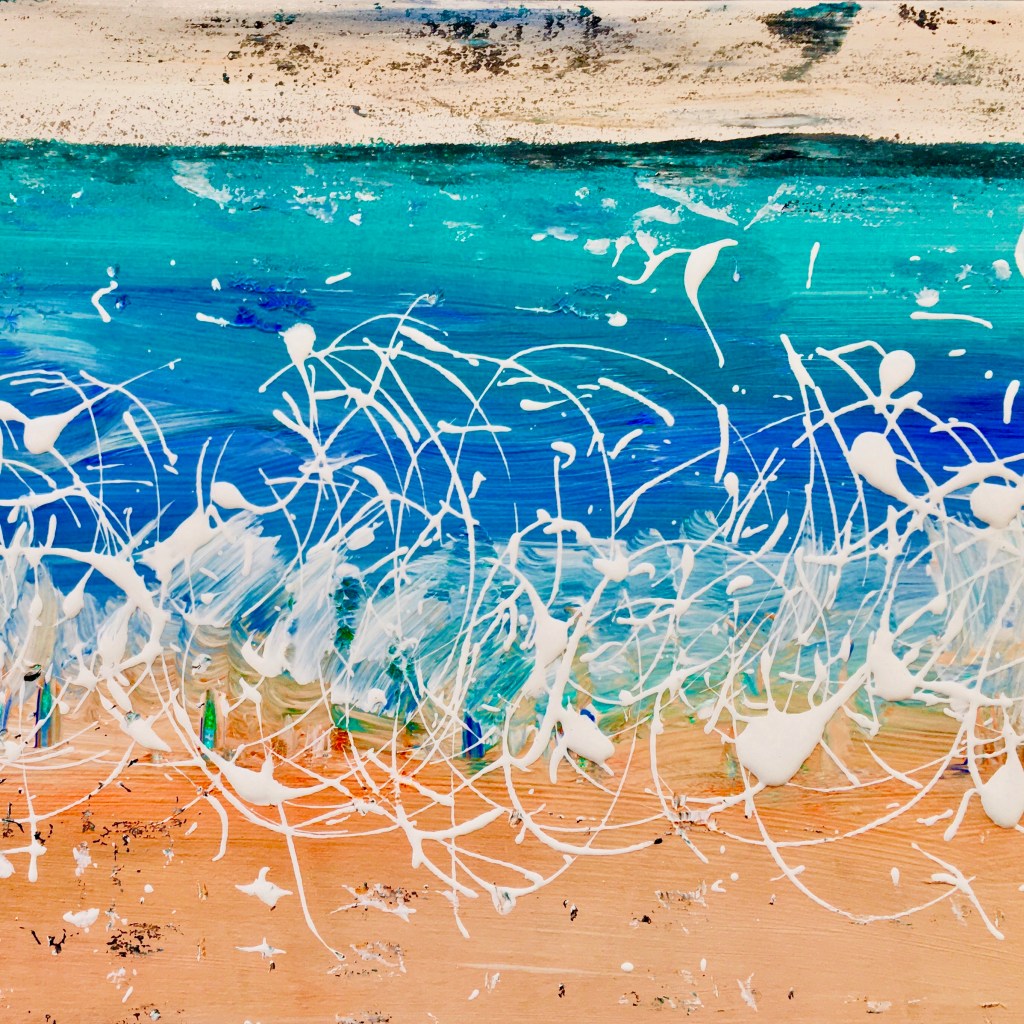
“The cure for anything is salt water; sweat, tears… or the sea” ~ Karen Blixen
Check out my gallery for a new, upcoming collection of paintings: The Summer of 2021
Unforgiving
24th June, 2021
An excerpt from, ‘Peacock Street’ by Christina Cummings.
He lives with one constant; his apartment feels perpetually cold. North facing. The shattered back of night has somehow broken, and it’s now morning. The still-slumbering sun strains through thickly lined stratus clouds. It sifts through the gnarly Plane trees and rakes the gravel of the community basketball court, as it ascends into the greyness. It smears the department store windows and bounces off the pigeons that roost on the church spire and then it does a leap right over Peacock Street.
The potted basil and lemon grass he’s placed beside the sink, hang, like despondency, over the ledge of the tiled windowsill, where Mifty sits staring out at the birdbath. A blue-smoke Persian cat with half a tail, Mifty never leaves the flat. The other half of her tail having lodged itself in the unforgiving slam of a car door means the closest she gets to fresh air these days is sitting just behind the wavering cat-flap, with a teasing closeness.
The phone rings. Shrill insistence that cannot be ignored. Mifty shifts from hind legs to forelegs and back again. Thomas raises his head from the sofa, then grabs a cushion and clamps it to his ear. The answer-phone machine clicks in. But the line crackles, a far-away rainstorm sort of hiss. And there’s silence then, followed by a sharp sound, a book falling from a shelf perhaps, or a sharp sob. Later, he would delete the message without listening to it. But for now, he sleeps off the disappointment and the vodka, his arm dangling to the floor like a broken rudder.
***
A bin lorry pulls up across the way, obscuring her view, like a slow stage curtain. Pulling her coat around her, Ava moves on down the street. She passes a hotdog vendor, hesitates for a moment, then decides the clawing feeling in her stomach isn’t hunger. She walks eastwards past the Lucky House restaurant, where Thomas once proposed to her, wrapping a jumbo shrimp around her finger. Making promises he’d never keep.
Ava frames the view with her hands, she looks past the sculptural hedgerows and the wrought iron gate, to the three storey apartment block, where behind Venetian blinds, the modern aluminium kind, her lover lies sleeping. She knows he’s home. His bike leans against the wall, the lock fastened to a rusted padlock chain. He never goes anywhere without his bike. And there’s something else; peering through the windowpane at her, Mifty looks relaxed as only she is when he is there.
© Christina Cummings
Restoration
22nd June, 2021

In these bite-sized excerpts from ‘The Big Sardine’, a short story I wrote about a waitress who re-invents her life, the magic of planting is observed. Currently, the grapevine and the forest fern and the little tub of sweet peas in my garden astound me every time I step outside.
Excerpts from ‘The Big Sardine’, by Christina Cummings
Maya walks unhurriedly, past the ten-pin bowling alley and the pink-bricked church, its spire reaching like a rocket ship against the star-stippled sky. She cuts through the park, almost circumnavigating the small man-made lake, where swan boats huddle together, tethered by thick lengths of still sopping rope. She knows now what she has to do; for the first time since leaving home, she has a plan. It was as though purpose had been waiting for her return.
***
Seeds are just the start, tiny, dry as tindersticks just bursting to grow. Maya sprinkles them, liberally at first as though they’re cracked peppercorns, then delicately, as precious spices, onto a bed of soil. There’s a pause then, as the sky peers at them, brazing them with sunlight. Maya fills a metal can with tap water. Droplets, in a high arc drench the beds, quenching the earth, the moisture cloaking the seeds with a treacle-dark broth of nutrients.
For a while, nothing stirs.
During the night, the heavens exhale and raindrops tap the rooftops and the windowpanes, rinsing the town, so that by dawn, it is as though an artist has taken up a brush and a restoration has occurred. Behind the Big Sardine, where the tarmac had bubbled and blistered, life is drawn from the soil, like flames from bark and breath. Vibrancy emerges. Pearl-green shoots pierce the air.
***
When Maya arrives at work, she is greeted by an oasis of frills and shoots and stalks, all of them green as a forest, green as the sea. A life force rages, softly, behind the bins. A silent thrum. Plainsong. Now the hollowed grey concrete breeze blocks and the old oil drums sing with life.
© Christina Cummings
Self(ie) Talk
12 June, 2021
The most powerful words you will ever hear, are the ones you say to yourself.
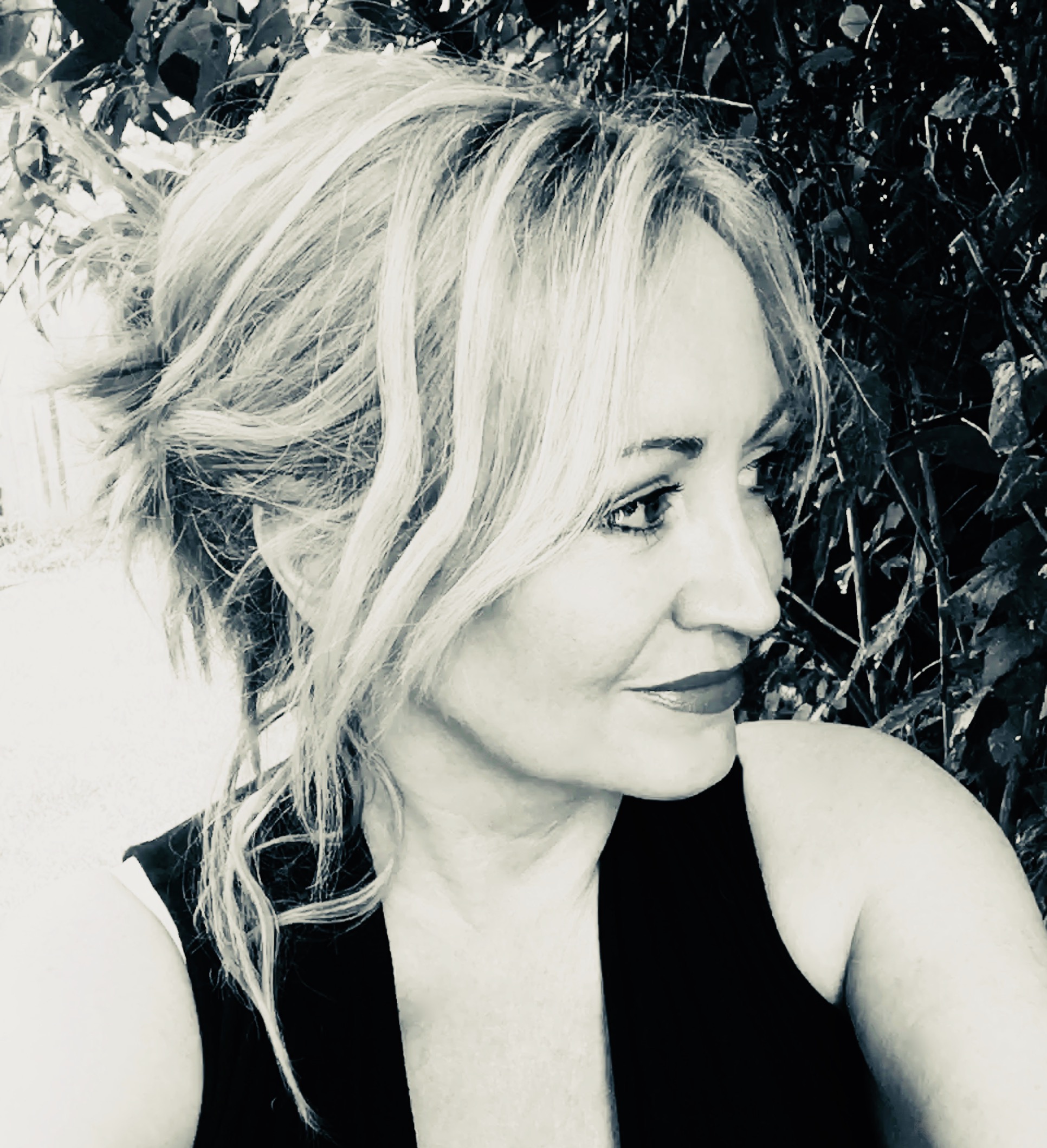
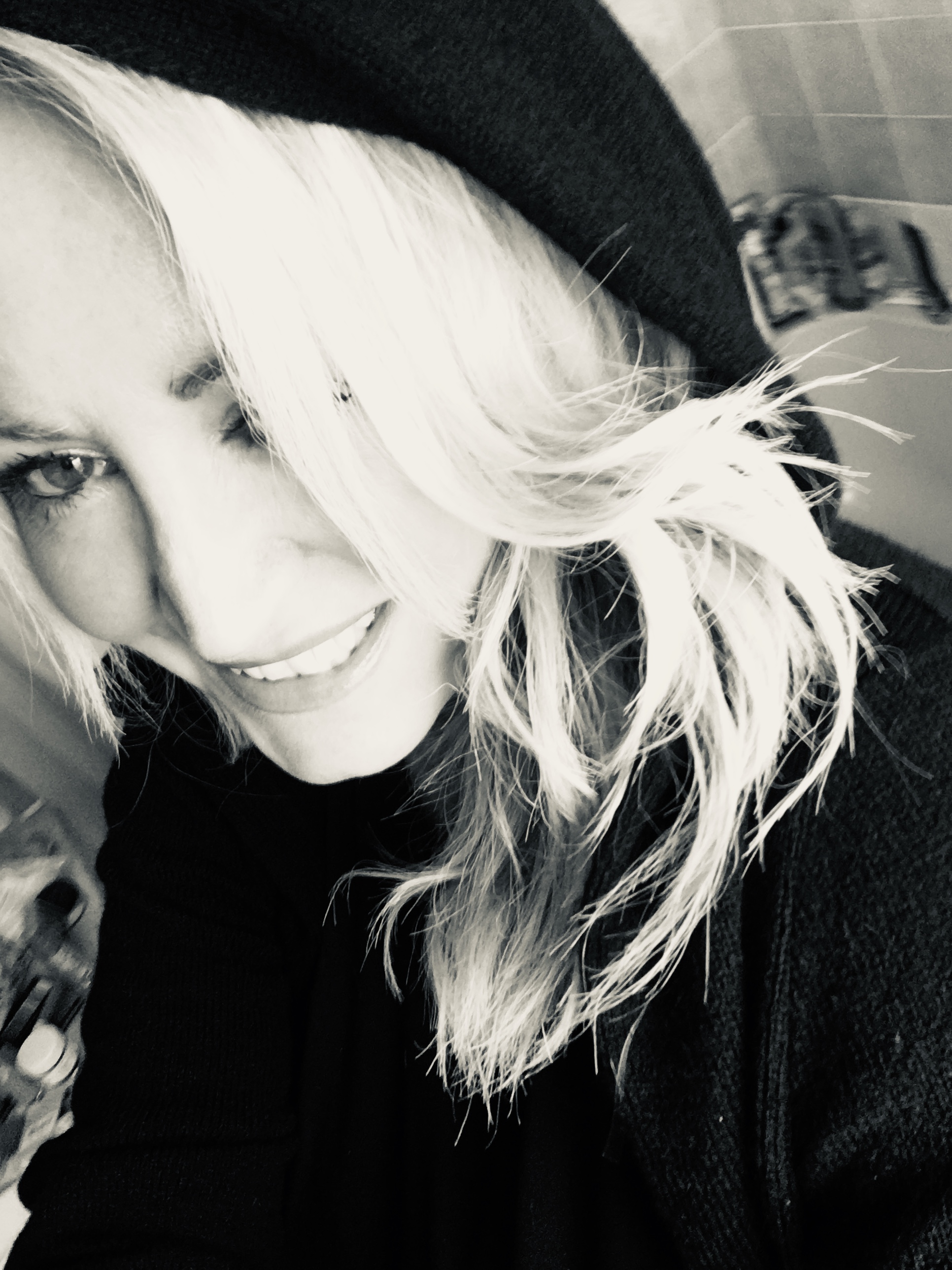




Sugary fingertips
6th June, 2021
I’ve been reading old manuscripts from short stories. Ones I wrote in earlier times. There’s something comforting about them. Perhaps it’s the way that they glide and shuffle as I read on. Or the naivety of prose, un-honed. Here’s an excerpt from one of them:
Excerpt from My last shot by Christina Cummings
Five a.m. did indeed seem early. The quayside is quiet, even the wading birds are still.
‘Over here!’
Bonnie is waving to me from the deck of a small fishing boat. Her short hair is slightly damp and tousled. Her face glows.
‘We’re going out on that?’ I say. I’d expected something else. Something larger, more substantial.
‘Welcome aboard the Emerald City,’ Bonnie chirps.
‘You do have a spare life jacket?’ I ask, my feet firmly centred on the dock.
Bonnie laughs. ‘They’re kept under here.’ She lifts what looks to be a trap door in the floor. ‘Oh, and they’ve never been used.’
‘I’m reassured,’ I say. (I’m not.)
‘We’re just waiting for Iris. She heard us on the phone yesterday, and insisted that she came along. She thinks you’re a professional by the way.’
‘Professional?’
‘Yeah, photographer, like for the National Geographic or something.’
I curse the fact that I hadn’t read the manual, but the batteries in my torch had run out last night.
Iris had run to the store for some snacks. Her car pulls up alongside mine, a little aggressively I thought. Then she saunters over to the boat, trying to look cool. She’s carrying a plastic bag and a tray of iced pink doughnuts and she’s trying hard not to spill the coffees.
‘Ahoy there!’ she shouts. Her sudden arrival startles the curlews and the redshanks. They scurry a little faster, shaking their heads, seawater dripping from their long pointy beaks.
‘I got us some munchies,’ she said.
I hate that word.
‘Great, thanks,’ Bonnie says as she takes the tray and lifts out a doughnut, tearing off a wedge and stuffing it into her mouth. ‘God I’m starving. Want some, Molly?’ she asks, offering the other half to me.
‘So are you taking pics for a nature magazine or something?’ Iris asks, handing Bonnie a cup of coffee. Her hand lingers.
‘Something like that yes, but sometimes I just take photographs for pleasure,’ I answer, licking the sugary icing from my finger tips.
‘Cool.’
‘Let’s get going!’ Bonnie says, starting up the engine.
Puffin Island is visible from the shore. As we draw closer, Bonnie points out a bottle-nosed dolphin.
‘Quick, Molly! Get your camera out!’ Iris says, settling on the bench between Bonnie and me. ‘You don’t want to miss this.’
I turn the camera on and lean over the side of the boat. The shutter clicks and I think I got a picture of the waves.
© Christina Cummings
Bar-less Airport
26th May, 2021
Ask any nurse: There are no words that adequately describe how it feels after working a busy 12.5 hour shift. Perhaps a marathon runner wearing lead boots, who’s just disembarked from a long-haul flight that had been delayed for hours at an airport with no bar and who now finds that they’ve yet to get across the country by a slow, meandering replacement bus service, before reaching the sanctuary of home… perhaps they might have an inkling. But, there is meaning in the tiredness. A sense of purpose, of personal satisfaction, of camaraderie, of having mattered and made a difference to another soul. Nursing is in itself the reward. We look after our patients and the friends and relatives who keep vigil at their bedside; the advocates, the cheerleaders, the loved ones. Seeing people recover and go on to live well together again is at the heart of our profession. And it’s a privilege to witness these precious bonds that outlive even the most tragic of circumstances. And so, despite the lack of recognition, the gruelling pace and scope of the job, despite the ridiculous, inappropriately low wages. Despite being so tired sometimes that it physically and emotionally hurts… as the lead boots slide off, there is a sense of meaning, and in that there lies happiness.
“YOU DON’T BECOME HAPPY BY PURSUING HAPPINESS. YOU BECOME HAPPY BY LIVING A LIFE THAT MEANS SOMETHING.”
~ HAROLD S. KUSHNER.
What we Are
22nd May, 2021

I may have been a little infatuated by the late Sylvia Plath when I first stumbled upon her works. I liked the rawness in her choice of words, the broad settings that reduce the reader to ask only one question: ‘Why are we here?’ And to answer it with: ‘I sometimes know’. That, and I recognised the same deep melancholy that had tip-toed behind her most of her adult life until her death, by her own hand in February 1963. And the utter annihilation of trust, by the man she loved.
Two Lovers and a Beachcomber by the Real Sea
By Sylvia Plath
Cold and final, the imagination
Shuts down its fabled summer house;
Blue views are boarded up; our sweet vacation
Dwindles in the hour-glass.
Thoughts that found a maze of mermaid hair
Tangling in the tide’s green fall
Now fold their wings like bats and disappear
Into the attic of the skull.
We are not what we might be; what we are
Outlaws all extrapolation
Beyond the interval of now and here:
White whales are gone with the white ocean.
A lone beachcomber squats among the wrack
Of kaleidoscope shells
Probing fractured Venus with a stick
Under a tent of taunting gulls.
No sea-change decks the sunken shank of bone
That chucks in backtrack of the wave;
Though the mind like an oyster labors on and on,
A grain of sand is all we have.
Water will run by; the actual sun
Will scrupulously rise and set;
No little man lives in the exacting moon
And that is that, is that, is that.
© Sylvia Plath
Dark as the flowers
20th May, 2021

Buds pierce the ground, tiny specks of green protrude through tilled soil, thirsting for light. And for seven weeks they reach skywards, each new surge of growth producing two new leaves like praying palms that open out to face the sun. In time, a thumb-sized flower head emerges, from which yellow petals unfurl, fanning out from the dark brown honeycomb middle, where new seeds nestle like bees in a hive.
The farmhouse glows. It’s that time when evening imposes, bringing with it a sense of something… relief perhaps… where the day’s accomplishments might be counted out like pebbles lined up along a shore braced for the new tide. She walks back along the path that winds through the orchard, past the slow chickens heading off to roost. She turns and with her back to the last wash of light, so that the whole field is a silhouette, she holds up her phone to capture the image, her features as dark as the flowers.
© Christina Cummings
Silent Cacophony
15th May, 2021
Your office; it’s exactly how you left it. All the smiles that beam from silver frames still watch over the pile of unread books and the souvenir bowl, filled with pinecones and paperclips, tiny shells and foreign coins. Your chair, with the small rolled cushion, ergonomically placed to save your back ~ it feels wrong to sit here. Yet I do. Placing my elbows on the wooden desktop I’m filled with my own importance… and the loss of you.
I pick up the paperweight which holds down your list of things to do, quietening them, keeping at bay their urgency ~ suspended now, like a lull in the breeze where rolling leaves are stilled before they’re lifted up again, moved and tumbled. It is as heavy as a river rock in my hand, and just as smooth. And no matter how hard I squeeze, the glassblower’s breath is trapped inside as though that last exhalation has been sealed in a silent cacophony of bursting purple flowers pointing skyward like saxophones tilted towards an open window, spotted from a plane.
© Christina Cummings
Nurses, Nurse’s, Nurses’…
12th May, 2021

“Live life when you have it. Life is a splendid gift ~ there is nothing small about it.”
~ Florence Nightingale ~
#InternationalNursesDay2021
All that surrounds it…
4th May, 2021

You reached out first, as is your way, and though time has cast a mist on the chronology, I know I liked you. Over a first coffee, how was I to know then that you’d be the voice of calm in my chaos? That it would be your words that would chisel away at the stubborn edges, smoothing and shaping the person that I am today.
The early years of any friendship are precious and fragile. Not all friendships last. They’re often abandoned through neglect or small slights. Time moves forwards taking the many moments we’ve shared with it, in an unforgiving tide, leaving us as beachcombers to our lives. I consider our moments; perhaps, there could have been more? But there are enough to cherish.
Amongst the tangled seaweed strands, and the frayed rope and the blanched wood, there is a piece of polished glass, its contours carved by a sea that has seen many storms. I pick it up and marvel at its presence and I know I’ll keep it with me always. It is pretty and colourful and warmed by the sun’s rays. It seems brighter than all that surrounds it. It is strong, resilient and stoic. It is you.
Crowd
18th April, 2021
I’ve never been more grateful to see a plumber, especially the one clutching a tool bag and standing at my door. The combination of ill-timed tea-making, a seized-up stopcock, a blocked U-bend and a blown washer made for unimaginable mayhem, nay horror. Not the sort of start to a Saturday morning one expects when one has yearned for the serenity of time after a long, hard week. As I tried to stem the unrelenting cascade with the entire contents of my airing cupboard, while waiting for the plumber to arrive, I was reminded of a short story I wrote called ‘Crowd’. Written after a visit to Mont-Saint-Michel in 2002, where the arteriole-narrow streets were shoulder to shoulder with tourists, I’d imagined a post apocalyptic world…
Excerpt from ‘Crowd’, by Christina Cummings (2002)
“It was a slow insidious beginning. Extreme and unpredictable weather phenomena occurred in places formerly known for their milder climates. Hurricanes terrorised the landscape, one off the back of another, and typhoons railed coastal towns. Seasonal rainfall alone was heavy enough to batter trees, flattening them out in prostrate prayer, flooding the lakes and the rivers, causing homeowners to admit defeat and abandon their homes, seeking new ones on higher ground. Poorly thought out zones were formed, such was the hysteria it caused. People panicked and though borders were under tight control, men, women and children in their hundreds of thousands, fled, taking only those possessions they could carry with them, in their quest to find a place of calm, only to find that resettlement was in itself a greater crisis.
As the world drowned under three million years of melt water from the Polar icecaps, which drip-dripped like popsicles on a late summer’s eve, the survivors clung to the remaining land like ants on a floating leaf. Fear was now the one common bond of brotherhood. And fear manifests itself differently in different people. It causes in those who succumb, wretchedness, the loss of hope; the sort that just give up. But fear can also bring about, a rage, a fighting spirit; sometimes for the good of all, and often at the cost of all. Immigration officials were told to use arms, but they were scared, like everybody else and some even, at the risk of imprisonment, deserted their posts, disappearing with forged papers into the realm of the unidentified. It was chaos of universal undoing, and was above the common laws of every country. Scientists had long since predicted a sea level rise, due to global warming, but they could never have predicted the series of events, which took place during the unenlightened years.
On an otherwise beautiful day in springtime, at exactly 06.07am, my great grandfather was riding his pushbike along a thin dusty track which wound its way around the base of a mountain, known then as Mount Snowdon. All about him grew Sundew and parsley fern, and above him towered the three billion year old product of plate tectonics, a water birth of rocks spewed from a gigantic fissure in the ocean floor. He was heading for the next village, where he had worked untiringly as a labourer on the Montgomery’s family farm ever since he’d been kicked out of school, for a fight which had culminated in him inadvertently elbowing the headmaster in the teeth as he’d tried to intervene. The wheels of his bike struggled for purchase on the stony ground, and he stopped for a while to catch his breath. It was said he saw in his minds’ eye, the first quake before it began. He felt for a moment the earth immobilized, as in that moment when a bowler cradles a ball before the throw. He leant his bike upon a low wall and stood, bracing himself; for something strange, something unknown. He noticed that the firmament darkened just a shade and that the Meadow pipits and Skylarks and the orange-billed choughs that had been roosting in the mountain oak trees or silently gliding on the effervescent air currents, took off suddenly and noisily high into the sky, as if they’d been startled by gunshot. Even the ravens at the mountain’s peak soared away with great speed. And down below, the mud-caked sheep looked up from their grazing, and my great grandfather saw fear in place of dumbness, in their glassy brown eyes.
By all accounts he remained standing throughout the frenzied few minutes, watching awestruck as the fields splintered, dividing themselves into random slices as the earth opened up. He saw the horizon bend as if he were viewing it through the rim of his beer glass, sat at the bar top in The Bleeding Heart pub. It was his ignorance that kept him alive. He did not panic, but waited, his arms out at the sides, groping the air for balance, until the ground stopped shaking. It was as though the earth had tired itself out, he was heard to say, when later he stumbled into the village to find all but two of the houses, the general store and half the primary school swallowed up by the ground. He didn’t know it then, but it was the same all over the Continental shelf and beyond. All of humanity smashed, ruined, like a sheet of ice under the tread of a heavy winter boot.”
Excerpt from Crowd © Christina Cummings 2002
Simple Shoe
8th April, 2021


‘I started early, took my dog’ poem by Emily Dickinson
I started Early – Took my Dog –
And visited the Sea,
The Mermaids in the basement
Came out to look at me,
And frigates in the upper floor
Extended hempen hands,
Presuming me to be a mouse
aground upon the sands.
But no Man moved me, till the tide
Went past my simple shoe,
And past my apron and my belt
And past my boddice too,
And made as he would eat me up
As wholly as a dew
upon a dandelion’s sleeve,
And then I started too.
And He, he followed, close behind –
I felt His Silver Heel
upon my ankle, then my shoes
would overflow with pearl,
Until we met the solid town
No one he seemed to know,
And bowing, with a mighty look
at me, the Sea withdrew.
It’s been a whole year…
1st April, 2021
At over eleven months post-Covid 19 infection, I asked my GP for an antibody test* to see if I still had any residual immunity [*before having the vaccine.] Given the year I’d had, from facing coronavirus in an under-prepared NHS and nursing Covid-positive patients on the acute frontline, to falling ill at the nation’s first wave, then returning to an even bigger second wave, where all but a few of my new colleagues succumbed too, I felt it was something I wanted to know. Needed to. Partly for my own reassurance and curiosity and partly for science. My mind and body had gone through a lot; it seemed a small ask in that regard. When I was recovering last year and preparing to return to face it all over again, I’d been told that immunity only lasted a few weeks or months. I was informed that I could become infected again. By then, PPE was at last in place, but there was no vaccine yet. As controversial as the immunisation programme has been, thank goodness those most vulnerable, including my own mother, are now protected. And thank goodness my innate immunity lasted and protected me for at least twelve months. Here are some photos from my blog back then… from when my antibodies were first being made… it’s been a whole year…
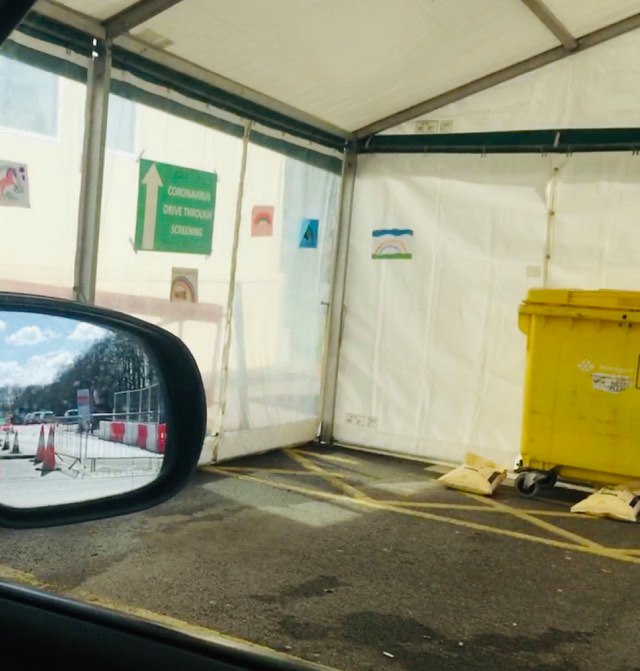

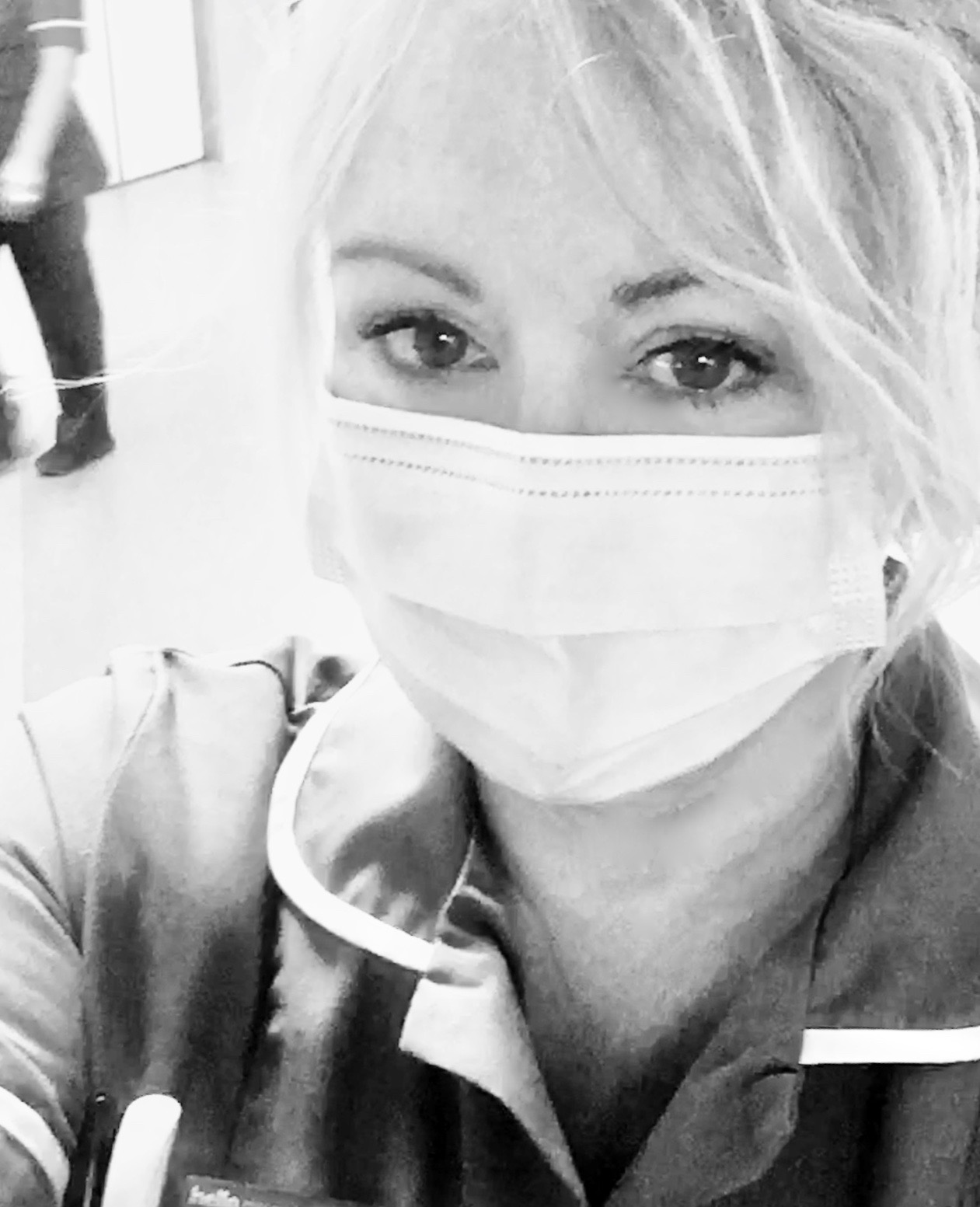

Tea, toast and a palette knife
28th March, 2021
To see my latest acrylic sgraffito paintings take a look at my art gallery here
Listening to her poems
25th March, 2021
Driving along a country lane the other day, I passed a friend and fellow-scribe on her daily walk. I reversed up and wound the window down. We exchanged greetings, and it felt good to reconnect; albeit a brief encounter in the road. I recalled the last time I’d seen her. It was over a year ago now, at our writing group. I’ve missed listening to her poems, so I read some of them online instead. Inspired, I did some writing of my own. It’s been a while. So, cheers to that.
Here is an excerpt I especially liked, from one of her published poems, taken from The High Window.
Bakelite Blintzes
By Jenny McRobert
The brown Bakelite radio had a single yellow dial,
a cat’s eye winking and whining night music.
Before the fingers of dawn stretched out the sky
she was elbow deep in silky, white flour,
the radio her only companion, foreign words
like acrobats tumbling through her mind.
Her hips swayed their own language:
‘Some day he’ll come along, the man I love,
And he’ll be big and strong, the man I love…’
A heartbeat of excitement, of possibility,
breaking out of the morning ritual
like a prisoner over the wall.
She expected no other love ~sea-foam batter rolled over her spoon,
baked to a fluffy climax that left the tongue wet.
Sharp, savoury, the perfect mix
of sweet and sour like a girl’s first kiss.
© Jenny McRobert 2019, from The High Window.
The 6 Cs
19th March, 2021

I had a missed call on my phone. And a voice note. It was late in the evening. A little too late to be good news. I can still recall the soft urgency in that voice: ‘Please call me back Christina, at your earliest convenience. Please.’ It was one of the microbiologists at Basingstoke Hospital. They’d run the test on my Covid swab, and the results were back.
On the day of that phone call, April 6th 2020, the first wave had not yet peaked. People who were otherwise healthy, who may have had an underlying condition without knowing it, people who had plans and dreams, people my age, doing the same job as me, were dying. Frontline healthcare workers were one of the occupational groups found to have higher rates of death from Covid when compared to deaths among the general population. I’d seen their faces, read their tributes. It was also on that same evening Boris, who as leader had done too little too late, was by an ironic twist transferred to ICU. At this point, things did not look good at all.
I had few regrets. Despite becoming a registered nurse just eighteen months before the global pandemic, I did not curse my profession. But I was far from a martyr. Surely a martyr would not have been so scared?
Two weeks passed. I counted the moments of each day, by the way April’s exceptional sunlight cast beams around my room each afternoon, by every nutritious meal placed outside my bedroom door, by the hand painted eggs my grown-up children placed on a tray on Easter Sunday morn, by the messages of encouragement and love sent in the post and through my phone. By my own heart’s beat; a little faster, but tentatively sure.
When I was ill, our country was still underprepared, our intensive care units were filling up and treatments were experimental at best. Though physically I was spared the worst, the mental anguish still sometimes haunts me now. And, if it had not been for all those who supported me through the last twelve months, I would not still be here. Thank God for them.
My children took me on a walk a few weeks into my recovery, and before I had to return to the frontline again. I hugged the biggest tree. And that’s the moment I allowed myself to hope. To feel relieved. I was out of the woods, yet in the woods. And I was going to be okay.
We’ve all been affected by Covid, through fear, through isolation, through lost or changed livelihoods, through the struggle to easily breathe. But for those nurses, who like me, were just about holding it together as Covid approached, who showed up and faced this disease, like an army un-shielded in war, I honour you. For all those whose lives were lost when mine was spared, those colleagues who will not see April’s light upon their walls, I won’t ever forget you. Of all the 6 C’s of nursing (NHS England, 2012), embedded in The Code (NMC), courage was our sword.
NHS England 6 Cs of Nursing
Care
Compassion
Commitment
Competence
Communication
Courage
The Code (NMC)
“ … to prioritise people, practise effectively, preserve safety and promote professionalism and trust.”
Clock
10th March, 2021
I know, of course I know, that life is an incredible and precious gift. And for the most part, it’s a beautiful journey, filled with wonderment and learning and unexpected laughter and rain-soaked hair and passionfruit-scented shower gel on tired limbs and the open road and stars and paper cuts and sprouting bulbs and good books. But on the days when circumstance and happenstance collide indifferent to the other, I know there’s a Bukowski poem that will say what I’m feeling. I love his poetry, not because it’s obvious his poems were an outlet for his own demons, but because he knew how to let them out.
This Charles Bukowski poem, from his 1977 collection, ‘Love is a dog from Hell’ is called ‘The Crunch’:
Too much, too little
or not enough.
Too fat, too thin
or just too bad.
Laughter or tears
or immaculate non-concern.
Haters, lovers,
armies running through streets of blood.
There is a loneliness in this world so great
that you can see it in the slow movements of
the hands of a clock.
There is a loneliness in this world so great
that you can see it blinking in neon signs
in Vegas and Munich.
There are people so tired, so strafed
so mutilated by love (or no love)
that buying a bargain can of tuna
in a supermarket
is their greatest moment, their greatest victory.
We are afraid;
we think that hatred means strength,
when what we need is more lovers than haters,
more beer,
more finches.
People are not good to each other,
people are not good to each other,
people are not good to each other.
And the beads swing and the clouds cloud
and the dogs piss upon the roses
and the killer kills like taking a bite
out of an ice cream cone.
And the ocean comes in and out,
in and out,
under the direction of a senseless moon.
And people are not good to each other.
We don’t think about the terror of one person
aching in one place,
alone,
untouched,
unspoken to,
watering a plant.
© Charles Bukowski 1977.
Ugh
23rd January, 2021

This photo was taken as I was about to go on break, hence the surgical mask is not as fitted as it should be. Though we’ve all got used to it now; to not taking a fresh breath of air for nearly thirteen busy and emotionally as well as physically demanding hours, it’s still really draining. Necessary. Essential. Part of the job. But, yeah, it’s draining as hell.
Waking in Winter
21st January, 2021
“It is as if my life were magically run by two electric currents: joyous positive and despairing negative — which ever is running at the moment dominates my life, floods it.” Sylvia Plath
And one of her poems, Waking in Winter, melds the currents:
Waking in Winter, by Sylvia Plath
I can taste the tin of the sky —- the real tin thing.
Winter dawn is the color of metal,
The trees stiffen into place like burnt nerves.
All night I have dreamed of destruction, annihilations —-
An assembly-line of cut throats, and you and I
Inching off in the gray Chevrolet, drinking the green
Poison of stilled lawns, the little clapboard gravestones,
Noiseless, on rubber wheels, on the way to the sea resort.
How the balconies echoed! How the sun lit up
The skulls, the unbuckled bones facing the view!
Space! Space! The bed linen was giving out entirely.
Cot legs melted in terrible attitudes, and the nurses —-
Each nurse patched her soul to a wound and disappeared.
The deathly guests had not been satisfied
With the rooms, or the smiles, or the beautiful rubber plants,
Or the sea, Hushing their peeled sense like Old Mother Morphia.
© Sylvia Plath 1960
Without regard
12th January, 2021
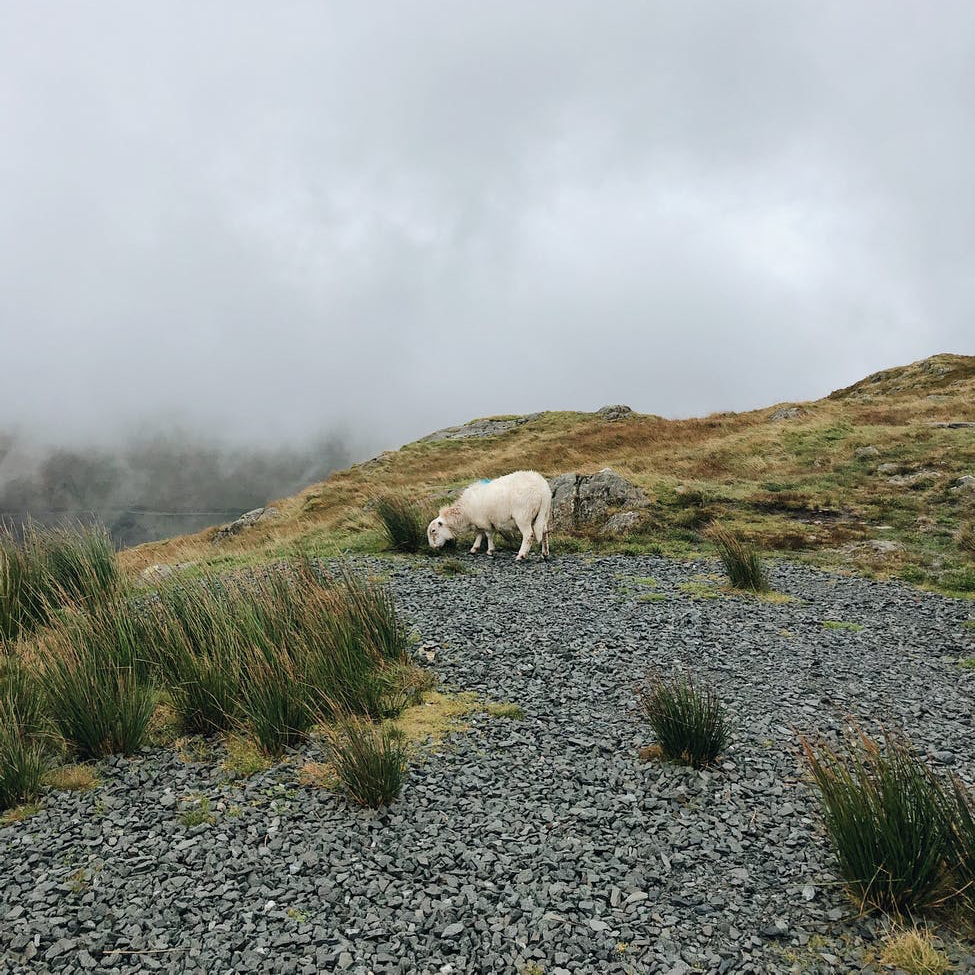
Nestled in a crook of North Wales, in the shadow of Snowdonia, it is, on first impression, a desolate place, the sort of place where mountains choke the sky, where sheep, without regard, wander onto the roads because they own them, where cars struggle in first gear to ascend. Not a place for light-hearted contemplation ~ it is darker than that. Winters separate the townsfolk from those who choose to live in solitude here, baring their teeth to the elements.
The night arrives suddenly, as some nights do, the light snuffed from the air as though some sinister force has drawn a last breath. The early evening fog is a solid bank that roves upon the fields and filters through the hedgerows blanketing the road, so that the world is hidden. It is a colder month than it ought to be; no sign of a springtime pledge as winter folds itself away. The temperatures plummet with cruel deliberation, causing ice to form, a deadly ice; a translucent kiss upon the ground.
I make my way along the mountain road, the one that weaves like surgeon’s stitches back and forth, back and forth across the slopes, which knead their way to the valley floor. I round the last bend and it comes slowly into view, as it always does this time of year, when just before the leaves return, the treetops form a lattice. There’s the familiar boxy silhouette and the multitude of chimneys, stacked like smut-imbued Lego bricks, the gravel path that zigzags to the open wrought iron gate and the windows ~ all of them darker than the night. The last house. They say, it looks haunted. They say it has an aura, as though the bricks and the wooden eaves and the iron nails that hold them there are full of sadness. How could they be? Unless it’s true that energy runs through all things; through smiles, a newborns’ cry, a plank of wood, through fingertips and angry words and old souls.
Perhaps it does.
© Christina Cummings
“A new heart for a New Year, always”
1st January, 2021

“The object of a New Year is not that we should have a new year. It is that we should have a new soul and a new nose; new feet, a new backbone, new ears, and new eyes. Unless we make New Year resolutions, we will make no resolutions. Unless we start afresh about things, we will certainly do nothing effective. Unless we start on the strange assumption that we have never existed before, it is quite certain that we will never exist afterwards.”
G.K. Chesterton (abridged)
Happy Christmas to all, and to all a good night!
25th December, 2020
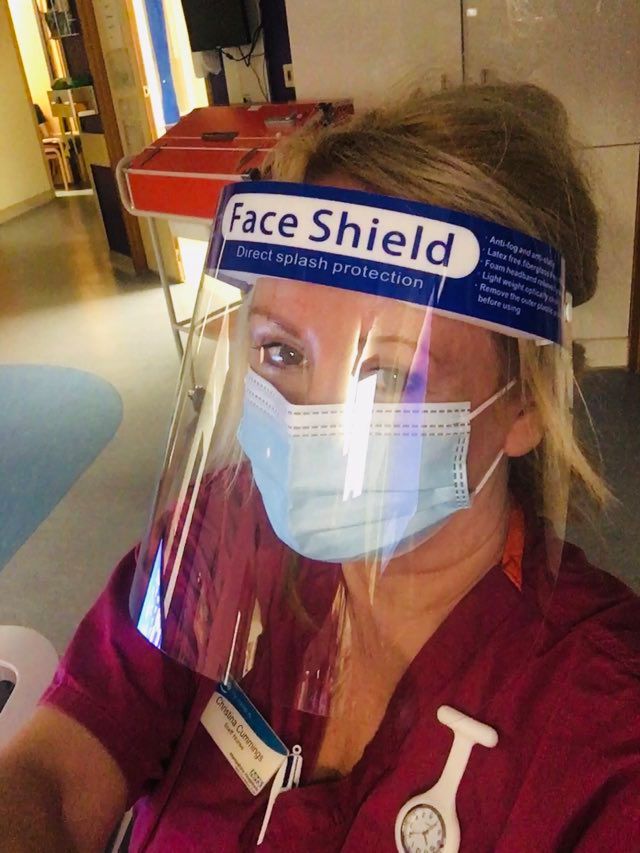
“A hundred struggle and drown in the breakers. One discovers the new world. But rather, ten times rather, die in the surf, heralding the way to that new world, than stand idly on the shore.”
~ Florence Nightingale ~
A Visit from St. Nicholas
by Clement Clarke Moore
‘Twas the night before Christmas, when all through the house
Not a creature was stirring, not even a mouse;
The stockings were hung by the chimney with care,
In hopes that St. Nicholas soon would be there;
The children were nestled all snug in their beds;
While visions of sugar-plums danced in their heads;
And mamma in her ‘kerchief, and I in my cap,
Had just settled our brains for a long winter’s nap,
When out on the lawn there arose such a clatter,
I sprang from my bed to see what was the matter.
Away to the window I flew like a flash,
Tore open the shutters and threw up the sash.
The moon on the breast of the new-fallen snow,
Gave a lustre of midday to objects below,
When what to my wondering eyes did appear,
But a miniature sleigh and eight tiny rein-deer,
With a little old driver so lively and quick,
I knew in a moment he must be St. Nick.
More rapid than eagles his coursers they came,
And he whistled, and shouted, and called them by name:
“Now, Dasher! now, Dancer! now Prancer and Vixen!
On, Comet! on, Cupid! on, Donner and Blitzen!
To the top of the porch! to the top of the wall!
Now dash away! dash away! dash away all!”
As leaves that before the wild hurricane fly,
When they meet with an obstacle, mount to the sky;
So up to the housetop the coursers they flew
With the sleigh full of toys, and St. Nicholas too—
And then, in a twinkling, I heard on the roof
The prancing and pawing of each little hoof.
As I drew in my head, and was turning around,
Down the chimney St. Nicholas came with a bound.
He was dressed all in fur, from his head to his foot,
And his clothes were all tarnished with ashes and soot;
A bundle of toys he had flung on his back,
And he looked like a pedler just opening his pack.
His eyes—how they twinkled! his dimples, how merry!
His cheeks were like roses, his nose like a cherry!
His droll little mouth was drawn up like a bow,
And the beard on his chin was as white as the snow;
The stump of a pipe he held tight in his teeth,
And the smoke, it encircled his head like a wreath;
He had a broad face and a little round belly
That shook when he laughed, like a bowl full of jelly.
He was chubby and plump, a right jolly old elf,
And I laughed when I saw him, in spite of myself;
A wink of his eye and a twist of his head
Soon gave me to know I had nothing to dread;
He spoke not a word, but went straight to his work,
And filled all the stockings; then turned with a jerk,
And laying his finger aside of his nose,
And giving a nod, up the chimney he rose;
He sprang to his sleigh, to his team gave a whistle,
And away they all flew like the down of a thistle.
But I heard him exclaim, ere he drove out of sight—
“Happy Christmas to all, and to all a good night!”
© Poetry Foundation
Welcome to Word Barn
17th November, 2020


Word Barn
Bespoke writing solutions
Jams and marrows
14th November, 2020

Dawn-break has not long passed. Mornings in the town unofficially begin when those on shifts rise wearily from warm sheets. She pours herself a juice. Tropical; too sweet for this hour. She usually has bagels and eggs, the ones that come in flat trays from the local farm store, all different sizes and shades with tiny downy feathers stuck to the shells. But, in her haste the night before, she’d forgotten to pick some up.
Last night, she had driven back along the short cut, after her rounds, her fingers drumming on the dash, when a tractor pulled out in front. Bumping along the country lane, slow as a yawn, it churned the verges by the church. She could picture the vicar, shaking his head, instructing the groundsman to make the notice even bigger, moving the old one further down the lane. ‘Pray ye keep off the grass!’ it would read, the letters dripping slightly because he’d put it up before the paint had really dried. In her frustration, she’d driven past the turn off to the farm, where produce could be bought even when the little shop was shut. There was a tin box beside the eggs and jams and marrows. People around here were mostly honest.
Instead, she pours cereal into the one clean bowl and stands by the sink, spooning up the crunchy flakes before they softened in the last remaining pool of milk.
Remember, remember…
5th November, 2020
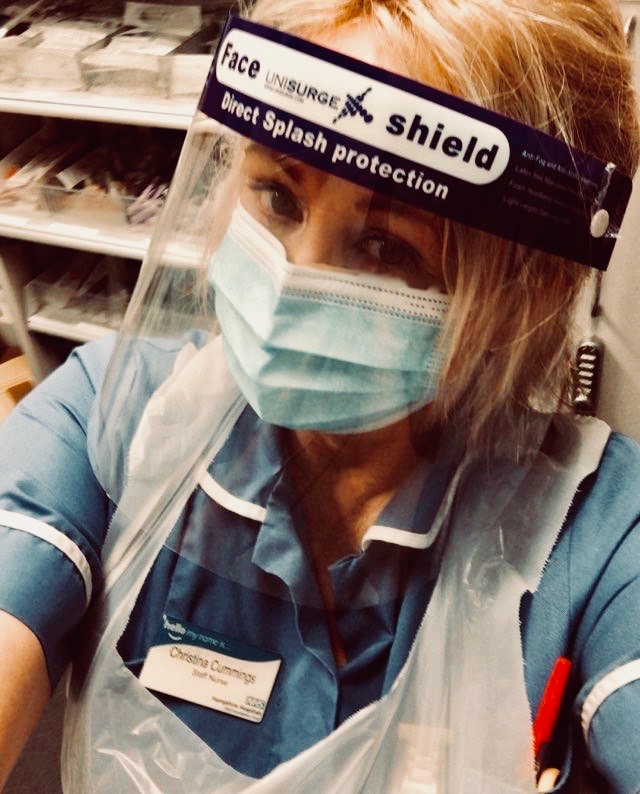
A slightly dishevelled end-of-shift, night-before-lockdown2 selfie. Tired. Dauntless. Hopeful. (And hungry!)
Must Love Dogs
22nd October, 2020


Buddy used to get a little jealous when I made a fuss of other animals. His reaction was more comedic, never aggressive. He was the sweetest, purest creature I’ve ever known. So, there’s a level of guilt attached to these photos taken with friend’s and family’s dogs this year. Moments when, after he passed away so suddenly in March, I didn’t think I’d even be able to look at another dog without deep sadness. But there’s nothing quite like the love you have for a dog. And the joyous way it is received. Buddy would want me to remember that.
P.S. Cats too!
Snapshot; circa 2020
19th October, 2020
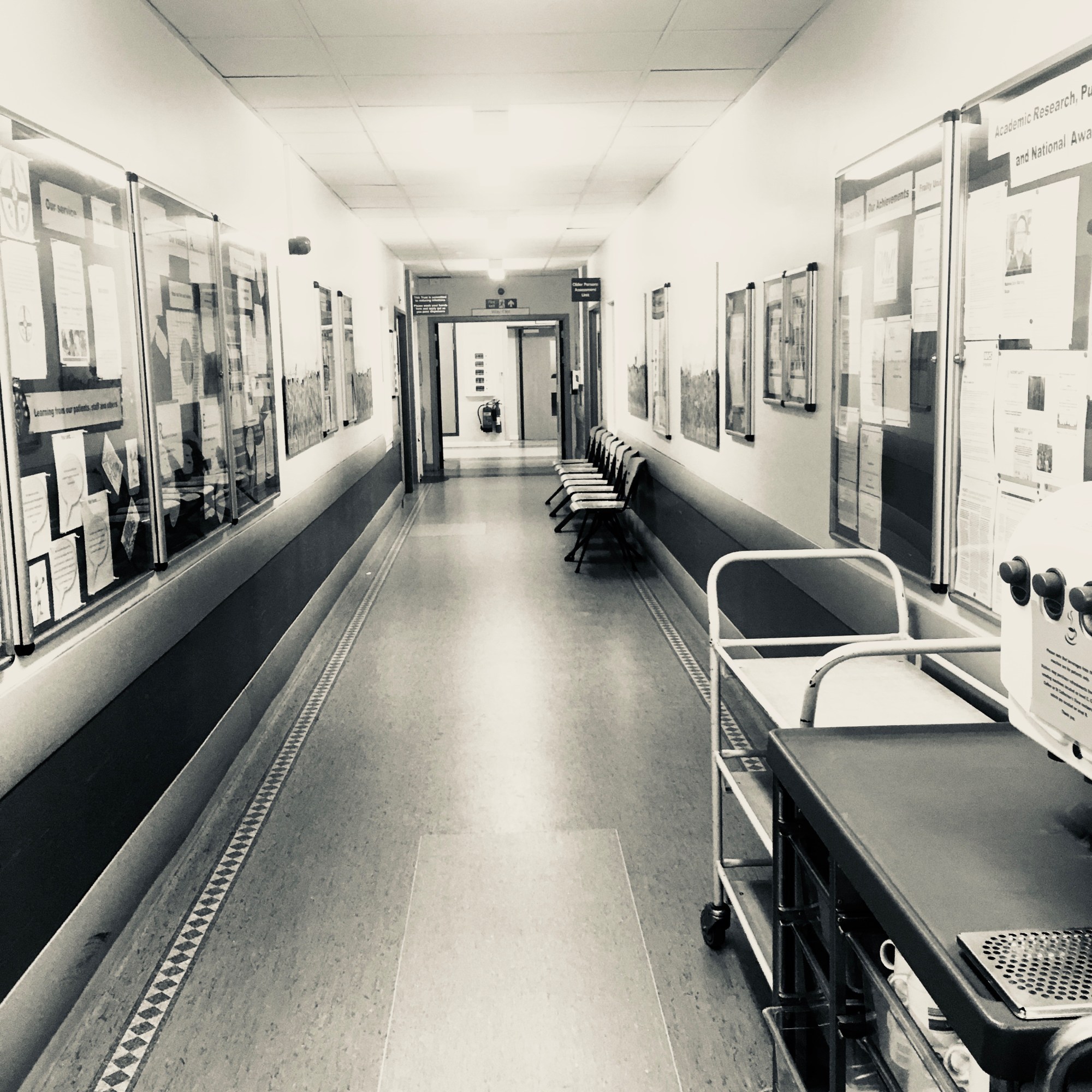
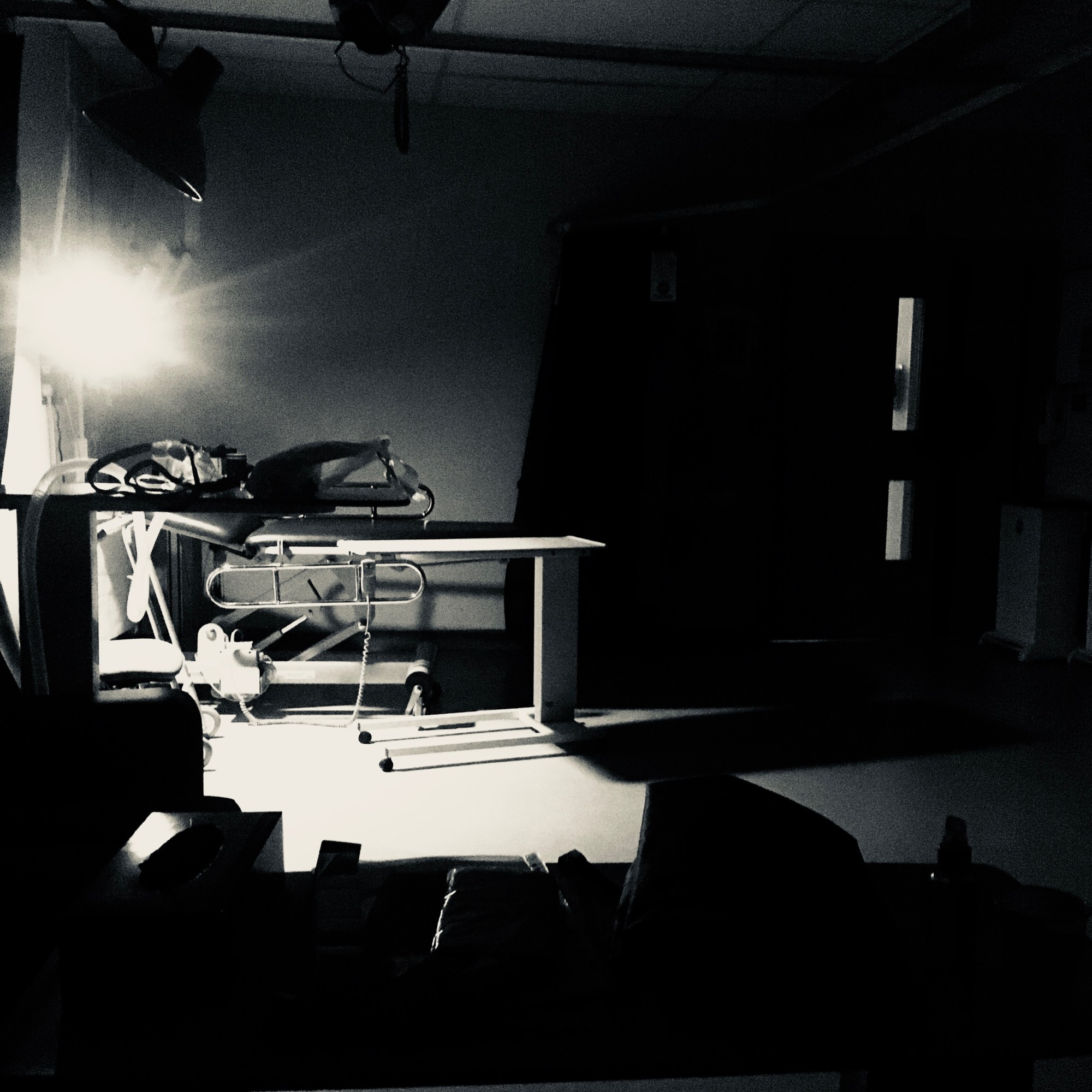
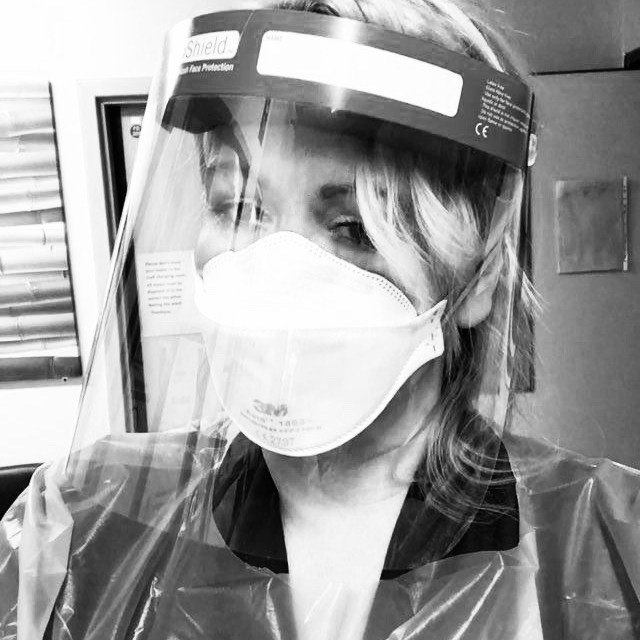

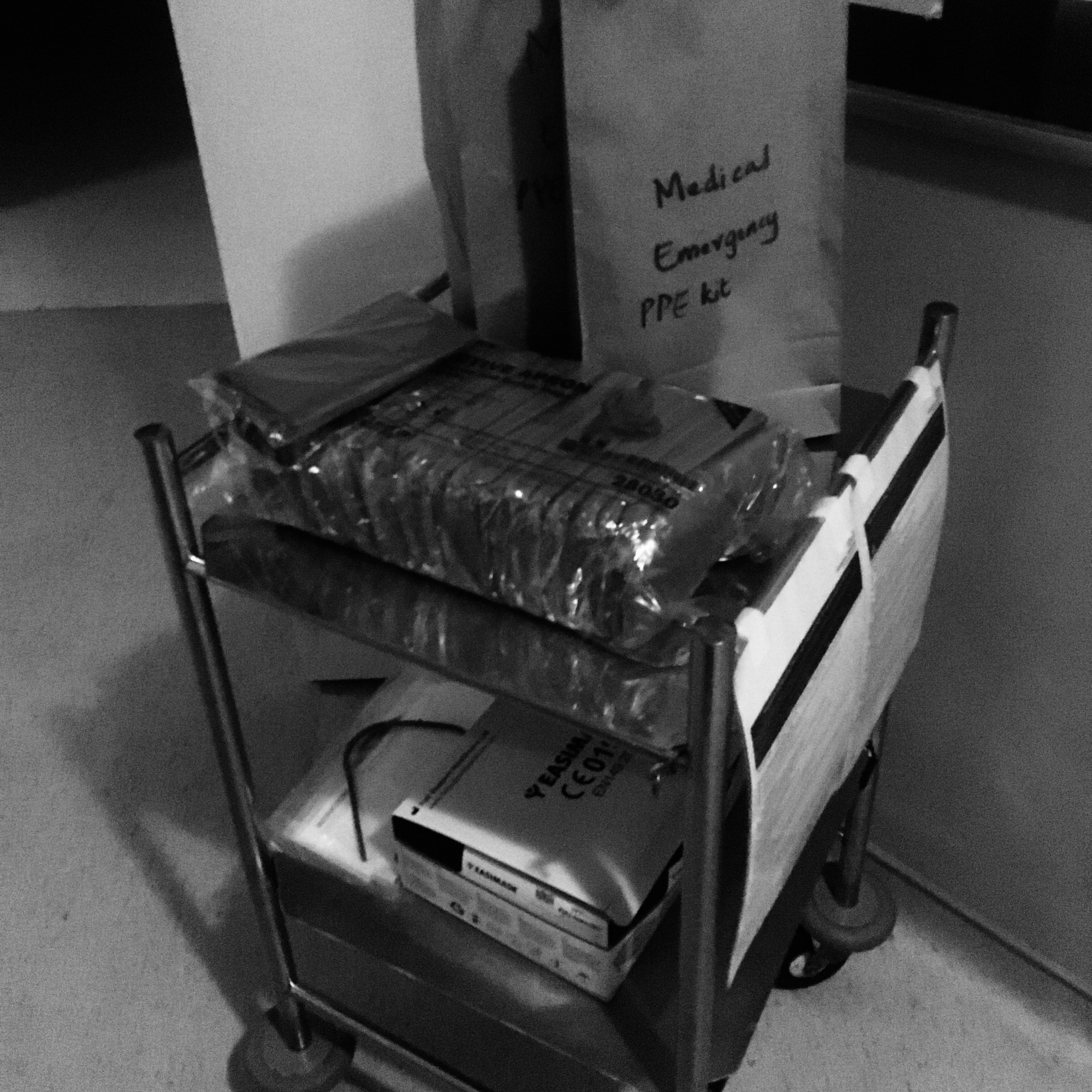


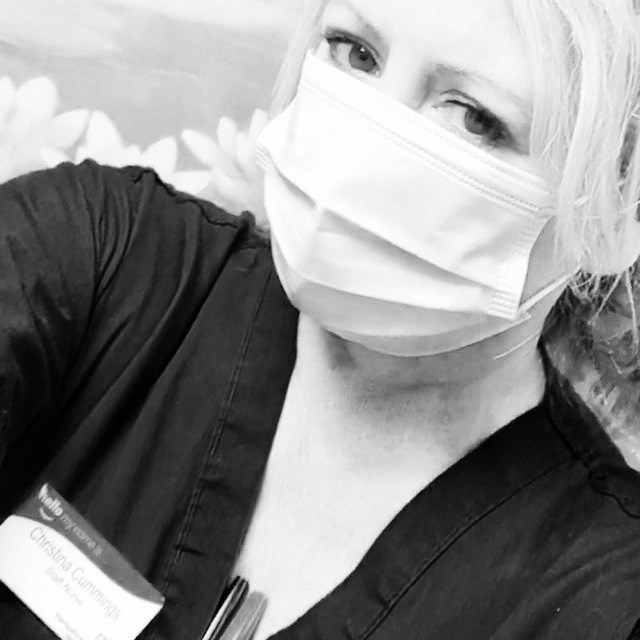


6.55 a.m.
17th October, 2020
On entering the hospital for a long-day shift, the mask donning and hand sanitising ritual takes place. It’s usually around 6.55 a.m. when the place is quiet, save for staff heading to their various wards. Since the start of the pandemic when, unmasked, I contracted Covid-19, I have documented this ritual. It reminds me that I’m still here, still showing up, because sometimes… even I’m amazed that I am.
The earth’s heart
29th September, 2020

From the soundtrack of the movie, ‘Puzzle‘, the song ‘Horizons’ by Dustin O’Halloran and performed by Ane Brun, was like listening to the earth’s heart. And I needed to hear that.
Horizons, The lyrics
Sometimes
Life can promise so much
Each breath of air
Will never reach deep enough
It’s a bottomless well of trust
Sometimes
A touch of a hand can spread out
Like branches on your skin
You can hear your cells whispering
Please let the light in
Let the light in
Every second
Every moment
Carries hope on its shoulders
Standing tall
Growing more and more
Whispering
Please let the light in
Let the light in
Every second
Every moment
Carries hope on its shoulders
Standing tall
Growing more and more
Stretching
Peaking
Over walls
Into horizons
Across the oceans
© Dustin O’Halloran
Rose water
26th September, 2020

As well as my writing, painting and nursing work, I enjoy lots of other activities ~ cultural, culinary, sporting, crafting, theatrical, horticultural, historical ~ but there are some evenings, after a near-thirteen-hour ‘day’ at work, when putting my feet up and watching an episode of GBBO or TWD or FTWD… well, it just fits the bill! From marzipan and rose water sponge to a world-wide zombie apocalypse, where survivors battle and bond ~ in my defence, I guess I’m allowed, need even, a little downtime. Everyone does, right?
Spolier alert!
Anticipating the post-apocalyptic wedding between two of the characters in an episode I watched last night, I pictured how it would be portrayed by the scriptwriters and the wardrobe and props department. Would there be music? Guests? Rings? A cake? How would people, lost to the old world of ceremonies and certificates and safe harbours ~ how would they declare their love?
Given that our world has changed, the way we do things now has altered. With that in mind, I thought I’d write a quick poem. And it goes like this:
Bride at her small wedding
Looping, twirling, threading, curling,
Deft fingers weave prefect-patterned lengths
That form, like webs in frosted morning light.
And now, as you step through the stone arch
Passing the empty spaces there,
A pink petal, separated from the flurry,
Clings to the veil that floats above your head
And as you walk to the wooden gates
I see along its edge, the tiniest flaw in the thread;
an error I made, in my haste,
in your beautiful wedding lace.
© Christina Cummings 2020
Blushed with beginning
25th September, 2020

Poet, philosopher and author, John O’Donohue, was best known for his published work of non-fiction, ‘Anam cara‘ ~ which means ‘soul friend‘ in the Irish language. His writing popularised Celtic spirituality and philosophical theology, with messages that we should be gentle, yet truthful with ourselves. This sentiment is beautifully laid bare in his series of ‘blessings’. ‘A Blessing for a Friend on the Arrival of Illness’ is as painful to read as it is to live through. But this one, about new beginnings, is for so many reasons, a joy:
Now you endeavor
To gather yourself
And withdraw in slow
Animal woundedness
From love turned sour and ungentle.
When we love, the depth in us
Trusts itself forward until
The empty space between
Becomes gradually woven
Into an embrace where longing
Can close its weary eyes.
Love can seldom end clean;
For all the tissue is torn
And each lover turned stranger
Is dropped into a ruin of distance
Where emptiness is young and fierce.
Time becomes strange and slipshod;
It mixes memories that felt
The kiss of the eternal
With the blistering hurt of now.
Unknown to themselves,
Certain small things
Touch nerve-lines to the heart
And bring back with colour and force
All that is utterly lost.
This is the time to be slow,
Lie low to the wall
Until the bitter weather passes.
Try, as best you can, not to let
The wire brush of doubt
Scrape from your heart
All sense of yourself
And your hesitant light.
If you remain generous,
Time will come good;
And you will find your feet
Again on pastures of promise,
Where the air will be kind
And blushed with beginning.
© John O’Donohue
All work and no play…
24th September, 2020
Jack Nicholson’s portrayal of a writer, in the Stanley Kubrick movie, The Shining, is iconic and utterly terrifying. It starts off quite innocuously. Man takes family (this was after all based on the 1977 Stephen King novel of the same name) to caretake a large hotel for the winter season. Cut off from the roads and from civilisation by a deep and impassable snowfall, the family succumb to cabin fever, largely due to the hotel’s violent history which variously haunts them in insidiously intensifying scenes. The claustrophobia is tangible. Ultimately, Jack’s (also the character’s name) descent into mania overtakes him to the point where he goes on a murderous rampage with an axe.
As I fired up my laptop this morning, I thought of that hotel and the spacious lobby where Jack sat for hours at his writing desk. And I understood that when examined more closely, the film is not about the perils of isolation, but about Jack’s own internal battles. Enraged by the struggles in his life, he seeks an outlet from the stifling frustrations of yearning. The axe-wielding scene, though memorable, is not the most terrifying part of the film. The long-take cinematography of Jack hunched over his typewriter, the keys loudly clicking as he bashes out his novel, culminate in the chilling moment where his increasingly concerned wife goes to read his work. As she sifts through the manuscript, alarm is etched upon her face. On every single sheet of paper in the thick pile, he’s written one sentence. The same sentence. Over and over. And over.
Rhythm of Randomness
19th September, 2020

If you woke from the silence of your bed and made your way to the kitchen to look in bleary habitude for the kettle and you happened to glance through the unveiled window pane at a framed and familiar garden, you’d be puzzled if, let’s say, you saw a tent. Alarmed perhaps.
Aren’t all stories, at some level, true? Or the possibility that at one point or another someplace in the universe, the most unbelievable story ever told, will in fact become true. At least for someone. Somewhere.
Sophie turned the lock and entered number 12 The Yard. Mrs. Rose was expecting her. As the door clicked shut, a twittering started up from the corner of the room. From behind the bars of his little silver cage, Webster tilted his head. His wings, the colour of unripe avocadoes, flapped a little, fanning a confetti of millet husks that spilled to the ground. Sophie took the tiny plastic trough to the sink and filled it. Glancing up, she looked through the fly-dirt-dotted window and saw beyond the rowan tree, a yellow tent erected on the lawn.
‘Mrs. Rose,’ she said, turning off the tap. ‘I didn’t know you had a visitor.’
‘I don’t!’ said Mrs. Rose, who was seated in her kitchen. Around her, an arc of necessaries: her lipstick (Burnt Sienna) and a compact mirror, a jug of elderflower cordial, Aloe Vera tissues and the remote control. Sophie set down a plate of toast and a pot of tea, and turned out five tablets from the dossette box. They scattered onto the saucer, like sweets.
***
‘Shall we call the police?’
‘No, dear,’ said Mrs. Rose, switching on the morning news.
‘Well, I can’t leave you until we know… well, who it is at least. I’m going out there,’ Sophie said, twisting the lid back on the ginger preserve.
‘But you’ll wake them up!’
‘Exactly.’
‘How would you like it if some stranger poked their head around your door?’
‘It’s hardly the same thing. For a start, that’s a tent … and it’s trespassing, technically, on your lawn.’
Mrs. Rose blew across the top of her tea. ‘Some things are best left alone!’ she insisted, but Sophie was already unlocking the back door and was halfway up the concrete steps.
The tent had been hastily constructed, some of the lines had not been tethered and a bag of pegs had been thrown to the side. The zip had been pulled down, to leave a small triangular gap, through which Sophie could hear a faint snoring.
‘Morning,’ she said, backing away. There was no answer, so she said a little louder, ‘Good morning to you!’ The tent shuddered. And there was the sound of a sleeping bag being turned. Sophie waited for a reply. None came. So she went back inside the house.
Sophie remembers a night she spent zipped inside a tent, not unlike this one ~ held hostage by the rain; a tender rainfall, like a thousand fingertips tapping the tarpaulin, stealing the silence, with the rhythm of randomness. She recalls her cheek being touched with the palm of a hand; a hand which still carried evening’s chill.
‘Well?’ Mrs. Rose asked, wiping a blob of jam from the front of her blouse.
‘There’s definitely someone in there,’ Sophie looked tense.
‘Take them some coffee, if you must! That’ll bring them out. Everyone likes the smell of coffee.’
Sophie made a strong black coffee in a Tweetie Pie mug and carried it outside. She placed it on a flat patch of grass, next to a sugar bowl and a bone-handled spoon and announced its presence. After a moment or two, a hand reached through the little gap and felt around, then the cup disappeared inside.
And if our tale should end here, true or not, we’ll feel the loss of conclusion’s withholding. But we can make up the last part of the story to suit our own pleasing. Isn’t that what most of us do, in the end?
© Christina Cummings, ‘The yellow tent’ 2020
The path…
14th September, 2020
An average day at work. Hmmm. So hard to give a potted account of the working day of a nurse. With leadership and management skills as well as clinical, pharmaceutical, medical, surgical and pathophysiological knowledge, the profession of nursing is one that’s highly skilled and emotionally as well as physically demanding. The notion that a nurse is any different from the general population, comes down to the fact that they have chosen to accept the path less glamorous in order to make a living. That, and altruism. Or, ‘selfless hero/heroine?’
A qualitative study by Slettmyr et al. (2017), aimed to discover the correlation between nursing and altruistic tendencies. Using Socratic dialogue, fifteen Swedish Acute Care Nurses had a discussion. The outcome was interesting. In terms of the traditional view of ‘The Nurse,’ society’s expectations of what altruism means ~ such as the response to nurses at the height of the pandemic, during that ‘glowy’ period, which was somewhere between early lockdown and before the realisation that political dithering had badly let down our NHS ~ and nurses’ perception of their work as a salaried job, in fact, collide in our modern healthcare model. If we are paid for helping others then it’s not technically altruism.
In short, nurses are only doing their job. But, I speak for myself and every colleague I’ve known, when I say, though nursing does carry a sense of duty, it is also immeasurably rewarding to the soul. When conceptualising this to embrace the whole ‘human’ experience from the nursing perspective, it would be fair to say that tangible compensation can be found not just in a living wage, but in the daily nurse-patient relationship, and the heroic and tiny moments that are utterly, uniquely profound.
© Drawing, ‘Christina’ by one of my patients, 2020.
Unseasonal pruning
12th September, 2020

A poem by Fellow of the Royal Society of Literature, Poet Laureate, Ivor Novello Award winner, BAFTA winner, Professor of Poetry at Leeds, Keats-Shelley Award winner and CBE, Simon Armitage (who just happens to be my favourite poet, especially when he reads aloud in his distinctive west Yorkshire dialect) speaks of destruction, regrowth, futility and overkill. It seems appropriate.
Chainsaw versus the Pampas grass
It seemed an unlikely match. All winter unplugged, grinding its teeth in a plastic sleeve, the chainsaw swung nose-down from a hook in the darkroom
under the hatch in the floor. When offered the can it knocked back a quarter-pint of engine oil and juices ran from its joints and threads, oozed across the guide-bar and the maker’s name, into the dry links.
From the summerhouse, still holding one last gulp
of last year’s heat behind its double doors, and hung with the weightless wreckage of wasps and flies, mothballed in spider’s wool
From there, I trailed the day-glo orange power line
the length of the lawn and the garden path,
fed it out like powder from a keg, then walked
back to the socket and flicked the switch, then walked again and coupled the saw to the flex ~ clipped them together. Then dropped the safety catch and gunned the trigger.
No gearing up or getting to speed, just an instant rage, the rush of metal lashing out at air, connected to the mains. The chainsaw with its perfect disregard, its mood
to tangle with cloth, or jewellery, or hair.
The chainsaw with its bloody desire, its sweet tooth
for the flesh of the face and the bones underneath,
its grand plan to kick back against nail or knot
and rear up into the brain.
I let it flare, lifted it into the sun
and felt the hundred beats per second drumming in its heart, and felt the drive-wheel gargle in its throat.
The pampas grass with its ludicrous feathers
and plumes. The pampas grass, taking the warmth and light from cuttings and bulbs, sunning itself,
stealing the show with its footstools, cushions and tufts and its twelve-foot spears.
This was the sledgehammer taken to crack the nut. Probably all that was needed here was a good pull or shove
or a pitchfork to lever it out at its base.
Overkill. I touched the blur of the blade
against the nearmost tip of a reed – it didn’t exist.
I dabbed at a stalk that swooned, docked a couple of heads, dismissed the top third of its canes with a sideways sweep
at shoulder height – this was a game.
I lifted the fringe of undergrowth, carved at the trunk ~ plant-juice spat from the pipes and tubes
and dust flew out as I ripped into pockets of dark, secret warmth.
To clear a space to work
I raked whatever was severed or felled or torn
towards the dead zone under the outhouse wall, to be fired. Then cut and raked, cut and raked, till what was left
was a flat stump the size of a barrel lid
that wouldn’t be dug with a spade or prised from the earth.Wanting to finish things off I took up the saw
and drove it vertically downwards into the upper roots,
but the blade became choked with soil or fouled with weeds, or what was sliced or split somehow closed and mended behind, like cutting at water or air with a knife.
I poured barbecue fluid into the patch
and threw in a match – it flamed for a minute, smoked
for a minute more, and went out. I left it at that.
In the weeks that came new shoots like asparagus tips sprang up from its nest and by June
it was riding high in its saddle, wearing a new crown. Corn in Egypt. I looked on
from the upstairs window like the midday moon.
Back below stairs on its hook the chainsaw seethed.
I left it a year, to work back through its man-made dreams, to try to forget. The seamless urge to persist was as far as it got.
© Simon Armitage, from The Universal Home Doctor (Faber & Faber, 2002)
Buckle up!
6th September, 2020
Waiting for the results of a medical test is no day at the beach. I’ve been through it a few times. Not just for myself, but for my children too. With a broad set of extreme outcomes that range from (a) a beautiful fear-free future in a rosier world, with new found respect for one’s physical self and the promise to worry less, drink less, live more. A second chance, if you will, to embrace life again only this time every little thing would be so much more enjoyed. To, (b), facing huge anguish, disruption and uncertainty and everything that goes with that.
With multitudinous forks in the bumpy road and countless variables and unknowns along the way, the inexorable journey begins. Far too many possibilities to consider. Except one does consider them, in the form of a spectacularly spine-chilling rollercoaster ride, in a not-so-fun fair. So, while waiting for a medical test result, routine or otherwise, the mind has quite the challenge. Consider that one’s approach is to take it minute by minute, and let’s say the results are going to take up to two weeks to come back. That’s 20,159 minutes and several trillion rollercoaster rides.
So that’s where I was last month; climbing into the little carriage at the start of the ride, wondering if it was worth bothering with the safety harness. Having had my routine mammogram appointment cancelled in February due to the coronavirus outbreak, I was both rattled and relieved, grateful even, when the letter came through to say the Breast Screening Clinic had started calling in those women whose appointments had been delayed. In my case by six months.
I had already spent much of the summer living in that ‘fear-free-rosier-world’. After surviving a pandemic, heck, nothing else could faze me. Right?
Wrong.
The first round of results came back. They’d found a lump. ‘Lump’ ~ so blunt a term. This led to a call-back for further tests, including a local anaesthetic, a needle biopsy and ultrasound. All the staff were amazing. From the radiologist to the receptionist, the specialist consultant, the breast care nurse and especially the health care assistant who covered my modesty, offered tea and conversed with me throughout, I was exceptionally well looked after.
I left the clinic, slightly bruised. The sun seemed particularly bright. I saw some colleagues I knew sipping Costa coffees by the hospital canteen. I could see the windows of the ward in which I worked. I drove home, popped the kettle on and sat down. And then… I only had 20,129 minutes left to wait.
Obviously family and friends helped me by offering reassurance, statistics, humour and best-case scenarios, but it was my own surrender to acceptance and a newly discovered patience, after the initial meltdown, that got me through in the end. That, and an article I read on-line, by a woman of a similar age, who’d gone through the same experience and offered some sensible advice. Shawn Meghan Burn, Ph.D., is Professor of Psychology at California Polytechnic State University at San Luis Obispo. She’s also the author of books and research articles on topics such as the social psychology of gender and sexual assault prevention. It was in her Blog, ‘Presence of Mind’, that I read an article entitled simply, ’How to Manage Breast Cancer Screening/Diagnosis Anxiety.’ In it, she talks about her own fear, how it’s normal to panic and she offers up techniques and mantras to recite in order to manage the ‘waiting game’.
Here’s one of them:
‘Whatever the outcome, I CAN handle it as I have so many other difficult things before. Like other challenges I have confronted, if there is a challenge to be faced, it will make me stronger and more resilient.’
And here’s another:
‘This experience is a reminder of my mortality and what’s important to me, and in that way it’s an opportunity for personal growth.’
And, importantly:
‘If it is cancer, it is not necessarily a death sentence. The ten-year survival rate is nearly 90 percent. And far more women have survived breast cancer than have died. Repeat: survived.’
The one key word from her article is ‘if.’ If it’s cancer. If there is a challenge to be faced. In any case, as the rollercoaster began, I reached over to the strap and buckled the hell up for the ride.
Fast forward 20,129+/- minutes, and the results came back in the form of an efficiently calm phone-call from the specialist nurse. She said it was benign. Another blunt term. Yet quite beautiful too. And with that, I allowed myself a sweet, pink candy floss, Hoopla-winning kind of a smile.
Next month is breast cancer awareness month. For more information on all breast cancer concerns there are lots of helpful websites:
https://www.nationalbreastcancer.org
https://breastcancersupport.org.uk
The author suggests…
5th September, 2020

You came round with a bag of groceries; I didn’t look inside until you’d gone. Underneath the ham and barley soup and a bag of Minstrels, you’d placed the self-help book. I knew it wasn’t just my appetite that bothered you. I put it aside and spooned cold soup into my mouth straight from the tin.
It wasn’t until later, until the last porch light in the close was dimmed, that I picked it up again. A paperback written in plain speak. On the cover, a pair of unlaced shoes. They’re pointing towards the suggestion of an ethereal horizon.
I flicked through.
Page 19, under the heading, Clearance Sale, the author suggests an activity. She asks the reader to place a selection of everyday objects onto a tray and ponder them. Then, one by one, remove each object and using a pad and pencil try, from memory, to list them all. This, the author says will re-set the mind and free it from unwanted thoughts.
I look around the room and gather some small things. There’s an old train ticket, a biro and a tea cup with stains. I settle on ten objects, place them in front of me and we square-off. I watch them for a while. In this moment these ten things are all I know. I notice the brass frog has kind eyes and the clothes peg has a patch of rust on its hinge.
Removing them from the tray proves tricky. Should the comb disappear before the spoon? Perhaps that was the point of the exercise. By replacing unwanted thoughts with a fresh dilemma, it does indeed re-set the mind.
I sucked on the last of the Minstrels, feeling the hard outer-coating give way.
Excerpt from ‘A cloud called Constance‘ by Christina Cummings
© Christina Cummings 2020
Whisky-sipped lips
1st September, 2020

Aah, Autumn! How quick I was to assume I’d see you again. The subtle, creeping chill of early morning and the darkening skies are a marvel aren’t they? And we’re still here reaping the harvest of a ravaged year. So many physical and mental burdens to carry over the last months; far too many to mention here. Let’s lay them down. They’re as heavy as the orange moon. And yet… there were joys too. We felt them. But they were held against a backdrop of bravado, and that kind of crazy just exhausted us.
We’d need a whole evening to explain our 2020 song. Perhaps we should sit hearthside before a near-slumbering fire, the glowing embers just a golden, throbbing hum and with whisky-sipped lips exchange one story of survival after another. And for the love of God we’d hunker down then, wouldn’t we? For the silent hours. And fall into deep and hearty sleep, safe in the knowledge that we’re not alone in this madness anymore.
We never really were.
Gone ‘splorin’
13th June, 2020
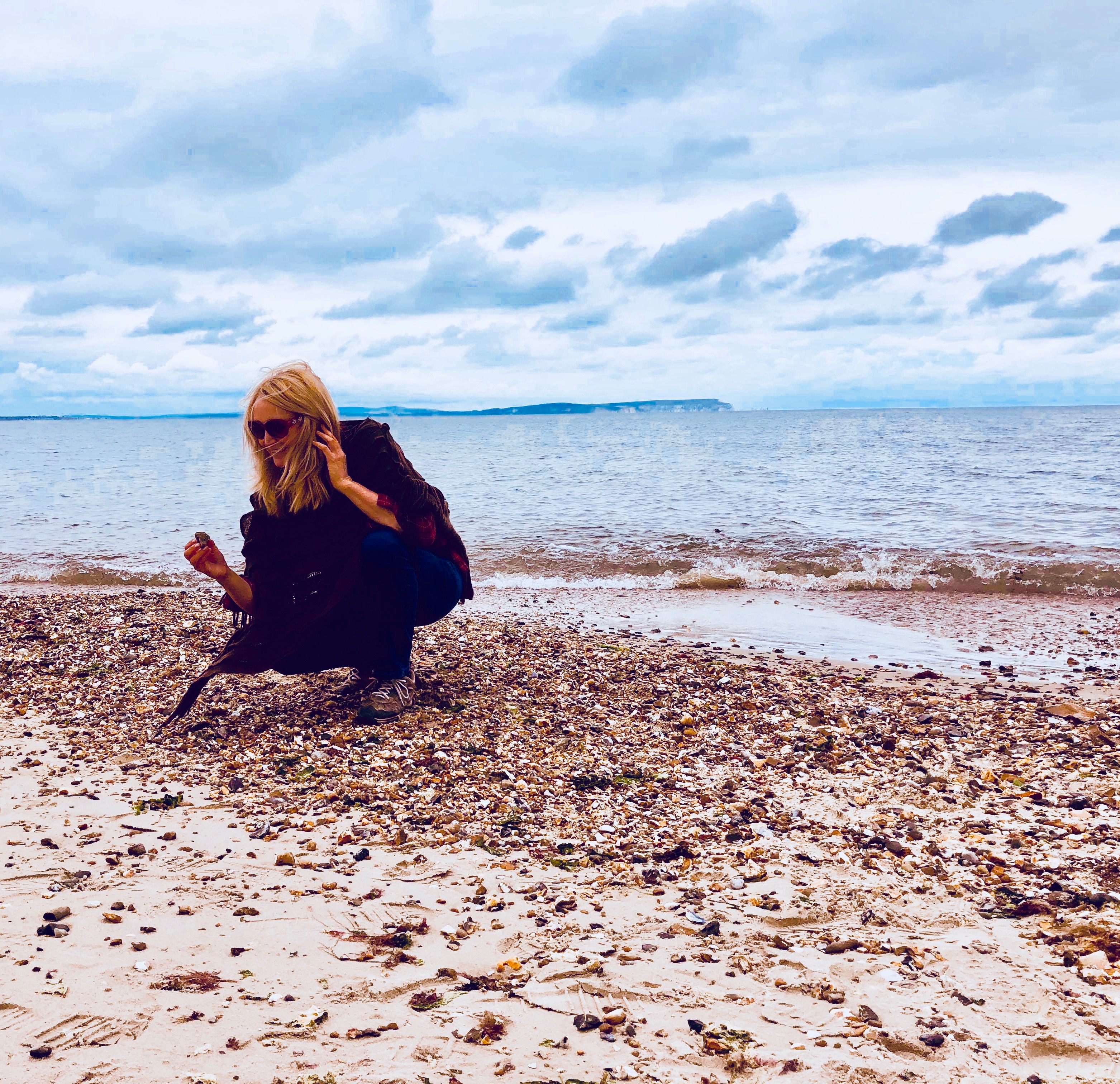
The first day of summer is almost here. It arrives, this year, on the longest day ~ the Summer solstice. With so many creative projects on the go and my continued work at the hospital, it’s time for me to hang up my blogging boots again. My focus will be on developing the third act of my novel and starting up a copywriting & editing service. That is, in between my usual shifts on the medical ward.
Looking back, the scariest part for me wasn’t when I contracted Covid-19 during the rise of the first wave (which was frightening enough), but when I witnessed people and our government act in hapless denial as the virus spread surely towards us. Living through this from the perspective of a nurse who swabbed one of the first ‘query Covid’ cases at Winchester, as the rest of the country were still adamantly gathering in large groups, whilst watching in horror as the soon-to-be-our-story unfolded in Northern Italy…. that, will forever be the hardest pill to swallow.
When lockdown came it was too late, creating panic and the loss of far too many lives. And now, as we seek to resume some elements of our previous existence, there are those who will respect the pace and those who won’t. The NHS and other ‘essential’ services, already braced for a winter wave, have not had the luxury of shielding from Covid-19. Rather they are at the epicentre. And will remain so, until the storm passes.
But there is another storm to face. With the murder of George Floyd by a law enforcement officer as the catalyst, the pent up fury has been rightly unleashed. Anger, guilt and fear abide. And there’s a turning of the tide. Black lives have always mattered. But our world did not reflect that. Trapped in a culture of blame and shame, we need to acknowledge, act and resolve… but in responsible ways. There is a fine thread now between finding justice and easing out of lockdown as least disastrously as can be achieved.
It seems at odds then to say that lockdown for me was bittersweet. Having the company of my children here with me, at home, has been the most precious of times. In some ways we’ve thrived. Still my children, they’ve become the most wonderful adults to have around, representing all that is good even with and inspite of white privilege. So, I will rest my blog here, until the autumn months. By then I hope with all my heart that peace, understanding, healing and renewal may be ours. Some light gathered up in abundance to replace these hard* times, giving us all hope for our shared future.
- hard* : raw, unsettling, socially-distanced, uncertain, frightening, unpredictable, disruptive, scary, trying, disappointing, disheartening, complex, isolating, exhausting, dispiriting, unstable, violent, precarious, sacrificial, unjust, life-changing, life-threatening, risky, unrestful, alarming, unnerving, inescapable, daunting, horrifying, intimidating, blundering, developing, inevitable, changing… times.
All of us
10th June, 2020

Essentially we, as humans, want to be heard. Why? Because then we are validated, respected, accepted. Maybe even loved. To be ignored, goes beyond hurt to a damaged place where all we fear festers.
Our basic human rights (and animal rights), our gender, our sex, our religious or non-religious beliefs, our disabilities, our freedom, our education, our safety, our race, our health ~ we have had to fight for every one of these. Throughout history and even today. Individually. Internally. Locally. Globally.
It’s easy to think of these as ‘other people’s battles’ and to imagine ourselves free from the need to be involved. But we are involved. All of us are, in at least one of these rights, benefitting from someone else’s will to fight injustice.
The last few weeks and months have shown us just how much we’re still up against. We need to educate ourselves, take responsibility, help ~ but there are limitations. We cannot personally pursue every single cause, all of the time. Together though, we have the resources. We want to be heard? Yes. But we must also be willing to listen.
Sleep is my lover now
9th June, 2020
“Noises flit around the house: garbage truck in the alley, rain, tree rapping against the window pane. I inhabit sleep firmly, willing it, wielding it, pushing away dreams. Everything is reduced to this bed, this endless slumber that makes time stop; stretching, compacting time until it is meaningless. Sleep is my lover now, my forgetting, my opiate, my oblivion. ” Excerpt from ‘The Time Traveller’s Wife’
Square in the face
8th June, 2020
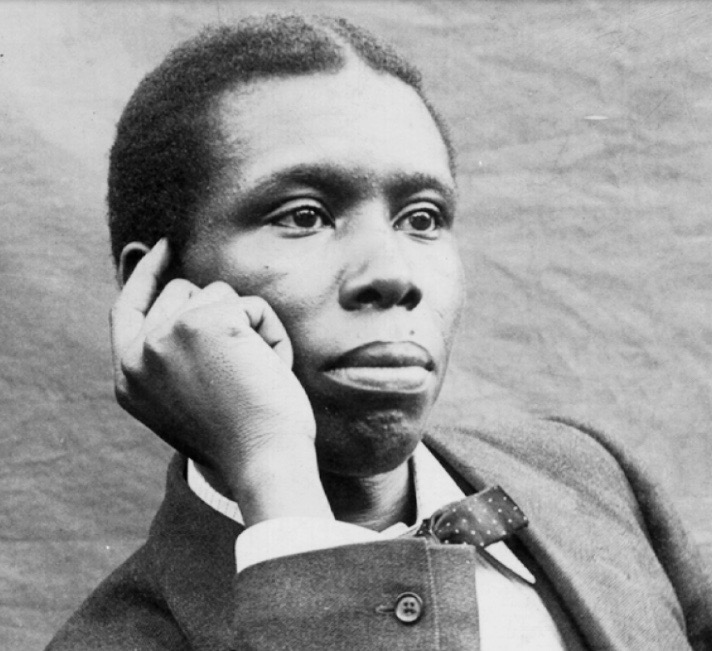
Photograph © Ohio History Connection
African-American poet, novelist, and playwright, Paul Laurence Dunbar, was born in 1872 in Ohio, to parents who had themselves been slaves before the American Civil War. As a child, Dunbar began to write creatively, publishing his poems at just sixteen years of age. His writing career was diverse; collections of short-stories, essays in Harper’s Weekly, four novels including The Sport of the Gods and the lyrics to In Dahomey, the first musical written and performed entirely by African Americans. However, at age thirty-three, Dunbar’s literary career was to be cut short after he contracted tuberculosis, for which, at the time, there was no known cure.
‘We wear the mask’ is Dunbar’s most studied poem. Societal stigmas are brought into the light, giving an insight into the struggles endured within cultures that stereotype, discriminate against and persecute ‘minority’ groups. The ‘mask’ here is metaphorical, in the sense that black people were forced to hide their true, justified feelings of pain and rage in front of a white society that harboured prejudice ~ mistreating and marginalising generation after generation.
In 2020, there is a new interpretation of this poem. We look back at history and how it has led us to where we are now. We look it square in the face. A place where fury is sparked. And where the mask is real.
We wear the mask, by Paul Laurence Dunbar
We wear the mask that grins and lies,
It hides our cheeks and shades our eyes,—
This debt we pay to human guile;
With torn and bleeding hearts we smile,
And mouth with myriad subtleties.
Why should the world be over-wise,
In counting all our tears and sighs?
Nay, let them only see us, while
We wear the mask.
We smile, but, O great Christ, our cries
To thee from tortured souls arise.
We sing, but oh the clay is vile
Beneath our feet, and long the mile;
But let the world dream otherwise,
We wear the mask!
Dog days
5th June, 2020
I’ve known these two gorgeous girls, Lily and Yogi, for years, so it was lovely to meet up with them again this week. Poor Yogi has a recently injured foot, but they were both on top form and full of mischief and beans. Every time I stopped hugging them, they’d look up at me with those imploring eyes. So they got lots of hugs and I got LOTS of love. Yep, there’s nothing quite like a dog.
How do we…?
4th June, 2020
As a nurse, the main purpose of my role is to look after people and help them heal. As I show up each day to do just that, I witness the boundless efforts of other healthcare professionals and sense the enormity of our daily achievements. Yet, within the wider scheme of things, what we do is really just the tiniest of drops in a huge, expansive ocean. We have, in a sense, mastered the art of ‘doing all we can’ to better the health of humankind ~ with education and screening at the forefront of that. Science-backed medicine and ever-evolving technologies address pathophysiological health concerns, or in basic terms, save lives. Yet, there will always be suffering, even as breakthroughs in research afford us newer and more effective ways of managing disease.
The challenges of working in this field are offset by real rewards, because the beauty of nursing is in the moments where our patients improve; we get to witness the joy of healing. Or, if their time has come, we can help them to pass peacefully and with dignity. We can do our best, even in the worst of times. Which is why the Covid-19 pandemic that has blighted our world, is especially disheartening. The effects are astronomical. Or rather, they are incalculable. With the capacity for treatments reduced, hubs closed and face to face consultations put on hold, we are facing the prospect of not being able to help all those who need us now.
Covid-19 is not just the sum of its daily death tolls, but the changing ways we now live and work, and the obstacles it has placed in accessing primary healthcare, the check-ups we took for granted, just one of those. Without breaching my duty of care in patient confidentiality, I can say it has also affected the hospital experience. Visiting times of the past are sorely missed. The little things that lift our patient’s spirits; familiar faces, carefully selected magazines and grapes, helium balloons and sweets delivered in person are all as distant now as unmasked smiles or hugs.
How do we emerge from all of this? And when will things feel ‘safe’ again? How, in a broader sense, can we truly work to make things better, when ignorance, brutality, prejudice and greed still… still…infect ‘society’? The very ruin of us is not just in the ways we act, but in the ways we don’t.
How, to put it simply, do we heal our world?
Without a cause
2nd June, 2020
My journey into Veganism dates back to early 1987, when living with a family in Mumbai I adopted the way of life which formed part of their belief; Jainism. It didn’t last long once I returned to the UK, but now, my preference for healthier choices and my conscience are naturally leaning towards an aspiring vegan lifestyle.
Over a breakfast of green tea, Marmite toast, nectarine slices and avocado, I re-read a piece from a short-story I’d written years ago, and am pleased to say I had cravings neither for cigarettes nor bacon.
Excerpt:
I toss the unappealing sandwich to the gulls and head off up the path, to the clifftop café. The only thing on offer that looks halfway decent is the bacon roll, which I order along with a coffee that comes in a lidless polystyrene cup. I check out the condiments; three plastic bottles of sauce in yellow, brown and red. I squeeze the one I take to be English mustard onto the crispy bacon, and spread it with the handle of a plastic spoon. Making my way to an empty bench, a droplet of coffee spills. I feel it sear into my thigh. It’s the first thing I’ve actually felt in days.
As I bite into the greasy roll, I notice a girl checking me out. She is tall with shoulder length blonde hair, a sort of hippie mullet. Silver bangles clink about her wrist and her sleeves are rolled. She smokes a cigarette, holding it between her lips, like James Dean in Rebel Without a Cause. She flicks the stub onto the dirty tarmac, blighted with car oil and flattened wads of gum. Smoke coils up from the ground like a dancing snake. With a quick swivel of her foot, she extinguishes it and comes over to the bench. ‘May I?’ she asks. With my mouth full of bacon rind, all I can manage is an ambiguous shrug. Yet she sits down anyway and leans back on her elbows.
© Christina Cummings
Get your hot Pierogies!
1st June, 2020
After my shift at the hospital, there’s a decontamination process involving changing out of scrubs at work, then laundering clothes separately above 60 degrees, hand washing and a hot bath, all before I can head to the fridge for food or wine. It’s quite the palaver. So it’s lovely when I have a day off and can relax and enjoy the cool comfort of shade in my sunny garden, free from concern about carrying Covid home.
Home: where the company of my grown-up children, during this time, has been especially precious. We’ve found new routes for walks, played board games and cards, embroidered and knitted, played frisbee, cricket and ventured out on bikes. Alfresco dining has been enjoyed, as well as pizza and popcorn in front of a film or a theatre production streamed from Shakespeare’s Globe. Freshly-picked elderflower pressé, home-cooked banana bread and hot pierogies have been consumed. And a vegetable patch of peppers, peas and runner beans is being carefully tended. So many things to be enjoyed… (not forgetting Disney Plus!) So much to be thankful for.
My return to work has been made far easier by their presence and their help. So much so, that I have the energy and motivation to work on a new, exciting project (to be announced) as well as my novel. While editing, some of the scenes seem quite surreal, in a kind of ‘pre-Covid’ way. And some of the plot will need to be altered. Because things have changed.
Tangibly
30th May, 2020
I was in my kitchen just now, waiting for the kettle to boil. Usually I multi-task and get at least seven things done, a race against the heating element before the air is filled with plumes of steam that rise from its snout. When I was growing up, we had a gas kettle that sat above a clasp of blue flames and whistled for attention. Honestly, I miss its shrill call, even now. Those were the moments of days’ past when things paused just long enough to tangibly hold on to time. I notice the spaces Buddy once occupied. It’s not just a particular chair, or the second stair up, or at the foot of my bed or on the back step looking out at the world… it’s in everything. In every meal time, every walk, the empty passenger seat, the locking of the back door, the silence at the front…
And the timing of his loss? My work, illness, and the new logistics of living through this pandemic outmanoeuvred my grief, so that acceptance was forced to come before denial. But now, the waves of loss, drown me. My best friend and most loyal guardian through a decade of change is gone, the tiny pup whose mere existence made our family complete and our house a home, at a time when all those things were threatened. He didn’t know he held such great importance. He just ‘was’.
Standing by the bowl he last drank from, which now belongs to the cat, I did nothing but wait. And I was a child again, holding on to time as the kettle boiled.
Garden vibes
27th May, 2020


Free from all worldly engagements, with a notebook and pen in hand… it is time to dream awake.
‘Our truest life is when we are in dreams awake.’ ~ Henry David Thoreau ~
A little perspective, please?
23rd May, 2020

When I returned from last week’s shop, I was slightly irritable. Only slightly. Let me explain. With a face mask on, my glasses had steamed up every few seconds, which made reading the list and labels difficult. That doesn’t happen at the hospital, but then the masks there aren’t made from socks. ‘It took twice as long!’ I bemoaned, as my daughter and I stood in the kitchen wiping items in the bag-for-life with an antibacterial cloth. ‘And they were out of vanilla pods again!’
In my defence, I was probably just a teeny, tiny, weeny bit grumpy on account of being just plain pissed off. Of course I have things in perspective. Up till now, I’ve been mostly stoic ~ chin firmly up and with my best foot forward. But, as it turns out, there is a limit to my cheeriness in the face of this pandemic. I popped the kettle on for a reviving cup of tea, after washing my hands of course. As I put the vegetables away in the rack I found myself pondering how long a single, stray virus might live if it should find itself, say, upon the surface of an onion skin?
The week unfolds, and before long it’s time to visit the supermarket again. My daughter compiles the shopping list. I gather my new, upgraded face mask, beautifully sewn by a vet in Henley-on-Thames. It even matches my shirt. I notice my daughter’s written everything in VERY LARGE PRINT. ‘Is that for my benefit?’ I ask. She replies with a smile, adding vanilla pods to the list again.
Flow chart
20th May, 2020
It’s Mental Health Awareness week. The theme is kindness. Searching even for one small fleck of silver in the darkest of clouds is our greatest superpower. And it all starts by being kind to ourselves.
#MentalHealthAwarenessWeek2020
Reality now…
19th May, 2020

Hubei Province, China, December 30th, 2019 ~ Dr. Li Wenliang tried to warn the medical community that a new ‘SARS’-like virus was beginning to emerge in patients admitted to a Wuhan hospital. Interrogated and censored, ironically by the Public Security Bureau, he was told to ‘stop making false comments’ and was admonished for ‘spreading rumours’.
A devoted husband and father, passionate about his medical career in ophthalmology, he felt worried enough to send warning to his fellow healthcare professionals. Tragically, he lost his life to the very virus that he had tried to raise concerns about. At the time of his illness and subsequent hospital admission, Li Wenliang’s wife was pregnant with their second child. They would never meet as a family again.
Since Li Wenliang’s brave signal to the world was quashed five months ago, over 5 million people have contracted Covid-19. And that’s just the ones who were tested positive. And of those who were known to have coronavirus, so far 330,000 have gone to an earlier grave. Li’s devastated father was reported to say: ‘My son was wonderful. I don’t think he was rumour-mongering. Hasn’t this turned into reality now?’
Disease has always been the bedfellow of life. But, the way the SARS-CoV-2 pandemic has been handled is shameful. For all our new technologies, research, social media and international relations, we are not ‘one world’ at all. The stark fact remains that two types of human inhabit planet earth: those who care about things other than themselves. And those that don’t. Perhaps we should reclassify our species based on that alone.
Tah-dah
18th May, 2020
Focusing on something I enjoy that represents the future in a positive way is really lifting my spirits. Facing the pandemic on the frontlines was an extremely bleak time. And I’m still dealing with the mental anguish that our government and in some cases, our fellow country men and women, afforded us in those early weeks. The disastrous few weeks where Covid-19 was inevitable yet ignored.
Witnessing the virus wreak havoc in other climes… wasn’t that enough? Watching it all unfold on our shores has been quite the sh*t show, hasn’t it. On top of this tragic mess, recovering from the way coronavirus affected me personally and physically has proved equally challenging. All the blessings in my life: I have always been grateful for them. But never more so than in these past few months.
I suppose what I’m saying here is that giving up is not an option. This difficult, strange and unprecedented time will not defeat us. Though the losses are incalculable and the strain is showing, there is still one trick we have up our sleeves; our own indefatigable resilience. And now is the moment to reveal it.
SAIL AWAY
16th May, 2020
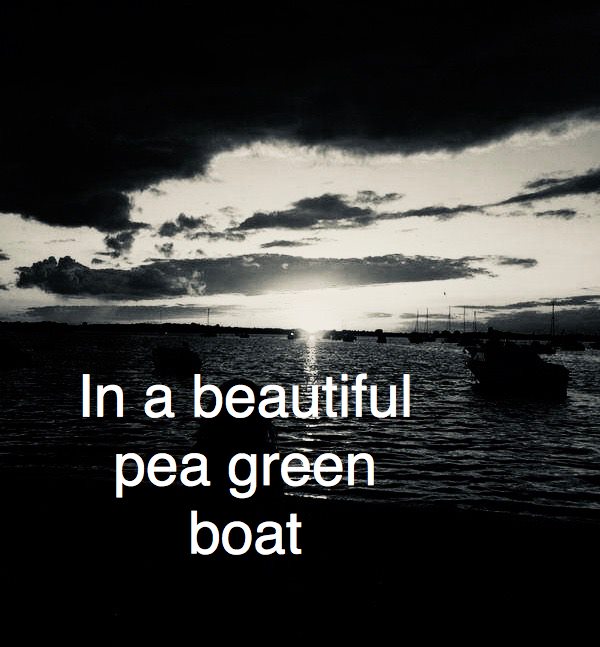
A poem by Rabindranath Tagore (winner of The Nobel Prize in Literature, 1913), called Sail Away, reflects my thoughts for today.
Sail Away
Early in the day it was whispered that we should sail in a boat,
only thou and I, and never a soul in the world would know of this our
pilgrimage to no country and to no end.
In that shoreless ocean,
at thy silently listening smile my songs would swell in melodies,
free as waves, free from all bondage of words.
Is the time not come yet?
Are there works still to do?
Lo, the evening has come down upon the shore
and in the fading light the seabirds come flying to their nests.
Who knows when the chains will be off,
and the boat, like the last glimmer of sunset,
vanish into the night?
What Maya said
14th May, 2020
“I’ve learned that people may forget what you said, they may forget what you did… but they will never forget how you made them feel.”
~ Maya Angelou ~
Rebuilt, refilled
May 13th, 2020
Right now, the whole world is scared. Because we’re losing a part of what we loved. Not least our freedoms and routines. And we loved those things, fiercely. Should we have saved back a little? Loved less? No, I don’t think so. The ruined, emptied vessels that remain when love leaves are worth the depth of its pain.
And the beauty of things broken, cracked, is that with care, they can be rebuilt, refilled. In time.
When the things we love are lost or threatened, we feel it most. In the empty space it yields, we yearn for their return. And to yearn is to grieve. And above all else, that’s the hardest thing we do.
We love by giving of ourselves. So, love fiercely. In whatever it is you do. As the late novelist, Toni Morrison, wrote in her much-hailed book, Beloved: ‘Love is or it ain’t. Thin love ain’t love at all.’
Once more unto the breach
May 12th, 2020
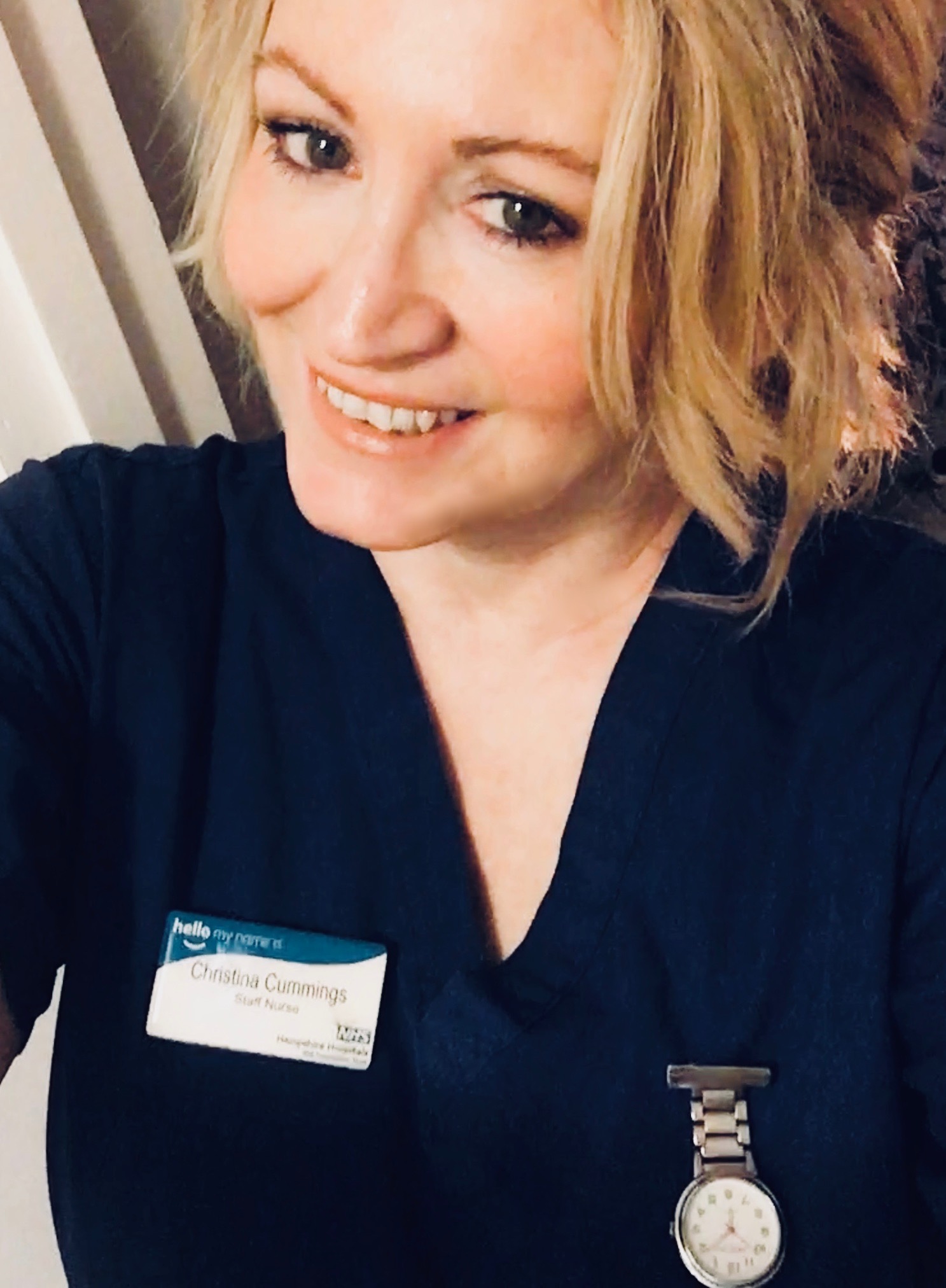
On International Nurses Day, I returned to work. Even with the stuffing well and truly kicked out of me, I felt the old pride return as I entered the ward. Not the kind of self-congratulatory pride which nurtures esteem, but a pure sense of kinship with the world. I was also scared. Yet, in no other realm can one feel more alive, than by facing fears.
Happy International Nurses Day!
Just off Pier Road
May 10th, 2020

In the seaside village of Lecanvey on Ireland’s western coast, there’s a wooden bench that faces away from the sea. And opposite, sits Staunton’s Pub, its whitewashed walls as stark as bone against the backdrop of Croagh Patrick. It was in the shadow of this holy mountain that late author, Marsha Mehran, spent her last days. William Makepeace Thackeray in The Irish Sketch Book (1842) described Croagh Patrick as “…clothed in the most magnificent violet colour, where a couple of round clouds were exploding, as if from the summit, a part of them towards the sea lighted up with the most delicate rose and gold…” Perhaps then, it had inspired her and stifled her, in equal measure. Because it was the last place she would look upon, as she wrote, sitting on the bench across the road.
Her novels, Pomegranate Soup (2005) and Rosewater and Soda Bread (2008) pay homage to both Irish and Persian culture. Immensely popular books, they were based somewhat on her own experience. Born in Tehran, she fled the country with her parents at the time of the Iranian Revolution and did most of her growing up in the United States. She proposed to an Irish bartender she met in downtown Manhattan. They were very much in love. They cooked and travelled, settling in County Mayo, supportive of one another’s work. Later, sadly they divorced.
Marsha Mehran died in winter’s coldest month, at the age of thirty-six, alone, in a rented cottage just off Pier Road. Her death remains a mystery, though those that knew her have spoken of declining mental health. In her last few years she’d withdrawn from those she loved. Writing was her way to battle demons, yet it consumed her too. In a letter to her father she wrote: “Hardly a night has passed that I have not woken up midway through sleep, body drenched in sweat, heart beating out the rhythms of some ancient tarantella inside my chest.”
There’s a photograph of Marsha hugging a very cute dog. She’s wearing dark denim jeans and a nautically themed T-shirt, unbuttoned to reveal the merest suggestion of her breast. Her eyes are refreshingly unadorned, and her smile is wide. One could say she looks very much alive. A young, internationally best-selling author with striking natural beauty, she had everything to live for. She was the only one, though, who could not see that. In, Pomegranate Soup, Marsha wrote, ‘… above all else, above all the unfortunate connotations of death and winter, the pomegranate was, and always would be, the fruit of hope.’
Heigh-ho
May 9th, 2020

Sometimes the path we choose leads us not to the destination we had planned, but to places we never could have imagined. And there are infinite paths from which to choose.
A nervous deer treads cautiously towards a road. Yet the road may be clear. And on the other side of it, a dappled glade where the light of the sun rests awhile in a forest greener than the sea.
World Food Aisle
May 7th, 2020

On my first trip out alone the other day I happened upon a colleague from the acute medical unit. Before the devastation caused by this pandemic… to health, livelihood and personal, national and global psyche, I might have said, ‘I bumped into a colleague…’, but most assuredly we kept safe distance. As safe as one can be when hastening up and down the aisles of the local supermarket. I was surprised she’d recognised me. Most of my face was covered with a hand-sewn mask. We asked each other how we were feeling and talked about work; I was anxious to know the status of PPE, since I’d been away. Respectful of the safety of other shoppers, we kept our interchange brief and to the point. We were in the world food aisle, so I popped some interesting items into my trolley and carried on my way. I messaged her later and said how lovely it had been to see her. And that it had been a little taste of normality. She agreed. I guess what we both meant was that it had been as normal as normal gets these days. Reflecting upon things, while re-stocking my kitchen cupboards, I decided that perhaps normal means balanced, but in a broad spectrum of ways. And the scales, right now, are tipped uncomfortably like some crazy simulator at a not-very-fun-fair. And that just doesn’t feel quite like normal yet to me.
But then what was normal any way?
#BeGoodDoGoodFeelGood
Sh*t Creek
May 6th, 2020

Next week I return to my job. And I have to say it’s not without some trepidation, though the silver lining in this is that I am recovered. And well enough to resume meaningful work. There will definitely be some level of anxiety as I pin the silver fob watch, my children gifted me when I first began my nursing career, to my blue uniform. I’ll be taking all precautions based on Trust policies and government guidelines, but also on some research I conducted regarding immunity status post-Covid-19. This new virus has not been around long enough for there to be any conclusive longitudinal studies. Any results at present are based purely on outcomes measured so far.
These include reports in South Korea of reinfections, which were then discovered to be false testing and a recent study carried out in China, which found that of 14 patients who recovered from Covid-19 (SARS-CoV-2), all had higher levels of IgM and IgG antibodies even at two weeks after recovery. However, there were no further follow up tests after that period, so their only evidence was that patients who recovered from Covid-19 did develop immunity for up to two weeks. Hardly reassuring beyond that, but then their study used an inadequately sized sample group, thereby lacking validity and was not useful with regard to discovering if there is longer-term immunity.
More reassuringly is evidence from a study by Kissler, et al (2020), which confirms that other deadly coronaviruses, for example SARS-CoV-1 and MERS do afford a longer period of immunity and less chance of reinfection. Moreover, induced immunity from those earlier disease outbreaks has been seen to last for up to 34 months in 86% of recovered patients (Payne et al, 2016). Even the common cold coronaviruses we’ve become accustomed to annually, provide immunity for up to 12 months, before waning off. So, only time will tell with Covid-19.
Until then, has anyone seen my paddle?
© Christina Cummings 2020
The summer we last shared
May 4th, 2020
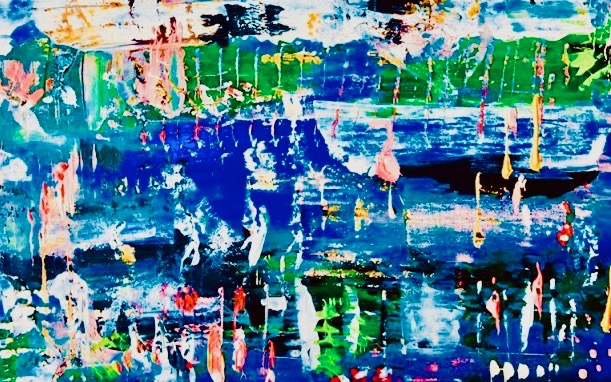
I haven’t yet regained my energies enough to paint. Although I do miss the creation of a new canvas and the culinary blending of soft acrylics on wood with the edge of a metal palette knife. Instead, I’m trying to keep the troubles of the world at bay, by sticking to a schedule. And mornings are for writing. So here goes…
The summer we last shared
A sweep of feathers, moss-green and brandy-orange, whirl past the window frame. The last flock of jays head south, driven by a cold front that sweeps towards this coast. We used to come here for weekends. You liked the ‘quaintness’ of it, you said. And the fish ‘n’ chip shops and the arcades. The rows of squat houses dodging offshore winds are painted yellow, pink and blue; the sort of shades one could neither care for nor ignore. You loved the ghostly ‘ke-ow’ of the herring gulls as they passed over the open chimney flume and the wholly intrinsic smell of the sea. We kept a collection of shells in an old transparent vase, which bore a fatal crack. We’d add to them each time. We even knew their names; Blunt Gapers, Purple Topshells, bi-valved Angel Wings and the common cockle.
In the emptied streets, summer’s late departure layers the curbs with turning leaves, clogging the storm drains. And weary shopkeepers remove the stands of buckets and spades, beach balls, rock and fishing nets, that had once narrowed the pavements of this seaside town. Faded postcards seem to offer the false promise still, of blue spotless skies. I take a walk along the front, my collar pulled high. I will forever miss the summer we last shared. Lost to us now. But despite the shortening days, winter has not yet arrived. It is the dread of things that govern people’s lives.
© Christina Cummings 2020
Lucky’s Choice
May 3rd, 2020

Breakfast time when you were here meant a heap of pancakes, fluffy, buttery ones, cloaked in syrup. It meant hot spiced tea and freshly squeezed orange, served in those little glasses we bought in France. It meant being with you. But now, the lil’ Lavazza gurgles impatiently as I search for a clean cup. They’re all ringed now, like a sea wall at low tide. Outside, dawn has not yet arrived and there’s a slow rain, so I curl under the warming bliss of a blanket and watch, through the atrium doors, the sky lighten ~ imperceptibly at first.
Last night I dreamt of you. I was in my favourite coffee house, a cosy-yet-modern-cyber-cafe just outside the soul of the city. It was empty for that time of day, the recently unoccupied wicker chairs with their Nottingham lace cushions had ceased their quiet creaking. Abigail’s caged parrot, Lucky, sleeps, his head twisted coyly to one side, as though in death. His once red-tipped wings have been cruelly clipped. The wall hung tapestry of a scene from Pride and Prejudice, catches the thinning beams of late afternoon, buffing up the coloured threads of Darcy’s saddle and the river reeds with a heavenly sheen; mint green, robin-egg blue, rose and rust. Abigail has just had the place decorated; the smell of freshly painted walls competes with the aroma of ground Arabica beans and brown sugar doughnuts and homemade bouillabaisse. I take my cup and saucer to a far table, unnoticed in the shadows, and pick up the free newspaper. I find nothing new in its well-leafed pages. I look up to see you walking by. I see you turn, but you do not see me. I rap on the window, but you do not hear. And then you’re gone. That’s when I wake. My heart is fast. My first thought is I should wash my hands. With soap. And then I think of Lucky trapped behind those bars. Though we can’t re-enter dreams, we can edit them at will. So, I picture Lucky as he sidles on his perch. I reach up and undo the metal clasp. The tiny door wide open now means Lucky has a choice. And all the while, I try not to think of you. And yet, pulling the blanket around me, the way you used to pull me close, how can I not? Blowing across the top of my cappuccino, I wonder why the world was always in a hurry. I mean the people, not the world. Why didn’t we let our coffee cool of its own accord? We rushed, didn’t we, to the next thing and the next?
The garden is visible now. As the last few drops are wrung from the lavender flecked sky, the air is filled with scents; rosemary and dill aroused from sleepy leaves and fronds. Rinsed and still dripping with raindrops, the pear trees shiver in the after breeze and beneath them the gauzy mass of wilderness sways; crowds of rough-stemmed Horsetails, mouse-ear hawkweed and pretty bryony. Clusters of nettles kowtow to the limestone walls and the seeded clocks of dandelions stand over wild pansies, which hold their petals up as if in prayer along the edges of the unmown lawn.
© Christina Cummings 2020
Upside down
May 2nd, 2020

We are often lost in our memories, even as we live in the present. They’re not merely anecdotal shards of time that we recall. They can be conjured, triggered, searched for, scanned. And, unlike the other data in our minds, they can be very surely felt.
Here’s a fictional shard of time…
Upside Down
Ynys Mon; the Island of Anglesey. Just off the northern tip of Wales. The early morning air is chilled and the sea is the kind of rough you can hear from far off past the old coast road, a raucous tinnitus of waves. I have come here to find some answers and I shall not leave until I find clarity, or failing that at least, some peace of mind. I swore this would never happen to me, but the end of Love’s affair had different plans. As often it does.
So here I am, sitting cross-legged on the shores of Red Wharf Bay with an unread paperback opened expectantly at chapter one. The sun’s omnipresent rays strain to break through the vast grey mantle of clouds that had, of late, pursued me. You might be forgiven for thinking that this is just another tale of broken love, another someone’s version of the same old yarn. But you’d be wrong.
Glance again at the scene. If you look closely at my face, you will notice that it looks a little pale. And my eyes are shot; last night I cried myself to sleep again. On my right hand you will notice a band of hammered bronze, now a little loose. And the paperback book is upside down. These are the clichés you might expect… and yet… if you have the time, perhaps you will accompany me. Back to the start. To last year, when the string of events that unfold will lead me here. To this exact spot in the sand. Only then will you understand.
© Christina Cummings
May Day
May 1st, 2020

Massachussetts born Helen Hunt-Jackson captures the essence of May in her sweetly passionate poem. Born in 1830, she became a celebrated writer, poet and political activist. In an attempt to awaken national consciousness with regard to mistreatment of the Native American people, she wrote, ‘A Century of Dishonour’, in which she described the injustices of government actions. At her own cost, she posted a copy of her book to every single member of Congress.
In 1879, in Boston, she met with civil rights leader and member of the Ponca tribe, Standing Bear, who fought, successfully, for his people to have the right to habeas corpus. This is a writ that requires a person under arrest to have the right to be brought before a judge, in order for release to be secured, if proven innocent. At the subsequent trial Standing Bear made a speech. He stood up and raised his right hand, and said: “This hand is not the colour of your hand, but if I cut it, the blood will flow. That blood is of the same colour as yours. God made me, and I am a Man, like you.“
The legal team that represented him in this land mark case offered their services pro bono. One of the lawyers was, Andrew J. Poppleton. Many years later, Poppleton, who was in failing health at the time and almost blind, recollected the final court plea he made on Standing Bear’s behalf. He said: “I cannot recall any two hours’ work of my life with which I feel better satisfied.”
Perhaps we might all have our own revelatory moment, when we reflect upon the work and the passions of our lives.
Here’s Helen Hunt-Jackson’s poem, ‘May’.
Sweet May! Without an envy of her crown
And bridal; patient stringing emeralds
And shining rubies for the brows of birch
And maple; flinging garlands of pure white
And pink, which to their bloom add prophecy;
Gold cups o’er-filling on a thousand hills
And calling honey-bees; out of their sleep
The tiny summer harpers with bright wings
Awaking, teaching them their notes for noon;
O May, sweet-voiced one, going thus before,
Forever June may pour her warm red wine
Of life and passion; yet sweeter days are thine!
No blossom blooms upon thy brightest day
So subtly sweet as memories which unfold
In aged hearts which in thy sunshine lie,
To sun themselves once more before they die.
© Helen Hunt-Jackson
Saying goodbye
April 29th, 2020
On Tuesday 28thof April at 11am there was a one minute’s silence to remember the healthcare workers who, among all the keyworkers in these unprecedented times, had died. I spent that minute on the telephone with a very good friend, who is a keyworker in the community, and together we fell silent as the clock struck eleven, in respect but mostly sadness at the tragic loss of women and men who were just doing the job for which they’d trained. Much like ourselves. I’d been unable to look at any news when I fell ill with coronavirus. It triggered a petrifying, crushing state of panic. So, I made the decision that in order to preserve my mental health and concentrate my energies on getting well I had to shut the horrors of the world outside my bedroom door.
But now, I felt that I should honour them, in some way. By knowing who they are. As I scrolled down through the many faces and read tributes from their loved ones, all I could think of was the mix of fear and hope they must have had at first, like me. And then the terror as things took a turn for the worse. It is hard, isn’t it, to bear that thought. It’s even harder to accept that, if our country and the world at large had recognised the need to be prepared, many of them might still be here. But, politics aside, it can be agreed that this new and unpredictably virulent virus and the path they chose, meant they departed this world sooner than they might have otherwise. The small mercy is they had little time to process that. Because death doesn’t just mean saying goodbye to loved ones. It means saying goodbye to tulips and runner beans, to finding shells on a windswept coast, to graceful dolphins on nature shows looping through waves, to chopping onions and grilling cheese, to a good bottle of wine, to cute dogs chasing frisbees at the park, to cocktails and coffee dates, to winning at Chess, to the sky on a clear night and trillions of stars, to bike rides, box sets, snow and hugs, to new shoes, old songs, sunbeams and autumn leaves, to rainbows… and to the work they loved.
RIP.
Note: While I was writing this, I bore one significant fact in mind: that there are hundreds of thousands of deaths around the world predominantly non-Covid related. However, Covid-19 did affect me, and it continues to affect the lives of every single citizen of this globe. In many difficult ways. And so, for the purposes of this article, I wanted to focus on the remembrance of people who did not consider themselves to be heroes. But purely good folk showing up to jobs that have been undervalued for far too long.
Four-legged Friends
April 27th, 2020
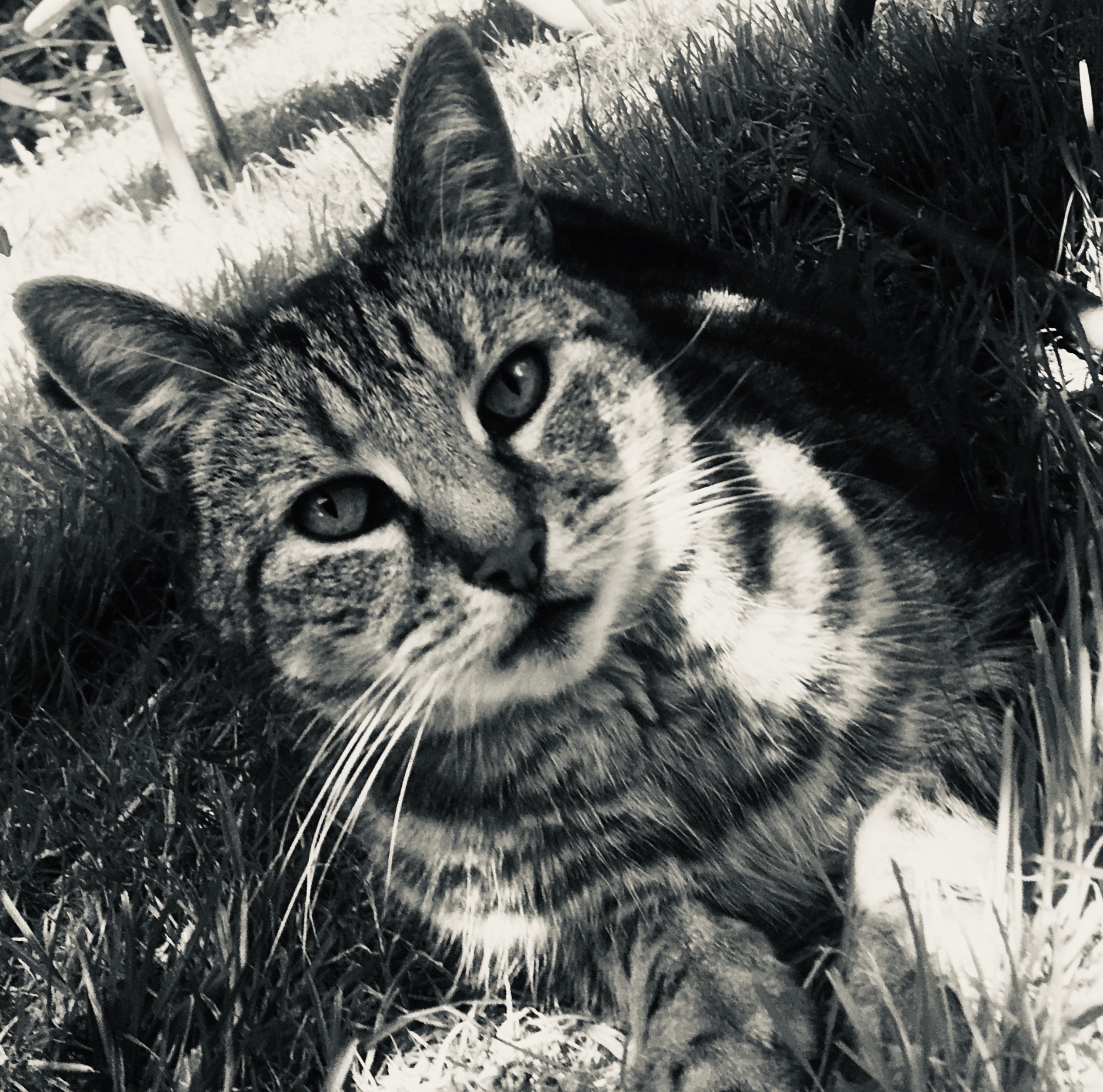
He’s too old now to jump over the garden fence, so he’s staying home like a good cat ~ and he’s excellent company too, even when he’s angling for food! He’s always there with a happy greet, like all our lovely lockdown pets 🌈🧡🐾 #fourleggedfriends #topcat 💗🐾
One wrong turn
April 26th, 2020
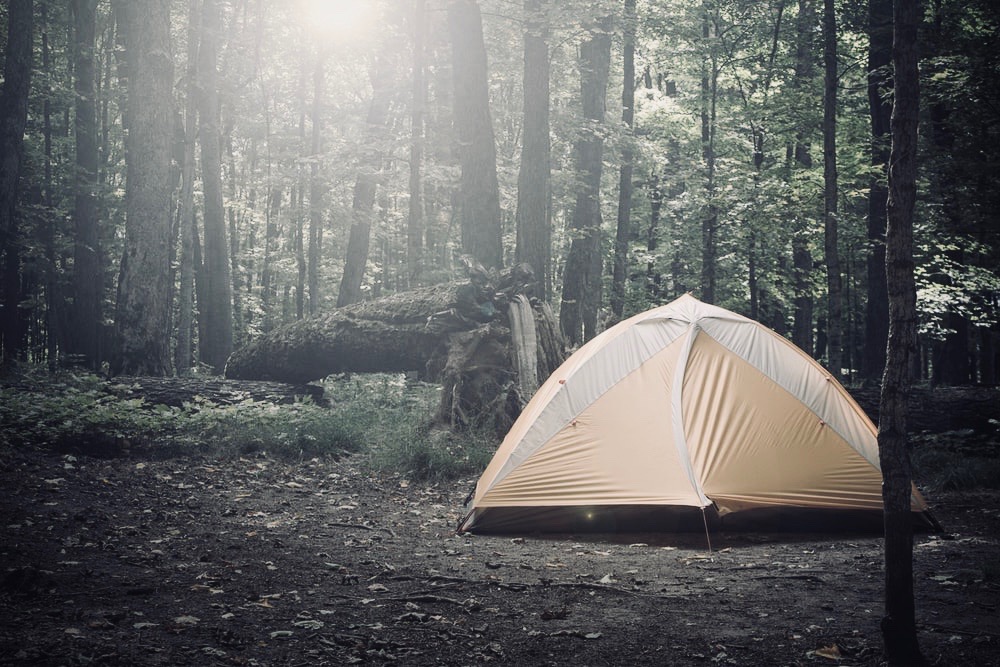
A piece of flash fiction, written in uncertain times.
One Wrong Turn
Back when I was in middle school, there was a teacher called Mr. Black. He was one of the popular ones, the kind of teacher that just gels intrinsically with the class, like he was someone’s cool older brother, a likeable guy, who didn’t need to work at discipline. The kids just always wanted to listen when he spoke. He was also my favourite teacher because he was head of the science department. He would write equations on the board, then sit down deliberately on the wooden chair behind his cluttered desk, in the centre of which stood a large globe plastered with neon post-it notes, reminders, notes-to-self, jotted down in hurried moments. Then he’d lean backwards with his hands in his pockets, one long leg crossed over the other, his trouser legs receding to reveal a pair of Formula 1 socks. He would smile at us and say: ‘What does this mean to you?’
On one hot July afternoon in the science lab, the windows were cranked open so far we could hear the First Years’ shouts as they played cricket on the games field and caught up on the soft breeze, particles of chalk dust and random filaments drifted and swirled, slow as a feather, toward the hardwood floor. The class watched as Mr. Black drew a cat in a box on the board. And beside it he wrote an equation of quantum mechanics, his lettering curly yet bold. ‘Can anyone explain this?’ he asked. ‘I’ll give you a clue. This is no ordinary cat. This is Schrödinger’s cat.’
Several eager hands shot up. Kids willed him to call out their name. ‘You!’ he said, that one time, pointing at me. ‘Go for it!’ I ached to get it right and replied carefully, ‘If you place a cat in a box with something that might kill the cat, such as a radioactive atom and then you seal the box, you won’t know if the cat is still alive or if it’s dead, Sir.’
‘Correct! Go to the top of the class!’ Mr Black said, pointing at the ceiling with a fountain pen, as he always did, his whole being shining with the genuine elation that is a teachers’ fulfilment. ‘So,’ he continued.‘Until that box is opened, the cat is, in a sense, both dead and alive. In scientific terms, it means that a theory is neither right nor wrong until it can be tested and proved. But by opening the box, we would interfere with the experiment. By influencing the experiment, we will never know the true outcome. The answer we seek. And we can apply that same principal to life. To the uncertainties we all face.’
‘Now do me a favour,’ he said rapping the board with his knuckles. ‘Always remember that’. And I do remember it. Because that was the last science lesson taught by Mr. Black. And I can’t think of Mr. Black without the concurrent image of a bloodstained tent in the woods; a bright red setting sun dripping slowly down the side of the white canvas and drying to the colour of mud. And the horror of what lay inside. The Head Teacher’s announcement at morning assembly and the subsequent gossip that traversed the school gates and the rally of whispered disbelief that lingered in the locker rooms and between the Formica trays of fishcake and chips in the canteen and around the peeling goal posts at break-time, redefined the school. From the moment Mr. Black stole God’s will, the mauve painted hallways were haunted. After that, whenever I sat in Class 7B, I would see the Formula 1 socks, the questioning grin, and the back of his head as he drew concise diagrams depicting the theory of plate tectonics or the direction of flow at the magnetic North Pole, the white chalk flicking across the smudgy blackboard, as he became the exponent of the world’s vast composition. And I would wonder if he had been nursing the idea of his death even as he had stood there and inspired us. Even as he had called out my name in class that day and smiled.
Suicide means one wrong turn. It leaves us forever questioning, not just death, but ourselves. Questioning everything we thought we’d ever known. It is a thief, whose silent removal of all assumptions leaves in its wake the footprints of doubt. Let’s be thankful for tomorrows. For being able to open and reseal that box. By looking at the things that overwhelmed us yesterday, we can reflect and own even the smallest of triumphs. At least if it all goes wrong, there will be another box. Another tent. Another chance to make it all worthwhile.
© Christina Cummings 2020
Addendum
You do not have to struggle with difficult feelings alone. Especially at this time. If you’re feeling like you want to end your life, it’s important to tell someone. Help and support is available right now if you need it. (NHS)
Samaritans
Call 116 123
Bright-lipped mouths
April 25th, 2020
Time did not permit me to work on my novel as much as I would have liked last year, but writing small bursts of prose felt attainable, necessary. I might go as far as to define my short stories as an artistic, personal expression, rather like my abstract paintings.
A short story can be anywhere from 1,000 to less than 20,000 words. Anything under 1,000 words is known as ‘flash fiction’. And longer stories of over 20,000 are called novellas. However, they all have one thing in common, they can all be considered a crafted, self-contained form in their own right, making use of resonance, plot and scene. These dynamic components of the short story evoke the senses, drawing out, for the reader, a ‘single effect’ or mood.
William Boyd is the award-winning British author of all genres, including for example the novel ‘A good man in Africa‘, the 1992 screenplay ‘Chaplin‘, the play ‘Longing‘ (which was an adaptation of Anton Chekhov’s ‘A visit to friends‘ and ‘My Life‘) and of course the short story collection, such as ‘On Yankee station‘ and ‘The Dream Lover‘. Interestingly he is also a painter, of abstract art. As he puts it: ” Short stories seem to answer something very deep in our nature as if, for the duration of its telling, something special has been created, some essence of our experience extrapolated, some temporary sense has been made of our common, turbulent journey towards the grave and oblivion.“
Right… well… here’s an excerpt from one of the short stories I wrote last summer:
Bright-lipped mouths
I search the sky for any sign of cloud and catch sight of a lone wisp, which lies to the East. A high wind gathers itself and hurries it along and then the sky is a blue cape once more, stretched over the coast and tucked in at the horizon by a slice of yellow light. I wish it would rain. It would cool everything down again. Even the fish are gasping, their bright-lipped mouths making circles in the surface of the pond.
England’s summers are very often swift affairs. It would seem the hottest days are found in spring. And then the months rove towards autumn without a even nod to our childhood days of yesteryear. Remember baking in the back seat of your parent’s car? And the paddling pool, stoic on the lawn, ever-filled with blades of grass from the soles of tiny bare feet? But this summer, well, things were different.
It all began with a thunderstorm that lasted the whole night, fizzling out, like a tired child, by the early hours of dawn. By mid-morning, it was as though the earth’s thermostat had been turned up and the kind of overbearing pizza-oven heat that takes one’s breath away engulfed us.
It’s been like this all week. And so much has happened, so many things I wish I didn’t have to face. The lounge is littered with empty Prosecco bottles, party poppers and shoes. I run the tap until the water is cold and drink a pint in one go, wiping the drips from my chin with my free hand. Over on the sofa my lover sleeps. He snores, lightly. His eyes flutter as though he’s in the midst of dreams. I smile at his helplessness, the dark shadow of stubble on his chin. The gold band around his finger is the only part of him I cannot love, mostly because it makes me unlove myself.
Upstairs Matilde and Matthew lie like spoons together on my bed. I tiptoe past their sleeping form and take some clothing from the drawer. I need to get out for a bit, get away from the collective hangover that keeps the house so quiet. At the doorway I kneel to tie my laces and marvel at the newness of my running shoes. I hadn’t followed through with my New Year’s resolutions. But I’m going to, now. I’m going to drink green smoothies, go to yoga classes, replace bacon with ripe avocados. This year everything will change. I am sure of it.
I manage a lap of the park before my chest hurts. My legs could run on, but my lungs ache and I’m gasping like those goldfish keeling in the pond. I feel heavy and old. But I keep up a brisk walk home and let myself in. No-one has stirred. There is just enough coffee to make a half pot. I inhale the earthy beans, blitz them and soak them in boiling water from a pan. And then I pop a cardamom pod into the mix and watch it bob like flotsam on a brown sea. I’d come to love the comfort of its flavour since my travels through India, when as a graduate I’d fled the notion of work for faraway dreams, staying longer than I’d meant to and returning, eventually, with hennaed feet and half the the things I owned.
End of excerpt…
© Christina Cummings 2019
Films are for afternoons
April 24th, 2020
Today, I thought I’d try some ‘free writing’. Free writing is a writing strategy developed by Peter Elbow in 1973. As Wikipedia puts it, free writing has traditionally been seen as a pre-writing technique, in which a person writes continuously for a set period of time without worrying about rhetorical concerns or conventions. While free writing often produces raw, or even unusable material, it can help writers overcome writing blocks and build confidence by allowing them to create, without fear of censure.
In other words, free writing is scribbling. Or, to quote Ray Bradbury: “Don’t think; just write!” So, with that warning in place, here’s some ‘unusable material’ that I ‘free wrote’ earlier. It’s a fictional account of a typical day in lockdown. Not my typical day, I might add ~ apart from the bit about the rice pan!
Films are for Afternoons
It’s no good. No matter how many times I scrape, some of the grains stick to the edges of the pan. The little stalwarts. I leave them there to dry. Hard. It will give me something to do later with suds and the brusque side of the cleaning sponge. There’s a little plum sauce left in an old bottle with spiky-spined dragons on the label. I remove it from the back of the fridge. A few shakes and it loosens, making lilac rain drops that arc and fall neatly onto the steaming rice and spinach stalks and the lone pilchard, already glistening, its scales flattened like tin foil along its sides.
The days pass, like this. Tea at dawn. A short walk. A book. A film, perhaps. No! (Films are for afternoons.) A yoga pose. The preparation of a meal. And, as the light dims, a hot bath, using the bar of lavender soap we bought in that gift shop at that castle near that lake… I forget the name of it now. We went to see so many, didn’t we? Was that time well spent? The bowl is licked clean. Well, who’s watching? I rescind and leave the pan in soak. I stretch my legs in the garden and notice the neighbours have erected a tee-pee for their kids. They’ve made bunting from rainbow flags. It looks the safest of havens from here.
I find an old photo album when I go to retrieve the pile of board games from the top of the book case. Still balancing on the chair, I flip it open and look through. There’s you in your University days. You always wore that yellow shirt. Slightly faded in the photo now, it was the lemoniest, no the canariest of yellows! I cried mascara onto the shoulder of it once. I turn the pages. There’s me in my dorm room. So many posters on my wall. And there’s the whistle-stop tour of Yorkshire captured on Kodak. We just made it to Robin Hood’s Bay before the car broke down. We, (well, I), had to push it the last mile in that gale. And then we set the fire alarm off at the B&B, trying to smoke cigarillos through the bathroom grill. I always suited that pixie cut.
There are some pieces missing from the Chess set. It’s one Pawn and… let me see… yes, one Knight down. Oh, and wait a moment, where’s the Queen? It’s okay, she’s here! I place her upright on the board. Perhaps I’ll do some needlework. The Singer sewing machine, I’d brought down from the loft last year, had sort of become part of the furniture. I lift off the potted plants I’d rested on its spine and remove the plastic sleeve. I’ve been meaning to alter some of my summer clothes, but before I do I’ll finish watching Britain’s Favourite Dogs. With a small gin. Everything else can wait. For now.
© Christina Cummings 2020
The Laughing Heart
April 23rd, 2020
On April 2nd, while on my break at work, I wrote my own eulogy. Working in the environment of an acute medical unit without the necessary protection was some scary stuff. On the evening of April 3rd I fell ill. With Covid-19. Today, twenty days later, I’m filled with a very basic human gratitude for my survival. I’m in awe of my family and how incredibly well I was looked after. Despite the risk to themselves, they never shied away from making sure I was okay. I’m scared for them too. I am still suffering from the physical effects. And I have what’s known as ‘survivor’s guilt’. Mentally we’re all being challenged. And in different ways, at different levels our whole lives are changed. One thing that keeps me grounded and safe is writing. Perhaps that’s because it’s the one thing I can control. And reading has helped me too. I used to have a thing for Charles Bukowski’s poems. So here’s one, called The Laughing Heart.
Your life is your life
don’t let it be clubbed into dank submission.
be on the watch.
there are ways out.
there is light somewhere.
it may not be much light but
it beats the darkness.
be on the watch.
the gods will offer you chances.
know them.
take them.
you can’t beat death but
you can beat death in life, sometimes.
and the more often you learn to do it,
the more light there will be.
your life is your life.
know it while you have it.
you are marvellous
the gods wait to delight
in you.
© Charles Bukowski
Earth Day
April 22nd, 2020
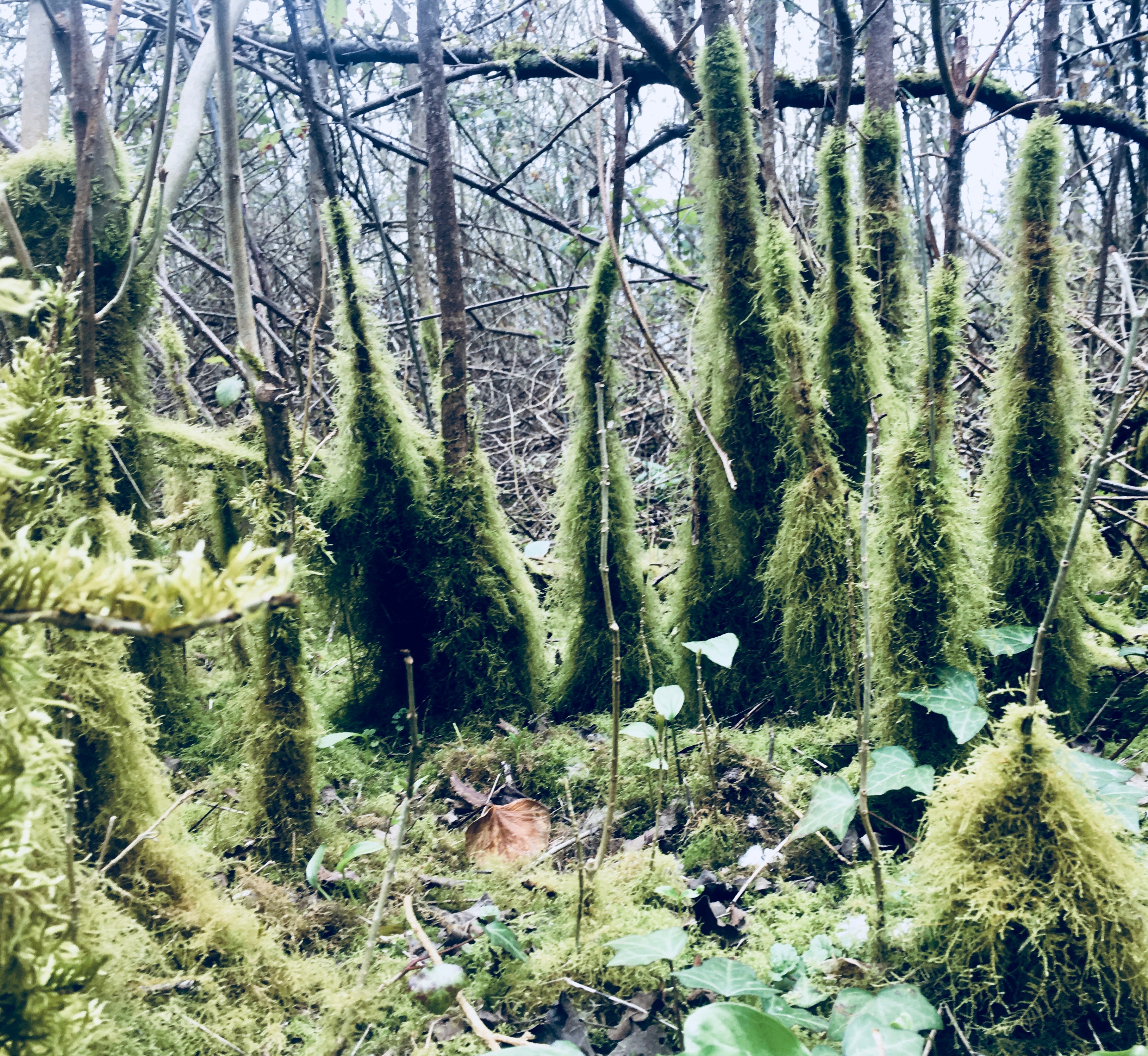
The rain-washed terrace smells of childhood summers; wetted concrete and steaming topsoil and the innocently unacknowledged scent of un-named flowers. It is a hothouse of undergrowth, where tiny creatures go about their day. Woodlice and oil-green beetles and bristly millipedes, scurry and weave their way beneath the shelter of some enchanted ancient forest. As though ripped straight from the pages of a children’s book, a ladybird, as red and as round as a droplet of blood, ascends the hairy stem of a thistle. I count its spots; seven; a Coccinella septempunctata species, and quite common. Casually, it pauses at the pinnacle, then with natural grace and a speed too quick for my morning bleary eyes, it flits its four wings and is gone. As I sit out here with my cup of Thai iced tea, my bare feet resting on the handles of an upturned barrow, my back against the moss-swathed rockery, I feel a part of their world, and I imagine, if I listen very closely, I can hear the whole garden breathe.
© Christina Cummings 2020
Forget-me-not
April 19th, 2020

“And once the storm is over, you won’t remember how you made it through, how you managed to survive. You won’t even be sure whether the storm is really over, yet. It will be, soon. And one thing is certain, when you come out the other side, though you won’t be the same, remember, storms draw something out of us that calm seas don’t.” #quote #forgetmenot #heroes
Greeted by a sea of the bluest forget-me-nots, on my first short walk outside the house today, I took a moment to remember those who didn’t make it through the storm, this time. 🌸💙🌱🙏🌿
A humble orange was my symbol of hope
April 16th, 2020
As I continue to recuperate, mentally and physically, from what I can only describe as the most brutally terrifying and debilitating period of my life, I have to thank my wonderful children for holding the fort and for nursing me back to health (from a safe distance). The photo is of a typical snack left outside the door of my room, full of vitamins and minerals to help my system fight the virus. My thoughts are with all those who have also been affected by coronavirus and my incredible colleagues in the NHS and around the world, who continue to fight this pandemic with bravery and professionalism despite fears for their own safety. To those whose lives have been tragically taken abruptly from their loved ones… may peace now be yours. To everyone doing their bit to help, from staying home to random acts of kindness on behalf of others, and to those who’ve kept working to provide me for instance with my humble orange, so much gratitude.
Old book sleeve
April 12th, 2020

How can I ever thank my children for saving me this week? I keep saying ‘week’, but I’ve been unwell now for 10 days with coronavirus. I looked back at the acknowledgement I penned at the start of a novel I wrote in 2003. It was written when they were 10 and 6 years old. It still rings true now, and it goes something like this:
“Thank you to my son, Tristan Oliver Cummings, for your unconditional faith in me, for your unwavering belief in doing the right thing and for your heartening humour when mine is lacking. You sustain my spirits, even through the bleakest moments. To my daughter, Seren Aurora Francisco Cummings, thank you for peaceful and industrious company, for your calm curiosity and for living up to your name; a shining star of serendipity in abundance. You inspire me with your tenacious resolve. You both gave purpose to completing this book.”
You both give purpose to my life.
And both of you are the true heroes here.
My week so far
April 11th, 2020

A “poem”, entitled ‘Fuck this shit’ by Christina Cummings
Day 1
Struggling through work (ironically, finally wearing correct PPE)
Headache, irritability, nausea.
Stomach pains.
Day 2
Called in sick
Severe headache
Feeling of uneasiness
Fever
Day 3
Eye pain
Fatigue
Fever
Chills
Swab tested positive at the coronavirus drive thru’ screening at BNHH (pictured)
Day 4
Fatigue
Fever
Eye pain
Panic
Day 5
Fatigue
Fever
Generalised Anxiety
Unable to lift arms
Day 6
Severe fatigue
Fever
Anxiety with Depression
Desperation
Day 7
Severe fatigue
Fever
Anxiety
Depression
Loss of appetite
Suicidal thoughts
Day 8
Severe fatigue
Fever
Dry feeling in centre of chest
Anxiety
Depression
Loss of appetite
Anger
Suicidal thoughts
Day 9
Fatigue
Fever
Tearfulness
Loss of appetite
Anxiety with depression
Suicidal thoughts
Over 11lbs weight loss
Weakness
Severe nausea
Rash
Day 10…
(N.B. This wasn’t really a poem, nor is it my finest writing, obviously… but a brief account of the pure hell and terror that is my situation at the moment.)
Oh, sweet pie!
April 3rd, 2020
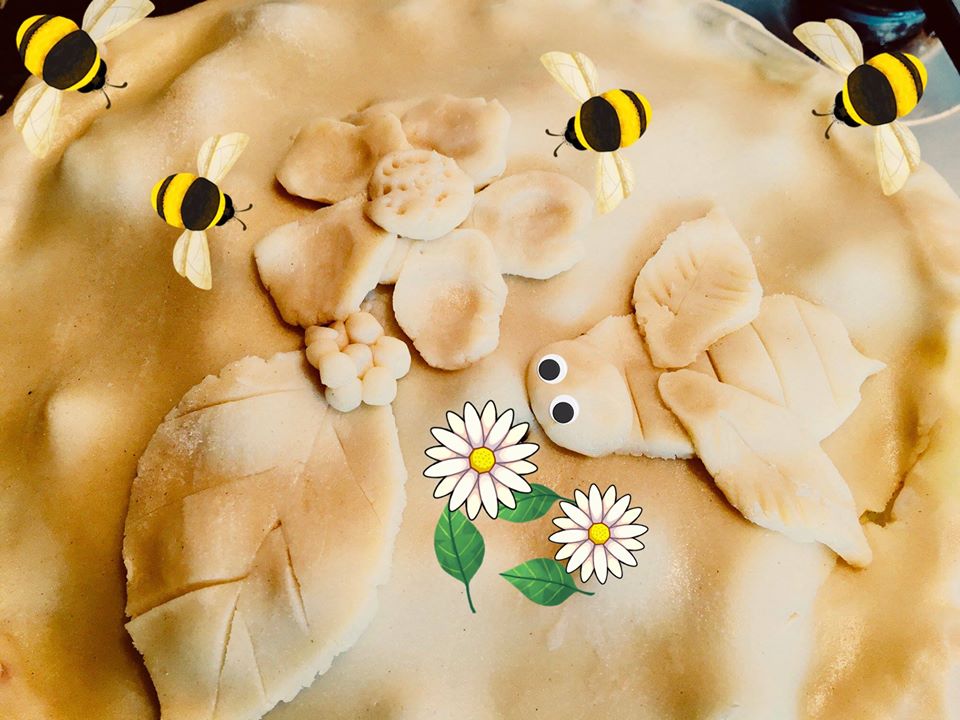
I was reading some poetry the other night. This one transported me to late summer days and slow walks. Buddy would dart between the brambles as we reached for the ripest fruits. Trying to pick the biggest berry gave us small scratches and blue-inked fingertips. Then the proud walk home: ‘There’s enough here to make two whole pies!’ With Bramley apples, peeled smooth, and a cascade of sugar (just enough to taste), the pastry was rolled. Oh, sweet pie! You’re something to look forward to.
Blackberrying – A poem by Sylvia Plath
Nobody in the lane, and nothing, nothing but blackberries,
Blackberries on either side, though on the right mainly,
A blackberry alley, going down in hooks, and a sea
Somewhere at the end of it, heaving. Blackberries
Big as the ball of my thumb, and dumb as eyes
Ebon in the hedges, fat
With blue-red juices. These they squander on my fingers.
I had not asked for such a blood sisterhood; they must love me.
They accommodate themselves to my milkbottle, flattening their sides.
Overhead go the choughs in black, cacophonous flocks
Bits of burnt paper wheeling in a blown sky.
Theirs is the only voice, protesting, protesting.
I do not think the sea will appear at all.
The high, green meadows are glowing, as if lit from within.
The only thing to come now is the sea.
From between two hills a sudden wind funnels at me,
Slapping its phantom laundry in my face.
These hills are too green and sweet to have tasted salt.
I follow the path between them. A last hook brings me
To the hills’ northern face, and the face is orange rock
That looks out on nothing, nothing but a great space
Of white and pewter lights, and a din like silversmiths
Beating and beating at an intractable metal.
Sylvia Plath
The night shift eulogy equation
April 2nd, 2020
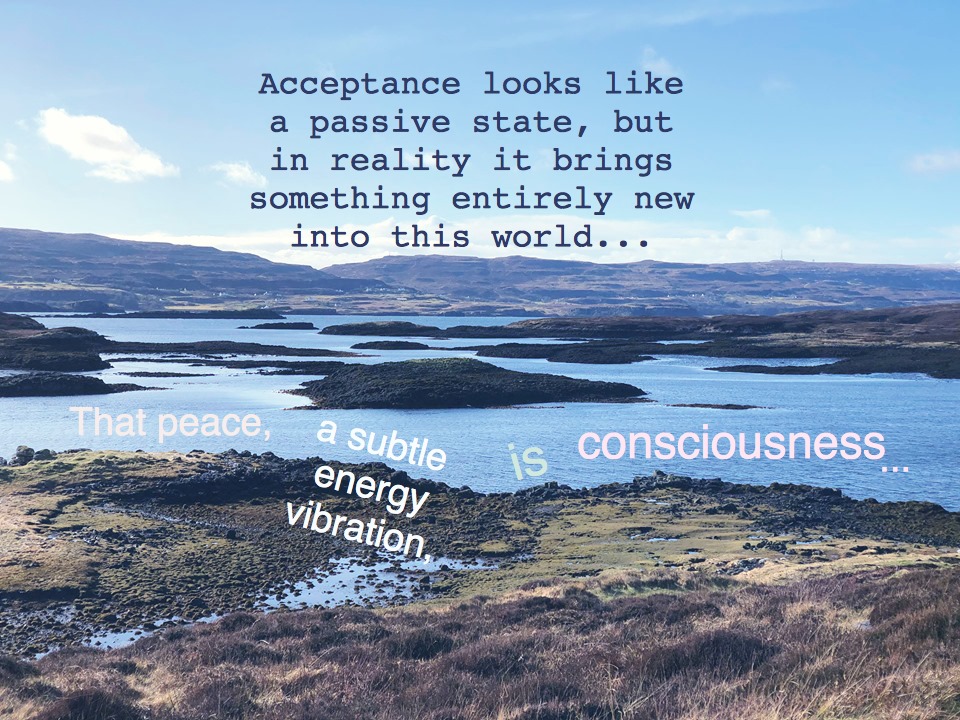
So I wrote my own eulogy. It was more of a bio really, because in order for it to be a true eulogy, it would need objective praise and anecdotes. As I wrote though, it became clear that it was less about me, and more a kind of goodbye to the people and places that have touched my life. It was around 3 a.m. on a second nightshift, so, what with the disturbed circadian rhythm, low blood sugar levels and a deep melancholia for the recent, untimely and sudden death of my loyal canine sidekick, the general terror of unprotected nursing, blurred guidelines and abandoned policies within this global pandemic means it wasn’t as macabre as it sounds. It seemed fitting to contemplate my demise, my fate, if you will, at the hands of a novel virus. And, I wanted, overwhelmingly, to assure my loved ones that I was okay* with that. That, in some ways, to curb my own seismic panic, I should quickly find acceptance. It’s not as straightforward as it sounds. There’s a glitch in the equation, in that, I don’t actually want to die, quite yet. Who does, really? It doesn’t seem fair does it that we have arrived at this point? But I overheard a wise person once, who said: ‘Who promised you fair?’
*hmmm
Locked Down
April 1st, 2020

Although my work at the hospital does not permit me to remain locked down, I’m thankful for my days off, spending time with family ~ cooking, walking, playing games and watching films. But in the quiet moments, though my painting is on hold, I still love to write. Writing helps me regain a sense of normality in these deeply frightening and surreal times. Originally written in 2014 as part of a novel, this piece of writing about two young brothers, encapsulates the sense of disconnection within relationships, the toll of mental health issues and the inescapability of bonds. During the editing process it ended up on the proverbial cutting room floor, so I decided to rework it into a short story entitled ‘Tracks’. This is an excerpt from that.
There’s a small crack in the door, just below the handle. Daniel doesn’t know it’s there. Erased by the light inside his room, it can only be detected from the outside, from the silent boards of the third floor landing, where the cat treads as she hides from Munster’s jaws. It’s through this thin portal that I have spied on him. I’ve waited for the day his head would turn and his eyes would look to mine, like darts, as if to say, ‘I know you’re there.’ But, he never moves. He is still; a soft statue with a Christopher Robin profile and sandy hair that spills over his collar as the weeks slide.
‘Munster!’ (It’s my mother’s voice.) ‘Is that you up there?’
I try to hush my heart as she starts to climb the stairs, but a bark from the backyard saves me. And then I hear the gate screech, and Munster’s yelpy greet, muffled by the rush of brittle leaves caught in the swell of a light wind. I picture him jumping up, his front paws splayed, his tail a crazed rudder, while the guest politely pats him down with the words, ‘Good dog!’ Funny that, because Munster’s pretty bad most days.
A tiny damp nudge, just below my elbow startles me. Treacle has arrived. She winds herself around me, pressing her body against my thighs. I run the cupped palm of my free hand down the length of her spine, urging her to settle. Perhaps today she’ll give the game away. Perhaps an innocent mewl is all that it will take. Downstairs the kettle whistles. Cups clink and the fridge door opens; my mother likes milky tea. She calls it char.
‘It’s not too early is it?’ I hear her say, and then the fridge door closes for a second time, and a cork pops. I look at my watch. It’s half past four.
I press my face against the plane of the door, so carefully I’m hardly moving. Barely breathing. I can see more of the room this way. Over by the wall, the rocking chair is motionless and beside it, the bed, its jay-blue sheets tucked in at the corners, like a parcel, looks unslept in as it always does. And under the window seat, the painted station is deserted now, save for the tiny conductor, who waits for the cue to wave his plastic flag. His jacket looks worn, and there’s a chip on his left shoe. Last time I looked, he’d fallen down, been knocked perhaps; a toy corpse lying across the tracks. At least that means that Daniel can still notice things. At least he can still move his world around.
Laughter and cooking smells ascend the staircase. Half a bottle has been consumed and an onion has been chopped. We’re having mince and mash. I watch Treacle’s tail twitch and decide it’s time to leave. I drag myself away by sliding on my knees, until the top step and then descend, backing away in defeat. I miss my brother. I’m lost to him… and him to me.
‘It’s dinner time.’ My mother is standing at the bottom of the stairs, flipping a tea towel in the air. Her cheeks are pink. When I reach her, she just holds out her arms and hugs me. She’s lost to him too. But she still has me.
***
It wasn’t always like that though. Childhood is a rock pool. Hidden by a mirrored surface, it is a place where early days can merely be glimpsed now, shadowed by mood and memory. Daniel did eventually join us. There was no build-up, no ceremony. It was just an ordinary day. I’d been playing with Lego. A window frame. Bright blue. I was making a factory for my toy cars, but had run out of pieces for the roof, so I’d been lowering the walls. And my mother (I’d stopped saying ‘our mother’) was standing at the grill, turning pink rashers of bacon with a wooden tong. Eggs were crackling on the stove.
‘How hungry are you, Thomas?’ she asked me.
‘Medium,’ I replied, looking out through the kitchen window from the vantage of my breakfast-bar stool. And when I looked back, he was there. Sitting right beside me. He looked at me and blinked. I heard the wooden tongs clack against the vinyl floor. I watched my mother take another plate from the cupboard and pour a second glass of juice. And that was it. I remember thinking, as I’d scraped up the last bit of yellow yolk, we were a proper family now.
© Christina Cummings 2020 An excerpt from ‘Tracks’ ~ a short story.
The Light
March 26th, 2020
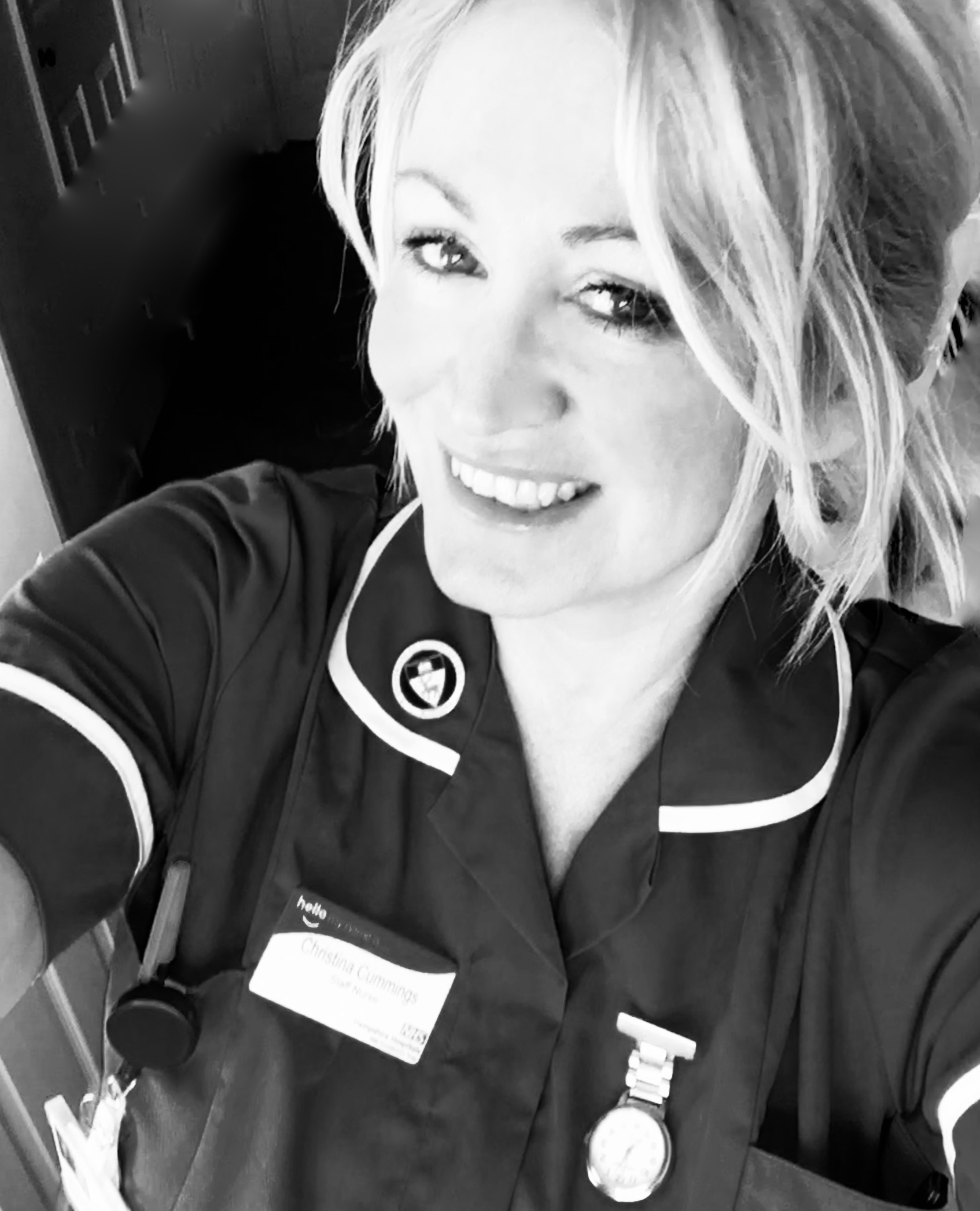
“Hope is the thing with feathers that perches in the soul, and sings the tunes without the words, and never stops at all. Faith is the bird that feels the light and sings when the dawn’s still dark.”
~ Emily Dickinson and Rabindranath Tagore ~


Up off the floor
March 20th, 2020

I was twenty-three years old when news reached me that my father had died. He was fifty-nine. I was volunteering at an orphanage in post-Ceaușescu Romania at the time. One afternoon, as I sat with colleagues on a tea break, I was called to the director’s office, wondering what it was I’d done. I’d been warned already about my attire; apparently the slashed denim just below the back pocket of my jeans, though de rigueur for 1990, was deemed inappropriate. As I was led along the gruel-coloured halls I prepared to defend my choice of clothes citing they were all I’d packed with me and that all young Romanian women would soon be wearing them too. In any case, I’d taken to donning a pair of bubble-gum-pink boxer shorts underneath my jeans, as they were en vogue back then too, so that no bare flesh was revealed.
The director indicated for me to sit. His office was orderly to the point of extreme. Each book, the lay of the functional furniture, the hang of a faded landscape painting on the wall above his desk, the placement of a heavy looking ashtray lined with half-smoked cigarettes, all seemed strategically arranged. He adjusted the height of his heavily padded, black leather swivel chair and leaned forwards. ‘Your father has died,’ he said.
Delivered with such brevity, one could say that it was very much to the point. And the tone; it was solemn but matter-of-fact, in a ‘Your soup got cold’ kind of way. Back then, a letter would have taken two weeks to arrive and phone calls had to be pre-booked. Somehow my uncle had managed to contact the hotel where I’d been staying and a fellow volunteer there had traced me to the orphanage.
It was the one-year anniversary of Nicolae Ceaușescu’s downfall. The austerity measures under his communist rule had all but ravaged the country. People were still queuing for bread. Early protests in 1989 had led to riots and street violence as the people and the military clashed. With human rights restricted, including censorship and the invasion of privacy by the secret police, or Securitate, people felt (were) suppressed. Furthermore, Ceaușescu had enacted an appallingly aggressive natalist policy, which included the banning of contraception and abortion and even taxing the childless. These draconian policies resulted in the deaths of over 9,000 women and over 100,000 children were put into orphanages by heartbroken parents who could not afford to raise them.
Not only was food rationed, but electricity and gas supplies too. In the cities, people turned to ‘butelli’, or charcoal stoves, to heat up soup or to warm their bones. Food shortages were the result of crops being exported, albeit under-priced, in a bid to fund industrialization and clear the country’s debts. Sunday curfew was instated and television, one of the few distractions and pleasures, was reduced to one single channel broadcasting sensored programmes for just two hours each day. Everyone worked hard to do their best but, still, life was incomprehensibly harsh.
By December 1989, cars were burning in the streets. Flames reached into the sky, like desperate hands. Smoke drifted through broken window-panes filling homes with fear and hope. Days passed in gun shots, threats and bullet holes. The words ‘Down with Ceausescu’ were carved into freshly fallen snow. Until, on Christmas Day, in a courtyard, the people’s wish came true.
One year on, and a coup was taking place. Flights were grounded. And now the lines were completely down. I was stranded at the airport. If it hadn’t been for the benevolence of a British Airways pilot flying journalists and charity workers back to the UK, I’d not have made it home. I remember being helped up off the floor of the departure lounge by my new friends, hugged goodbye and bundled onto the plane. I had no strength left. Let’s just say, the two days I’d spent in shock, trying to fathom my father’s death and ponder its cause, had all but consumed me.
As the plane took off and headed to Heathrow, I felt I’d been hollowed out, my spirits crushed, every cell of my body depleted and my psyche drained. Dwelling on a person’s demise, as a result of being spared the details of their final throes, becomes an obsession. The surprisingly few ways in which we might actually die, become overwhelming when the disturbingly unique circumstances to which they can be applied are imagined. It is, though, a natural reaction to the striking bewilderment that death affords us. The effects of this experience have lasted to this day, in the form of a debilitating, excruciating anxiety which I’ve tried every day since to stave ~ not always successfully. And yet, there are moments of serenity and calm. Though rare, they are beautiful, where life feels okay again.
In reality, death’s threat is always there. But right now it’s like watching a burning arrow coming straight for us, no? I know I’m not alone. We’ve all faced our own individual challenges. And now, Covid-19, which has been hurtling towards us like a slo-mo tsunami viewed from a previously safer shore, unites us. And more scarily divides us too. Without applying any explanation to the following list, I think we can all agree that it has brought with it, in no particular order: denial, prejudice, bravado, suffering, queues, anger, stupidity, humour, random acts of kindness, soap, political division, panic, financial ruin, grief, camaraderie, community spirit, bravery, loss and fear.
However we deal with this, we owe it to ourselves to honour our time on this precious planet earth, and all the years spent trying to be human, and the plans we make in spite of uncertainty. For in doing so, we are surviving. And in this frightening storm, as we hold close all that is dear, let’s literally and metaphorically help each other up off the floor. Let’s relish, if we can, the ordinary moments, while they’re still ours. For whatever happens, we will find calm once more.
Soft skitter
March 15th, 2020
At my writing group a few week’s back, I wrote a short imagery piece about an old dog quietly waiting for food. I had no idea at the time that my own four-legged friend was in fact that dog. I hadn’t noticed he was getting old… or rather, I’d tried not to.
Half moons, once white, underscore his milky-eyed stare. Hopeful brows regard me. Yet he’s still now, as I move pans above the blue flames. I reach for a wooden spoon and he is betrayed by a twitch. And then the glimpse of his tongue, as I stir. His eyes wander to a place just beside the dresser where the boots are kept and where I place his bowl. ‘Here,’ I say, watching him rise stiff-legged; his claws make a soft skitter as he crosses the linoleum. ‘There you go.’
I can barely write this, as I don’t want it to be true. But on Friday, my heart was broken completely by the sudden loss of our most beloved and treasured friend. More than a friend, he was central to our lives. My children and I were gifted, ten years ago, with the sweetest, most loyal and loving soul whose unconditional love and joy for life saw us through some of the hardest times and shared with us so many happy, contented moments, cherished always now. Wherever he went he made people smile, such was the effect of his pure-hearted goodness. A blessing in this world. The kindest brown eyes and the waggiest of tails – we just want them back – but Buddy’s time had come, and I am so thankful I was there with him, holding him through his final moments, so he wasn’t scared. His ‘siblings’ were able to whisper their goodbyes into his ear via my phone. He heard them, and I could see his love reflected back before he peacefully died.
This quote literally saved me, and will continue to comfort me in this truly awful void… ‘When you are sorrowful look again in your heart and you shall see that in truth you are weeping for that which has been your delight.’
Rest in peace, Buddy.

It’s okay…
March 12th, 2020
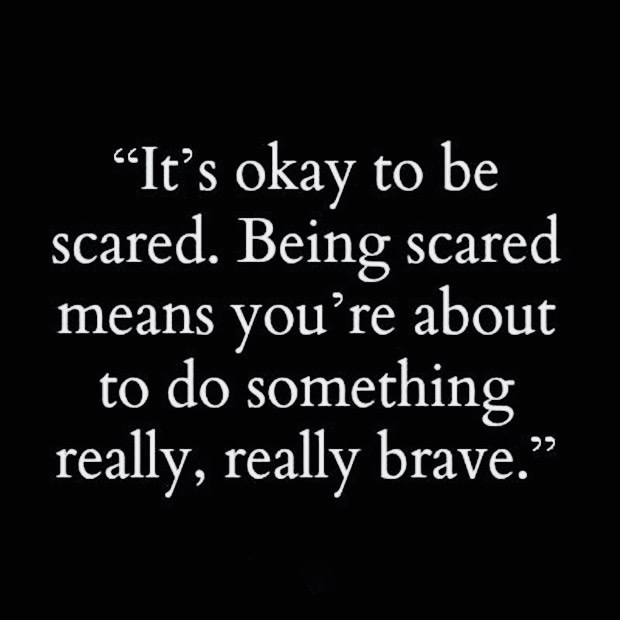
To Quote or Not to Quote…?
March 10th, 2020
‘Instead of bracing for catastrophe, respond to the challenge.’
A quote befitting for the weeks ahead.
That’s all.
Silent Cacophony
March 8th, 2020

Your office; it’s exactly how you left it. All the smiles that beam from silver frames still watch over the pile of unread books and the souvenir bowl, filled with pinecones and paperclips, tiny shells and foreign coins.
Your chair, with the small rolled cushion, ergonomically placed to save your back ~ it feels wrong to sit here. Yet I do. Placing my elbows on the wooden desktop I’m filled with my own importance… and the loss of you.
I pick up the paperweight which holds down your list of things to do, quietening them, keeping at bay their urgency ~ suspended now, like a lull in the breeze where rolling leaves are stilled before they’re lifted up again, moved and tumbled.
It is as heavy as a river rock in my hand, and just as smooth. And no matter how hard I squeeze, the glassblower’s breath is trapped inside as though that last exhalation has been sealed in a silent cacophony of bursting purple flowers pointing skyward like saxophones tilted towards an open window, spotted from a plane.
© Christina Cummings 2020
Still life
February 14th, 2020
The walls of the hospital chapel* are a nauseous over-ripe peach, a warm shade at least, chosen perhaps for its non-clinical feel. It is past its open door that in the dark hours of a winter’s morning shift I walk along the corridor towards Nightingale Wing.
I’m not sure why, but today I turn back and wander in, my fingertips still numb from scraping the windscreen of my car. I feel them thaw. Sometimes we do things in a moment of spontaneity without cause or reason. But it feels as though I was meant to be here, like an appointment had been made. And I can’t help thinking that, in here at least, there is something of a quiet haven.
I take a seat on the end of the wooden pew. And my first thought is how tired I feel. Factoring in the sleepyhead-pre-coffee-fatigue of early morning starts, my age, and the fact I was on my second long-day shift, I decide it’s none of these. These are more transient or they can be accounted for, managed. No, it is an altogether deeper sense of itself; a weariness to which these things cannot be attributed. But why the need to just sit here awhile? And why now?
Literary critic and medical historian at the University of Kent, Anna Katharina Schaffner, Ph.D., has some answers to this. Her book, Exhaustion: A History, studies the ways in which medics and philosophers explain how the limitations of mind, body and spirit govern our lives. It makes for an interesting exploration. At times, she suggests, we all feel side-swept by exhaustion: through circumstance, illness, worry, disappointment, monotony, grief, depression and fear. We can, it seems, become too concerned, too intense, too involved and too internally conflicted for our own good. Energy drains from us and we feel the loss of it in ways that remind us we are not the machines that today’s goal-obsessed society would have us believe we must be.
Exhaustion affects even the happiest most optimistic souls. It does not discriminate. It can be seen in the pain on an athlete’s face, heard in a baby’s tired sobs, felt in our own exhalations. So, what is exhaustion’s proposed remedy?
It is, perhaps, a return to self, by way of disconnection, albeit temporarily, from the relentless need to feel a part of things. Sitting with ourselves and letting ourselves just feel, without judgement. Metaphorically ‘stepping off the world’. If only for a little while. In holistic terms this means maintaining balance; rest and physical exercise, healthy eating and the indulgence of treats, meaningful tasks, work and playfulness. Resting the mind, or meditation, is not just found in the Lotus position alone, it can be practised by listening to music or taking a walk through the trees. And importantly, spending time with loved ones, indulging our hobbies, cuddling a pet: these things too can energise. The acceptance of our own ever-changing levels of motivation and resilience and the ability to self-soothe can restore and bring peace to our lives. Recognising the value of self-care is the key to this.
I rise from the pew and head to the ward with renewed vigour, strengthened by a moment of solitude and the knowledge that all of us bravely tread the same wheel of balance. And in some ways this unifying fact reassures. The temporary despair of fatigue can also be a gift. A reminder perhaps, that the cure is found in the abundance of love and understanding that we give to ourselves.
* The Royal Hampshire County Hospital in Winchester provides space for all faiths and non-faiths to seek comfort in contemplation or prayers.

On the other side of fear
January 28th, 2020

Some worrying times we’re facing ~ not only our own struggles and those of the ones we love, but globally: people we’ve never met are, in many corners of our world, suffering and scared. Sometimes the worst does happen. But, for the most part life affords us a wonderful opportunity to live fully, in the face of all our fears. And, there’s no better time than the present, to be brave. Or at least, to try.
The Last Goodbye
January 27th, 2020

This painting by writer and artist, Edith Birkin, is called ‘The Last Goodbye’. Born in Prague, in 1927, she enjoyed a happy childhood, until at age fourteen, she was one of hundreds of thousands of people sent to concentration camps. Here, she was denied her human rights, made to work in an underground munitions factory and robbed of her youth and her loved ones. Upon her liberation from Auschwitz she returned to Prague, only to discover that none of her family had survived.
She went on to become a teacher, an artist and a mother, studying art history and writing several works of poetry in response to her experience. Her vivid paintings reflect the universal sense of isolation, separation and loneliness that we all can feel at times. And, of course, the miracle of survival.
‘The Last Goodbye’ needs no words.
Holocaust Remembrance Day 2020
Simple Pleasures
January 24th, 2020
As writer and philosopher, Alain de Botton, recently said:
“The point of staring out of a window is, paradoxically, not to find out what is going on outside. It is, rather, an exercise in discovering the contents of our own minds. It’s easy to imagine we know what we think, what we feel and what’s going on in our heads. But we rarely do entirely. There’s a huge amount of what makes us who we are that circulates unexplored and unused. Its potential lies untapped. If we do it right, staring out the window offers a way for us to listen out for the quieter suggestions and perspectives of our deeper selves. Plato suggested a metaphor for the mind: our ideas are like birds fluttering around in the aviary of our brains. But in order for the birds to settle, Plato understood that we needed periods of purpose-free calm. Staring out of the window offers such an opportunity.
The potential of daydreaming isn’t recognised by societies obsessed with productivity. But some of our greatest insights come when we stop trying to be purposeful and instead respect the creative potential of reverie. Window daydreaming is a strategic rebellion against the excessive demands of immediate (but ultimately insignificant) pressures – in favour of the diffuse, but very serious, search for the wisdom of the unexplored deep self.”
One of my life’s simple pleasures is watching, from my kitchen window, a small herd of cattle graze while I do the washing up or wait for the kettle to boil. These beautiful creatures have been lovely, friendly neighbours over the last few winters ~ introduced for grazing, which helps to protect the bio-diversity here. Whiteshute Ridge also happens to be one of Hampshire’s few remaining areas of chalk downland. More can be discovered here: Whiteshute Ridge
Diversion
January 21st, 2020
Sometimes, on a cold, frosty morning, I like to indulge myself with a cup of hot green tea, a cosy, fluffy blanket and a chance to work on my writing; in this case, the makings of a thriller…
‘Come on,’ I whisper to myself. ‘Keep going.’
My words and my quick shallow breaths steam up the inside of my car ~ it’s like I’m driving through a coastal fog. My windscreen wipers, like frantic waving hands, swish before me to reveal an orange sign. Nailed to one of the fence posts on the approach road, I can just make out the word, ‘Diversion.’ Cursing quietly, I follow the red tail-lights in front and resign myself to driving a convoluted route. Traffic, in a long, cautious, copycat-tail, circumnavigates the old mining town, the many wet wheels rotating in empathetic synchronicity. Slow lines of cars and lorries crawl past suspiciously. The town centre is cordoned off, like a crime scene. Copper beech trees that line the overpass, shrugging off their aged leaves, their frigid branches reaching out wide, like eager fingers, seem to sigh guiltily then retract in submission. The winter sky has sallowed and the timid garden birds are already flying south.
I pull into a garage. I need to refuel. Paying for a top-up of unleaded petrol, a steak and onion pasty and a can of coke, I notice the cashier has an uneasy look, his eyes roving in small concentric circles, his fingertips too quick.
‘You headed south?’ he asks.
‘North, actually,’ I say, peeling back the tab and taking a mouthful of generic cola. Being on the road somehow permits, promotes even, the consumption of junk food. ‘This diversion is a nuisance though, isn’t it?’
The guy is using an old till, tapping on a loud keyboard with such deliberation, his lips purse, as though he’s reached the centre of a sherbet lemon. ‘The roads are bad tonight,’ he says, ‘take good care.’
I swallow, and the fizz hits the back of my throat, burning, like cheap mouthwash. I take my change and head for the door. As I pass a pyramid of oilcans and bags of briquettes, I notice his reflection in the smeary glass; he is looking at me, one hand rubbing at his temples and the other hand reaching for the telephone. His words trail along behind me, like a stiff-legged, stubborn dog: ‘the roads are bad…the roads are bad…’
I know the roads are bad.
The diversion takes me all around the old wooded copse, and along the by-pass, past a hotdog van and a dilapidated pub, and then a church comes into view, its tarnished metal spire stabbing the heavens. The traffic speeds up now. With one hand on the wheel and one hand holding the pasty to my lips, I take a bite. Pastry crumbs flutter to my lap. Chewing on a chunk of gristled beef, I pass a group of fluorescent clad workmen, standing like a herd of cows beneath the vast canopy of an ancient fir. And then illuminated in my headlights, for just a moment before it skims past my car, the signpost, ‘Welcome to Glem, please drive slowly.’
I try not to think of her as I pass by. Or of what transpired there. It’s only when I reach the motorway, I let her face come into view. And my foot goes down, and I’m racing full sail across the wavy landscape towards home. I tune the radio, to match my mood. A violin concerto seems appropriate; the frantic strings a perfect soundtrack.
Between the beams, frosted with an early evening mist, a driveway appears, swamped on two sides by a privet hedge, that joins in the middle in a high arch. Home. I pull into the drive, close now to the house where it all began.
My father is reading in his study. I know he’s in there, as the door is closed, save for a slash of lamplight that underlines it, the sort of yellow light that suggests cold cosiness. He took his reading seriously, turning the pages slowly, then pressing the words with a calm hand before studying them. I hear him clear his throat, and the innocuous thud of a brandy glass as he sets it down. Since the incident, he had only looked at books. Sometimes the pages wouldn’t even turn.
© Christina Cummings
Happy New Year
December 31st, 2019
By the Fireside
December 14th, 2019
It was lovely and cosy by the ‘fireside’ writing my nursing notes at work yesterday. Designed and created by one of the amazing Senior Health Care Assistants, it made the unit glow with a warm, Christmassy nostalgia ~ perfect for the patients while they’re in hospital at this time of year 💗 #DeckTheHalls #workplacefestivities #ChristmasSpirit #GoodWillToAll


Take a moment today
December 13th, 2019

We are all living under the deluge of uncertainty and unpredictability in socio-economic terms, whichever way we voted. Even today, none of us can predict how the future will unfold, such is the nature of changeability. Despite the underlying, universal acknowledgement of injustices in our world, our decisions are often driven either by compassion or fear. Sometimes both. Worry (and hope) for the future, about what will happen next, what life will look like, (be like), for all of us, can affect our wellbeing. So, in order to reduce political anxiety, let’s take a moment today to look after ourselves and each other. Acknowledge feelings. Remember the things we value. And find positive, empowering ways to take action, however small, as we move forward…
Side by side
December 6th, 2019

Plucked from its snowy forest the tree glittered and glowed, a nest for soft-winged angels that dangled from their knotted strings. We sat down on the old leather sofa, the one that swallows you slowly while you snooze. We snuggled, my head resting on your shoulder. And for one special moment we were a family again. With images of reindeer, sure-footed, nostrils flared, racing through the night sky towards the chimney stacks, the children slept soundly. We switched the TV on, quietly, so as not to wake them.
‘Wait,’ you said. ‘I’ll get the brandy.’
I heard the soft clink of glasses from the other room. And then the show began, so I pressed pause. But the screen went black. A minute passed, then two, then five. So, I went to find you.
‘The television’s broken again,’ I said, searching for you in the gloom.
You were standing in the garden, shards of glass scattered at your feet. I followed your gaze. And I saw it too; a dash of light trailing off into the darkness. A sleigh, perhaps? And a bright red coat. You reached out and took my hand. And we stood like that, side by side, just staring.
© Christina Cummings 2019
An excerpt from ‘Christmas Past’, part of my short story collection.
The Earthquake Bird
November 18th, 2019
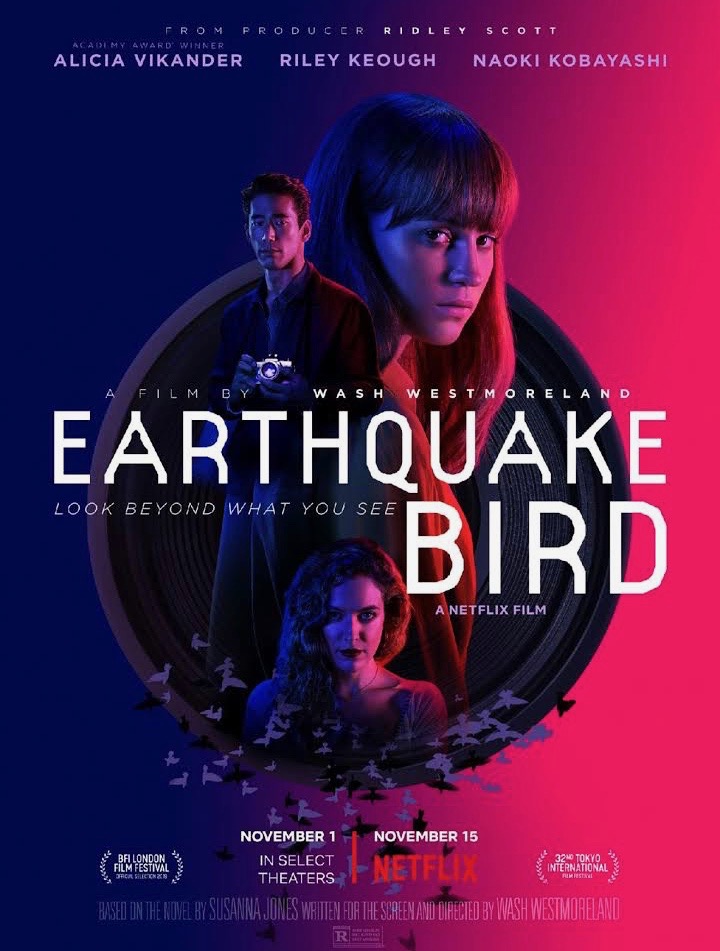 © Netflix 2019
I had the opportunity of interviewing author Susanna Jones after her first novel The Earthquake Bird was published. A haunting psychological thriller set in Japan, it tells the story of a murder investigation complicated by a love triangle, using flashbacks and mystery in its prose. It’s now been made into a film starring Alicia Vikander and Riley Keough and aired on Netflix this week.
Interview with Susanna Jones:
Q. Your writing has been described as “compulsively imaginative..beautiful..and concise.” Who would you say were your greatest literary influences – both in childhood and adulthood?
As a child I loved fiction that had a strong sense of place, the Laura Ingalls Wilder books for example, Swallows and Amazons, but I read anything that appeared in front of me from Roald Dahl to Enid Blyton. In my teens I moved on to the Brontes and I stayed in the nineteenth century for a while with Hardy and Austen. It’s hard to see influence on one’s own writing, or feel its presence clearly so I’m not sure which contemporary authors have influenced me. I studied drama at university and love theatre. I’m certain that watching and reading lots of plays has influenced my approach to writing fiction.
Q. Writers seem to have quite varied and diverse work schedules and needs when writing. What’s a typical day for you when in the throes of writing a novel?
It depends on where I am in the book. In the early stages I find it hard to write much in a day so I go for a lot of walks, read as much as I can and seem to mess around a lot not really doing anything. I used to worry about this and think of it as Writers’ Block but now I just see it as part of the way things work for me and know I’ll get past it to a more productive stage. Once I’ve got a good way into the book then I can write happily all day but I don’t tend to stick to a particular routine for long. Sometimes it’s good to write late at night and sometimes on the train to work (I teach part-time and travel regularly between Brighton and London) so I go with what seems to be working at the time.
Q. Whilst you were writing your first novel, were there any moments of doubt about finishing it? And, if so, what elements helped you to succeed?
No, when I wrote The Earthquake Bird I knew quite early on that I would finish it. I had the title before I started writing properly and I knew exactly what I wanted to do, even if I didn’t know quite how I was going to do it. I ended up finishing it much sooner than I expected. I had written a novel before that (unpublished) which was much harder work and I had to force myself to get to the end but that experience of getting from the beginning to the end of a novel – even if I didn’t think much of the final result – made me feel freer and more confident when starting The Earthquake Bird.I think there’s always a point during the writing of a novel where it feels as though the novel is an enemy, on a mission to finish its writer off but, if there isn’t that element of struggle, the novel is probably too safe and not very good.
Q. Aspiring writers, (whether they admit it or not), find solace in hearing that even successful authors have received rejections before they got the golden “Yes”. Was this true for you, and if so, how did you deal with rejection and carry on?
That first novel was turned down by a couple of agents but I already knew it wasn’t the best I could do so I just stopped sending it out and got on with the next thing. I think my advice to any rejected author would be to move forward and work on something new – because that’s what you’d be doing if your work had been accepted. It’s important not to get stuck with a piece of work that isn’t getting anywhere. You need to feel light on your feet and ready for fresh ideas.
Q. Do you have days when inspiration just can’t be conjured? What are your coping mechanisms for times when the words won’t flow?
Yes, I do but, as I said above, this is mostly in the early stages of the book. I find that going for a run or a walk always helps ideas move around and I come back with an answer to a problem or something new to work on. I always feel stuck for a while when I’ve just finished a novel and then I’ll just spend some time ‘filling up’ again by reading lots of new writers, going to the theatre, exhibitions and by travelling.
Q. Which character (from your books) seems most real to you, and why?
Whichever one I’m writing about at the time. At the moment it’s Grace Farringdon, narrator of my new book When Nights Were Cold.I finished writing the book a year and a half ago but she’s still very present in my thoughts.
Q. Once you have an idea in mind, how much of the story is organic – that is: does the story try to turn away from how you’d planned it? And if this happens, which way do you go?
I don’t plan to begin with. Once I have a sense of where the novel is going, I’ll start planning but, yes, things inevitably change during the process and I go with the changes because the plan is only ever a starting point, a means of thinking things through. The narrative structure will always go through several changes as the story itself develops so I would never close down possibilities because a plan tells me to. I do write a lot of notes and diagrams but I rarely look at them once I’ve written them down. It’s the putting them onto paper that’s helpful.
Q. As a writers’ group we share our writing, for feedback – sometimes right from its raw state. Do you think that there are some times when writing should be shielded from criticism until it is in a more mature state?
I think it depends on you and when you feel that feedback will be helpful. Sometimes it’s good to keep a piece of writing a secret and work on it until you know that it needs to be read and needs a response. I suppose it depends on the sort of feedback you’re hoping for and what the group can offer. If you want detailed technical advice that will help you shape and develop your very raw piece of writing, and your group has a good editorial eye, then it might be helpful to show it at an early stage. If you’re not ready for that then having a group correct grammar or tell you how your characters should behave might be exactly what you don’t need. Trust your own gut feeling. Do you want someone to read this piece and what are you hoping they will give you?
Q. Which one of your novels would you say was the ‘easiest’ to write? And why?
From a technical point of view, many aspects of writing have become easier with experience and yet each novel has been difficult in its own way. There was a kind of excitement to writing The Earthquake Birdbecause I had no agent or publisher, no expectations from anyone except myself. I felt very free and I think that made it seem easier. Or perhaps I’m just being nostalgic…
Q. Do you find that you have, in mind, ideas for the next novel… and the next… that just won’t rest until you’ve written them down? How do you decide on ‘the one’?
I’ve always got some ideas – well, not really ideas so much as images and fragments of voice or scene – and it’s usually when some of these start banging into each other that I can see a novel coming. It’s all fairly nebulous until I’ve done a lot of work so I can never be sure, before I start, that I really have got something. A lot of ideas get ditched or shuffled to the back for later.
Q. When, and what, was the last time you read a book that you just couldn’t put down?
I’ve just read The Siegeby Helen Dunmore and it was utterly compelling. I can’t think why I didn’t read it sooner. I’m reading Sarah Hall’s short story collection, The Beautiful Indifference, now and find her writing mesmerising.
Q. To a writer who falters when they’re, say, three chapters in – what three words of encouragement, which perhaps you’ve held dear in your own experiences, would you say to them?
Put chapter three down for a while and have a go at chapter nineteen or thirty-two. Sometimes working backwards is much more effective than going in a linear fashion from the beginning. It’s good to keep things messy until you really know your novel. If you get stuck at chapter three you probably haven’t spent enough time thinking about the whole novel.
Also, don’t be put off by how bad the first draft of your first novel seems. Of course it’s bad; it’s your first draft of your first novel and it’s just a lump of clay to work with. It isn’t supposed to be good and you don’t have to show it to anyone if you don’t want to. As long as you can make some improvement with each new draft, you’re getting closer to having something good.
Q. Could you recommend your top non-fiction books for learning the craft of creative writing?
A lovely book, not so much on craft but on being a writer is Sally O’Reilly’s book, How to Be a Writer (Piatkus Books).It’s full of advice and observations on every stage of the writer’s career and I recommend it.
© Christina Cummings / Susanna Jones 2010
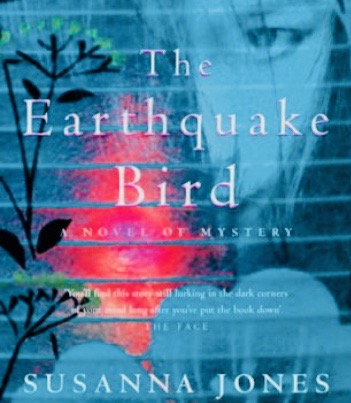
© Picador
In 2001, Susanna Jones published her first novel, ‘The Earthquake Bird’. Currently a lecturer in fiction writing, she is the author of three more novels: ‘Water Lily’ (2003), ‘The Missing Person’s Guide to Love’ (2007) and ‘When Nights Were Cold’, (which will be published in 2012.) Her books have been translated into twenty languages and she has won four awards: The CWA John Creasey Dagger (2001), John Llewellyn Rhys Award (2001), Betty Trask Award (2002), Book of the Year (for the Hungarian translation, 2004).
Peace on Earth
November 11th, 2019
War. Humanity has so far found no other way towards peaceful progress. For those who leave their warm beds to keep us safe in ours, we feel, (if not always voiced or shown), immeasurable respect and gratitude. For those who did not, (will not), come home… and for those who have returned, forever changed… we will remember you. For in your bloodiest moments, we find peace in ours.
Safe Refuge
October 29th, 2019
Dodging puddles as we run to the school gates in our stiff new shoes, we have a sense that beginnings are both hopeful and exhilarating, yet they’re pretty scary too. And there is no newer beginning than the start of autumn term. The safe refuge of the summer holiday is replaced with uncertainty and challenge. Even the weather gets serious as the days shorten and the trees shrug off their kaleidoscope of tired leaves. The alarm clock silenced, bowls of porridge scraped, uniforms hunted for and hastily buttoned, we arrive at our desks ~ the homework we did by last night’s lamplight handed in, and our text books, once heavy burdens in our bags, now come to rest.
In this moment there seems to be an order to things. A structure on which we can rely. The subject may or may not hold our interest. We may exchange unnoticed whispers with our friends. The pencil case we brought will hold a keepsake, a pen perhaps, from a gift shop that reminds us of a happy time. The teacher will ask that one pupil who hasn’t prepared, to explain the evolution of an ox bow lake. The lesson bell will ring just before the hour but will startle, still. And so, the day unfolds. Until we’re headed home again, to biscuit tins and TV shows. And then, one day, quite unexpectedly, we are adults.
Hard-wired to the chronology, the ‘back-to-school’ feeling of childhood still resounds. Even as flip flops are replaced with slipper socks we’re reminded that our lives are governed by the seasons of time. And as we add a splash of Chianti to our slow-cooked casseroles, summer salads now a distant culinary memory, that sense of transition, of getting our lives in order, glimmers, fiercely. Just as the squirrels are gathering their winter stores, we too, must draw the curtains against the cold. For in the face of uncertain times, there is solace in the order of things. There is comfort in routine.
Autumn may spell a new beginning, despite the chill, despite the loss of light and leaves. Yet, in that first hint of bonfire smoke, in hot spiced drinks, in new woolen scarves, we slide inexorably towards wintertide, braced, but with thankful hearts. This is the season of festivals that celebrate these transitions ~ Harvest, Thanksgiving, Rosh Hashana, Divali and the new Chinese Moon. Each one symbolized by a shared gratitude and the gift of candlelight.
But, indulging in a little bit of darkness, if so inclined, seems to suit this time of year. I’m often drawn to ‘magic realism’ and horror. They’re seen as genres that can’t be counted as ‘literary’, but I suggest otherwise. I have a broad appreciation for the arts, for philosophy, for poetry, short stories and the novel. The wizardry of magic realism is that the subject need not be dark. The prose though, should conjure at least one imperceptible shiver, as the streetlights glow outside ~ whereas horror addresses the subjects we find appalling, all the more disturbing when written in a subtle manner.
In 2007, I wrote a short story that touched on domestic violence, a dark subject indeed ~ and one on which light must be shed. Like any other previously taboo subject it jars, yet it features in many literary works. From Shakespeare’s ‘Othello’, to Anne Bronte’s ‘The Tenant of Wildfell Hall’ and ‘The Girl on the Train’ by Paula Hawkins, writers have not shied away from the notion of taboo, because life, for all of us, is full of difficult topics.
On a side note, my story was also the product of having read two great books that year. They were set around the pagan festival of Halloween, and their writing styles greatly influenced my own scribblings at the time…
In Ray Bradbury’s1962 novel ‘Something wicked comes this way’, the opening lines plant intrigue…
First of all, it was October, a rare month ~ not that all months aren’t rare. But there be good and bad as the pirates say. Consider August, a good month: school hasn’t yet begun. July, well July’s really fine. June, no doubting it, June’s best of all, for the school doors spring wide open and September’s a billion years away.
But you take October, now. School’s been on a month and you’re riding easier in the reins, jogging along. And if it’s around October twentieth and everything smoky smelling and the sky orange and ash grey at twilight, it seems Halloween will never come in a fall of broomsticks and a soft flap of bed sheets around corners.
One year, Halloween came on October 24, three hours after midnight. That was the October week they grew up overnight, and were never so young anymore…
© Ray Bradbury, 1962.
We are drawn in, right from the first chapter of Stewart O’Nan’s 2003 novel, ‘The Night Country’…
Come, do you hear it? The wind – murmuring in the eaves, scouring the bare trees. How it howls, almost musical, a harmony of old moans. The house seems to breathe, an invalid. Leave your scary movie marathon; this is better than TV. Leave the lights out. The blue glow follows you down the hall. Go to the window in the unused room, the cold seeping through the glass. The moon is risen, caught in nodding branches. The image holds you. Black trunks backlit, one silver ray fallen across the deck, beckoning. It’s a romance, this invitation to lunacy ~ lycanthropy, a dance with the vampire ~ elemental, yet forbidden, tempting, something remembered in school.
Don’t you ever wonder? Don’t you want to know? Come then, come with us, out into the night…
© Stewart O’Nan, 2003.
In fact, Stewart O’Nan, a self-confessed admirer of Ray Bradbury’s work, dedicated his book to the author, so influenced was he by the use of disquieting prose. So, in that same spirit, this excerpt from the preface of the short story I wrote in 2007, entitled ‘The Last Treat’, has elements of both their writing styles…
The wind is discreet. It filters through the birch trees, barely kissing them, funneling, like cigar smoke from old lips across the lawn; the cut grass unaware. It stops at the door, timidly, as though seeking permission to enter here. This stale room screams for its life; begs for air. Throw open the window, and you’ll gulp for the lack of it. You’ll hear nothing out there in the half-light, see nothing. Night has its purpose. It reminds us that we must stop awhile, shed our drowsy, too-familiar skins, lay down our smoky birthday-candle-wishes in place of dreams. Restore. But some nights, if we wake before we’re ready to, it can feel like a death, sudden and silent, and… and most nights, now… it feels more like our own.
You must recall that first time. It was late autumn, the windowsills and doorsteps in the crescent glowed with the bared and snarling teeth of carved pumpkins. Wood smoke lingered in the night sky. Indoors, locked safe from the witches and zombies that roamed the neighbourhood in search of treats, we shared a bottle of Château La Garde and bowls of lamb ragout. You said I’d never looked prettier. I believed you. A lovers’ truth in the shape of a kind lie. But the promise that evening held was stripped and maimed. You remember, don’t you? It was the wine perhaps.
Yet, in the morning, turning up the collar of my coat as I faced the world, I was hardened. Treading reluctantly upon this inexorable path you’d steered us on, my love, you must have known that it was only a matter of time…
© Christina Cummings

Summer Break
Gone ‘splorin’…
Back by Halloween.

Perspective
July 30th, 2019
Part of the thrill of writing stories is that the writer can, for a while, become the character. Actors have that same privilege. Consider Meryl Streep for instance, whose character in Big Little Lies is so far removed from the usual warmth that she exudes in other parts she’s played, that one could almost forget it’s her beneath the fake teeth and horn-rimmed glasses. There’s a similar anonymity that allows writers to explore ‘other lives’ and even genders.
Generally my writing is from the female perspective, but most stories require a full cast of characters with which the protagonist must interact. I’m enjoying this element, currently, with a character called ‘Mart’, who gets involved in something that will change his life… change him… forever.
Excerpt:
The roads had been swept of fallen leaves by relentless winds that blew in from the west. Mart held onto his hat with one hand, like a lady at the races, and lifting up the hems of his trousers so that they just skimmed the ground, he walked with haste along the path, dodging the muddiest parts, miscalculating occasionally and cursing himself. He reached the ridge and looked back over the valley. The sheep had roved across the field behind him. Huddled in a tangle by the gates, their waxy woollen coats looked sodden. He wanted to scream at them: ‘Don’t you get it? Can’t you see how shit my life is compared to yours? Doesn’t anyone get it?’ He knew if he did, that he’d be ignored. Perhaps one of them would startle and look towards him, then past him. That’s what always happened. In town, in the pub, at work. It was as though he was always in the way, like he was always near something interesting; curious enough that people would notice, but when he’d try to catch their eye, he would discover that they weren’t looking at him at all, but at something just beyond him, their heads might crane a little even, as though he were blocking their view.
And so he carried on up the lane, past the church yard with its precariously leaning tombstones and bio-degradable confetti stuck to the moss like flowers from far off climes. And then he came to the metal gate at the side of the farm, tugged the latch clumsily with his frozen-fingered grasp and made his way towards the barn. The bales of hay had been stacked carefully. He knew which ones to move to find the stash he’d come there to retrieve. He read the text again, though his battery was low and his phone had lost its glow, the dimmed screen threatening to blacken at any moment.
Bring it tonight, or forget the whole thing.
He didn’t want to forget the whole thing. He wanted to be a part of it. He wanted to be a part of something, for once. So he grabbed the package and tucked it into the deepest pocket of his overcoat, and headed for the farmhouse, where lights from the kitchen illuminated the yard with the comfort and promise of warmth.
© Christina Cummings 2019
Chiaroscuro and Cabbage Rolls
July 15th, 2019
Tracy Chevalier, author of Girl with a Pearl Earring and Remarkable Creatures, will be launching her new book in the autumn. A Single Thread tells the story of a ‘surplus’ woman, in post war England, who through bonds and threads within the community and companionship of Winchester Cathedral, forges her own independence.
As a resident of Winchester, (not quite a Wintonian ~ I was born and raised up North), I’ve always loved its cathedral. It was the first place I took my son to visit when we arrived; I was pregnant with my daughter at the time. There are too many reasons to mention here, why it holds special meaning. But, one is relevant. It is the resting place of novelist Jane Austen, whose novels explored the dependence of women on marriage. (But that was then, was it not? It’s surely different now…?)
In any case, cathedrals are more than a place of worship and tranquility, they hold together for us pieces of history, of architecture, art and stories, preserving our heritage for the next generations to come. And, like Tracy Chevalier, I love them too.
Here is an excerpt from a story I wrote called, Russian Doll, featuring St. Isaac’s Cathedral in St Petersburg, the largest cathedral in Russia.
Excerpt:
I am back in St. Petersburg ~ well, my spirit is. I knew it well. I grew up in Pushkin just outside, on a wide avenue sagging with elm trees. I spent three years at the university there, studying fine art, specialising in oils; recreating motion ~ of engines, of wind, of waves. It is also the last place I saw my father. The day before his death, we had been visiting the Winter Palace together. I had always looked upon our trips to the city with much affection. This particular day, he had told me he was going to show me both life and death. I was thrilled at just the thought of that. He showed me the paintings of Rubens and Rembrandt and the way light could be captured on a canvas, so that it appeared more real even than the rays from St. Isaac’s golden dome at noon. Rembrandt’s mastery of ‘chiaroscuro’, taught me that you could capture life, though life itself moved on. I later learned that Rembrandt painted over fifty self-portraits, none of which he liked. An artist is not so very far removed from his work, though the canvas tells one story, the face another, but it was my father’s face I studied that day. I watched as he surveyed Rembrandt’s ‘Descent from the cross’, saw the way his eyes roved upon the brush marks, the way he closed their pale lids as if to remember something, then sigh and say ‘That is a beautiful piece of work. Just beautiful.’ And I can remember wondering if, one day, I would ever feel that way about something, the way that Rembrandt touched my father.
We had lunch together at Palkin’s. Father ordered. He said I could have anything I wanted off the menu. There was so much to choose from; duck and doe deer, pelmeni, pepper steaks and cabbage rolls. I spent so long trying to decide what it was I wanted, the waitress grew less and less enchanted by me, tapping a stubby pencil on the side of her cheek; a cue for father, who announced: ‘I will order something I know you’ll like!’, his face a full patient smile. And as he gazed at me with hazel eyes that mirrored my own, I felt as any daughter, as any one, should always feel: cherished and safe, but above all unconditionally loved.
After lunch he took me to the zoological museum, which had always fascinated me as a child. The creatures, stuffed and set in natural poses, seemed animate to me, yet somehow anaesthetized, their fur a little too brittle, their eyes not quite right. The mammoth made even my father look small. It stood, tusks pointing to the sky, ready to charge, yet rooted to the fake snow; a cruel paradox. I grew to find this kind of display, the representation of false life, distasteful. Just as a dead thing is always dead, the art of taxidermy will always be macabre. But despite the bizarreness, I found intrigue there: a hummingbird caught in silent flight, its proboscis deeply embedded within the nectar-less stamen of a satin flower. Pondering the resin, which glossed its purple feathers, the tiny even stitches along its breast, I saw a side to death that puzzled me. A side we never get to see. We hold on so tight to life. Are we too scared to look, knowing this is all there really is… a life of fearing death? Within the heartache of my father’s death, there was much to learn. That time is all we really have. And I got lost in time that day. I can still smell the polished floors of the Winter Palace; feel the grip of father’s hand as we crossed the road and the buzz of being a child in Petersburg again.’
Excerpt from Russian Doll, by Christina Cummings ©Christina Cummings
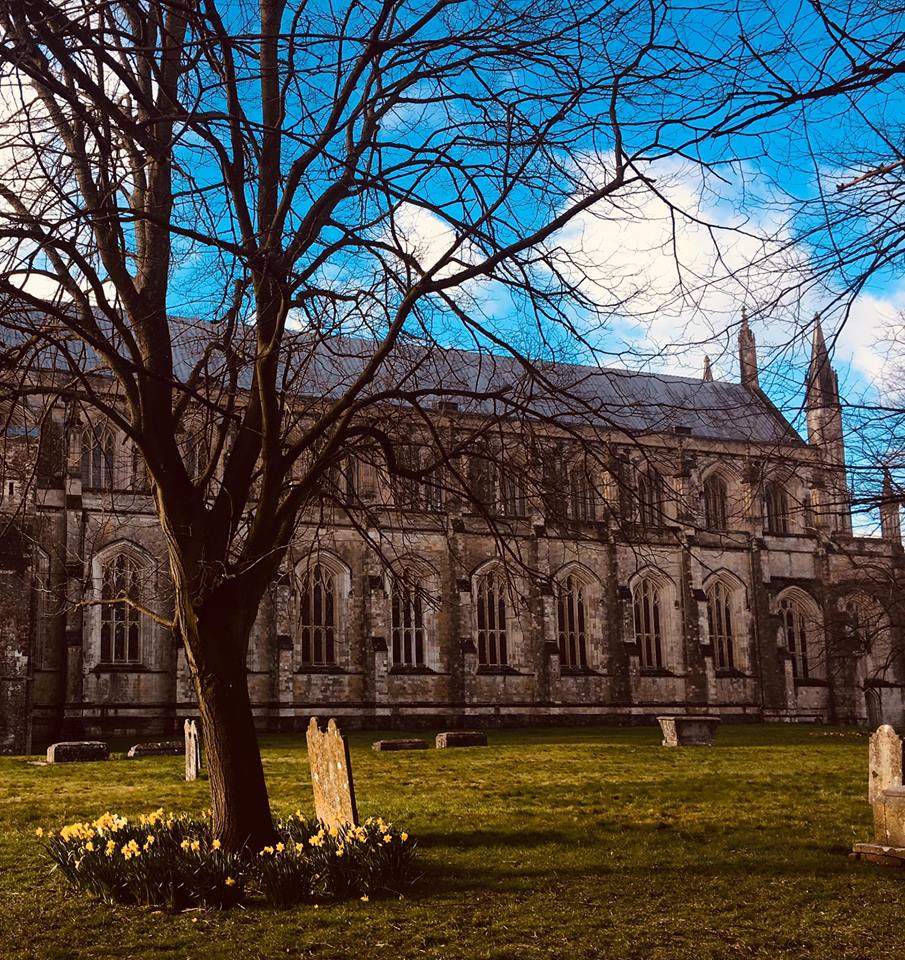
Paperweights
July 14th, 2019
“I do not know what I may appear to the world, but to myself I seem to have been only a child playing on the sea-shore, and diverting myself in now and then finding a smoother pebble or a prettier shell than ordinary, whilst the great ocean of truth lay undiscovered before me”
~ Sir Isaac Newton ~
This stone, plucked from a Norfolk beach, is the perfect rest for my paintbrush. The others, though not as useful, (unless perhaps as paperweights), are just as interesting…
#beachcombing #stonesnshells #wornglass #pebbles
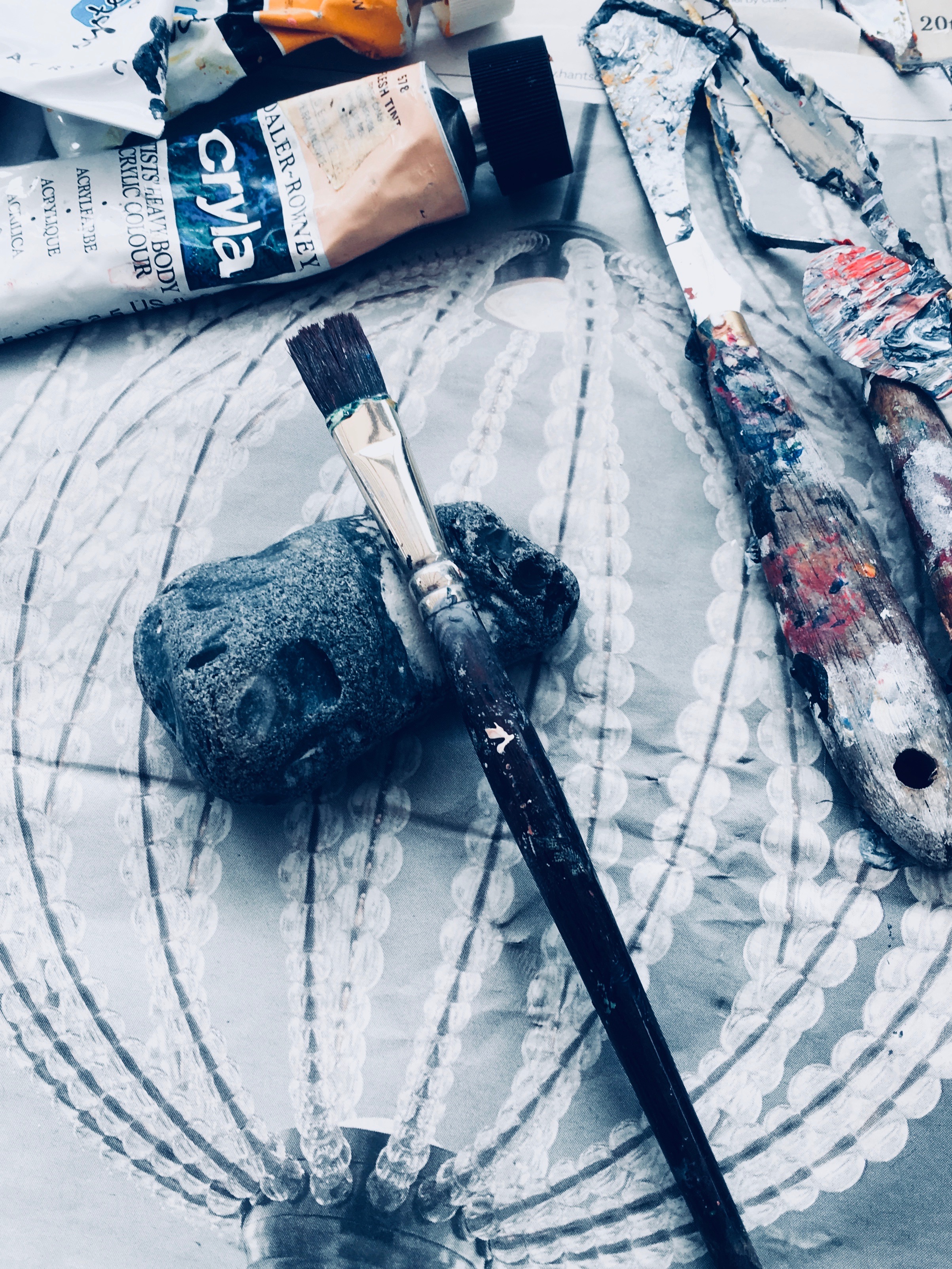

Plucking a paragraph
July 9th, 2019
In a beautiful paragraph plucked from ‘Orlando’ by Virginia Woolf, I’m reminded of a childhood tree, the roots of which felt so safe and solid. Gnarled, partly visible, partly held beneath the earth like the clasp of a jewel in a claw set ring, they suggested permanence. As children (and perhaps as grownups too), that above all other things, above wishes even, is the thing we trust in most.
Excerpt:
“He sighed profoundly, and flung himself — there was a passion in his movements which deserves the word — on the earth at the foot of the oak tree. He loved, beneath all this summer transiency, to feel the earth’s spine beneath him; for such he took the hard root of the oak tree to be; or, for image followed image, it was the back of a great horse that he was riding, or the deck of a tumbling ship — it was anything indeed, so long as it was hard, for he felt the need of something which he could attach his floating heart to; the heart that tugged at his side; the heart that seemed filled with spiced and amorous gales every evening about this time when he walked out. To the oak tree he tied it and as he lay there, gradually the flutter in and about him stilled itself; the little leaves hung, the deer stopped; the pale summer clouds stayed; his limbs grew heavy on the ground; and he lay so still that by degrees the deer stepped nearer and the rooks wheeled round him and the swallows dipped and circled and the dragonflies shot past, as if all the fertility and amorous activity of a summer’s evening were woven web-like about his body.”
Orlando, by Virginia Woolf [First Published in 1928]
An ecstatic longing
June 17th, 2019
Listening to BBC World Service on the car radio as I drove down south the other day, I was reminded again why I write and paint. It’s because I love food. Let me elaborate! Food unites us, and so does art. Captured in a reading from Yemisi Aribisala’s book: ‘Longthroat Memoirs; Soups, Sex and Nigerian Taste Buds’, her description of a traditional soup that her ‘aunty‘ once made, was so utterly sublime it conjured in me an ecstatic longing to not just try that soup one day, but to scrape the sides of a bowl, on a table, in a house, in a country, in a lifetime that wasn’t mine. The author could have been at my kitchen stove, holding out a spoon for me. Writing (and reading) allows us to taste the lives of others, to experience limitlessness, to love endlessly. And painting explains things when the words run out. Words can be blended and chopped, paint can be spread, sparingly or in great, generous dollops; ingredients for creations to be both savoured and devoured, allowing our souls to be dipped into something just beyond our own realities.
Here, Yemisi Aribisala enlightens us about the structure of ‘Ogbono soup’:
“Ogbono soup is the classic draw soup. It requires both technique and light-handedness to create the perfect degree of draw. ‘Draw’ is defined as the animation of the soup. It refers to that thing that connects two kisses moving apart to catch their breath; organic strings pulling in two directions. It means mucilaginous; the structural elasticity that creates the shape of a climbing whirlpool in a pot on the fire. Structure, not texture, is what we mean. The name, ‘Ogbono’, is inelegant, like trying to talk with a mouthful of hot yam. ‘Ogbono’ is a beautiful girl named without considering how the blend of letters that make up her name sounds. No matter how time-honoured the name, if it tumbles around the tongue and lips it somehow takes away from the girl’s beauty doesn’t it?”
And, as she recalls her ‘aunty’s‘ exceptional culinary skills, she laments… perhaps that bowl of soup will remain just that… a memory:
“In my mind’s eye, I can bring up the soup in the vivid colour of diluted palm oil, not moody brown or red but stunning turmeric. The soup was lightly viscous, velveteen, embellished with luscious fresh, giant prawns. I’ve never been able to replicate the attractiveness, the perfect degree of draw, the flawless timing allotted to the prawns at the end of cooking so that their pink taut flesh detonated between my teeth. I have not even been able to replicate that exact shade of hunger-inducing turmeric. I suspect that my memory keeps raising the bar to the point where I could never cook it as well as I remember it. Or it might be that I could never ever cook it as skilfully as it was made that day.”
In any case, I had to write to her to tell her that her soup may not be perfect, but her writing… well, it was all the nourishment needed to re-inspire me that day.
The excerpts in this piece were transcribed from “Longthroat Memoirs: Soups, Sex and Nigerian Taste Buds,” by Yemisi Aribisala (Cassava Republic Press, 2017).
Cassava Republic Press Website

Wash of White
June 9th, 2019
In the spirit of recycling, I often buy old, unloved canvasses from the tip. For a few pounds and a wash of white emulsion, their faded print is erased. Literally, they are renewed. A blank canvas from which to create ~ a fresh, new phase. If only life would afford us that same chance. Perhaps it does. This excerpt is from a story I wrote called ‘Russian Doll’, (before the hit Netflix show of the same name!) The protagonist strives throughout the tale to find reason in loss.
Has it been a year, already? Twelve months can drag like a hundred-dozen Sunday afternoons, but sometimes, like a missed opportunity, time gives a mere fleeting glance at us, as merry flutes at midnight’s strike are raised. Sometimes it passes with few lessons but hurt, yet a year is a year nonetheless. As the seasons execute their purpose with seamless precision, we console ourselves with their familiar signs; Winters’ cold punch imparts to us harsh truths while lawn snow lays unspoiled, and Summers’ evening balm can conjure pleasantries, until just the feel of it on our skin can bring to life forgotten dreams, a once lost moment, a melody, a first kiss. When the pain of loss is too much, we can take comfort that a year of bittersweet precipitation, is, if nothing else, a year survived.
© Christina Cummings
The Big Sardine
June 4th, 2019
Oceanic themes aptly lend themselves to the artist’s brush. Echoing our lives, the sea is a constant in a constantly changing canvas.
In Excerpt No. 3, a short story I wrote, about two people who meet at just the right time, set in a beachside bistro called ‘The Big Sardine’,* nautical analogies abound.
A bright beam traverses the harbour as the lighthouse flickers. Shards of light shimmer, bright as expectation, splicing the ocean, as the moon withdraws. Behind shutters, tired eyes close their lids for sleep as the whole town settles into darkness.
Out there though, sea can change. One minute, the tranquil surface gleams, the next it’s pulled apart by weather, a harvest of waves, tall as trees. Heading back to shore, Whispy watches the town, as it seems to rise and sink before him, like it’s been jacked up on some crazy simulator, like the ones in the arcade.
Whispy had been fishing all his life. It was said he got his sea legs from his mother. She had felt the first kick as she’d sailed the old flat boat round the island. It was as though Whispy, in the snugness, the warm rockpool of his mother’s womb, had sensed the rhythm of the waves and was dancing at the joy of it, even then. She said he was like the lobsters trapped in the pots, nudging the sides, trying to escape back to the deep. It was like he was ready to be born.
(*Published in the second anthology, of the writing group, Pencils and What-not. ‘Journeys and What-not’ © Pencils and What-not, 2013.)
Unknown to ourselves
May 28th, 2019
This excerpt from an early story I wrote called, ‘The smallest footprint possible’, depicts the moment when you revisit a place that holds a meaning in time… and the realisation that it can never be recaptured in quite the same way.
Excerpt No.2
I am compelled to go inside, to walk again through those heavy elm wood doors ~ to be a latent witness to the briefness of our special day. I stare at the altar where we both had kneeled to say our vows. Perhaps I shall capture some indelibility, that through time-passed has lingered. Perhaps I’ll hear your voice.
Golden vine leaves grasp the thick pedestal of the marble lectern from which countless readings have resonated through the years. In the stained-glass window above the font, disciples, their palms outstretched like beggars on an unforgiving street, reach toward their saviour. The morning sun casts their hopes, bright and surreal, scattering them like the splinters of a frosted rainbow onto the cold flagstone floor.
But this place, it holds nothing of us here. Instead, the smell of ancient rites suffocates. The void elicits fear. The faithless know this fear, despite their smug assumptions. It is not a fear of ‘God’, or death, or loss. It is a fear we all share: to leave this existence unknown to ourselves.
© Christina Cummings

Depth and Promise
May 23rd, 2019
As I mentioned a few posts back, I have been taking inspiration from excerpts of my writing, for my new paintings. However, there have been some paintings I’ve already created that have elements which suit certain writing styles, such as this one ~ taken from a story I wrote about a dystopian future, called ‘Crowds’. So, here is Excerpt No. 1. and there will be more to follow:
‘All of her beauty had been funnelled into misleadingly grey eyes. They could hold you spellbound in their intensity, and depending upon the weather they became a barometer of luminosity, reflecting every shade of light. Sometimes on a clear cloudless day, if she had her back to the sun, they appeared a sort of velvet blue, like the colour of the shining flag poles that encircled The One Nation Palace, or as she had once been told as a child, the colour of innocence. And at evening’s end when life drained from the sky, or if she looked at you across a table lit with flames, they darkened; moss green and endlessly deep, I had fallen in love with the depth and promise of those eyes.’
© Christina Cummings
Time for tea
May 20th, 2019
A while back, I was sat contemplating my life up until this point. There was a half drunk cup of tea on the dresser beside me, and it was raining outside. The kind of rain that suggests it has come to stay for a while, soaking everything, tapping at the window as if to say, ‘I’m still here’. The tea was tepid: the optimum time for drinking a cup of tea is somewhere between the desire to drink it and just before the realisation that it’s stone cold. Sometimes, tea can be disappointing. In any case contemplation, it turns out, is procrastination. Sure, lessons can be learned from the past, but only in actions can they be applied.

Blue Fur
May 19th, 2019
I wrote this short story at exactly this time last year. It was for a competition, that in the end I didn’t enter. But in re-reading it, the prescience of its theme struck me as ironic, and it is the inspiration for a new painting entitled ‘On a Sunday’s eve’ ~ a work in progress.
A Shift in the Tide
A short story, by Christina Cummings, May 19th, 2018.
So unlike Wales that time of year, even the green grass was bleached to brown. Our cottage, on the steep cliff side glowed like a white shell in the sandy bay and along the ochre trail that wound its way to town, the path was whipped to dust. The slow sun bore down on crests and dips turning the mud of winter’s rain to broken marble.
I watched the hunched form of you, over the roar of your Yamaha, and pictured its wheels carving tracks through untrodden ground, where animal prints drift off into woodland’s naves. And as you sped away, pale petals lifted from where they’d fallen, pink confetti for just a moment, before they fluttered to the earth again. I felt you disappear over a steep brow and heard the last of you as the frame emptied and I stood in the silence where you last bent down to kiss my lips. And I wondered if in the quiet nights of a future we no longer share, you too will miss those unmade moments where we might have ordered crab claws in a busy beach cafe or spoiled a dog with lamb bones on a Sunday’s eve.
And so I returned to the cottage, knowing the aloneness it would hold and I closed all the curtains save for the one in our room, where the paperback you’d started lay unread. I poured a glass of red wine and sipped it, feeling the blue fur gather on my teeth and I let out a cry, the one I’d held inside for days. And then, as the light faded outside and the room cooled, I poured more wine, but I could not stand the briny lacquer of its harsh aroma. I walked to the window, breathed in the evening’s cold air and vowed not to think of you. Someone once said that grief lasts a finite time, but that to be sure one should double it. But how can a lifetime be doubled? The choked tears have settled, as I knew they would, into a place in my chest, where at any moment they might startle me. And your face, your footsteps, they are as much a part of this beloved coastline now, as the rocks and the heath and the gulls.
I still walk that path to town and carry home with me a bag of groceries to keep me fueled. I buy firelighters and milk for tea. In the late afternoon, I nibble biscuits and cheese, while I sit and write. But the novel I started before you left holds elements of you that chain me to the time when there was an ‘us’. I had considered starting a new one, but there is a bitter-sweetness to the prose and the story must be told. The characters rely on me. And so, I weave the part of you that is still mine into the pages to keep you here with me.
The sky has darkened now. Autumn’s approach always surprises me. I bend to stoke the fire, and there by the hearth I see the hand-carved wooden spoon you made for me. You worked on it that long winter, the one when lazy snow had gathered along the bare boughs and we’d lain low like forest beasts until the path to town was passable again. A Lovespoon’s pledge is as old as love itself. Hearts wrapped in chains are buried in its handle, alongside a horseshoe for luck and a lock that represents the safe security of marriage. I turn it over in my hand and marvel at the irony. But it’s not my hands I see, it’s yours. The way they’d gripped the metal tools, whittling the wood as though it were mere putty. And I see the look of intensity upon your face. It haunts me still.
Morning nudges me awake, as dappled daylight and birdsong filters through the grey dawn. I rise and take an early walk down to the beach, inhaling the smell of the sea. There is no one about, save for one dog walker strolling far off in the distance, its companion retrieving sticks from the waves. And I let the solitude wash over me. And I’m okay. Perhaps, in a lifetime there are enough hours, after all. I feel lighter, calmer for the revelation.
Returning to breakfast at the little round table that just about fits into the space between the stove and the dresser, I stir my tea and blow across the surface letting the milky steam waft back at me. I scrape yellow yolk from the plate with the last square of toast and plan my day. I have just one last chapter left to write. My laptop is propped on a pile of National Geographic’s I’ve been meaning to read. A second cup of tea rests on a slate and all about me are treasures that have inspired; a dried rose head, framed memories, shells. And then I see the stone. I take it from the desk and let it soften in my palm. I found this special one last year. We’d been taking a walk across the wet sand, watching the curlews snap and snarl at the spiky waves. You were ahead of me. And I, in my parka, walked a few paces behind. ‘Look,’ I’d said, brushing the coarse sand from the underside with a slow sweep of my thumb. Within my outstretched fingers I held a perfectly shaped heart, smooth and small, and warmed by the late afternoon sun. ‘Hold onto that one,’ you said. ‘It is a rare find.’
Later, when we’d finished off the last of the cowl and our cheeks were flushed from brandy, I’d asked you what you’d meant by that. And tucking a strand of hair behind my ear, you replied, ‘That heart that can never be broken.’
I think of it as a serendipitous unearthing, a chance find, like the meeting of two souls, but in reality it was just lying there, in wait, to remain unnoticed or perhaps be found. Comprised of pale brown and pink-veined quartz, it feels despite its smallness, obdurately solid and steely hard. When you left me here, I carried it around with me. It was my comfort in those endless hours.
I write the last sentence and, pulling on my coat and boots I go out for some air. I watch the flapping green waves roll into the bay and crash onto the shoreline, making crisscross patterns as they flatten and spread out like spilt drinks. A shift in the tide lures the spent surf home once more to the vastness of the ocean. And as it does, I raise my arm and with a whoop I hurl the pebble, with all the strength I’ve gained. It arcs and falls and disappears. This sheltered cove has seen such dramas ebb and flow. And for now, everything is in its place once more.
© Christina Cummings

Paperback
May 10th, 2019
Dappled sunlight dances under the steady tree, where I sit with a cappuccino and a book. Clouds pass unhurriedly towards the west and make dark threats of rain, but I have shelter and a shawl, so I lean back against the wide tree trunk, finding in its lumpy hardness a smooth bit on which to unfold my spine. The coffee has cooled a little, but still tastes good, and my paperback book intrigues me, so I shall sit here, just like this, for a little while.

Lime Green Shoes
April 29th, 2019
Picture me; I’m outside a café, the weather brisk but not at all melancholic. I’m holding an armful of pink tulips in such a way as to make passers-by ponder: ‘Are they for a favourite aunt? Or from an old friend she hasn’t seen since that flurry of post college weddings? They’re not roses or lilies, so maybe, but perhaps not from a lover…?’ They’d all be wrong: the old street vendor on the corner of Market Lane said they suited me. He said he liked my lime green shoes. He is a part of the town, like the cobbles themselves, diligently laying out his buckets just before sunrise, and blowing into clasped fingers, he’d still be there as early diners descend, buying up the lonely flowers for a pinch of their worth. But then, what are flowers, once they’ve been unearthed?
I am not thinking about you. I am not picturing your face. I’m not recalling your warm shoulder, or that soft jowl that disappears when you smile. Or your sweet laugh, a deep silverback groan, like it’s raised from the forest. Yet, here you are. Like the tulips, you are cradled in my arms. Still.
Home now, I place the flowers in a vase. ‘Shall I put them by the window?’ I ask. Turning on some lamps to fill the void, I imagine you have hung your coat and climbed the stairs. You’ll be up there, changing your shirt or looking for a book. I’ll hear the floorboards creak as you tread the landing. You might sing, or shout down to me: ‘How was your day?’.
I stir soup, watching it thicken, watching bubbles bursting at the surface. I take one bowl from the cupboard. I’ll make some toast with an extra thick layer of butter. I will eat it, as I watch TV. And I’ll not recall the way we used to sit: you behind me, a steady tree on which to lean, your arms: one a strong bough, the other draped around me, holding me like those safety-guards on rollercoaster rides. The soup is ready, and the butter melts. But first, I need to get out of these lime green shoes.
© Christina Cummings
Bar-less Airport
April 26th, 2019
“You don’t become happy by pursuing happiness. You become happy by living a life that means something.” ~ Harold S. Kushner.
Ask any nurse: There are no words that adequately describe how it feels after working a busy 12.5 hour shift. Perhaps a marathon runner wearing lead boots, who’s just disembarked from a long-haul flight that had been delayed for hours at an airport with no bar and who now finds that they’ve yet to get across the country by a slow, meandering replacement bus service, before reaching the sanctuary of home… perhaps they might have an inkling. But, there is meaning in the tiredness. A sense of purpose, of personal satisfaction, of camaraderie, of having mattered and made a difference to another soul. Nursing is in itself the reward. We look after our patients and the friends and relatives who keep vigil at their bedside; the advocates, the cheerleaders, the loved ones. Seeing people recover and go on to live well together again is at the heart of our profession. And it’s a privilege to witness these precious bonds that outlive even the most tragic of circumstances. And so, despite the lack of recognition, the gruelling pace and scope of the job, despite the ridiculous, inappropriately low wages. Despite being so tired sometimes that it physically and emotionally hurts… as the lead boots slide off, there is a sense of meaning, and in that there lies happiness.
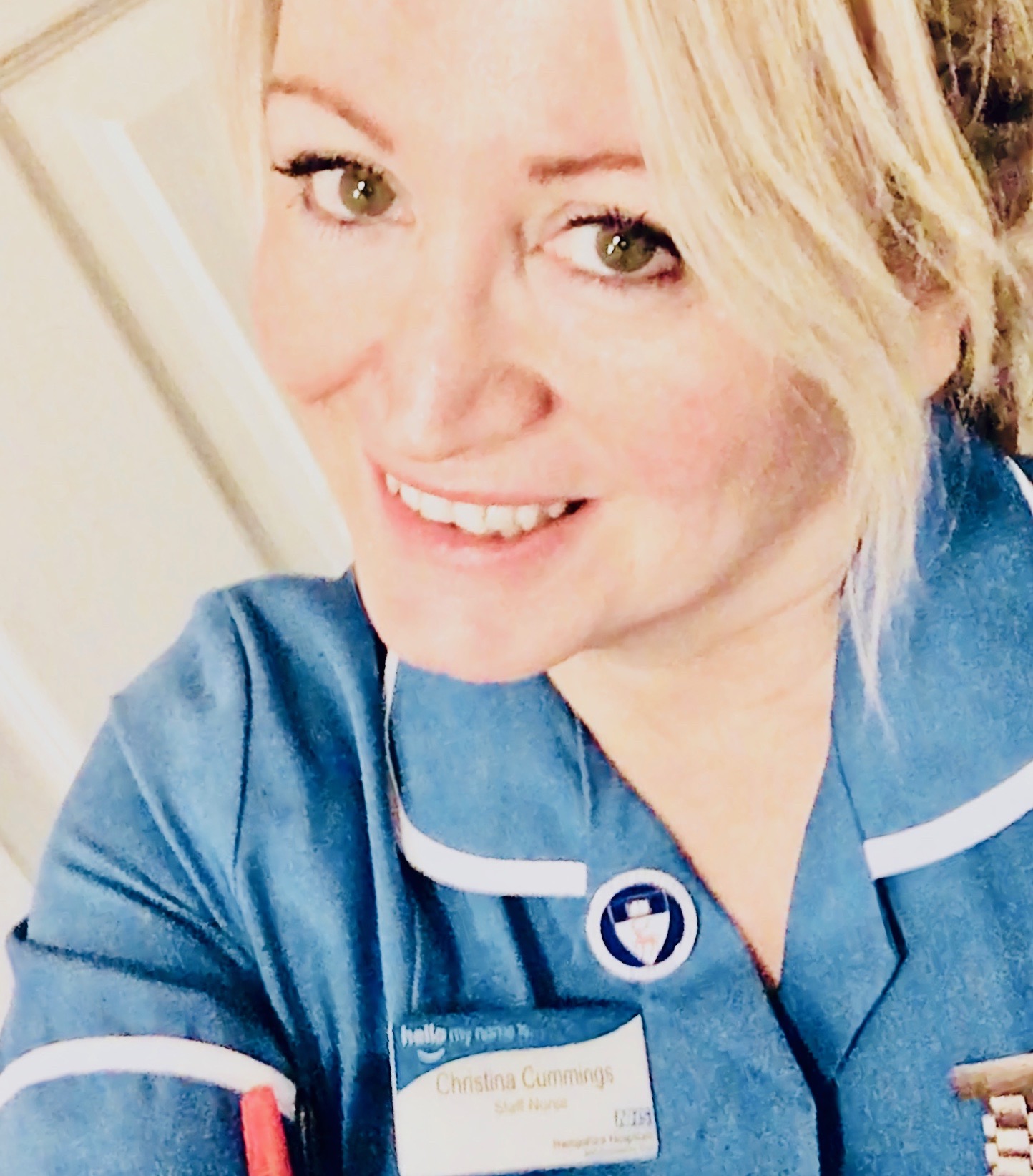
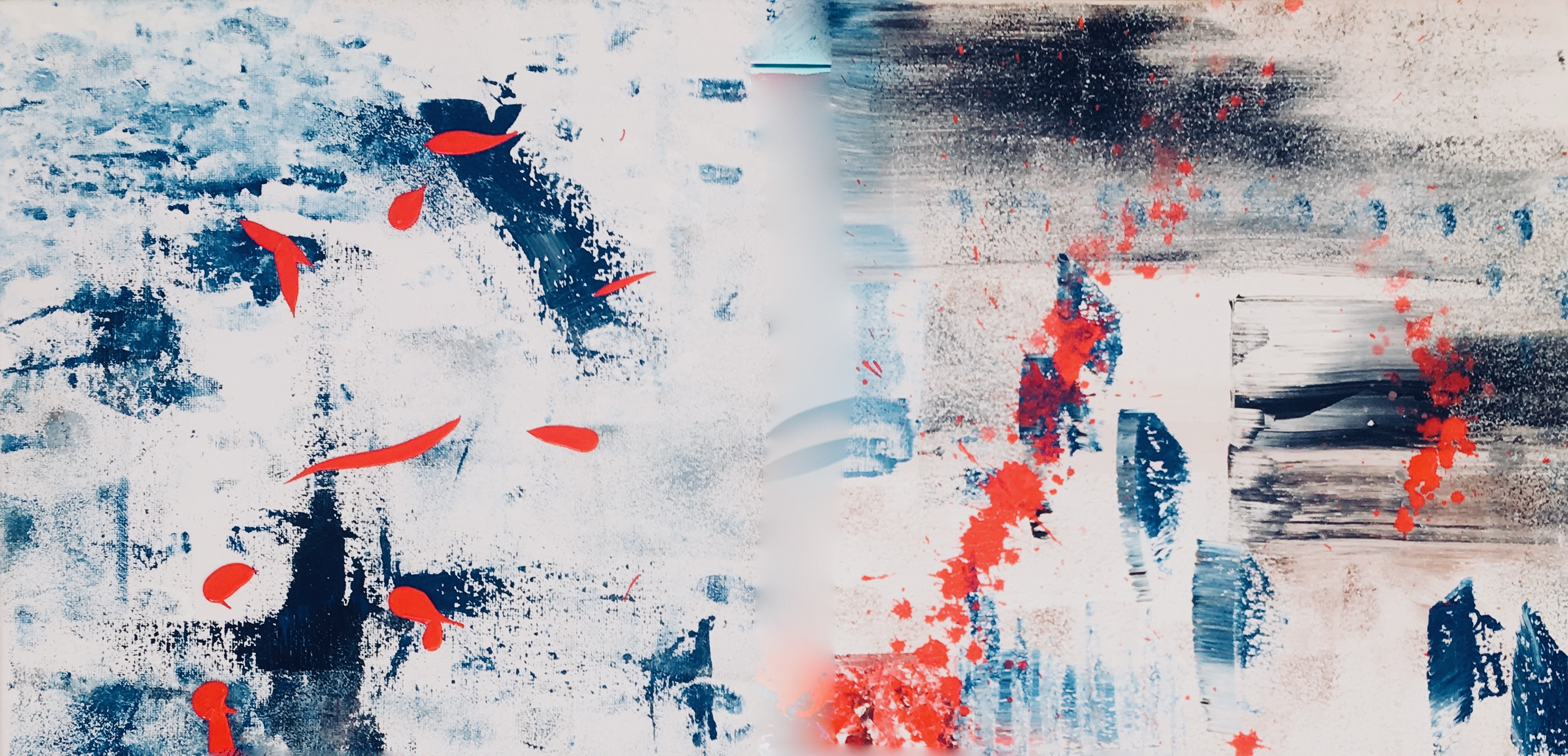
Days of Yore
April 12th, 2019
I stumbled upon an interview I did in 2012. A fellow writer, Mick Davidson, created a blog in which he spoke to other writers about their creative processes…
Welcome to IAAY number eight! This week it’s all about British writer, Christina Cummings. IAAY is published every Wednesday (yes, all of them), so there’s plenty of time for you to join in too! Contact me via the comments section or via Twitter: @mickdavidson.
Transcript:
“When I agreed to take part in IAAY, I hadn’t predicted that, to my frustration, I would discover that everything I thought I knew would vie for my attention, so that to take just one element and offer it up as my inspiration would be to dishonour all the rest. It’s definitely part of my nature to want to gather up life’s wonders, like so many flowers. Yet, some of the stems have fallen from my grasp and petals that once brought joy or solace, have dried up, lost to that place inside that exists just beyond memory. There are recollections more fresh than some, but nevertheless integral to my soul where inspiration nourishes me like rainfall. I am not going to opt out altogether, or dodge this question for one simple reason: To know that which has driven me this far. In questioning what inspires me, I question myself. So, where does my inspiration lie? My answer is this: in everything.
I am a writer. I am a reader too. Many works I’ve read have, over my lifetime, allowed the quiet seed to grow. Such is the symbiotic love affair which only writers and readers know.
My first manuscript is entombed upon a floppy disc. It dates back from the early 90’s when I was living in Philadelphia’s now hip and trendy Northern Liberties. Typing with fumbled fingers, I began the purge that underpins the need to tell a story. As the word count whirled, it was as though I were the captain of a ship, steering my crew to a safe harbour. Each tiny bit of action, each character was at the mercy of my helm. Or so I thought. What actually occurred was a mutiny. The moment they were christened, or given a voice, they guided me until on a ‘good writing day’ we were all in it together.
It was to be a story of lost love set in the deserts of Jordan. It seemed right to base the plot on what I knew, and the memory of spending a night near Petra with stars for blankets and a pillow of stone was the catalyst for what was the opening scene. However this unfinished first manuscript remains hidden even from me now, as I can’t view it and had never printed it off. Of this fact, I’m glad; I’m sure the naivety of my prose back then would make me blush now.
The piece of writing I have chosen for IAAY is a more recent foray. The years in the interim have been rich with extremes and there have been days I’d forgotten how to write. But there are good days too. This excerpt is from a novel, for which my daily inspiration is the resolute and unwavering regard for life that I have, over time, learned from my mother, in order to survive.”
Excerpt:
Autumn is for mushroom picking. Eidel wandered the woods, keeping her eyes down. The basket she carried, was the one her mother used to keep the laundry in once she’d unpegged it from the line. She used to tie a rope from the cornice of the caravan to a nearby tree, and for as long as they camped in that spot, clothes would flutter like bunting along the length of it. Now, over half a century later, on a warm day, if Eidel leaned in close, she liked to imagine that she could still inhale those moments in the floral pleats and with that breath she would picture her mother folding cotton sheets and smoothing down hems with hennaed fingers, smiling, happy at work. Her mother had never known how to feel otherwise.
©Christina Cummings 2012

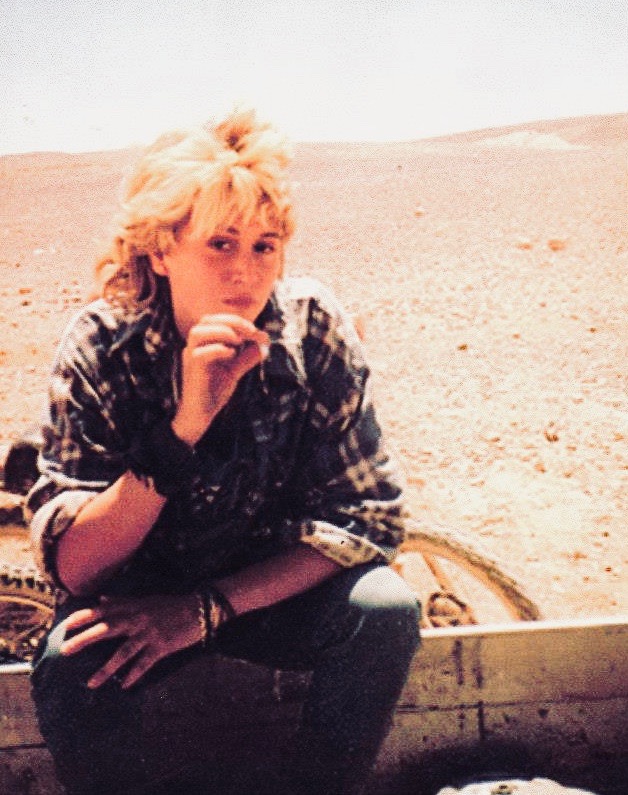
Christina Cummings, Jordanian desert, 1985
Window seat
April 7th, 2019
I made it just in time to catch the commuter train, and sat down in a backwards-facing window seat, just in time to miss the anticipated down-pour which slashed, like irritable fingernails, at the smeary glass. The station disappeared, replaced by rows of worn-out terraced houses, then fields of coarse grass, where electricity pylons dominated the skyline, and the odd Shetland pony grazed unperturbed, and further on, scary looking farmhouses with dark soulless windows stood in isolation in the hammering rain. I imagined the folk who lived inside – relishing the remoteness, spending long days working without the need for outsiders, eating big new laid eggs at the kitchen table, mud-caked wellies waiting like patient dogs at the back door.
© Christina Cummings
Copper-feathered hens
April 3rd, 2019
I’ve decided upon the tale I wish to tell. It was not an easy task; I have many unfinished manuscripts in hard copy and on hard drive. I’ve converted the old sofa in my conservatory into a writing nook. The mid-afternoon light can be harsh out here, but with the blinds pulled down, as the sun moves round, I find my eyes can rest comfortably upon the screen.
I sometimes read back through old writing and find myself entering a twofold world. In one, the characters I created are still there, waiting for me. And in the other, I am the protagonist of my own story; I might be thirty-five again, picking up my kids from school, taking their tiny hands in mine as we cut through the park before heading home. Or I’m forty-five, throwing corn to copper-feathered hens that free-range round a garden that I once loved. So, there is ‘memory’ in those writing days too. I wonder, how will I recall these days, when in years to come I read the chapter I am working on?
In any case, I cannot separate my writing from my painting. For me, the two sprout from the same bedrock, the same need. As an abstract artist, there is as much joy in reading a painting as there is in reading a novel or a poem. So, just as art begins with the first mark, so does writing begin with a word. I will select sentences from different works, so they can be aired for a while. They will be chosen for their inspiration to paint a moment, or a mood, or a memory…
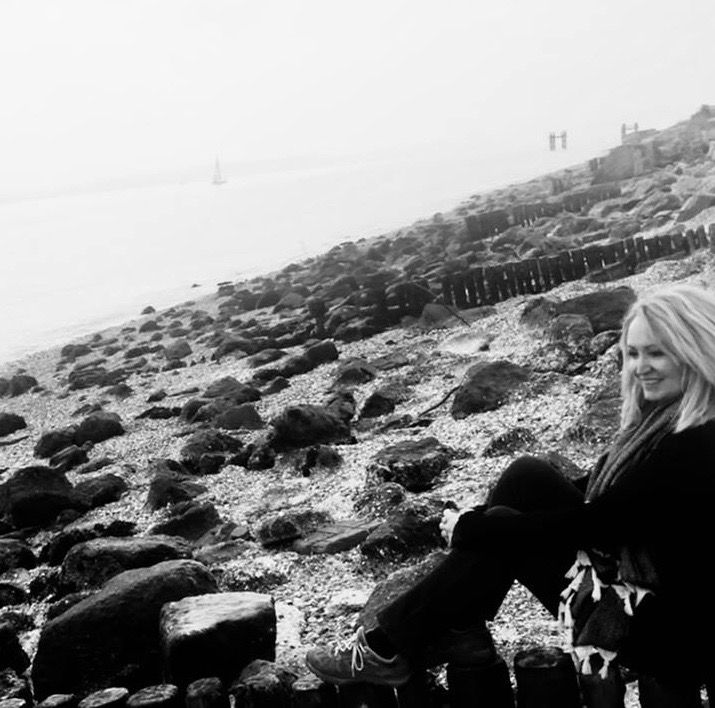
The wooden dining table
March 30th, 2019
The kettle is on. My still sleepy dog has circumnavigated the garden, clearing off the early birds with admonitory barks. There’s a cool nip to the air, though the sky makes a spring promise and later, the kind of sunshine I dreamed of on bleak January afternoons will warm my spirits.
I blow across the surface of my tea and take small sips. My painting studio, a modest conservatory in which my grandfather’s wooden dining table serves as an easel, is lit with daylight. There is no hiding in such light. Stains are illuminated. Stubborn cobwebs cling to the rafters. Paw prints still tread upon the floor tiles. Yet, there in the centre of the table, resting on sheets of last week’s news, is a clean, blank canvas…

 Christina Cummings